Table of Contents >> Show >> Hide
- What Is Sichuan Eggplant in Garlic Sauce, Exactly?
- Why Eggplant Acts Like a Tiny Kitchen Sponge (and How We Fix It)
- Ingredients for Sichuan (Szechuan) Eggplant in Garlic Sauce
- Step-by-Step: Sichuan (Szechuan) Eggplant in Garlic Sauce Recipe
- Pro Tips for Restaurant-Style Eggplant in Garlic Sauce
- Variations and Substitutions
- What to Serve With Sichuan (Szechuan) Eggplant
- Storage, Reheating, and Meal Prep
- FAQ
- Conclusion: Your Ticket to Eggplant Glory
If eggplant has ever betrayed you by turning into an oily, mushy mystery, you’re in the right place. This
Sichuan (Szechuan) eggplant in garlic sauce recipe is the redemption arc: silky eggplant, bold
garlicky aromatics, and that classic sweet-sour-spicy punch that makes you “accidentally” eat half the pan
standing over the stove like a midnight snack gremlin.
We’re going for the restaurant-style magic you know as eggplant in garlic saucebut with smarter
technique so it doesn’t require a swimming pool of oil or a fire extinguisher. You’ll get a glossy,
cling-to-the-eggplant sauce with big garlic energy and just enough heat to make your taste buds sit up straight.
What Is Sichuan Eggplant in Garlic Sauce, Exactly?
On many Chinese-American menus, this dish shows up as “Eggplant in Garlic Sauce” or “Hot Garlic Eggplant.”
In Sichuan cuisine, a close cousin is often tied to the yú xiāng (sometimes spelled “yu xiang”)
flavor profilecommonly translated as “fish-fragrant” (plot twist: there’s usually no fish).
The name points to a style of sauce that balances savory, sweet, tangy, and spicy flavors with
lots of garlic, ginger, and scallions.
Depending on the kitchen, the heat and funk can come from doubanjiang (fermented chili bean paste),
pickled chilies, chili garlic sauce, dried chilies, or some combination of the above. The tang often comes from
vinegarideally Chinese black vinegar, but rice vinegar can absolutely work. The point is simple: eggplant becomes
a flavor sponge… on your terms.
Why Eggplant Acts Like a Tiny Kitchen Sponge (and How We Fix It)
Eggplant is porous. It’s basically the loofah of the vegetable world. If you toss raw eggplant into lukewarm oil,
it will absorb that oil like it’s training for a marathon. The solution isn’t “never cook eggplant again.”
The solution is control.
Choose the Right Eggplant (Your Future Self Will Thank You)
Chinese or Japanese eggplant (the long, slender ones) are ideal: thinner skin, fewer seeds,
sweeter flavor, faster cooking, and a naturally creamier texture. Regular globe eggplant works toojust cut it
into smaller pieces and consider peeling “zebra stripes” so the skin doesn’t hog the spotlight.
Pick Your Anti-Sponge Strategy
-
Quick salt soak: A short soak in salted water helps season the eggplant and can reduce oil
absorption. Pat dry well before cooking. -
Light cornstarch coat: Tossing eggplant with a bit of cornstarch creates a thin barrier that
helps it brown and keeps the sauce clingy. - Pan-fry in batches: You get caramelized edges without deep-frying the whole zip code.
- Steam or microwave first: Great for a lighter dish; you’ll finish with a quick sear and sauce.
Ingredients for Sichuan (Szechuan) Eggplant in Garlic Sauce
This recipe is written to taste like the best takeout versionsweet, tangy, spicy, garlickywhile staying
flexible for what’s in your pantry.
Eggplant & Stir-Fry Base
- 1 1/2 to 2 pounds Chinese or Japanese eggplant, cut into 2–3 inch batons
- 1 1/2 teaspoons kosher salt (for soaking or seasoning; optional but helpful)
- 2 tablespoons cornstarch (for coating; optional but recommended)
- 3–4 tablespoons neutral oil (canola, peanut, avocado), plus more as needed
- 6–8 cloves garlic, minced (yes, really)
- 1 tablespoon fresh ginger, minced
- 3–4 scallions, whites and greens separated
- 1–2 dried red chilies OR 1 tablespoon chili garlic sauce (adjust heat)
- Optional: 4 oz ground pork (traditional in many versions) or minced mushrooms/tofu
The Garlic Sauce (The Reason You’re Here)
- 2 tablespoons soy sauce (or tamari)
- 2 tablespoons Chinese black vinegar (or rice vinegar)
- 1 tablespoon Shaoxing wine (or dry sherry; optional but delicious)
- 1–2 tablespoons sugar (start with 1; add more to taste)
- 1/2 cup chicken stock (or veggie stock/water)
- 1 tablespoon doubanjiang (fermented chili bean paste) OR 1 tablespoon chili garlic sauce
- 1 teaspoon toasted sesame oil (optional but cozy)
- 2 teaspoons cornstarch + 2 tablespoons water (slurry to thicken)
- Optional: pinch of ground Sichuan peppercorn for a tingly finish
Step-by-Step: Sichuan (Szechuan) Eggplant in Garlic Sauce Recipe
This method gives you tender eggplant with browned edges and a glossy saucewithout deep-frying your way into
a lifelong relationship with paper towels.
1) Prep the Eggplant
- Cut eggplant into batons (think “thick fries,” not “sad cubes”).
-
Optional but effective: soak in a bowl of water with 1 1/2 tsp salt for 10 minutes. Drain and pat dry really well.
(Moisture + oil = splatter auditions.) - Toss eggplant with 2 tbsp cornstarch until lightly coated. Shake off excess.
2) Mix the Sauce
In a bowl, whisk together soy sauce, vinegar, Shaoxing wine, sugar, stock, and doubanjiang (or chili garlic sauce).
In a separate small cup, stir cornstarch + water to make the slurry. Keep both near the stovestir-fry waits for no one.
3) Cook the Eggplant (Pan-Fry, Batch Style)
- Heat a wok or large skillet over medium-high heat until hot.
- Add 2 tbsp oil. When shimmering, add eggplant in a single layer (work in batches).
-
Cook 3–5 minutes, turning occasionally, until browned and softened. Add a splash of water if it’s sticking too much.
Transfer cooked eggplant to a plate. - Repeat with remaining eggplant, adding oil as needed.
4) Aromatics + Optional Pork (AKA Flavor Central)
-
Lower heat to medium. Add a small drizzle of oil if the pan is dry.
Add scallion whites, ginger, garlic, and dried chilies. Stir 20–30 seconds until fragrant. - If using ground pork (or minced mushrooms), add it now. Cook until no longer pink (or mushrooms release moisture and reduce).
5) Sauce It Up
- Give the sauce bowl another whisk and pour it into the pan. Let it bubble for 30–60 seconds.
- Stir the slurry and drizzle it in while stirring. The sauce should thicken and turn glossy fast.
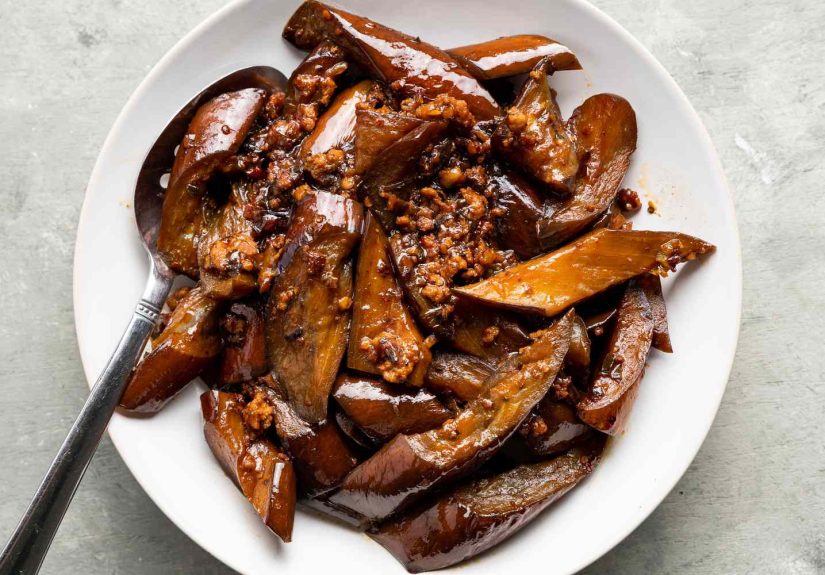
- Return eggplant to the pan and toss to coat for 1–2 minutes, until everything looks lacquered and glorious.
- Finish with sesame oil (and Sichuan peppercorn if using). Top with scallion greens.
6) Serve Immediately
Serve hot over steamed jasmine rice, sticky rice, or noodles. If you want to be extra (recommended), add a cucumber
salad on the side to cool the spice and make you feel like you have your life together.
Pro Tips for Restaurant-Style Eggplant in Garlic Sauce
High Heat Is Your Friend (But Crowding Is Not)
Eggplant browns best when it has space. If you pile it all in at once, it steams and turns pale and soft.
Batch cooking sounds annoying, but it’s faster than you thinkand the payoff is huge.
Dial In Your “Sichuan” Flavor
- More tang: add 1–2 extra teaspoons vinegar at the end.
- More heat: add more doubanjiang, chili garlic sauce, or dried chilies.
- More sweet: add 1 teaspoon sugar at a time to balance the vinegar and chili.
- More umami: a little oyster sauce (or vegetarian oyster sauce) deepens the sauce fast.
Yes, You Can Make It Lighter
Want a less oily version? Steam or microwave the eggplant until just tender, then do a quick sear in a hot pan
before adding aromatics and sauce. You’ll sacrifice a little crispness, but you’ll keep the flavorand your shirt
won’t smell like a fry basket.
Variations and Substitutions
Vegan Sichuan Eggplant in Garlic Sauce
Skip pork. Use veggie stock. For extra “meaty” depth, add minced shiitake mushrooms or browned tofu crumbles.
If a recipe calls for oyster sauce, swap in vegetarian oyster sauce (mushroom-based) or a touch more soy sauce plus
a pinch of sugar.
Gluten-Free Option
Use tamari instead of soy sauce. Swap Shaoxing wine with dry sherry (check labels if needed).
The rest is naturally gluten-freeyour wok does not discriminate.
Can’t Find Chinese Black Vinegar?
Rice vinegar works. If you want a closer vibe, mix rice vinegar with a tiny splash of balsamic (like 1/4 teaspoon).
Don’t overdo itthis is eggplant, not a salad dressing competition.
What to Serve With Sichuan (Szechuan) Eggplant
- Steamed jasmine rice (classic, reliable, emotionally supportive)
- Garlic noodles or lo mein
- Pan-seared tofu or stir-fried shrimp (garlic sauce loves company)
- Smashed cucumber salad with rice vinegar and sesame oil
- Simple greens like bok choy or Chinese broccoli
Storage, Reheating, and Meal Prep
Eggplant in garlic sauce keeps well for 3–4 days in the fridge. Reheat in a skillet over medium
heat with a splash of water to loosen the sauce. If the sauce gets thin, add a tiny cornstarch slurry and simmer
until glossy again. Microwaving works too, but stovetop reheating keeps the texture nicer.
FAQ
Is Szechuan eggplant supposed to be very spicy?
It can be. The beauty is you control it. Start with 1 tablespoon doubanjiang or chili garlic sauce, taste, then
add more if you want that “my lips are awake now” sensation.
Can I use regular globe eggplant?
Yes. Cut it smaller and consider peeling stripes. A quick salt soak helps too. Globe eggplant can be a little
more seedy and firm, but it absolutely works in this eggplant in garlic sauce setup.
What’s the difference between chili garlic sauce and doubanjiang?
Chili garlic sauce is usually bright, garlicky, and straightforward. Doubanjiang is fermented,
funkier, and more complexmore “Sichuan restaurant” vibes. If you want the deepest flavor, use doubanjiang (or a mix).
Conclusion: Your Ticket to Eggplant Glory
This Sichuan (Szechuan) eggplant in garlic sauce recipe is proof that eggplant doesn’t have to be
oily, bitter, or suspicious. With the right cut, a quick cornstarch coat, and a sauce that hits every corner of the
flavor mapsavory, sweet, tangy, spicyyou’ll get a dish that tastes like your favorite restaurant delivered it
directly to your kitchen… minus the delivery fee and the “where’s my chopsticks?” panic.
Kitchen Experiences: The Stuff That Usually Happens (and Why It’s Worth It)
The first experience most people have with this dish is the grocery-store moment: you’re holding a long, skinny
Chinese eggplant like it’s a rare artifact, and you’re wondering whether it’s different from the big globe
eggplant you grew up seeing in the produce aisle. Good news: it’s friendlier. The skin is tender, the seeds are
smaller, and it cooks fastso you get that silky texture without arguing with the vegetable for 40 minutes.
If you can’t find Chinese eggplant, you’ll discover the next classic experience: improvisation. That’s when globe
eggplant gets a quick “zebra stripe” peel and smaller cuts, and suddenly it behaves like it got a motivational speech.
Then comes the “eggplant sponge” phase. The first time you make Szechuan eggplant, it’s tempting to add
more and more oil because the pan looks dry. That’s the trap. What you want is hot pan, enough oil to brown, and
patience in small batches. The moment you see those golden edges, you’ll understand why restaurants do it this way:
browning equals flavor, and flavor equals people hovering near the stove “just to taste” (again).
Next is the garlic confidence test. Six to eight cloves can feel like a lotuntil you smell it hit the hot oil with
ginger and scallions. That aroma is the unofficial “you’re doing it right” signal. If you’ve ever ordered eggplant
in garlic sauce and thought, “Why doesn’t mine taste like that?” the answer is usually enough aromatics
and enough heat. The dish isn’t shy. It’s not trying to be subtle. It’s trying to be memorable.
Another common experience: adjusting the sauce in real time. Some like it sweeter, some like it tangier, and some
like it spicy enough to make them reconsider their life choices (respect). The best part is how easy it is to tune:
a touch more sugar calms the vinegar and chili; a splash of vinegar brightens everything; a spoonful more doubanjiang
adds deeper fermented heat. After one or two tries, you’ll start making it “your way”and that’s when it stops being
a recipe and becomes a weeknight move.
Finally, there’s the leftover experience. Eggplant can get even more flavorful overnight as it hangs out with the
sauce (like a sponge, but now it’s using its powers for good). Reheated on the stove with a splash of water, it’s
a ridiculously good lunch over rice. People who “don’t like eggplant” often become people who “don’t like eggplant…
except this one.” Which is basically the culinary version of a mic drop.