Table of Contents >> Show >> Hide
- Why Regrowing Lettuce Actually Works
- What You Need to Regrow Lettuce on a Kitchen Counter
- How to Regrow Lettuce Step by Step
- What to Expect: Results, Not Fairy Tales
- Water Only or Pot It in Soil?
- Light, Temperature, and Moisture: The Real Secret Trio
- Common Mistakes When Regrowing Lettuce from Scraps
- Is Regrowing Lettuce Safe to Eat?
- Why This Little Project Is Bigger Than It Looks
- My Experience Regrowing Lettuce on My Kitchen Counter
- Final Thoughts
There are two kinds of people in this world: the ones who throw away the bottom of a romaine head without a second thought, and the ones who look at that stub and whisper, “You and I are not done yet.” This article is for the second group. Or for the first group who are ready to become delightfully weird about lettuce.
Regrowing lettuce on your kitchen counter is one of those small, satisfying projects that feels a little like cheating. You buy lettuce once, save the base, add water, place it in a bright spot, and suddenly your countertop starts auditioning for a tiny farming documentary. Is it going to replace your weekly grocery run? No. Is it fun, useful, and oddly charming? Absolutely.
If you want the short version, here it is: yes, you can regrow lettuce from scraps, especially romaine or other heads with a solid crown attached. No, you will not grow a giant brand-new supermarket head from a stump in a cereal bowl. What you can get is a modest flush of fresh new leaves, enough for topping sandwiches, garnishing wraps, or making a small side salad. And honestly, that is still pretty impressive for something that was five minutes away from the trash.
Why Regrowing Lettuce Actually Works
Lettuce regrowth happens because the base of the head still contains living tissue. When you cut away the edible leaves but preserve the bottom couple of inches, the crown can push out new growth from the center. Think of it as the plant saying, “I may have been chopped, but I still have ambitions.”
This is why regrow lettuce from scraps is such a popular kitchen experiment. You are not planting a seed and waiting forever. You are restarting a plant that already has a head start. That makes kitchen counter gardening feel wonderfully immediate, which is perfect for impatient people, curious kids, and adults who need a low-stakes win before breakfast.
The catch is that countertop regrowth has limits. The stump still has only so much stored energy. New leaves can emerge, but the plant is not operating with the same power, root system, and growing conditions it had in a field or garden bed. That is why the best mindset is this: treat regrowing lettuce as a mini harvest project, not a miracle subscription service for endless Caesar salad.
What You Need to Regrow Lettuce on a Kitchen Counter
The beauty of this project is that your supply list is not exactly dramatic:
- One head of romaine lettuce or similar lettuce with a healthy base
- A sharp knife
- A shallow bowl, dish, or jar
- Clean water
- A sunny or brightly lit window
- Optional: a small container of potting mix if you want to move it into soil later
Romaine is the classic choice because it usually has a sturdy base and tends to respond well in water. If the crown is damaged, mushy, or looking like it has seen things, pick a better head. Your future countertop lettuce deserves a strong start.
How to Regrow Lettuce Step by Step
1. Cut the Lettuce the Smart Way
When preparing your lettuce, leave about 2 inches of the bottom intact. Do not shave it down to a sad little coin. You want enough of the base left to support new growth.
2. Place It in Shallow Water
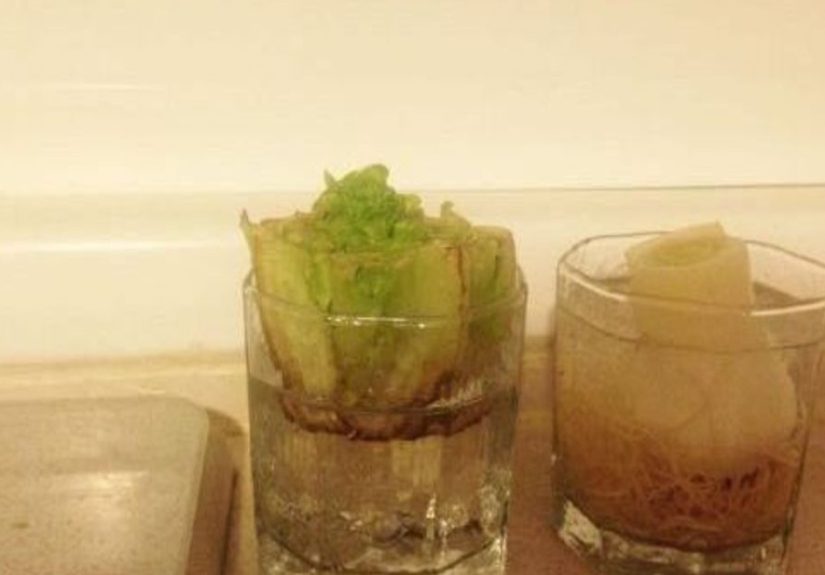
Set the lettuce base in a shallow dish with about an inch of water, just enough to cover the bottom portion. The key is to keep the lower base moist while leaving the top exposed. If you submerge the whole thing, you are not “helping.” You are basically inviting rot to move in and redecorate.
3. Put It in Bright Light
Place the dish near a sunny window or in bright natural light. A warm, bright spot works best, but do not roast it on a blazing windowsill if your kitchen turns into a greenhouse by noon. Lettuce prefers cooler growing conditions, and excessive heat can lead to bitter, weak growth.
4. Change the Water Regularly
Fresh water matters. Change it every 2 to 3 days to help prevent mold, funky smells, and that cloudy science-project look nobody asked for. Clean water is one of the biggest differences between “Look, it’s sprouting!” and “Why does my lettuce smell like regret?”
5. Watch the Center
Within several days, you should see new leaves beginning to emerge from the center. This is the exciting part. You will absolutely start checking it too often, like a person waiting for a text back. That is normal.
6. Harvest Small Leaves
When the new leaves are large enough, snip them with scissors or pinch off the outer growth first. Smaller leaves often taste best. Once the regrowth becomes spindly, pale, or bitter-looking, it is time to call the experiment complete.
What to Expect: Results, Not Fairy Tales
Let’s set expectations at a healthy, non-delusional level. Regrowing romaine lettuce on the counter usually gives you a small second round of leaves, not a full replacement head. In practical terms, that means:
- A few sandwich toppings
- A handful for tacos or wraps
- A modest side salad
- A very smug feeling every time you look at it
If your goal is maximum yield, this project alone will not keep your salad bowl full. But if your goal is to reduce food waste, learn something about plant growth, and add a fresh little green ritual to your kitchen, it is absolutely worth doing.
Water Only or Pot It in Soil?
This is where many people level up. Keeping the lettuce base in water is the easiest way to start, but if roots begin to form, moving it into potting soil usually gives better results. Soil offers more stability, more access to nutrients, and better long-term productivity than a shallow dish on the counter.
If you transfer it, plant the rooted base so the roots and lower crown are covered lightly, but the center remains above the soil line. Use a quality potting mix, not dense backyard mud scooped into a yogurt cup like you are filming a survival challenge. Keep the soil evenly moist, not soggy.
Once in soil, your lettuce has a better shot at producing stronger leaves. If it gets good light and cool enough conditions, you may get a more useful extended harvest. This is the sweet spot between lettuce in water and an actual small indoor vegetable garden.
Light, Temperature, and Moisture: The Real Secret Trio
If your regrown lettuce fails, the culprit is usually not bad luck. It is usually one of the following: poor light, stale water, or too much heat.
Light
Lettuce needs bright light to produce decent regrowth. A sunny windowsill is ideal. If your kitchen has the lighting of a moody coffee shop, the leaves may grow weak, stretched, and unimpressive.
Temperature
Lettuce prefers cool conditions. Heat encourages bitterness and bolting, which is gardening language for “the plant has decided salad is beneath it now.” If your window gets very hot, shift the container slightly away from the glass during the warmest part of the day.
Moisture
In water, the base should stay moist but not drown. In soil, moisture should be steady but not swampy. Lettuce has relatively shallow roots and does best with consistent care. Neglect followed by panic watering is not a personality trait your lettuce appreciates.
Common Mistakes When Regrowing Lettuce from Scraps
Using a damaged base
If the crown is crushed, brown, or slimy, skip it. Start with a healthy base.
Submerging too much of the stump
Too much water around the leaves invites rot. Keep only the bottom portion in water.
Forgetting to refresh the water
Old water encourages mold and decay. Change it every few days.
Expecting a full head
This is a regrowth trick, not a lettuce cloning empire. Think modest harvest, not produce aisle domination.
Leaving it too long
Once regrown leaves become tall, bluish, spindly, or bitter, quality drops. Harvest earlier rather than later.
Is Regrowing Lettuce Safe to Eat?
Yes, with basic common sense and good food-handling habits. Keep the container clean, use fresh water, and rinse the regrown leaves under clean running water before eating. Do not wash produce with soap or household cleaners. This is lettuce, not a casserole dish.
If your original packaged lettuce is labeled washed, triple washed, or ready-to-eat, you generally do not need to rewash those original store leaves before using them. But the new leaves you regrow on the counter should be handled like fresh produce from home: keep things clean, rinse before eating, and refrigerate leftovers promptly.
Why This Little Project Is Bigger Than It Looks
Part of the appeal of regrowing lettuce on my kitchen counter is that it makes food feel less disposable. You start seeing scraps not as trash, but as potential. It is a tiny act of thrift, a tiny science lesson, and a tiny rebellion against the idea that everything useful comes shrink-wrapped and ready-made.
It is also an easy entry point into gardening. Not everyone has raised beds, a backyard, or the patience to baby seedlings for weeks. But almost everyone can save a lettuce base, fill a shallow dish, and place it near a window. That makes this one of the most approachable forms of countertop gardening out there.
My Experience Regrowing Lettuce on My Kitchen Counter
The first time I tried regrowing lettuce on my kitchen counter, I was not feeling particularly agricultural. I was making lunch, chopped up a head of romaine, and paused right before tossing the base into the trash. I had seen people online talk about regrowing vegetables from scraps, and like most internet trends, I assumed the reality would be about 30% less magical than advertised. Still, I had a bowl, a window, and the kind of curiosity that has led many people into harmless household experiments.
I trimmed the lettuce so about two inches of the base remained, set it in a shallow dish with a little water, and parked it by the sunniest window in the kitchen. Then I did what every reasonable person does with a new plant project: I checked it constantly, as though eye contact alone might accelerate photosynthesis. For the first day, nothing happened. On the second day, still nothing impressive. By the third day, though, I noticed a tiny bit of green lifting from the center, and suddenly I was emotionally invested in a lettuce stump.
What surprised me most was how quickly the project became part of my routine. I changed the water every few days while making coffee. I turned the bowl slightly so the light hit it more evenly. I started noticing details I usually ignore, like how the outer cut edges dried a bit while the center stayed lively and determined. It felt less like “growing food” and more like watching a comeback story unfold in miniature.
By the end of the first week, the center leaves were clearly developing. They were small, pale at first, and honestly not destined for a glamorous salad photo shoot. But they were real. They were fresh. And they had grown on my counter with embarrassingly little effort from me. That tiny success made the whole kitchen feel more alive. It is hard to explain, but the presence of one stubborn little lettuce base made the room feel less like a place where food gets used up and more like a place where food cycles through another chapter.
There were also a few lessons. One time I added too much water and the base started looking soggy and suspicious. Another time I forgot to change the water on schedule and the whole setup lost some of its wholesome charm very quickly. I also learned that sunlight matters more than optimism. A bright window produced better, sturdier leaves than a dim corner ever did. And once I tried moving a rooted base into potting soil, the regrowth looked stronger and lasted longer than the water-only version.
The harvest itself was modest, which is exactly why I now recommend this project honestly rather than dramatically. I did not get an endless supply of lettuce. I got enough tender leaves to tuck into sandwiches, add to wraps, and scatter over a plate in a way that made lunch feel a little more victorious. It was not huge in quantity, but it was huge in satisfaction. There is something deeply pleasing about eating something that came from what most people would have thrown away.
What stayed with me most was the mindset shift. After that first success, I started looking at green onions, celery, and herb stems differently too. Regrowing lettuce became less about the lettuce and more about paying attention. It reminded me that kitchens are not just places for consuming ingredients. They can also be places for experimenting, observing, and making small, practical magic. And yes, that sounds dramatic for a vegetable stub in a bowl of water, but once you have cheered for a lettuce center leaf like it is running a marathon, you will understand.
Final Thoughts
If you have ever wanted a gardening project with almost no risk, almost no cost, and just enough drama to keep things interesting, regrowing lettuce on your kitchen counter is a fantastic place to start. It will not replace a garden bed. It will not keep a family of four in salad for the season. But it will give you fresh leaves, useful experience, and one more reason to feel weirdly accomplished while standing in your kitchen.
So the next time you slice into a head of romaine, do not rush that base into the compost or trash. Give it a little water, a little light, and a little patience. Your reward may be small, but it is fresh, practical, and very satisfying. And frankly, any project that turns lunch leftovers into tomorrow’s garnish deserves a spot on the counter.