Table of Contents >> Show >> Hide
- What Does It Actually Mean To Be “Miscast”?
- 10 Standout Miscast Performances Movie Fans Never Stop Debating
- 1. John Wayne as Genghis Khan in The Conqueror (1956)
- 2. Cameron Diaz in Gangs of New York (2002)
- 3. Keanu Reeves in Bram Stoker’s Dracula (1992)
- 4. The Whitewashed Heroes of The Last Airbender (2010)
- 5. The All-Star but Misaligned Cast of The House of the Spirits (1993)
- 6. Benedict Cumberbatch as Khan in Star Trek Into Darkness (2013)
- 7. Tom Cruise as Lestat in Interview with the Vampire (1994)
- 8. Russell Crowe as Javert in Les Misérables (2012)
- 9. “Too Young for the Job” Leaders
- 10. When Even the Actors Regret the Casting: Super Mario Bros. (1993)
- The Rest of the “37 Miscast Actors” Crowd
- Why Miscasting Feels So Personal To Movie Fans
- Did These Actors Really “Ruin” Their Movies?
- How Hollywood Could Miscast Less (At Least in Theory)
- What We Learn From Talking About Miscast Actors (Experience & Reflections)
- Conclusion: Miscasting, Fandom, and the Movies We Can’t Stop Talking About
You know that feeling when you’re totally into a movie… and then one character walks on screen and your brain
just goes, “Wait, what is that person doing here?” The line delivery is off, the vibe is wrong, the accent
is hanging on by a thread, and suddenly you’re no longer in 19th-century New York you’re on your couch,
silently recasting the role in your head.
That’s the power of miscasting. Movie fans online are ruthless (and often hilarious) when it comes to calling out
actors they think were badly matched with their roles. From classic epics and superhero flicks to prestige dramas,
people have strong opinions about miscast actors who “almost ruined” otherwise good films. And while that’s
obviously subjective, some examples come up again and again in movie forums, Reddit threads, and entertainment
sites across the internet.
What Does It Actually Mean To Be “Miscast”?
A “miscast” performance doesn’t necessarily mean the actor is bad. In fact, a lot of the names on these lists are
talented, beloved, award-winning performers. The problem is that the actor and the role don’t fit.
Common reasons fans say an actor was miscast include:
- Age mismatch: A character is written as seasoned and powerful, but the actor looks like they’re fresh out of college.
- Accent issues: A wobbly accent can pull viewers out of the story faster than you can say “I vant to suck your blood.”
- Wrong energy or persona: Some actors radiate “rom-com lead,” others scream “brooding antihero.” Put them in the wrong lane and it shows.
- Cultural or historical disconnect: Casting choices that ignore ethnicity, culture, or lived experience can feel disrespectful and inauthentic.
- Franchise baggage: Fans already have a clear idea from books, games, or animated series. If the casting clashes with that mental image, backlash is almost guaranteed.
When those things stack up, people don’t just shrug and move on they head to Reddit, X, and comment sections
to vent about how one casting decision “almost ruined the movie.”
10 Standout Miscast Performances Movie Fans Never Stop Debating
The original Bored Panda list pulls from fan discussions and viral threads, but similar names keep popping up on
entertainment sites and forums across the web. Below are some of the most talked-about cases where viewers
felt the casting choice missed the mark.
1. John Wayne as Genghis Khan in The Conqueror (1956)
This one has practically become the poster child for terrible casting decisions. John Wayne was a Western icon,
famous for playing rugged American cowboys so naturally Hollywood handed him the role of Mongol conqueror
Genghis Khan. Critics and historians have long described the performance as egregiously miscast, and the movie
itself has appeared on lists of the worst films of all time.
Beyond the obvious cultural inaccuracy, Wayne’s familiar drawl and mannerisms clash wildly with the character.
Instead of disappearing into the role, he just looks like John Wayne in a wig, which makes it almost impossible
to take the movie seriously.
2. Cameron Diaz in Gangs of New York (2002)
Martin Scorsese’s bloody, atmospheric period drama is packed with heavyweight performances… and then there’s
Cameron Diaz as pickpocket Jenny Everdeane. Diaz is charming and charismatic, but many critics and fans felt
she was out of place in a gritty 19th-century New York crime saga.
Her performance isn’t disastrous, but the modern rom-com energy she naturally brings can feel at odds with the
film’s brutal tone. For a lot of viewers, Diaz’s casting is the one piece of the puzzle that never really clicks.
3. Keanu Reeves in Bram Stoker’s Dracula (1992)
Keanu Reeves is widely loved and deservedly so but even his fans will admit that his turn as British lawyer
Jonathan Harker in Francis Ford Coppola’s gothic horror classic isn’t his finest hour. The English accent is stiff,
the line readings feel strained, and he’s surrounded by scene-chewers like Gary Oldman and Anthony Hopkins.
Coppola has defended Reeves over the years, saying he tried so hard to perfect the accent that it ended up
sounding awkward. Still, for many horror fans, this is a textbook example of how an otherwise solid film can be
undercut by a lead who simply isn’t the right fit for the role.
4. The Whitewashed Heroes of The Last Airbender (2010)
When M. Night Shyamalan adapted the beloved animated series Avatar: The Last Airbender, expectations were sky
high. What fans got instead was a movie plagued by stiff performances, clunky exposition, and most controversially
casting choices that sidelined the Asian and Indigenous influences of the original show.
Critics called out the lack of appropriate representation and the way the film’s casting ignored the cultural
identities baked into the animated characters. That, combined with weak acting across the board, has led many
fans to label the entire ensemble as painfully miscast, and some say it “ruined” any chance of a faithful live-action
version of the story.
5. The All-Star but Misaligned Cast of The House of the Spirits (1993)
On paper, this adaptation of Isabel Allende’s novel looks flawless: Meryl Streep, Jeremy Irons, Glenn Close,
Winona Ryder, Antonio Banderas it’s a dream cast. In practice, critics argued that the mostly Anglo lineup was
a poor fit for a multi-generational Latin American family saga.
Reviewers noted that the actors seemed misaligned with the story’s cultural roots, and that the film struggled to
capture the magical realism and emotional depth of the book. The result? A movie that feels oddly distant despite
being packed with big names.
6. Benedict Cumberbatch as Khan in Star Trek Into Darkness (2013)
Benedict Cumberbatch is a phenomenal actor, but his casting as Khan Noonien Singh a character originally portrayed
by Mexican-born actor Ricardo Montalbán sparked major backlash. Fans criticized not just the “mystery box”
approach to revealing his identity, but also the decision to erase the character’s ethnic background.
Cumberbatch delivers intensity, but to many Trekkies, the casting feels like a missed opportunity for a more
culturally aligned actor to take on such an iconic role.
7. Tom Cruise as Lestat in Interview with the Vampire (1994)
Depending on who you ask, Tom Cruise as the decadent vampire Lestat is either genius or a disaster. When he was
first announced, many fans including author Anne Rice were vocally unhappy, arguing that Cruise’s all-American
movie-star image didn’t match the ethereal, aristocratic vampire from the books.
Over time, some viewers have grown to appreciate his performance, but the initial backlash remains a classic
example of fans feeling like a cherished character was miscast before the cameras even rolled.
8. Russell Crowe as Javert in Les Misérables (2012)
Crowe brought plenty of glowering intensity to Inspector Javert, but in a movie where nearly every line is sung,
vocal performance matters as much as acting. Many musical fans felt his singing lacked the power and precision
needed for such a towering figure, especially when compared with cast mates like Hugh Jackman and Anne Hathaway.
For some viewers, Javert’s big numbers fall flat instead of landing as emotional gut punches, making this one of
the most debated casting choices in the film.
9. “Too Young for the Job” Leaders
Reddit threads are full of examples where viewers just couldn’t buy an actor as a high-ranking official or hardened
leader because they simply looked too young. One frequently cited example is Alicia Vikander playing the Director
of the CIA in a Bourne film a role some fans found jarringly unrealistic given her apparent age on screen.
It’s not about talent; it’s about believability. When the character’s authority is central to the story, casting
someone who doesn’t look like they’ve had time to climb that ladder can undermine the whole premise.
10. When Even the Actors Regret the Casting: Super Mario Bros. (1993)
The live-action Super Mario Bros. has its defenders, but even star Bob Hoskins later called it the worst job of
his career and described the production as a “nightmare.” Many fans feel the casting gritty,
world-weary character actors dropped into a bizarre, kid-franchise adaptation never quite gels with the
movie’s tone.
It’s a reminder that miscasting isn’t always about a single bad performance. Sometimes, it’s a whole cluster of choices
that don’t match the story the film is trying to tell.
The Rest of the “37 Miscast Actors” Crowd
Beyond these headline examples, film lovers regularly bring up dozens of other performances they feel were
miscast even in otherwise good movies. Some of the most commonly mentioned include:
- Sofia Coppola in The Godfather Part III, often criticized for feeling out of her depth in a pivotal role.
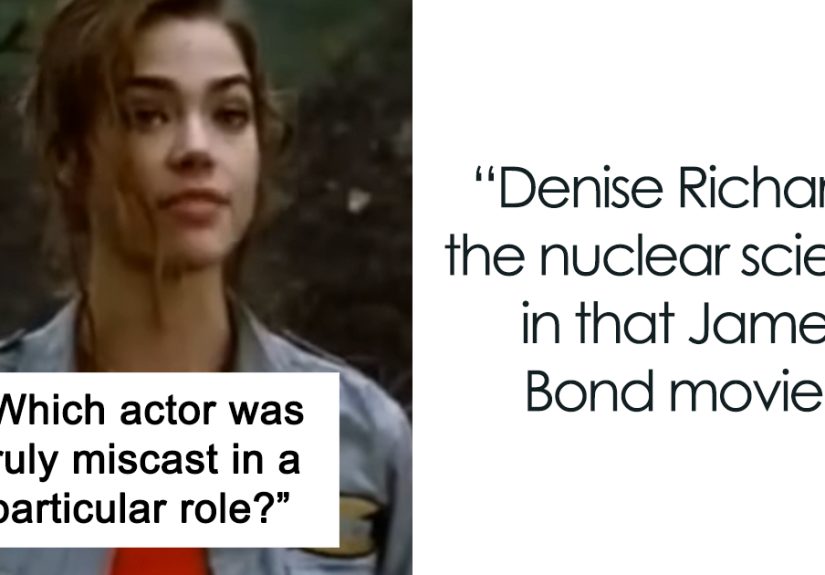
- Denise Richards as a nuclear physicist in the Bond film The World Is Not Enough, a choice many viewers found hard to take seriously.
- Various attempts at “serious” roles by actors best known for light comedy, where the tonal shift never quite lands.
- High-profile stars dropped into historical or biographical roles that clash with the subject’s real-life background.
- Beloved character actors promoted to leads in blockbuster franchises, only to struggle under the weight of fan expectations.
Put them all together and you easily get 37 (and probably a lot more) performances that movie fans swear
“almost ruined” the films they were in emphasis on “almost,” because in many cases the movies still found fans
and success despite the controversial casting.
Why Miscasting Feels So Personal To Movie Fans
If you’ve ever scrolled through a long Reddit argument about miscast roles, you’ll notice something: people take
this stuff personally. When you invest time, money, and emotional energy into a movie or
franchise, the characters start to feel like they belong to you. A casting choice that clashes with your mental
image can feel like a betrayal.
Several things make miscasting especially painful for audiences:
- It breaks immersion. A performance that doesn’t fit reminds you you’re watching a movie, not living in its world.
- It can distort the story. If a character is supposed to be intimidating, vulnerable, or wise and the actor doesn’t sell that, the plot beats lose impact.
- Representation matters. When characters from specific cultures or backgrounds are played by actors who don’t share that context, it can feel erasing or insensitive.
- It wastes potential. Fans know there are dozens of actors who could have nailed the role which makes a poor fit even more frustrating.
Did These Actors Really “Ruin” Their Movies?
Here’s the twist: even some of the most “infamous” miscast roles haven’t actually destroyed their films. In a few
cases, the performances have even been reassessed over time. A role that once drew mocking reviews might gain
cult-favorite status decades later, as new audiences discover the film with different expectations.
And then there’s the fact that casting is only one piece of the puzzle. Bad writing, messy editing, weak direction,
or studio interference can drag down performances that might have worked in a better-built movie. Some actors
named on miscasting lists are doing their best inside a fundamentally flawed production.
Still, the fact that we’re all arguing about these roles years later means they clearly made an impression even
if it wasn’t the one the filmmakers intended.
How Hollywood Could Miscast Less (At Least in Theory)
There’s no perfect formula for casting, but the online backlash to some of these choices has taught the industry a
few lessons:
- Listen to the fanbase for established properties. When adapting beloved books, games, or series, completely ignoring the tone and identity of key characters is a fast track to controversy.
- Prioritize authenticity. Casting that reflects the character’s cultural, historical, or lived experience usually creates richer, more believable performances.
- Don’t underestimate tone. An actor who shines in broad comedy might struggle in grim historical drama and vice versa.
- Test chemistry and believability. Sometimes a simple screen test can reveal that an actor just doesn’t “read” as a world-weary cop, a genius scientist, or a terrifying villain.
Of course, studios will still chase big names, surprising stunts, and buzzy casting twists which means we’ll keep
getting both surprisingly brilliant choices and gloriously messy miscasts.
What We Learn From Talking About Miscast Actors (Experience & Reflections)
Spend enough time reading fan threads about miscast roles and you start to notice patterns in how people react.
Moviegoers aren’t just complaining for the sake of it; miscasting taps into deeper expectations about storytelling,
identity, and even how we see ourselves on screen.
One common experience people share is the awkward shift from “immersed in the story” to “suddenly hyper-aware
of the actor.” Maybe it’s an accent that never quite settles, like Reeves in Bram Stoker’s Dracula, or a performance
that feels strangely modern in a historical setting, as with Diaz in Gangs of New York. The moment that
disconnect happens, viewers often start mentally recasting the role “What if this had gone to a character actor
instead?” or “Imagine how different this would be with someone like X in the role.” That mental exercise is fun, but
it’s also a sign that the movie has lost some of its hold.
Another recurring experience is the frustration fans feel when miscasting intersects with representation. In
discussions of The Last Airbender or The House of the Spirits, people don’t just say “this didn’t work” they talk
about how the casting choices flattened the story’s cultural texture or sidelined actors from the communities the
story is supposed to honor. For viewers who rarely see themselves reflected on screen, a miscast
role can feel like a missed opportunity that stings long after the credits roll.
Film students and critics often describe a slightly different experience. They’ll watch a performance that doesn’t
work and immediately start diagnosing the problem: Was the actor misdirected? Were they cast against type with
no support? Is the script forcing them into emotional beats that don’t match their strengths? Reading those
breakdowns can be oddly comforting, because they remind us that “bad casting” isn’t always about talent; it’s
about context and collaboration.
There’s also a more playful side to all this. Many fans admit that spectacular miscasting can make a movie more
entertaining just not in the way the filmmakers intended. John Wayne as Genghis Khan is often watched today
with a mix of morbid curiosity and “how did this get made?” disbelief. Some cult favorites survive precisely
because the casting is so wild that people can’t resist rewatching and sharing clips.
And finally, talking about miscast actors forces us to confront our own biases. Sometimes we decide a role is
miscast because it challenges our pre-existing image of the actor. When a performer known for comedy shows up
in a dead-serious role, or a beloved TV star takes over an iconic character, our first reaction might be “wrong fit”
simply because we’re not used to seeing them that way. A few of those “miscast” performances end up aging well,
gaining appreciation years later when we’re more open to re-evaluating them.
In the end, the ongoing debate about miscast actors is part of what makes movie fandom fun. We argue, we recast,
we send each other clips, and we build huge comment threads about whether one actor “almost ruined” a film or
whether the movie was flawed long before they ever stepped in front of the camera. Either way, we keep watching,
keep debating, and keep caring, which might be the clearest sign that, miscasting or not, the movies are still doing
their job.
Conclusion: Miscasting, Fandom, and the Movies We Can’t Stop Talking About
From John Wayne’s legendary misfire as Genghis Khan to modern controversies over whitewashed adaptations and
tone-deaf franchise decisions, miscast roles have a way of sticking in our collective memory.
They give us something to argue about, laugh about, and learn from about representation, about storytelling, and
about how much casting really matters.
The 37 miscast actors fans say almost ruined their movies didn’t bring Hollywood to a halt. Many of those films still
found success, grew cult followings, or got softer re-evaluations over time. But each one is a reminder that casting
is more than just putting a famous face on a poster. When it works, we forget we’re watching actors at all. When it
doesn’t, well… the internet will be there, popcorn in hand, ready to rank, roast, and rewrite the cast list.