Table of Contents >> Show >> Hide
- Why Comics Were the Perfect Language for 2020
- The Common Everyday Struggles of 2020, One Comic at a Time
- Why Relatable Pandemic Comics Went Viral
- The Serious Side Behind the Humor
- What Made Yasemin Demirel’s 2020 Comics Stand Out
- How 2020 Changed Everyday Humor
- Specific Examples of 2020 Struggles That Belonged in Comics
- Why These Comics Still Matter Today
- Experiences Related to “My 50 Comics Represent The Common Everyday Struggles Of 2020”
- Conclusion
There are years we remember by milestones, and then there is 2020: the year remembered by sourdough starters, foggy glasses, video-call panic, toilet paper math, and the sudden discovery that “working from home” can mean answering emails while a laundry basket judges you from the corner. The title “My 50 Comics Represent The Common Everyday Struggles Of 2020” captures exactly why comics became one of the most relatable forms of storytelling during that strange, anxious, pajama-heavy year.
In October 2020, freelance graphic designer and illustrator Yasemin Demirel shared a collection of comics inspired by lockdown life and the emotional absurdity of the coronavirus era. Her idea was simple but powerful: instead of letting isolation turn into one long Netflix marathon, she turned the “sourest lemons” of the moment into visual humor. That creative choice speaks to a bigger truth about 2020. People needed facts, yes. They also needed jokes. They needed tiny illustrated mirrors showing that everyone else was also confused, tired, cautious, snack-driven, and one minor inconvenience away from yelling at a kitchen drawer.
This article explores why pandemic comics felt so personal, what everyday struggles of 2020 they represented, and how humor helped people process a year that changed work, school, relationships, shopping, mental health, and the way we looked at our own living rooms.
Why Comics Were the Perfect Language for 2020
Comics are built for contradiction. A single panel can be cute and devastating. A tiny character can say what an adult with seventeen open browser tabs cannot. In 2020, that mattered. People were flooded with charts, breaking news alerts, case counts, public health updates, and conflicting opinions from people who had suddenly become experts in epidemiology after reading three headlines.
Comics cut through the noise. They turned giant problems into bite-sized scenes: a person staring at an empty calendar, a shopper guarding the last roll of toilet paper like a dragon protecting treasure, a remote worker trying to look professional from the waist up while wearing slippers below the frame. These images were funny because they were true. They were also comforting because they made private frustration feel shared.
The best 2020 comics did not need long explanations. A mask with broken ear loops, a Zoom call frozen on the worst possible facial expression, or a fridge opened for the tenth time before noon said everything. Humor became a survival tool, and comics gave that humor a shape.
The Common Everyday Struggles of 2020, One Comic at a Time
1. Lockdown Turned Home Into Everything
Before 2020, home was where people returned after work, school, errands, gym sessions, dinner plans, and social obligations. During lockdown, home became the office, classroom, café, theater, yoga studio, restaurant, and occasionally a low-budget emotional support bunker. The walls did not move, but life somehow expanded until every corner had a job.
Comics about lockdown often found humor in this overcrowded domestic universe. A couch was no longer just a couch; it was a workstation, lunch spot, movie seat, and existential crisis platform. Bedrooms became meeting rooms. Kitchen tables became classrooms. The line between weekday and weekend became so blurry that Tuesday started wearing Saturday’s sweatpants.
This is where Demirel’s kind of relatable illustration shines. The everyday struggle was not only fear of the virus. It was the weirdness of trying to live a full public life inside private space. In comic form, that weirdness becomes immediately recognizable.
2. Remote Work Made Everyone a Tech Support Intern
Remote work was one of the defining shifts of 2020. For many Americans, work moved from offices to bedrooms and dining tables almost overnight. That transition created flexibility for some, but it also created new problems: longer hours, blurred boundaries, weaker connection with coworkers, and the eternal question, “Can everyone see my screen?”
The 2020 work-from-home comic practically wrote itself. There was the person joining a meeting with a serious face while a pet staged a hostile takeover in the background. There was the desperate search for decent lighting. There was the sacred ritual of saying, “You’re on mute,” which became the unofficial national greeting.
What made these comics funny was not that remote work was easy. It was that the chaos was so ordinary. We were all suddenly performing professionalism through unstable Wi-Fi, awkward pauses, and video-call squares. The office did not disappear; it squeezed itself into a laptop and followed people into their kitchens.
3. Distance Learning Became a Family Group Project
School closures changed family life dramatically. Millions of households had to manage distance learning, often while parents were also working, worrying about money, or trying to keep younger children entertained. For students, school became a screen. For parents, the phrase “log into the learning portal” became a villain origin story.
Comics about online school captured the absurd details: children attending class under blankets, parents whispering answers from off-camera, teachers battling frozen screens, and students discovering that “camera off” was the greatest invention since recess. Behind the jokes, however, was a serious point. Not every household had equal access to devices, reliable internet, quiet rooms, or adult support.
That tension made 2020 comics especially meaningful. They could show a funny scene while quietly acknowledging the pressure underneath. A cartoon child asleep beside a laptop was cute, but it also reflected exhaustion. A parent juggling work calls and math homework was silly, but it also represented a real burden carried by families everywhere.
4. Masks Changed the Way We Read Faces
Masks became one of the most visible symbols of 2020. They were practical, politicized, necessary, uncomfortable, and strangely capable of turning a quick grocery run into a foggy-glasses obstacle course. For comic artists, masks offered endless visual possibilities.
A mask could hide a smile, exaggerate tired eyes, or transform a character into someone who looked prepared for a bank robbery when they were actually just buying bananas. Comics captured the awkwardness of trying to recognize neighbors, decode muffled speech, or smile politely with only eyebrows available for emotional labor.
The humor worked because masks changed tiny social habits. People had to learn new ways of being friendly, cautious, and respectful. The face became partially hidden, so body language had to work overtime. In comics, raised eyebrows, oversized eyes, and dramatic hand gestures became the new vocabulary of public life.
5. Grocery Shopping Became a Strategic Mission
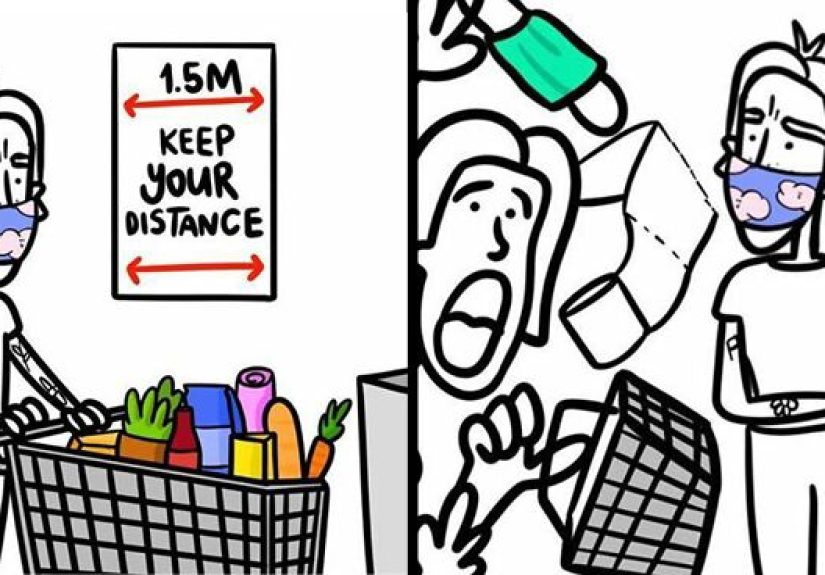
In early 2020, ordinary shopping trips turned into carefully planned expeditions. People stocked up on canned goods, cleaning supplies, flour, pasta, hand sanitizer, and, of course, toilet paperthe household item that briefly became more emotionally powerful than gold. Shelves were empty, carts were full, and everyone suddenly had opinions about yeast.
Comics captured the panic and absurdity beautifully. A character standing triumphantly with one roll of toilet paper could look like a medieval knight returning from battle. A pantry filled with beans could become a monument to uncertainty. A bottle of hand sanitizer could be drawn with the glow usually reserved for treasure in adventure movies.
These jokes were funny because they exaggerated real behavior only slightly. The fear of shortages made people act dramatically, but underneath the comedy was a basic human instinct: when the world feels unpredictable, people reach for supplies, routines, and anything that makes tomorrow feel a little more manageable.
6. Time Lost Its Shape
One of the strangest everyday struggles of 2020 was the collapse of normal time. Days felt long, weeks vanished, and months somehow moved both too slowly and too quickly. People asked, “What day is it?” with the seriousness usually reserved for medical emergencies.
Comics about time in 2020 often showed calendars melting, clocks giving up, or characters celebrating tiny achievements like putting on jeans. The humor came from collective disorientation. Without commutes, events, school schedules, or regular social plans, time became soup. Not a fancy soup eithermore like the kind made from whatever was left in the pantry.
This loss of structure affected mood and motivation. When every day looked similar, small rituals became important: morning coffee, neighborhood walks, online workouts, movie nights, or calling a friend. Comics helped mark those rituals and remind readers that feeling unproductive did not mean failing. It meant being human in a deeply unusual year.
Why Relatable Pandemic Comics Went Viral
Relatable comics spread quickly because they gave people a low-pressure way to say, “This is me.” Sharing a comic was easier than writing a long emotional post. It could express stress, loneliness, boredom, anxiety, or ridiculousness without sounding dramatic. A good comic invited laughter first, then recognition.
Social media also shaped how people consumed humor in 2020. With fewer in-person conversations, online sharing became a substitute for hallway jokes, office banter, and casual complaints. A comic about overeating during lockdown or dressing up only from the waist up could travel from one exhausted person to another like a tiny digital care package.
The visual simplicity of comics helped too. While long articles required attention, a comic could be understood in seconds. It could be read during a break, sent to a friend, or saved for later. In a year when many people felt mentally overloaded, that mattered. Comics respected the reader’s limited bandwidth.
The Serious Side Behind the Humor
Although pandemic comics were often funny, they were not shallow. Many touched on serious themes: isolation, burnout, grief, financial insecurity, health anxiety, and the emotional weight of uncertainty. The laughter did not erase the pain. It made the pain easier to look at.
That is one reason the title “My 50 Comics Represent The Common Everyday Struggles Of 2020” works so well. The word “common” is important. The struggles were not always spectacular. They were ordinary and repetitive: washing hands until skin cracked, refreshing news feeds, missing birthdays, canceling trips, worrying about loved ones, and trying to stay calm while the future refused to send a calendar invite.
Comics gave dignity to these small struggles. They showed that the little things were not little when they happened every day. A messy room, a missed call, a failed recipe, or a wave of loneliness at 2 p.m. could become part of the historical recordnot in a textbook way, but in a human way.
What Made Yasemin Demirel’s 2020 Comics Stand Out
Yasemin Demirel’s comics stood out because they leaned into everyday truth rather than grand drama. Her background as a graphic designer and illustrator gave the work visual clarity, while her subject matter kept it grounded in familiar pandemic frustrations. Instead of trying to explain the entire crisis, the comics focused on the moments people actually lived.
That approach is powerful. A pandemic is too large to understand all at once, but a small comic about boredom, snacking, video calls, or lockdown habits feels manageable. Readers can enter the story through a single joke and leave with a sense of connection.
The collection also reflects a larger creative pattern from 2020: artists used limited circumstances as material. Stuck at home, they drew home. Surrounded by uncertainty, they drew uncertainty. Living through absurd routines, they drew absurd routines. Creativity did not require perfect conditions. In fact, the imperfect conditions became the point.
How 2020 Changed Everyday Humor
Before 2020, jokes about staying home often sounded like introvert memes. After 2020, the joke became more complicated. Home was safe, but also confining. Technology connected people, but also exhausted them. Free time existed, but motivation disappeared. The refrigerator was always nearby, which was both a blessing and a public health concern for leftover pizza.
Everyday humor became more honest. People joked about not being okay, about forgetting how to socialize, about dressing up to take out the trash, and about needing emotional support from houseplants. The comedy was gentle but sharp. It acknowledged that survival sometimes looked like laughing at the same problem for the fiftieth time.
Comics were especially good at capturing this new humor because they could exaggerate without becoming cruel. A character melting into a couch after a Zoom meeting was funny, but not mean. A person celebrating a grocery delivery slot like a lottery win was exaggerated, but only barely. The format made stress visible and safe to laugh at.
Specific Examples of 2020 Struggles That Belonged in Comics
The “Going Outside” Checklist
Keys, phone, wallet, mask, backup mask, hand sanitizer, suspicious amount of caution, and the sudden feeling that the outside world had become a boss level in a video game. Comics about leaving the house in 2020 often captured how even small errands required preparation.
The Video Call Identity Crisis
Was the camera on? Was the microphone muted? Was the background embarrassing? Was that a cat, child, roommate, or mysterious shadow entering the frame? Remote communication created a whole new category of social anxiety, and comics turned those awkward moments into shared comedy.
The Snack Spiral
Many people joked that lockdown had two moods: cooking elaborate meals or eating cereal directly from the box. The kitchen became a comfort zone, a boredom trap, and sometimes the only destination available without shoes.
The Hobby Explosion
People tried baking, drawing, gardening, home workouts, puzzles, knitting, language apps, and musical instruments. Some discovered hidden talents. Others discovered that buying a ukulele is not the same as learning the ukulele. Comics captured both the optimism and the abandoned supplies.
The Social Battery Malfunction
After months of limited interaction, even small conversations felt strange. A quick chat with a cashier could feel like a Broadway performance. Comics about awkward re-entry into social life became relatable because many people forgot what normal interaction felt like.
Why These Comics Still Matter Today
Years later, pandemic comics still matter because they preserve emotional memory. Statistics tell one part of the story. Comics tell another. They remember the awkward, domestic, deeply human details that official timelines cannot fully capture.
They remind us that history is not only made of major announcements and national numbers. It is also made of people disinfecting groceries, waving through windows, attending birthdays on screens, teaching kids at kitchen tables, missing grandparents, cutting their own bangs, and pretending a living room workout was “basically the gym.”
That is why a collection of 50 comics about 2020 is more than entertainment. It is a visual diary of ordinary people living through extraordinary disruption. The drawings may be cute, but the cultural memory behind them is real.
Experiences Related to “My 50 Comics Represent The Common Everyday Struggles Of 2020”
Looking back at the everyday struggles of 2020 feels a little like opening a drawer full of old receipts, tangled earbuds, and one mysterious key nobody can identify. The memories are messy, specific, and oddly emotional. For many people, the year began with normal plans: weddings, graduations, job goals, vacations, school events, birthday parties, and simple routines. Then, almost overnight, life shrank to the size of a home screen.
That is why comics about 2020 feel so personal. They do not need to show dramatic scenes to make a point. A character staring at a blank wall can represent boredom. A person refreshing the news can represent anxiety. Someone wearing pajamas during a work meeting can represent the collapse of public and private life. The comedy lands because the audience has already lived the setup.
One of the most relatable experiences was the sudden importance of tiny victories. Taking a walk around the block felt like travel. Finding flour at the grocery store felt like winning a silent auction. Getting through a video call without technical problems deserved applause. Even cleaning a closet could feel like a major life achievement, especially if it happened before 3 p.m.
Another shared experience was emotional contradiction. People were grateful for safety but frustrated by isolation. They wanted news but felt overwhelmed by it. They missed friends but sometimes ignored calls because they had no energy to talk. They wanted productivity but also needed rest. Comics gave those contradictions a place to live without judgment.
There was also the strange comedy of domestic discovery. People learned which floorboards creaked, which neighbors owned loud dogs, which family members talked too loudly on speakerphone, and how quickly dishes could reproduce in a sink. Homes became familiar in a new, almost suspicious way. A comic about arguing with a printer or hiding from chores could feel surprisingly profound because everyone had developed a more intense relationship with their surroundings.
For creators, 2020 offered both limitation and inspiration. Artists could not always travel, meet collaborators, or visit studios, but they could observe the absurdity around them. A mask hanging by the door, a half-finished puzzle, a lonely birthday cake, a laptop balanced on booksthese became visual symbols of the year. Comics transformed those symbols into stories people could share.
The most important experience, however, was connection. When someone saw a comic and thought, “That is exactly me,” a small bridge formed. The reader felt less alone. That may sound simple, but in 2020 simple forms of connection mattered enormously. A funny drawing could travel across distance faster than a visit, carrying a message that said: yes, this is weird; yes, this is hard; and yes, somehow, we are still laughing.
In that sense, “My 50 Comics Represent The Common Everyday Struggles Of 2020” is not just a title. It is a reminder that ordinary struggles deserve to be seen. The messy, anxious, funny, boring, snack-filled moments were part of the story too. Comics helped people survive the year not by pretending everything was fine, but by showing that not being fine could still be shared, understood, and occasionally turned into a very good punchline.
Conclusion
“My 50 Comics Represent The Common Everyday Struggles Of 2020” works because it captures a universal truth: the biggest historical moments are often experienced through the smallest daily details. The pandemic changed public health, work, school, travel, and social life, but it also changed breakfast routines, grocery lists, phone calls, facial expressions, and the meaning of sweatpants.
Comics gave people a way to process that transformation with humor and honesty. They made room for frustration without drowning in it. They turned isolation into recognition and anxiety into a punchline soft enough to hold. Years later, these pandemic comics still matter because they document how people copednot perfectly, not elegantly, but creatively.
And if 2020 taught us anything, it is this: when life gives you sour lemons, you can make lemonade, draw the lemons wearing masks, post them online, and help thousands of people feel a little less alone.