Table of Contents >> Show >> Hide
- What Makes Molekule Different: PECO and “Destroying” Pollutants
- Why Performance Talk Always Comes Back to CADR
- Molekule Models and What They’re Aiming to Do
- Independent Testing and the Molekule Debate
- How to Decide If a Molekule Air Purifier Is Right for You
- Maintenance: Filters, Replacement Cycles, and the “Oops I Forgot” Tax
- Safety and Certification: Ozone, Regulations, and What to Look For
- Getting Better Results: Setup Tips That Actually Matter
- So… Is a Molekule Air Purifier “Worth It”?
- Real-World Experiences With Molekule (Extended Section)
- SEO Tags
If you’ve ever looked at your living room and thought, “Wow, this place is cozy,” and then immediately
thought, “Also… what exactly am I breathing right now?” welcome. Indoor air is complicated. It’s a
cocktail of everyday stuff: cooking fumes, pet dander, dust, smoke particles that sneak in, and
sometimes gases (like VOCs) that don’t smell like anything but still love to crash the party.
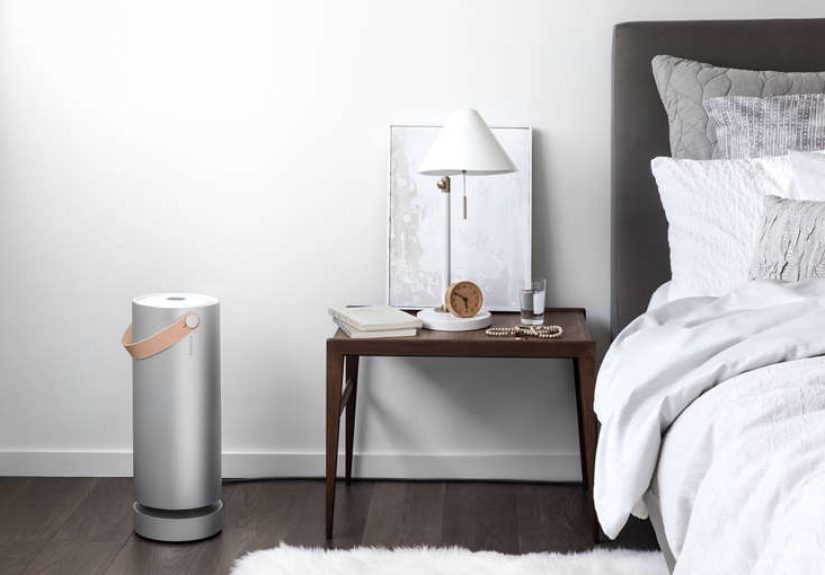
The Molekule air purifier is one of the most recognizable “designer” purifiers on the market:
sleek cylinder, app-connected, and built around the brand’s signature idea: don’t just capture
pollutants destroy them. That’s the promise. The reality? It’s more nuanced (because indoor air
always is), and the details matter: filtration type, room size, performance metrics, and what third-party
testing says versus what marketing says.
What Makes Molekule Different: PECO and “Destroying” Pollutants
Molekule became famous for promoting PECO (Photo Electrochemical Oxidation), a technology
that uses light and a coated filter surface to trigger chemical reactions intended to break down certain
pollutants at a molecular level. The brand position was bold: traditional filtration (like HEPA) traps
particles, while PECO aims to break down more categories of pollutants, including some that aren’t just
particles. Molekule’s early public explanations leaned heavily into this “destroy, don’t just collect” angle.
Today, Molekule also sells filters that combine multiple approaches. For example, the
PECO-HEPA Tri-Power filter format is described as layering True HEPA (for particle capture),
carbon (for odors/gases), and PECO (for breakdown of certain pollutants). In plain English: it’s not
“either/or” anymore it’s “stack the methods.” That’s generally a smart direction, because indoor air
problems rarely come in only one flavor.
Why Performance Talk Always Comes Back to CADR
If you’ve shopped for air purifiers for more than five minutes, you’ve seen CADR Clean Air
Delivery Rate. CADR is essentially a speed-and-volume metric: how much filtered air a purifier delivers
for specific pollutant categories (commonly smoke, dust, and pollen). Higher CADR means faster cleaning
in a given space. It’s one of the easiest apples-to-apples comparisons across models.
The EPA recommends choosing a portable air cleaner with a CADR appropriate for your room size and notes
that higher CADR generally means the unit can filter particles faster or cover a larger area. AHAM, the
industry group behind common CADR standards, emphasizes that CADR numbers help consumers compare how quickly
a unit can reduce smoke, dust, and pollen in a room.
Here’s the key takeaway: if your main concern is particles (wildfire smoke, dust, pollen,
pet dander), CADR is your best friend. If your concern is gases (odors, VOCs), you’ll also
care about carbon filtration and whether the unit is designed for gas adsorption and even then, results
depend on how much carbon is used and how fast air moves through it.
Molekule Models and What They’re Aiming to Do
Molekule’s lineup has shifted over time, but two commonly referenced options are:
Air Mini+ (for smaller rooms) and Air Pro (for larger rooms).
Molekule markets Air Mini+ for spaces up to about 250 sq ft, and Air Pro for spaces up to
about 1000 sq ft (assuming standard ceiling height).
Molekule Air Mini+
- Best for: bedrooms, nurseries, home offices, small living rooms
- Typical use case: continuous everyday purification with “auto” adjustments
- Notable features: compact footprint, app control, automatic mode tied to particle readings
Molekule Air Pro
- Best for: open-plan spaces, big living rooms, busy common areas
- Typical use case: higher airflow needs, higher-traffic zones
- Notable features: multiple automated modes, app control, sensor-driven adjustments
A practical note: “coverage area” numbers can be misunderstood. Many brands calculate coverage based on
assumptions (like an 8-foot ceiling) and a target number of air changes per hour. If you want “noticeably
cleaner air” during heavy events (cooking smoke, wildfire haze), you generally want more cleaning capacity
than the minimum or you’ll end up running a purifier at its loudest setting all day. And nobody wants
their living room to sound like a polite jet engine.
Independent Testing and the Molekule Debate
Molekule is one of the most debated purifier brands because the marketing has been big and the third-party
testing history has been mixed especially for earlier flagship models. Consumer Reports, for example,
published analysis stating that some Molekule units didn’t match the hype in their tests, and their model
score pages emphasize performance based on removing smoke and dust in a test chamber, along with noise and
other factors.
On the advertising side, the Better Business Bureau’s National Advertising Division (NAD) has evaluated
Molekule claims in the past and recommended discontinuing or modifying certain claims (including some
related to broad pollution elimination and health-related outcomes). Molekule has also publicly discussed
the appellate process through the National Advertising Review Board (NARB), arguing support for some claims
while other claims were recommended for modification or discontinuance.
None of that automatically means a Molekule purifier is “useless.” It means you should shop with your
eyes open and pick based on what you need most:
particle removal speed (CADR), real-world room sizing, maintenance costs, and verified claims.
If you’re buying primarily for allergies or smoke, performance metrics matter more than the vibe.
If you’re buying because you want a purifier you’ll actually leave out (instead of hiding it like an
ugly router), design may matter too but it’s still not a substitute for measurable cleaning power.
How to Decide If a Molekule Air Purifier Is Right for You
Choose Molekule if you care about…
- Design and usability: You want something that looks good in a room and is easy to live with.
- Smart features: App control, automated modes, and sensor-driven adjustments matter to you.
- Multi-layer filtration approach: You like the idea of combining HEPA-style capture, carbon odor reduction, and PECO-based processing in one filter system.
Think twice (or compare carefully) if you care about…
- Maximum CADR per dollar: Some premium brands price for design and branding, not just raw performance.
- Strict third-party benchmarking: If you want the simplest “high CADR HEPA box,” you may prefer products with very transparent CADR reporting and certifications.
- Long-term cost: Filter subscriptions and replacement cycles can add up.
Maintenance: Filters, Replacement Cycles, and the “Oops I Forgot” Tax
Air purifiers are like toothbrushes: the whole concept works better when you actually maintain them.
Molekule’s guidance commonly recommends replacing PECO filters about every 6 months, and
for some models with a separate pre-filter, replacing that pre-filter more frequently (often around
3 months). Many users rely on the app indicator so they don’t have to guess.
The real-life budgeting tip: before you buy, calculate the annual cost of ownership:
device price + (filters per year × filter cost). If two purifiers clean the room similarly
but one costs much more to maintain, your wallet may develop… opinions.
Safety and Certification: Ozone, Regulations, and What to Look For
When people say “air purifier,” they sometimes accidentally include devices you should treat with caution,
such as ozone generators. Ozone is a lung irritant, and agencies and public health guidance often warn
against devices that intentionally generate ozone for “air cleaning.” California, for example, regulates
indoor air cleaning devices for ozone emissions, and CARB provides consumer information and maintains
certification-related resources.
Molekule has had regulatory history in California, including a settlement related to selling uncertified
devices at one point. That context doesn’t mean “avoid forever,” but it does reinforce the general
best practice: look for transparent compliance, current certifications, and clear specs.
If you live in a state with specific rules (or you simply want extra peace of mind), check whether a
device family is listed in relevant certification resources.
Getting Better Results: Setup Tips That Actually Matter
1) Put it where air can flow
Don’t wedge your purifier behind a chair like it’s in time-out. Give it breathing room on all sides so it
can pull in and push out air efficiently.
2) Size up if you hate noise
If you buy a purifier that’s barely big enough, you’ll need higher fan speeds to keep up and higher fan
speeds usually mean more noise. A slightly larger unit can often run quieter while delivering the same
effective cleaning.
3) Run it consistently
Air cleaning isn’t a “one-and-done” task. Particles and odors keep showing up (because life happens), so
consistent operation usually works better than turning it on only when you remember. Auto modes help with
this, but they’re only as smart as what the sensors can detect.
4) Remember: sensors don’t detect everything
Some Molekule models use particle sensors and may also display other measurements, but even Molekule’s own
documentation notes that particle sensors reflect particles not every pollutant category. So if your
unit says the particles are low, that doesn’t automatically mean “everything is perfect.”
So… Is a Molekule Air Purifier “Worth It”?
The honest answer is: it depends on what “worth it” means to you.
-
If you want a premium, good-looking purifier with app control and a filtration approach
that includes HEPA capture plus carbon and PECO processing, Molekule can fit your lifestyle especially
in bedrooms, offices, and common spaces where aesthetics matter. -
If you want the most proven particle removal per dollar, you should compare CADR,
certifications, and independent test performance very carefully and be skeptical of broad claims that
sound like they were written by a superhero movie trailer narrator.
In other words: Molekule is not just selling “clean air.” It’s selling an experience design,
convenience, and a specific technology story. Whether that story matches your needs comes down to your
home, your air problems, and your tolerance for filter subscriptions.
Real-World Experiences With Molekule (Extended Section)
Below are the kinds of experiences commonly reported by reviewers, testers, and everyday owners across
small apartments, family homes, and home offices. Think of this as the “living with it” section the part
that rarely fits neatly into a spec sheet.
1) The “I can finally sleep” effect (when the room is sized correctly).
In bedrooms and home offices, people often describe the most noticeable benefit as a subtle reduction in
“stuffiness.” Not a magical spa breeze, but that less-dusty, less-stale feeling especially when the unit
runs consistently instead of only during a crisis. This is most common when the purifier is properly sized
for the space. In a small room, an Air Mini+ running on an auto mode can feel like it’s doing something
useful without constantly demanding attention.
2) The sensor becomes your mildly judgmental roommate.
A surprisingly common experience is realizing how many everyday activities mess with indoor air. Cooking
(especially searing, frying, or “I’ll just toast this bagel a little longer” moments), vacuuming, burning
candles, spraying cleaners, and even heavy foot traffic can trigger changes in air readings and fan speed.
Owners often say the purifier made them more aware of habits that create particulate spikes or lingering
odors. You may start cracking a window while cooking not because you became an indoor-air scholar overnight,
but because your purifier basically said, “Wow. Really? In this economy?”
3) Noise is personal (and so is bedtime drama).
Many people are fine with moderate fan noise during the day, but nighttime is a different negotiation.
Some owners like steady “white noise” and find it soothing. Others discover that a higher fan speed is too
loud for sleep, which can lead to a familiar pattern: the purifier gets turned down (or off), and then the
“quiet air cleaning” benefit shrinks. The most satisfied users tend to be the ones who bought enough
capacity that they can run lower, quieter speeds and still get meaningful cleaning.
4) Filters: the recurring cost you will either plan for… or resent.
People who enjoy subscription-style convenience like that filter replacement can be guided by app alerts
and shipped automatically. People who don’t like subscriptions often describe the replacement cycle as a
“tax for forgetting.” The sentiment usually isn’t that filter replacement is unusual it’s that premium
devices can make premium filters feel like premium commitments. The smoothest ownership experience happens
when buyers decide upfront: “Yes, I’m okay paying for ongoing filters,” rather than being surprised later.
5) Smoke events and “emergency mode” reality checks.
During wildfire season or heavy outdoor smoke days, owners often run purifiers more aggressively. This is
where expectations matter. Some people report that odor and irritation improve when the purifier runs at
higher speeds continuously, especially in a sealed room. Others are disappointed if the unit can’t keep up
in a large open layout unless it’s running loudly. The real-world lesson is consistent: if smoke is a
major concern, you generally want to size up, reduce leakage (close windows/doors), and run longer not
just “turn it on for 30 minutes and hope the air apologizes.”
6) The design really does change behavior.
This sounds silly until you’ve lived it: a purifier that looks good is more likely to stay out in the open,
placed correctly, and run consistently. Owners frequently describe Molekule as something they don’t mind
seeing in their space which, ironically, can be a performance advantage because correct placement and
consistent use are a big part of real outcomes. The best purifier is the one you actually use, not the one
you hide behind a plant like it’s in witness protection.
If you’re considering Molekule, the most realistic “experience-based” advice is this:
buy for your actual room size, budget for filters, and treat sensors as helpful hints not absolute truth.
When those pieces line up, the day-to-day experience is often described as quietly reassuring: you set it,
you forget it, and your home feels a bit fresher. When those pieces don’t line up, the experience can turn
into the classic premium-product frustration: “It’s beautiful, it’s smart, and yet my air still smells like
last night’s salmon.”