Table of Contents >> Show >> Hide
- Legendary Resistance, explained in one sentence
- Why Legendary Resistance exists
- How Legendary Resistance works, step by step
- What Legendary Resistance does (and does not do)
- Big interactions players ask about
- DM tips: make Legendary Resistance feel fair
- Player tips: how to beat a monster that “chooses to succeed”
- Quick FAQ
- Conclusion
- Experiences from the table: what Legendary Resistance feels like (about )
Some D&D rules are elegant little haikus. Legendary Resistance is not a haiku. It’s the bouncer outside the VIP room: it exists so a boss monster doesn’t get kicked out of its own big scene because of one unlucky d20.
If you’ve ever watched a dragon fail a single save and instantly become a decorative statue (thanks, “save-or-sit-down” spells), you already understand the design goal: keep climactic fights from ending before they start.
Legendary Resistance, explained in one sentence
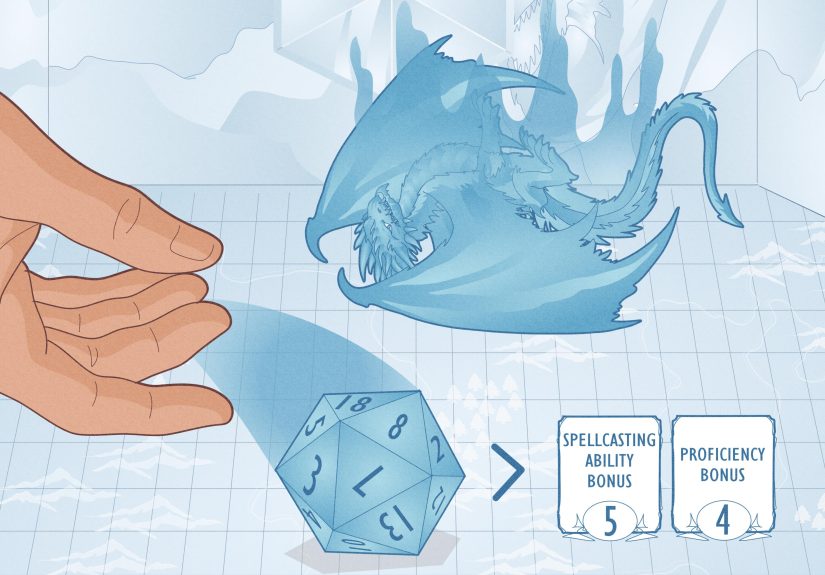
Legendary Resistance is a monster trait (often “3/day”) that lets a creature turn a failed saving throw into a success.
That’s it. No bonus, no reroll, no complicated math. The creature fails a save, chooses to spend a use, and succeeds instead.
Why Legendary Resistance exists
It protects solo bosses from the “one-roll knockout”
Fifth Edition has plenty of effects that can remove a creature from the fight or lock it downbanishment, paralysis, stun, fear, domination, and more. Against a solo enemy, one failed save can be the whole plot twist, and not in a fun way.
It helps with action economy
A party typically gets 4+ turns per round. A single monster gets one. Even a tough monster can be overwhelmed by conditions, forced movement, and repeated saving throws. Legendary Resistance (alongside legendary actions and lair actions) is one of the game’s balancing tools so “boss fight” doesn’t become “speedrun.”
It creates a tactical mini-game
Whether your table loves it or hates it, Legendary Resistance turns certain encounters into resource chess: players try to force failures to drain uses, and the DM spends uses only when the consequences would derail the encounter.
How Legendary Resistance works, step by step
- The effect calls for a saving throw.
- The creature rolls the save (including any advantage/disadvantage and modifiers).
- You determine success or failure by comparing to the DC.
- If it failed, the creature may use Legendary Resistance (spending 1 use) to turn that failure into a success.
- Resolve the effect as a success. Remember: many effects still do something on a successful save (like half damage).
Timing: “Does it have to roll first?”
Yes. Legendary Resistance triggers on a failed saving throw. You roll, you see it fail, then you decide whether to spend a use.
Duration: “Does it keep working after that?”
No. It applies to one saving throw. If the creature has to make another save two seconds later, that’s a new roll and a new decision.
“3/day” in real-life table terms
Most legendary monsters have a small number of uses (often 3). That limit is the whole point: the party can make measurable progress by forcing the boss to spend those uses.
What Legendary Resistance does (and does not do)
It DOES
- Turn a failed saving throw into a success.
- Work on any saving throw unless the DM chooses to restrict it (the trait itself doesn’t say “combat only”).
- Help a boss survive long enough to feel like a boss.
It DOES NOT
- Help against effects with no saving throw.
- Automatically negate all consequencessuccess often still means partial effect (like half damage).
- Give ongoing protection, advantage, or immunity on future saves.
- Apply to attack rolls or ability checks.
Big interactions players ask about
Rerolls (including Silvery Barbs)
The headline: rerolls can’t “undo” Legendary Resistance after it’s spent. Official rules guidance explains that Legendary Resistance changes the result to a success regardless of the d20 number, so forcing a reroll later doesn’t reverse that success.
Still, rerolls are useful before the resistance is spent: they can turn a near-success into a failure and pressure the boss into burning a use. Think of rerolls as “make it fail,” not “rewind the fail-safe.”
Die-replacement features (Portent, Chronal Shift, and similar)
If your feature changes the d20 result, it can absolutely force the creature to fail. That’s when Legendary Resistance becomes relevant: the DM can spend a use to convert that forced failure into a success.
Save debuffs (Bane, Mind Sliver, Unsettling Words, and friends)
Debuffs that reduce a save total are often the quiet heroes of a legendary fight. They don’t have to “beat” Legendary Resistance directly. Their job is to create enough failed saves that the boss runs out of usesand then your big control spell finally sticks.
Out-of-combat saves (Scrying, traps, social magic)
The trait doesn’t limit itself to combat. If the creature fails a saving throw while you’re spying on it, trying to charm it at a banquet, or springing an ancient ward in its lair, Legendary Resistance can apply. Many DMs save it for dramatic moments outside combat, but rules-wise it’s available.
DM tips: make Legendary Resistance feel fair
Narrate it as effort, not a veto
Instead of “it succeeds,” describe what it costs in the fiction: ancient runes flare and fade, the monster staggers but refuses to fall, its eyes burn with willpower. Players accept “boss rules” more easily when it feels like something happened.
Spend it on encounter-changing effects
If you spend Legendary Resistance on every little save, players stop trying. If you reserve it for the effects that would end the fight early (stun, banishment, paralysis, domination), the party feels progress when you spend it, and the fight stays tense.
Let the table read the “health bar” without showing math
You don’t have to announce the exact count, but you can telegraph dwindling reserves: “That took something out of it,” “the warding magic is thinning,” “its roar sounds strained.” This keeps the mini-game legible without turning combat into an accounting seminar.
If your group hates it, swap the feelnot the function
Some tables just don’t enjoy the mechanic. You can replace it with something interactive: a shield that shatters after a damage threshold, a phase change at certain hit points, or a backlash cost each time the boss “cheats fate.” The goal stays the same: protect the boss from instant shutdown while giving players meaningful ways to break through.
Player tips: how to beat a monster that “chooses to succeed”
- Don’t open with your biggest shutdown unless the party is ready to force multiple saves quickly. Otherwise, you’re just donating a Legendary Resistance to the cause.
- Stack pressure: two medium threats in one round can be harder for the boss than one huge threat.
- Use effects that matter on a success (half damage, battlefield control, forced movement) while you drain uses.
- Coordinate: the best “Legendary Resistance turns” are teamwork turnsdebuff + forced save + follow-up.
Quick FAQ
Can a legendary creature use Legendary Resistance multiple times in one round?
Yes. If it fails multiple saving throws and still has uses left, it can spend a use each time.
Does the DM have to tell players when it’s used?
Rules don’t require an announcement, but many tables do it anyway because it’s satisfying progress. If you keep it secret, consider making the narration unmistakable so players know they accomplished something.
Does Legendary Resistance remove concentration, conditions, or ongoing effects?
No. It only changes the outcome of the saving throw that just happened. If a condition is already on the creature, that’s a different problem that requires its own solution.
Conclusion
Legendary Resistance is blunt on purpose: it keeps epic monsters from becoming punchlines, and it gives players a clear objective inside the fightdrain the resistances so the big spell finally sticks. Use it sparingly, narrate it dramatically, and it becomes a pacing tool rather than a fun-killer.
Experiences from the table: what Legendary Resistance feels like (about )
Knowing the rule is one thing. Living through itwatching your “master plan” bounce off a dragon’s willpoweris another. Here are a few common table moments that show why Legendary Resistance can be frustrating and why it often makes the fight better.
1) The round-one heartbreak (and the instant lesson)
The wizard drops a signature control spell. The boss rolls, fails, and the party starts celebrating like the credits are about to roll. Then the DM says, “It chooses to succeed,” and the room does that quiet thing where everyone suddenly reads the words “legendary” and “creature” more carefully. It stings, but it also sets expectations: this enemy isn’t here to be deleted by one die roll. The fight is going to have chapters.
2) The teamwork drain that feels like a montage
Some of the best Legendary Resistance stories are basically sports highlights. The bard lands a save debuff. The warlock forces a tough save with a spell that still matters even on a success. The cleric follows with another “this can’t be ignored” effect. The boss fails twice and burns two resistances. Nobody feels robbed, because the party didn’t “lose a spell”they forced the boss to spend two of its most precious resources in one round. That’s momentum you can feel.
3) The “success still hurts” realization
There’s a moment many groups hit mid-fight: someone points out that a successful save doesn’t mean “nothing happens.” The boss used Legendary Resistance and still took half damage, still got shoved into a worse position, still had to change plans. Suddenly the table stops treating Legendary Resistance like an off switch and starts treating it like armor plating. You can chip armor. And chipping armor is how you win.
4) The cinematic tell that makes it satisfying
When a DM narrates Legendary Resistance as visible strainrunes flickering, scales cracking, a roar that shakes dust from the ceilingplayers stop arguing with the mechanic and start leaning into the drama. By the time the last use is spent, the boss feels rattled. Everyone senses the turning point: the safety net is gone. The next failed save is no longer a “maybe.” It’s a fall.
5) The “bait spell” that becomes a legend
One of the funniest outcomes is when the party starts treating low-level spells like fishing lures. Someone tosses out a “good but not devastating” effect that still forces a serious save. The boss fails, burns a resistance, and the table erupts like they just found a secret door. It’s not glamorous, but it’s smart: you don’t have to spend your best slot to win the resistance waryou just have to make the boss choose between bad and worse.
6) The post-fight debrief (aka “Okay… that was fair”)
After a tough legendary encounter, parties often talk it out. Casters admit it felt rough to watch a spell get shrugged off. Martials admit they liked that the boss stayed on the field long enough for positioning and teamwork to matter. And most DMs admit they tried to spend resistances only when the consequences would have ended the encounter too early. When Legendary Resistance is used with restraint and good narration, many groups land on the same verdict: annoying in the moment, but better than a boss who loses on initiative and never gets to be scary.