Table of Contents >> Show >> Hide
- What an LVAD isand what it isn’t
- Who might need an LVAD?
- How an LVAD works (without turning this into a physics final)
- The LVAD journey: evaluation, surgery, and recovery
- Benefits: what an LVAD can realistically improve
- Living with an LVAD: the practical stuff nobody puts on the brochure
- Risks and complications (aka why follow-up matters)
- Follow-up care: what the routine often includes
- When to call your LVAD team vs. 911
- Frequently asked questions (because your brain will ask these at 2:00 a.m.)
- Real-World Experiences: What Life With an LVAD Can Feel Like
- Conclusion
If your heart were a hardworking drummer in a rock band, advanced heart failure is the moment the drummer’s arms turn to noodles mid-solo. The crowd (your organs) still expects the beat, but the performance is… let’s call it “experimental.” Enter the Left Ventricular Assist Device (LVAD): a mechanical helper that can take over much of the heavy lifting when your left ventricle can’t pump enough blood to meet your body’s needs. [1]
LVADs are serious medicine, but they’re also one of the most life-changing tools modern cardiology offers for people with advanced heart conditionsespecially stage D (end-stage) heart failure. They can help you breathe easier, walk farther, and get back to the everyday stuff that heart failure tends to steal (like climbing stairs without negotiating with your lungs). [1]
What an LVAD isand what it isn’t
An LVAD is a durable mechanical circulatory support devicea surgically implanted pump that helps move blood from the left ventricle into the aorta, improving circulation to the rest of the body. [2][4] It’s usually part of a bigger system: an implanted pump plus external components that control and power it. [5]
What it is: a long-term assist pump that can support circulation when the heart is weak. [2][4]
What it isn’t: a cure for heart failure, a “set it and forget it” gadget, or a substitute for a full heart transplant in every case. [1][2]
LVAD vs. total artificial heart (quick sanity check)
An LVAD helps the left side of the heart pump better; it doesn’t replace your whole heart. A total artificial heart is a different therapy entirely and is not the standard path for most people considering LVAD support. [11]
Who might need an LVAD?
LVAD therapy is typically considered when someone has advanced heart failure despite optimized medications and lifestyle managementoften when symptoms remain severe, hospitalizations are frequent, or organs start suffering from low blood flow. [1][2]
1) Bridge to transplant (BTT)
If you’re eligible for a heart transplant but can’t safely wait without extra support, an LVAD may serve as a bridge to transplantkeeping circulation stable until a donor heart becomes available. [9]
2) Destination therapy (DT)
If a transplant isn’t an option (because of age, other medical conditions, or other factors), an LVAD may be used as destination therapymeaning it’s intended for long-term support. [2][9]
3) Bridge to decision or bridge to recovery (selected situations)
Sometimes the medical team needs time: time to see whether the heart may recover, whether other organs improve, or whether transplant candidacy becomes clearer. LVAD therapy can play a role in longer-term support when recovery doesn’t occur and ongoing support is needed. [9]
Who usually is not a good candidate?
Every center has its own criteria, but common red flags include severe irreversible organ failure, uncontrolled infection, inability to take blood-thinning medication safely, or situations where consistent daily device care would be unrealistic (for example, no caregiver support when it’s required). LVAD programs evaluate both medical factors and practical life factorsbecause a high-tech pump still lives in the real world with you. [1][3]
How an LVAD works (without turning this into a physics final)
Most modern durable LVADs are continuous-flow pumps. That means blood flow is steady rather than “pulsing” like a natural heartbeat. [8] Practical consequence: some LVAD patients have a very faint pulseor none you can easily feelbecause the pump is moving blood continuously. [8]
The main parts you’ll hear about
- Implanted pump: connects to the heart to help move blood forward. [2][4]
- Driveline: a cable that exits the body through the skin and connects the pump to the external controller/power source. [5][6]
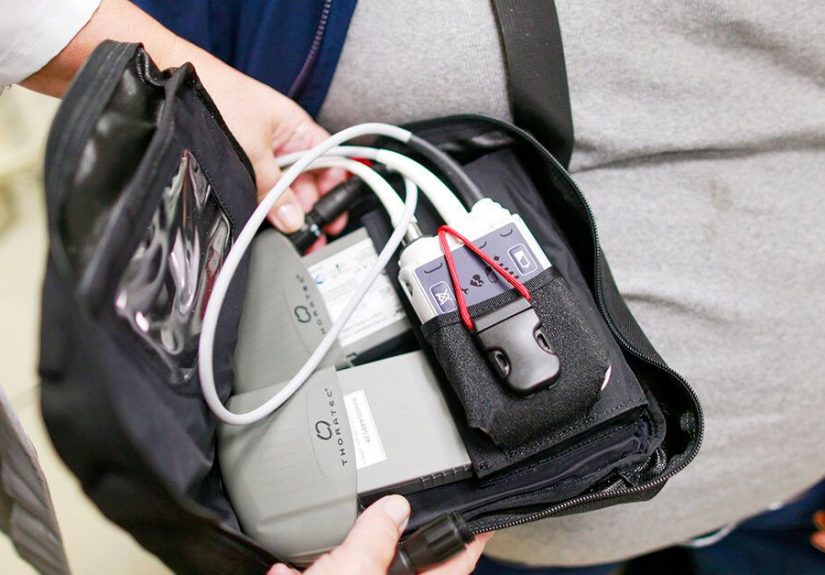
- Controller: a small computer that runs the system, monitors function, and displays alarms. [5]
- Power sources: typically rechargeable batteries for mobility, with options to plug into wall power when resting. [5]
If you’re thinking, “So I’m basically becoming part human, part charging cable,” you’re not wrongbut you’re also not alone. LVAD programs train patients and caregivers to manage equipment safely, troubleshoot alarms, and plan for everyday life (including power outages and travel days). [3][12]
The LVAD journey: evaluation, surgery, and recovery
Step 1: A team evaluation (because this isn’t a one-doctor decision)
LVAD implantation is usually managed by a multidisciplinary heart failure/mechanical circulatory support team. Evaluation often includes imaging, bloodwork, assessment of right-heart function, kidney/liver status, nutrition, and a review of social support. The goal is to answer two questions: “Will the device help?” and “Can the person live safely with it?” [1][3]
Step 2: The surgery
LVAD implantation is major cardiac surgery. The pump is placed and connected so it can help move blood from the left ventricle into the aorta. [2][4] After surgery, patients typically spend time in the ICU, then transition to step-down care and rehabilitation as strength returns. [1][3]
Step 3: Rehab and learning “LVAD life”
Recovery is two-track: your body heals and your brain learns a new routine. Many centers use structured education (for both patient and caregiver) covering alarms, dressing changes, battery swaps, and emergency planning. [3][5]
Benefits: what an LVAD can realistically improve
For many people with end-stage heart failure, LVAD support can improve symptoms like shortness of breath, fatigue, and swellingand can improve function in other organs by restoring better blood flow. [1]
Outcomes vary by individual condition and center experience, but LVAD therapy has been associated with improved survival and quality of life compared with medical therapy alone in appropriately selected patients. [1][8] One major health system reports that roughly 80% of patients are alive one year after LVAD implantation, with survival decreasing over subsequent years (numbers vary based on patient factors and era of device). [1]
Living with an LVAD: the practical stuff nobody puts on the brochure
Let’s be honest: you’re not just “getting a device.” You’re adopting a routine. The good news is most routines become second naturelike learning where your phone is at all times, except your phone doesn’t keep you alive (unless you’re emotionally attached to it, which… fair).
Daily driveline care: small steps, big payoff
The driveline exit site is a key focus because it’s a pathway where infection can start. Many LVAD infections involve the driveline, so centers emphasize consistent exit-site care, securement (to prevent tugging), and early reporting of redness, drainage, or fever. [10]
Showering, swimming, and the “water is my enemy” era
Many patients can shower after incisions heal, using a special shower bag to protect the controller and batteries from water. [6][7] Swimming, hot tubs, and submerging equipment are generally not allowed with current systemswater and external electronics are not friends. [6]
Power planning: batteries, backups, and not living like a squirrel (but kind of)
LVAD life rewards people who like preparedness. You’ll typically have spare batteries, charging plans, and a routine for switching between wall power and battery power safely. Many emergency protocols emphasize bringing all LVAD equipment and extra power options if you go to the ER. [12]
Travel and public life: yes, you can still do things
Many LVAD patients travel, socialize, and return to meaningful activity. The secret sauce is preparation: carry backup power, know how to respond to alarms, keep your LVAD team contact info handy, and consider medical ID. Your team will guide safe exercise, work, and sexual activity based on your recovery and overall health. [3]
Blood pressure and pulses: why your nurse may use a Doppler
Because many LVADs provide continuous flow, blood pressure measurement can be different, and a typical “cuff reading” may not always behave like it used to. LVAD programs teach staff and patients how to monitor blood pressure appropriately. [8]
Risks and complications (aka why follow-up matters)
LVADs can be lifesavingbut they come with trade-offs. Understanding the risk profile is part of shared decision-making, and it’s why LVAD care is done by specialized teams. [1][8]
Bleeding (especially gastrointestinal bleeding)
Bleeding is a well-known complication. One reason is that LVAD patients often require blood-thinning medication to reduce clot risk, which increases bleeding risk. Continuous-flow physiology may also contribute to certain bleeding patterns over time. [8]
Blood clots, pump thrombosis, and stroke
Clotting risk matters because clots can interfere with device function or travel to the brain, causing stroke. Care teams manage this risk with careful anticoagulation monitoring and device surveillance. Neurologic complications, including stroke, remain among the most serious LVAD-related risks. [8][13]
Infection (driveline and beyond)
The driveline exit site is a common infection concern in durable LVAD therapy. Prevention includes meticulous skin care, securement to avoid trauma, and rapid evaluation of symptoms. [10]
Right-sided heart failure
An LVAD supports the left ventriclebut the right side of the heart still has to pump blood to the lungs. If the right heart is weak, problems can arise before or after implantation, and teams evaluate right-heart function carefully during candidate selection and post-op care. [1]
Device malfunction and alarms
Modern LVAD systems include a controller that checks device status and issues alarms. Patients and caregivers are trained to respondbecause alarms range from “check your connection” to “get help now.” FDA patient materials describe how the controller and driveline connect the implanted pump to external power and monitoring. [5]
Follow-up care: what the routine often includes
Ongoing care typically involves regular clinic visits, bloodwork (often including anticoagulation checks), device interrogation, and monitoring for symptoms of infection, bleeding, or heart failure changes. Education is continuousbecause new situations pop up (travel, dental work, other surgeries), and each one needs an LVAD-aware plan. [3][5]
When to call your LVAD team vs. 911
Your center will give you a tailored action plan, but here are common “don’t wait” moments:
- Stroke symptoms: facial droop, arm weakness, speech trouble, sudden confusion. [13]
- Severe bleeding: vomiting blood, black/tarry stools, uncontrolled bleeding. [8]
- Fever with driveline redness/drainage or rapidly worsening pain. [10]
- Serious device alarms you can’t resolve quickly, or signs of low blood flow (fainting, severe dizziness, gray/clammy skin). [5]
Emergency responders and ER teams often need your equipment and a knowledgeable caregiver, if available. Some emergency protocols emphasize bringing all LVAD gear, extra batteries, and the chargerand getting the device connected to stable power promptly. [12]
Frequently asked questions (because your brain will ask these at 2:00 a.m.)
Will I be able to feel the pump?
Most people don’t “feel” the pump working the way you feel a heartbeat, but you may notice vibration or awareness of the device, especially early on. Many patients report that this becomes background noise over timelike living near a highway you eventually stop hearing. [3]
Can I exercise?
Often, yesunder guidance. Many programs encourage cardiac rehab and gradual strengthening once you’re medically stable. Exercise plans are individualized based on recovery, right-heart function, and other conditions. [1]
Can I shower? Can I swim?
Showering may be possible after healing using protective equipment to keep the controller and batteries dry. Swimming and submersion are generally not allowed with current devices. [6][7]
Do I need a caregiver?
Many LVAD programs require reliable supportespecially earlybecause living with an LVAD includes equipment management, dressing changes, and emergency readiness. Requirements vary, but practical support is often a key part of candidacy. [3]
Real-World Experiences: What Life With an LVAD Can Feel Like
Statistics matter, but the lived experience is what people really want to know: “What does Tuesday feel like?” The most common description from LVAD patients is surprisingly ordinary: once recovery stabilizes, life becomes a series of small routines that quietly protect the big stuffyour circulation, your organs, your ability to do normal human things.
Early on, many patients describe a mix of relief and overwhelm. Relief because breathing improves and fatigue liftssometimes dramaticallycompared with late-stage heart failure. Overwhelm because you’re learning a new language (controller alarms, battery levels, driveline care) at the same time your body is healing. It’s like getting a new job, moving apartments, and recovering from a marathonall in the same month. That’s why LVAD teams teach in repetition: you practice battery changes until your hands could do it half-asleep (which, honestly, is the goal).
Daily driveline care can feel intimidating at first. People often worry they’ll “mess it up.” But most settle into a rhythm: set up clean supplies, check the exit site, change the dressing the way the team taught you, secure the driveline so it doesn’t tug, and move on with your day. Over time, it becomes less “medical procedure” and more “brushing your teeth,” except you’re brushing your teeth for your abdomen. Not glamorousbut wildly effective.
The equipment becomes part of your wardrobe. Patients talk about learning how to carry the controller and batteries comfortably, how to sleep without yanking anything, and how to dress for the weather without turning into a walking tangle of straps. You’ll also become a power planner: charging batteries, packing spares, and knowing where the nearest outlet is in a way that would impress an airport electrician. People often say the biggest mental shift is accepting that preparedness isn’t anxietyit’s freedom. When you’re ready, you can go out.
Social situations have their own learning curve. Some patients keep explanations simple (“It’s a heart pump that helps my heart”) and move on. Others share more detail with friends and family, especially because loved ones may help respond to alarms or notice signs of infection early. Kids sometimes ask the best questions (“Do you have robot parts?”), and many patients find humor helps: “Yes, but unfortunately my upgrades didn’t include Wi-Fi.”
Travel is a milestone. The first overnight trip can feel like packing for an expedition: backup batteries, charger, extra dressing supplies, emergency contact info, and a plan for what to do if an alarm goes off in a hotel hallway. After a few successful trips, confidence builds. Many patients describe that moment as the return of identity: “I’m not just a patient. I’m a person who happens to have an LVAD.”
The most consistent theme is adaptation. Life with an LVAD isn’t “back to the old normal.” It’s a new normalone that often includes more stamina, fewer hospital days, and the ability to plan ahead again. And in the world of advanced heart failure, that’s not a small thing. It’s enormous.
Conclusion
A Left Ventricular Assist Device (LVAD) can be a powerful therapy for advanced heart conditionsespecially severe heart failureby improving blood flow when the left ventricle can’t keep up. [1][2] It may serve as a bridge to transplant or as destination therapy, depending on your health and transplant eligibility. [9]
The decision is never just “Do I want a device?” It’s “Do the benefits outweigh the risks for me, and do I have the support to live safely with it?” The best outcomes come from shared decision-making with an experienced LVAD team, clear expectations, and consistent follow-up. [1][8]