Table of Contents >> Show >> Hide
- What Happened at Chongjin: A Launch Ceremony Gone Sideways
- Why the “Side Launch” Factor Matters
- What Kind of Ship Was It: The 5,000-Ton Destroyer and a Bigger Naval Push
- North Korea’s Rare Admission of Failure: Why Say Anything at All?
- Salvage, Repairs, and the Race Against a Political Deadline
- Why the Incident Matters Beyond North Korea’s Dockyard
- Engineering Lessons: How Launches Fail (and How Pros Try to Prevent It)
- FAQ: Quick Answers About the Capsized 5,000-Ton Warship
- Conclusion: A Very Public Reminder That Physics Doesn’t Care About Propaganda
- Extra: Shipyard and Salvage “War Stories” (Real-World Experience Themes) Why Launch Day Is the Most Stressful Day
Some leaders like to cut ribbons. Kim Jong Un, on the other hand, showed up for a ship launchand got an unplanned lesson in gravity, balance, and how quickly a carefully choreographed “historic moment” can turn into a very expensive oops.
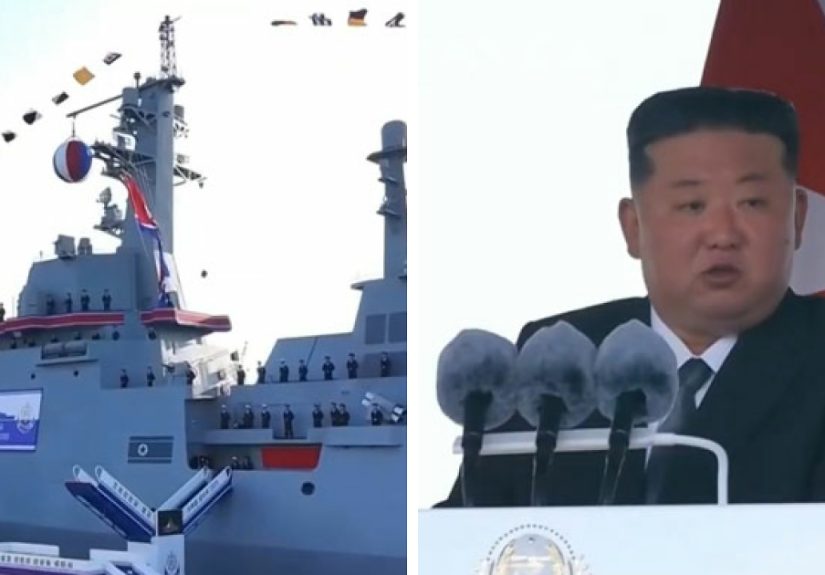
In late May 2025, North Korea said a brand-new 5,000-ton-class destroyer suffered a major accident during its launch at the northeastern port city of Chongjin, with Kim watching the entire mishap unfold. State media framed it as a “serious accident,” and Kim reportedly called it an “irresponsible error” and a “criminal act” driven by “absolute carelessness”language that, in a system built on control and image, lands like a depth charge.
This wasn’t just about a ship tilting awkwardly at the dock. The incident became a window into North Korea’s shipbuilding constraints, the risks of rushing complex projects, and the way authoritarian regimes manage embarrassment: by turning it into discipline, spectacle, and a deadline.
What Happened at Chongjin: A Launch Ceremony Gone Sideways
The moment the launch stopped looking like a launch
North Korean accounts described a failure during the launch process in which the ship did not move evenly. Reports indicated the stern area moved first while the bow stayed put, leaving the vessel unbalanced and leading to damage along the bottom and side. From the outside, intelligence assessments and satellite imagery later suggested the destroyer ended up on its side and partially submerged after the botched attemptan outcome that is hard to hide, even with the best tarp budget.
The big technical takeaway: launching a large warship is not just “push boat, boat goes splash, everyone claps.” It’s a high-stakes engineering sequence where alignment, timing, and stability have to cooperate. When any one piece gets out of syncespecially on a huge vesselthe whole system can cascade into failure.
Why Kim’s reaction was so intense
According to North Korean statements summarized by multiple outlets, Kim didn’t treat this like a routine setback. He framed it as a leadership-and-science failureblaming officials, engineers, and shipyard operatorsand warned that the people responsible would be dealt with at a ruling party meeting. In authoritarian systems, harsh language is often less about the technical root cause and more about restoring the appearance of total command.
Put simply: the ship capsized, and then the narrative capsized too. When a regime ties national prestige to military hardware, a public failure becomes an attack on legitimacy. That’s why state media’s rare acknowledgment of the accident mattered almost as much as the accident itself.
Why the “Side Launch” Factor Matters
Launching methods are strategybecause infrastructure is strategy
Analysts focused heavily on the launch method because it helps explain both the accident risk and the constraints North Korea may face. A commonly used approach for large ships is a controlled float-out (often via dry dock or floating dock). But reporting and imagery analysis suggested North Korea attempted a more hazardous approach sometimes described as a side launchsliding the vessel sideways into the water.
Side launches can be done successfully, but they’re less forgiving. The ship experiences abrupt forces, and if the vessel’s center of gravity and support points aren’t managed precisely, the entry can become violent and unstableespecially for warships that can be top-heavy compared with many commercial hull designs.
Warships aren’t shaped like the ships that usually use riskier launches
Commercial vessels that lend themselves to certain launch methods often have hull shapes and loading profiles that behave more predictably during water entry. Warships, by contrast, may carry heavy systems high upradars, sensors, launch cells, and other equipment that can raise the center of gravity. When a launch goes wrong, that top weight can help turn “tilt” into “tip.”
In other words: if you’re going to roll a massive, complex, weapons-packed platform sideways into the sea, you want everything about the process to be boring. The accident at Chongjin was the opposite of boring.
What Kind of Ship Was It: The 5,000-Ton Destroyer and a Bigger Naval Push
A symbol ship for a modernization campaign
The vessel was described as a 5,000-ton-class destroyera significant size for North Korea and a major leap in conventional naval ambition. Around the same period, North Korea publicized a newly built destroyer of similar class as evidence of naval modernization. Taken together, the message was clear: the regime wanted to be seen not only as a missile state, but also as a state building more capable surface combatants.
From a strategic standpoint, destroyers aren’t just “bigger boats.” They can be platforms for air defense, anti-ship warfare, and potentially missile launch capability. For North Korea, advancing surface forces supports deterrence messagingespecially when paired with rhetoric about countering the United States and allied militaries in the region.
The “why now” behind the shipbuilding rush
Big-ticket naval projects can serve multiple goals at once: domestic propaganda, internal competition for resources, and external signaling. But they also introduce a problem that dictatorships are famously bad at solving: complex programs require a culture where people can report bad news early. When everyone fears punishment for setbacks, failures often surface only when they become impossible to hidelike a destroyer lying on its side.
North Korea’s Rare Admission of Failure: Why Say Anything at All?
When the accident is visible, silence can be louder
North Korea’s state media doesn’t typically highlight embarrassing military mishaps. Yet in this case, the regime reported it. That choice can be read as an attempt to seize control of the story: frame the failure as the result of individual negligence (fixable by punishment), rather than systemic weakness (fixable only by reform).
There’s also a practical reality: if outside observers already have satellite imagery and allied intelligence assessments, denial becomes less credible. In a media environment where the world can watch ports from orbit, pretending nothing happened can backfire.
Detentions and accountability as a second performance
Subsequent reports indicated officials were detained or summoned for investigation after the incident. In authoritarian governance, accountability often functions less as a safety mechanism and more as a warning label: “Someone will pay for this.” That message can tighten disciplinebut it can also encourage shortcuts and fear-driven decision-making, which are not exactly the ingredients for safe ship launches.
Salvage, Repairs, and the Race Against a Political Deadline
Tarps, cranes, and the scramble to make the ship look less… sideways
After the accident, imagery analysis described efforts to conceal and stabilize the shipoften involving blue tarps and intensive recovery activity. Researchers later reported the vessel had been returned to an upright position, though questions remained about damage and how quickly full repairs could be completed.
Salvage operations are not magic tricks. Even getting a ship upright can be only step one. Restoring a modern warship involves inspections, structural work, systems testing, andcruciallyaccess to appropriate facilities such as dry docks or heavy-lift capability. Reporting noted that Chongjin is not widely known for building and launching large warships, which raises the difficulty level for both launch and repair.
Why “fix it fast” is a risky instruction for complex engineering
Political deadlines can distort technical decisions. When leadership demands that a damaged ship be restored by a specific meeting date, teams may prioritize speed over thoroughness. That can produce repairs that look good on camera but create longer-term reliability problemsespecially for hull integrity, propulsion alignment, and sensitive electronics exposed to seawater.
If there’s any irony here, it’s this: the same pressure that can push a shipyard to attempt a riskier launch can also push it to rush the recovery. And in maritime engineering, rushing is a great way to invite sequel episodes.
Why the Incident Matters Beyond North Korea’s Dockyard
Regional signaling: embarrassment doesn’t always mean retreat
A high-profile failure can slow a program, but it doesn’t automatically change strategic intent. North Korea’s broader military modernizationincluding tests and messaginghas often continued even after setbacks. For U.S. and allied planners, the key question is not “Did they fail once?” but “What does their learning curve look like, and how quickly do they adapt?”
What this suggests about capabilityand constraint
The Chongjin accident highlights a tension: North Korea wants advanced platforms, but advanced platforms demand industrial depthspecialized infrastructure, repeatable processes, skilled labor, and quality control. When any of those pieces are thin, spectacular failures become more likely. That doesn’t mean the program ends; it means the program becomes more unpredictable.
Engineering Lessons: How Launches Fail (and How Pros Try to Prevent It)
You don’t need classified documents to understand the basics of launch risk. Maritime engineering and safety investigations point to recurring themes:
- Alignment is everything: Launch cradles, rails, and support systems must move in sync. “Almost parallel” is how you get “almost afloat.”
- Stability can flip quickly: Once a hull starts to roll, recovery windows shrink fastespecially if compartments flood or weight shifts.
- Infrastructure shapes options: Dry docks and floating docks offer controlled float-out. If you don’t have them, you may resort to methods with narrower safety margins.
- Deadlines create blind spots: “We must launch by Friday” is not a stability calculation.
- Quality assurance is a culture, not a checklist: If workers fear reporting problems, small misalignments can reach launch day uncorrected.
These lessons apply everywherecommercial yards, naval yards, and yes, even secretive shipyards preparing a destroyer launch under the gaze of a leader who does not enjoy surprises.
FAQ: Quick Answers About the Capsized 5,000-Ton Warship
Where did the accident happen?
North Korean reporting placed the launch accident at a shipyard in Chongjin, a northeastern port city.
What caused the warship to capsize?
North Korea blamed command and operational negligence during the launch sequence, and outside assessments emphasized launch-method risk and uneven movement during water entry.
Was Kim Jong Un really present?
Multiple reports said Kim attended the ceremony and witnessed the accident.
What happens after a ship capsizes during launch?
The priorities usually include stabilizing the hull, preventing further flooding, returning the vessel upright, moving it to appropriate repair facilities, and then performing structural and systems inspections before any future trials.
Does this derail North Korea’s naval modernization?
It’s a setback, but not necessarily a stop. The larger trendpursuit of more capable naval platformsappears to continue, even as the incident exposes constraints and risks.
Conclusion: A Very Public Reminder That Physics Doesn’t Care About Propaganda
The capsizing of a 5,000-ton destroyer at Chongjin wasn’t just a shipyard accidentit was a collision between ambition and capability, between political theater and engineering reality. North Korea’s own messaging framed it as an “irresponsible error,” with Kim Jong Un furious and demanding accountability and rapid restoration. Outside observers saw something else too: a rare, visible stress test of the regime’s industrial limits.
In the end, the lesson is simple and stubbornly universal: you can rehearse a ceremony, you can script a headline, and you can drape a lot of tarpsbut you cannot negotiate with balance, buoyancy, and gravity. Not even at a launch party.
Extra: Shipyard and Salvage “War Stories” (Real-World Experience Themes) Why Launch Day Is the Most Stressful Day
People who build and recover ships often describe launch day as the moment when months (or years) of planning finally meets the one reviewer who never gets tired, never gets bribed, and never accepts excuses: the ocean. Across shipyards worldwidecommercial and navalveteran engineers tend to repeat the same experience-based truth: “The launch isn’t the end of the project. It’s the first exam.”
One common theme in shipbuilding experience is the tension between schedule pressure and technical caution. Teams may spend weeks checking welds, verifying measurements, and rehearsing proceduresonly to face a last-minute rush because someone important wants the ship in the water by a certain date. In those environments, the most experienced foremen and launch masters usually become the unofficial guardians of discipline. They’re the ones who insist on the boring steps: re-checking alignment marks, confirming cradle positioning, verifying that supports are carrying load the way the plan assumed, and making sure every person in the chain of command understands the sequence.
Another frequent “experience lesson” is that small misalignments act like big problems once weight starts moving. On land, a slight drift in a rolling system can look manageable. During launch, that same drift can become asymmetryone side moving faster, one support point losing contact, one section taking far more stress than expected. Maritime professionals often talk about the difference between “a workable plan” and “a plan that survives friction.” In practice, they build buffers: more monitoring points, redundant confirmations, and clear authority to stop the operation if anything looks off.
Salvage and recovery teams bring a different kind of hard-earned perspective. Their work is less like construction and more like emergency medicine for steel. The first job is rarely “fix everything.” It’s almost always “stop it from getting worse.” That means stabilizing the hull, controlling flooding, protecting sensitive equipment, and preventing the vessel from shifting into a position that complicates recovery. When ships end up partially submerged, crews often focus on pumping out water, shoring up weak points, and preparing controlled liftsbecause uncontrolled movement can multiply damage. Experienced salvors tend to be suspicious of fast timelines, not because they don’t work hard, but because they know seawater is relentless: corrosion starts, wiring suffers, mechanical systems degrade, and hidden voids can fill when you least expect it.
A final experience-based theme is psychological: when leaders treat setbacks as personal insults, organizations can become risk-blind. Workers stop surfacing concerns. Engineers avoid delivering bad news. Managers “round up” progress reports. In contrast, high-performing maritime organizations normalize early warnings. They treat near-misses as valuable feedback, not as proof someone should be punished. That culture difference can decide whether launch day is a proud milestoneor a public, costly lesson.