Table of Contents >> Show >> Hide
- Where Joe Versus the Volcano Ranks in Tom Hanks’ Career
- From Box Office Flop to Cult Classic
- What Critics See in Joe Versus the Volcano
- Fan Opinions: Why People Love (or Don’t Love) the Movie
- How Modern Rankings Frame Joe Versus the Volcano
- What Joe Versus the Volcano Says About Us
- Extended Reflections: Experiences with Joe Versus the Volcano
If you’ve ever stared at a flickering office fluorescent light and thought,
“There has to be more to life than this,” then you’re already on Joe Banks’
wavelength. Joe Versus the Volcano (1990), starring Tom Hanks and
Meg Ryan, started life as a box office disappointment but has slowly bubbled
up into cult-classic status. Today, it shows up on Tom Hanks rankings,
think pieces about misunderstood movies, and Reddit threads devoted to
“films that didn’t deserve the hate.”
This article dives into how critics, fans, and film writers rank
Joe Versus the Volcano, why opinions have shifted over the
decades, and what makes this existential romantic comedy so strangely
enduring. Think of it as your guide to the cult of Joe, minus the brain
cloud.
Where Joe Versus the Volcano Ranks in Tom Hanks’ Career
In the grand universe of Tom Hanks movies, Joe Versus the Volcano
usually lands in the middle of the packrarely near the top, but almost
never near the bottom. Large roundups that rank Hanks’ films by critics’
scores or cultural impact tend to label it a quirky “fan favorite” rather
than a mainstream essential.
For example, lists of the “best Tom Hanks movies” routinely highlight
career-defining roles like Philadelphia, Forrest Gump,
Saving Private Ryan, and Cast Away, while placing
Joe Versus the Volcano further down as an oddball early gem with a
small but devoted fan base. One modern ranking of Hanks’ work even calls
out his late-’80s and early-’90s comedieslike Big, The
’Burbs, and Joe Versus the Volcanoas “fan favorites,”
acknowledging that viewers who love them really love them.
When it comes to Tom Hanks and Meg Ryan pairings specifically, critics and
entertainment sites almost always rank Sleepless in Seattle and
You’ve Got Mail higher in terms of box-office success and romantic
comedy polish. Yet writers frequently note that the chemistry between Hanks
and Ryan actually starts here, in Joe Versus the Volcano, where
Ryan plays three different women who all nudge Joe toward authenticity and
courage.
From Box Office Flop to Cult Classic
On release in 1990, Joe Versus the Volcano confused a lot of
people. It’s not just a romantic comedy. It’s not just a fantasy, or a
satire of corporate life, or a mythic fable about mortality. It’s all those
things at once, which made marketing a nightmare and early reviews mixed at
best.
Today, critics and bloggers have largely reappraised the film. Many call it
a beautifully made mainstream movie with a big-budget sheen and a deeply
personal heart. A retrospective written for a film festival notes that the
movie doesn’t really behave like a typical cult filmit isn’t edgy or
transgressivebut it reaches people because of its emotional sincerity
beneath the absurdity.
On crowd-sourced platforms, the film’s scores sit squarely in “divisive but
liked” territory. Rotten Tomatoes summarizes it as bursting with screwball
energy and thought-provoking reflections on living life to the fullest,
while admitting that its existential ambition may be “too goofy” for some
viewers. That’s the Joe experience in a nutshell:
either it unlocks something in you, or you just see a guy on fancy luggage
floating in the Pacific and shrug.
What Critics See in Joe Versus the Volcano
An Existential Comedy in Disguise
Writer-director John Patrick Shanley (who had just won an Oscar for
Moonstruck) described Joe Versus the Volcano as a story
born out of his own confrontation with mortality and meaning.
Tom Hanks has referred to the movie as an “existential comedy with
adventure and romance,” and that label has stuck with fans and essayists
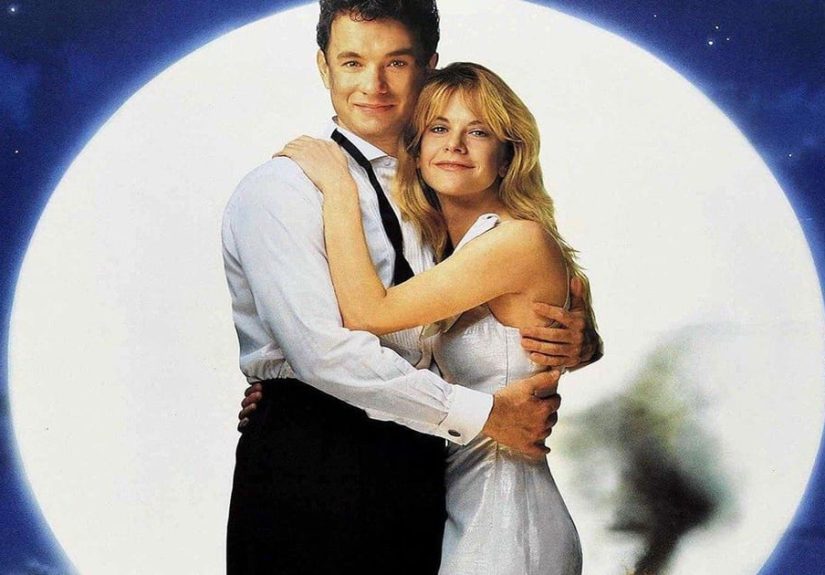
who argue that the film is much deeper than its cartoonish poster suggests.
Several analyses point out that Joe’s journeyfrom burned-out factory
worker to would-be human sacrifice who chooses lifeis essentially a modern
fairy tale. The film is packed with archetypes: the hellish workplace, the
trickster industrialist, the wise driver, and the three women who each
represent a step in Joe’s emotional awakening.
Visual Symbols and the Lightning-Bolt Path
Critics also love the visual motifs, especially the lightning-bolt pattern
that appears in Joe’s workplace, his apartment, and even the volcanic
procession. One film critic argues that the zigzag crack represents both
fear and the “crooked road” we take when we don’t face the truth directly,
echoing Joe’s slow march toward authenticity and courage.
The movie’s production design exaggerates everything. The fluorescent-lit
factory is grotesquely oppressive; the office path snakes like a cartoon
artery into a giant mechanical heart of despair. In contrast, the ocean
sequences drip with romantic, almost spiritual beauty. It’s not subtle, but
that’s the pointthe film is a fable, not a slice-of-life drama.
Themes of Depression, Consumerism, and Redemption
Modern essays frequently call out the film’s surprisingly honest portrayal
of depression and burnout. One writer describes it as a “melancholy
comedy” whose depiction of a man numbed by meaningless work resonates with
anyone who has ever felt like a zombie at their job.
Others see a sharp critique of consumerism. Joe’s miserable life at the
American Panascope factory (sometimes misheard as “Parascope”) is a parody
of corporate culture that treats people like replaceable components.
When Joe quits and starts spending lavishly on luggage, suits, and a
once-in-a-lifetime trip, the film simultaneously mocks and embraces the
idea of using stuff to reinvent yourself.
Another reading treats the story as a deal-with-the-devil parable: Joe
effectively trades his soul for a short-term fantasy of wealth and
adventure, only to discover redemption in authentic connection and a renewed
will to live.
Fan Opinions: Why People Love (or Don’t Love) the Movie
“It’s My Movie” – The Cult of Joe
Among its fans, Joe Versus the Volcano inspires startling loyalty.
In a personal essay on RogerEbert.com, one writer calls it their favorite
film and notes that devotees share a kind of secret handshake: if someone
says it’s their number one movie, the reply is, “I’m not arguing with
you.”
Online conversations echo this affection. In threads where people list
movies that “didn’t deserve the hate,” Joe Versus the Volcano
frequently pops up, with commenters reminiscing about loving it on release
and rewatching it regularly.
For these fans, the film’s appeal comes from its combination of surreal
humor and a very human emotional core. The jokes land, but so do the quiet
momentsJoe staring at the moon on his makeshift luggage raft, realizing
how precious life is even when it’s completely absurd.
Why Some Viewers Don’t Get It
On the other side, plenty of people bounce off the movie entirely. Some
find the tone uneven: the early scenes in the factory are exaggerated and
grim, while later island sequences lean into cartoonish satire, causing
tonal whiplash for viewers expecting a straightforward romantic comedy.
Others simply don’t connect with Shanley’s mythic, symbolic approach and
see the film as a shaggy, overstuffed curiosity.
Even among critics who admire its ambition, there’s an acknowledgment that
the movie isn’t for everyone. Rotten Tomatoes’ consensus bluntly notes that
the same existential ambition that thrills fans may feel “too goofy” for
others.
How Modern Rankings Frame Joe Versus the Volcano
So where does all of this leave Joe Versus the Volcano in modern
rankings and opinions?
-
Tom Hanks filmographies usually place it in the mid-tier:
not an all-time high, but a cherished early role that showcases his shift
from broad comedy to more layered, heartfelt performances. -
Tom Hanks–Meg Ryan rankings tend to list it below
later, more polished rom-coms, while still praising its whimsical energy
and their offbeat chemistry. -
Cult-movie retrospectives hold it up as a misunderstood
classictoo big and glossy to fit the usual cult mold, yet weird and
personal enough to inspire long-term devotion. -
Fan forums and social media frequently describe it as a
comfort movie, a life-affirming fable, or “the one I secretly love more
than the ‘better’ Tom Hanks movies.”
Put simply, Joe Versus the Volcano is rarely ranked number one,
but it lands near the top of people’s personal lists when they’re asked
which movies feel like old friends.
What Joe Versus the Volcano Says About Us
One reason the movie continues to show up in rankings and essays is that it
speaks directly to a very modern anxiety: the fear of wasting your life in
the wrong job, the wrong place, or the wrong version of yourself.
Joe starts the film with a “brain cloud” diagnosisa fictional condition,
but a great metaphor. He’s convinced he’s dying, but in a way, he already
is. He’s going through the motions in a dehumanizing environment, barely
aware of his own desires. Only when he stares death in the face does he
realize how badly he wants to live fully, even if that means literally
jumping into a volcano.
Modern writers have connected this arc to discussions of depression,
burnout, and the courage it takes to change your life. One essay points out
that the film isn’t truly about romantic loveit’s about falling in love
with life itself, with all its risk and uncertainty.
That’s why, more than thirty years later, Joe Versus the Volcano
keeps earning new fans. Its rankings may never compete with the Oscars-and-
prestige titles in Hanks’ filmography, but for people who meet it at the
right time in their lives, it can feel like a message in a bottle: strange,
funny, and exactly what they needed.
Extended Reflections: Experiences with Joe Versus the Volcano
To really understand why Joe Versus the Volcano shows up so often
in personal “favorites” lists, you have to look beyond aggregate scores and
critic rankings and into how people actually experience the movie.
For many viewers, the first encounter happens almost by accident. They see
“Tom Hanks and Meg Ryan” on a streaming service or a late-night cable
lineup and assume it’s another cozy rom-com in the tradition of
Sleepless in Seattle. Ten minutes later, they’re staring at a
fluorescent-green office with a zigzag path and workers who look like
extras from a zombie movie, wondering what they’ve gotten themselves into.
That initial confusion is part of the charm. The film starts as a nightmare
satire of office life and gradually opens into a strangely hopeful,
romantic fantasy. Viewers who stick with it often describe a moment of
clickusually on the luggage raft, under the enormous moonwhen the movie’s
weirdness suddenly feels purposeful. Joe’s gratitude for simply being alive
resonates with anyone who’s ever crawled out of a dark time and realized,
almost with surprise, that the world is still beautiful.
Rewatch experiences matter, too. Fans often say that the film grows with
them. On an early viewing, it’s easy to focus on the quirky comedy: the
absurd island culture, the bizarre business deal, the running jokes about
orange soda. Over time, though, different details start to stand outthe
way Joe’s posture shifts as he gains confidence, the tenderness in his
scenes with Patricia, the symbolic weight of those battered steamer trunks
that literally keep him afloat.
A lot of people discover that their feelings about the movie change as
their own lives change. In your twenties, Joe’s story might read like an
escapist fantasy about quitting your job in spectacular fashion. In your
thirties or forties, it can feel more like a cautionary tale about waiting
too long to choose yourself. Either way, the central message“live boldly,
because you don’t have forever”hits differently depending on where you are
in your own story.
There’s also a strong communal element to the film’s reputation. Fans love
showing it to friends and watching the reactions in real time. Will they
laugh at the office scenes? Will they vibe with the island satire? Will
they get misty-eyed at the volcano jump? The answers vary, but the process
of sharing the movie becomes part of the experience. In that sense,
Joe Versus the Volcano is less a “top 10 of all time” entry and
more a personal rituala movie you revisit at turning points, or pull out
when someone you love is feeling stuck.
Those lived experiences explain why rankings and opinions around the film
are so scattered. On paper, it’s a mid-tier Tom Hanks curio with uneven
box-office history. In practice, it’s a cinematic secret handshake. If you
’ve ever stood at your own metaphorical volcanoquitting a job, ending a
relationship, moving across the countryyou might find yourself thinking of
Joe’s line: “We’ll jump, and we’ll see.” That’s not just a punchline; it’s
a philosophy. And for many viewers, that’s enough to push
Joe Versus the Volcano way up the only ranking that truly matters:
their own.