Table of Contents >> Show >> Hide
If you spend enough time around markets, you eventually hear some version of this line: if prices are wrong, you should be rich. It sounds smug, but it is actually a useful reality check. Investors love saying a stock is “obviously undervalued” or “totally broken.” Then they buy a little, grumble a lot, and somehow remain stubbornly not-rich. Awkward.
The phrase gets at one of the oldest arguments in finance: are market prices mostly right, or mostly nonsense wearing a necktie? The truthful answer is delightfully annoying. Prices are not perfect. They can be emotional, delayed, distorted, and sometimes flat-out silly. But they are usually efficient enough that easy money disappears fast. When mispricing does exist, exploiting it is harder, riskier, and more expensive than armchair stock pickers like to admit.
That is why this topic matters. Understanding how prices form helps investors separate a real opportunity from a story they simply happen to like. It also explains why index funds exist, why value investing still appeals to disciplined people, and why “the market is stupid” is not, by itself, a strategy.
What This Phrase Really Means
Price is what the market will pay right now. Value is what an asset is actually worth based on cash flows, growth, assets, risks, and alternatives. Those two numbers can diverge. In fact, value investors build entire careers on the assumption that they sometimes do.
But here is the catch: intrinsic value is not a number glowing in neon above a stock ticker. It is an estimate. Smart analysts can look at the same company and arrive at meaningfully different valuations because their assumptions about margins, growth, capital intensity, competition, and discount rates are different. So when someone says, “The market is wrong,” what they often mean is, “The market disagrees with my spreadsheet.”
That distinction matters. A disagreement is not proof of mispricing. It is just the admission price for being in markets.
Markets Are Not Perfect, Just Competitive
The efficient market hypothesis is often caricatured as the claim that markets are always perfect. That is not the practical reading. A more useful interpretation is that prices usually reflect available information well enough that most investors should behave as if markets are broadly efficient. In plain English: you are probably not the only person who noticed the “cheap” stock trading at 8 times earnings. Wall Street has also seen it. So has every quant with a server farm and a caffeine addiction.
That does not mean anomalies never happen. It means obvious, low-risk, easy-to-exploit mistakes are rare. If markets routinely left hundred-dollar bills lying in the street, more people would have already bent down.
This is where the phrase If The Prices Are Wrong You Should Be Rich lands its punch. If a stock were truly, unmistakably, absurdly mispriced, then investors with conviction could buy it aggressively, lever it carefully, and profit as the market corrected. If that kind of opportunity were common, professional managers would be crushing indexes year after year. Instead, the record is much messier.
Why Bad Prices Do Not Instantly Create Millionaires
Recent fund scorecards have shown, once again, that most active large-cap U.S. equity funds fail to beat the S&P 500 over time. That does not prove markets are flawless. It does suggest that consistently identifying and monetizing “wrong prices” is brutally difficult.
1. Intrinsic Value Is an Estimate, Not a GPS Pin
Value investing sounds simple when reduced to a bumper sticker: buy a dollar for fifty cents. The real world is ruder. Intrinsic value depends on future cash flows, and the future has terrible manners. Growth rates change. Margins compress. New competitors appear. Interest rates move. Management teams decide that capital discipline is optional. By the time your elegant model meets reality, reality usually has a folding chair.
That is why a margin of safety matters. If your estimate of value is uncertain, paying a meaningfully lower price gives you room to be somewhat wrong without immediately setting your portfolio on fire. It is not a magic shield, but it is one of the few investment ideas that combines math with humility.
2. Arbitrage Is Risky, Expensive, and Frequently Annoying
In textbooks, arbitrage looks glorious. You buy the cheap thing, short the expensive thing, collect a tidy spread, and go home feeling like a Nobel Prize with a brokerage account. In real life, you pay financing costs, borrow fees, spreads, taxes, and the emotional price of watching a trade move against you while your thesis still makes sense.
Shorting is especially nasty. A stock can be overvalued and still become more overvalued. A bubble can keep floating long enough to embarrass, exhaust, or financially damage the people who are right too early. Timing risk is real. Synchronization risk is real. Career risk is very real if you manage other people’s money and your “obvious” trade looks dumb for twelve straight months.
3. People Are Involved, and People Are Weird
Behavioral finance exists because human beings do not calmly process information like robots in tasteful business casual. Investors chase stories, anchor on old prices, copy crowds, panic under pressure, and confuse familiarity with quality. Markets are not a supercomputer. They are a giant argument with money attached.
That helps explain why bubbles form, why glamour stocks can overshoot, and why unfashionable assets can stay unfashionable longer than logic suggests. It also explains why some pricing mistakes are not corrected immediately, even when many smart people suspect something is off.
When Prices Really Do Go Weird
Peloton, Bubble Logic, and the “Great Product, Bad Stock” Problem
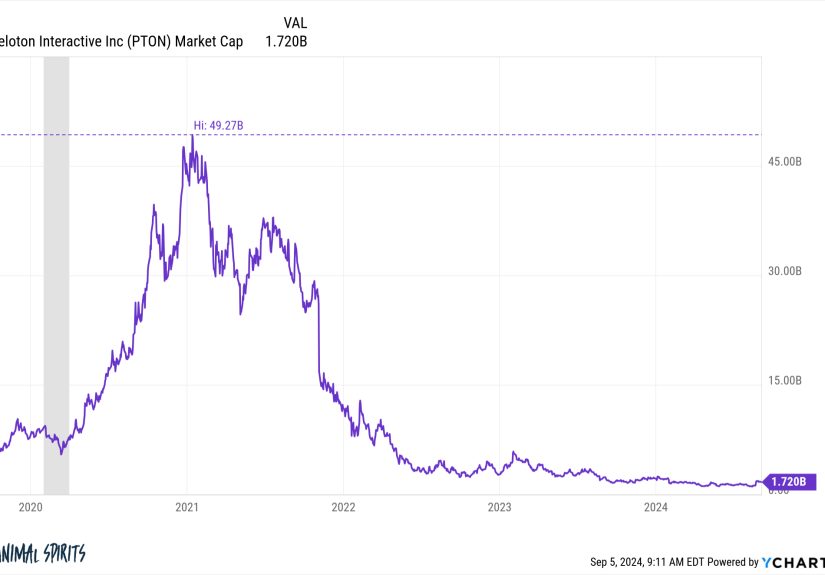
A company can sell something people genuinely love and still be a terrible stock at the wrong valuation. That is one of the market’s favorite practical jokes. During the pandemic era, Peloton became a classic example of how a compelling story, pulled-forward demand, and heroic assumptions can inflate expectations far beyond what a business can reasonably support. Loving the bike did not automatically make the shares a bargain.
This is one of the most common investor mistakes: confusing a good company with a good stock. A fantastic business can be overpriced. A messy business can be investable if the price is low enough. The market does not grade products on vibes. Eventually, it grades cash flows.
Royal Dutch/Shell and Other Clean Mispricing Cases
There have been genuine examples where related securities drifted far enough apart to make economists mutter into their coffee. The famous Royal Dutch/Shell episode is often used because it showed that even claims tied to the same underlying economics could trade at distorted relative values. That is a real reminder that prices can be wrong.
But those examples are memorable precisely because they are unusual. Investors love to point at rare clean mispricings and then pretend every disliked chart is the same thing. It is not.
Slow Adjustment Is Still Mispricing
Not every mistake is dramatic. Sometimes prices are simply slow. Research on post-earnings announcement drift suggests that markets do not always digest new information instantly and perfectly. Good news and bad news can seep into prices over time rather than landing all at once with cinematic efficiency. That does not destroy the idea of market efficiency as a useful model. It just means real markets are made of humans, institutions, incentives, and frictions instead of clean blackboard equations.
Sometimes the Investor Is Wrong, Not the Price
There is another twist that deserves more airtime: sometimes people yell “mispricing” when the actual issue is misunderstanding. Leveraged and inverse ETFs are a good example. Many investors assume they behave like ordinary long-term index funds, when many of them are designed around daily resets and can perform very differently over longer holding periods. In those situations, the market may not be irrational at all. The buyer may simply be using the wrong instruction manual.
What Smart Investors Do Instead
Use Margin of Safety, Not Maximum Drama
If you are going to make valuation calls, build in room for error. A sensible investor does not need to pretend precision where none exists. Estimating value with humility, requiring a discount, and updating the thesis when facts change is much more useful than announcing on social media that a stock is “guaranteed” to triple. The market enjoys humiliating certainty.
Diversify Because a Few Stocks Do Most of the Heavy Lifting
One of the strongest arguments for diversification is that long-run wealth creation in the stock market is astonishingly concentrated. A relatively small number of stocks account for a huge share of total market gains. That means concentrated portfolios may feel brave, but they also raise the odds of missing the handful of names that do the real work.
Owning the market is not flashy. It will not make anyone at a dinner party describe you as “bold.” But it remains one of the most effective ways to avoid being clever straight into a ditch.
Respect Fees, Friction, and the Zero-Sum Problem
Active management is often described as a zero-sum game before costs and a negative-sum game after costs. That idea is wonderfully rude and annoyingly accurate. Even if some managers are skilled, the industry as a whole still has to fight fees, taxes, trading costs, and bad timing. Skill exists, but so does drag.
This is why low-cost indexing keeps winning fans. It does not require investors to identify the next superstar manager, predict when an anomaly will close, or guess which expensive narrative will fall back to Earth first. It simply asks you to accept that the market is competitive and that your default setting should probably be humility, not hero mode.
The Real Lesson Behind “If The Prices Are Wrong You Should Be Rich”
The real lesson is not that prices are always right. It is that they are usually right enough to punish laziness. Markets can be wrong at the macro level and still hard to beat at the micro level. They can wobble under sentiment, overshoot in bubbles, and remain efficient enough that most investors are better served by patience, diversification, and reasonable costs.
Long-term thinking matters here. In a short enough window, markets can look ridiculous. In a long enough window, business fundamentals tend to get more votes. The trouble is that investors build for ten years and judge themselves after ten days. That is how good strategies get abandoned and bad stories get promoted.
So the phrase works as a filter. It forces better questions. Is the price really wrong, or do I just dislike it? Do I have a genuine edge, or a strong opinion wearing an edge costume? Am I identifying value, or shopping for validation? If the answer is mostly vibes, the market will eventually send an invoice.
Experience: What This Looks Like in Real Investing Life
Experience adds a lot of muscle to this idea. Plenty of investors have lived through the strange emotional cycle of believing a price is wrong. At first there is excitement. You feel like you found a secret passage behind the wallpaper. The market is missing something, and you are the one with the flashlight. You buy the stock, maybe even write yourself a smug little note about how obvious the opportunity is. Then the stock falls another 15%, and suddenly your flashlight feels more like a birthday candle in a hurricane.
That is when theory meets temperament. In real life, mispricing rarely arrives with trumpets. It usually shows up looking exactly like a mistake. A cheap stock can get cheaper. A bubble can become more ridiculous before it bursts. A “can’t miss” catalyst can miss the bus entirely. Investors who have been through more than one cycle learn that being right eventually and being solvent the whole time are not the same achievement. That lesson alone has probably saved more money than a thousand spicy valuation threads online.
There is also the social side of price disagreement. It is easy to hold an unpopular view alone for one afternoon. It is much harder to hold it for eighteen months while the market, the headlines, and your group chat all mock you in surround sound. That is one reason many professional managers drift toward the benchmark even when they claim to be fearless. Being conventionally wrong is often safer for a career than being unconventionally early. Human incentives can keep prices from snapping back as quickly as logic says they should.
Another common experience is discovering that a “wrong price” was really a misunderstood business. Investors often confuse a good company with a good stock, or a bad company with a bad investment. A wonderful product can still be attached to a terrible valuation. A messy company can still be a decent bargain if the price is low enough. The market does not care how much you enjoy the app, the shoes, the energy drink, or the CEO’s podcast voice. Eventually, it cares about the cash flows. That adjustment can take longer than anyone likes, but it tends to be a strict teacher.
Seasoned investors also learn that most real edges are smaller than they look. Maybe your analysis is a little better. Maybe your time horizon is a little longer. Maybe your behavior is calmer in sell-offs. Those are real advantages, but they are not superhero powers. They do not guarantee riches. More often, they improve the odds modestly over a long stretch. That is less exciting than the fantasy of spotting a ten-bagger hiding in plain sight, but it is much closer to how durable wealth is actually built. In the end, the most valuable experience may be realizing that you do not need every price to be wrong in order to do well. You need a sensible process, broad diversification when appropriate, reasonable costs, and the discipline to keep going when markets get loud. The investors who quietly rebalance, avoid unnecessary complexity, and refuse to turn every disagreement into a grand theory of market stupidity may not look dramatic. They also tend to sleep better, which is an underrated source of alpha.
Conclusion
So yes, if the prices are wrong, you should be rich. But before you print that on a coffee mug and declare war on the stock market, remember the fine print: prices can be wrong, you can still be early, and your edge can still be smaller than your ego. The real win is not proving the market foolish. It is building an approach that still works when the market acts very much like itselfcompetitive, emotional, adaptive, and only occasionally generous.
For most investors, that means respecting the difference between price and value, admitting that valuation is uncertain, using margin of safety where appropriate, diversifying broadly, keeping costs low, and letting time do more of the heavy lifting. That is not flashy. It is just effective. And in markets, effective usually beats dramatic.