Table of Contents >> Show >> Hide
- What The Limit Is Really About
- The Two Men at the Center of the Storm
- Why the 1961 Season Felt So Volatile
- Ferrari, Speed, and the Myth of Control
- Monza 1961: When the Title Fight Turned into a Tragedy
- What the Book Says About Life, Death, and the Cost of Glory
- Why The Limit Still Matters Today
- Experiences From the Edge: What Life Felt Like on the 1961 Grand Prix Circuit
- Conclusion
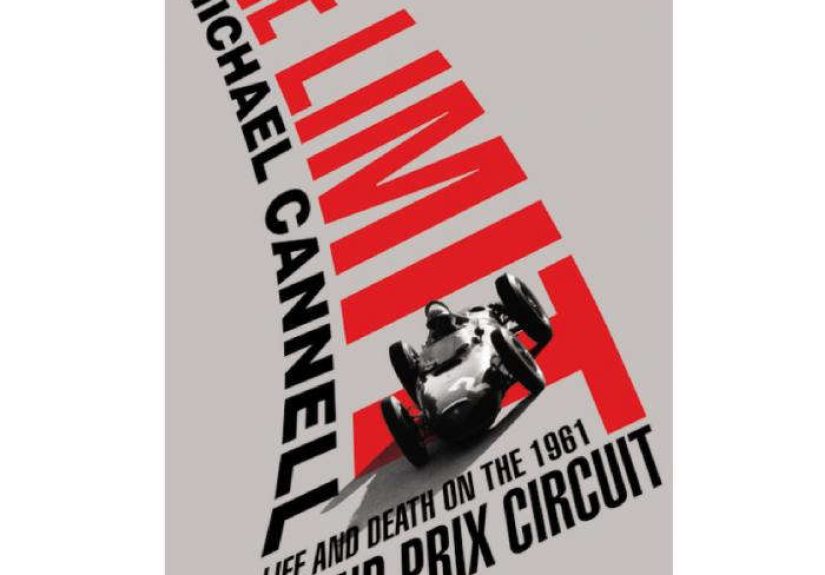
Some sports age gracefully. Early Formula One does not. It arrives in memory like a fireball: gorgeous cars, glamorous drivers, cigarette smoke in the paddock, and danger so constant it might as well have had its own pit stall. That is the electric charge running through The Limit: Life and Death on the 1961 Grand Prix Circuit, Michael Cannell’s gripping account of a season when Formula One looked impossibly elegant and behaved like it had signed a secret contract with catastrophe.
At the center of the story are two Ferrari teammates who could not have been cast more differently if Hollywood had tried. Phil Hill was the quiet American mechanic-turned-driver, all sensitivity and technical precision. Wolfgang von Trips was the charming German aristocrat, handsome, fast, and born to make an entrance. Together they drove for Ferrari in 1961, a year when the team had the best car, the sport had one foot in modernity, and the people involved still treated death as an occupational inconvenience. That combination is what makes The Limit more than a racing book. It is a story about ambition, class, machinery, nationalism, grief, and the cost of asking human beings to drive faster than the age was ready to protect them.
What The Limit Is Really About
On the surface, this is a book about the 1961 Formula One season and the championship fight between Hill and von Trips. In practice, it is about the psychology of risk. Cannell uses the season not just as a timeline of races, but as a pressure cooker. Every Grand Prix tightens the emotional screws. Every straightaway feels longer. Every triumph arrives with the queasy understanding that the same sport producing applause can also produce funeral plans before sunset.
That is what gives the book its staying power. It does not reduce 1961 to stats, podiums, and mechanical notes. It treats the season as a lived experience. The drivers are not superhero decals slapped onto pretty cars; they are men carrying fear, pride, loneliness, loyalty, ego, and a stubborn belief that they are the exception to motor racing’s terrible math. Spoiler: motor racing has never been especially sentimental about exceptions.
The Two Men at the Center of the Storm
Phil Hill: The American Anti-Hero
Phil Hill is one of the most fascinating champions in racing history precisely because he does not fit the standard template. He was not loud, swaggering, or addicted to mythmaking. He was introspective, mechanically gifted, and often more comfortable with engines than with people. In a sport full of chest-thumping bravado, Hill could seem almost out of place, like a poet who accidentally wandered into a V12 argument.
That difference matters. The Limit presents Hill as a man deeply aware of what racing demanded from the soul, not just the body. He knew the machine, respected the danger, and never looked entirely at ease with the emotional bargain. That makes his 1961 title feel less like a coronation and more like a burden he was forced to carry. He became a world champion, yes, but not in a way that allowed uncomplicated celebration.
Wolfgang von Trips: The Golden Rival
Von Trips is the kind of figure sports history tends to preserve in a soft glow: noble background, movie-star presence, fearless pace, and the kind of charisma that makes teams, fans, and journalists lean a little closer. He was not merely quick. He was symbolically powerful. A German driver on the verge of becoming world champion less than two decades after World War II was not just a sports storyline; it was a cultural one.
That broader significance gives The Limit unusual depth. Von Trips is not written as a cardboard rival or a tragic prop in Phil Hill’s story. He is a fully formed counterweight: socially effortless where Hill was reserved, aristocratic where Hill was self-made, luminous where Hill was inward. Ferrari, naturally, had both men in the same garage. Because apparently one source of tension per season was simply not enough for Formula One.
Why the 1961 Season Felt So Volatile
The 1961 championship unfolded during Formula One’s shift to a new 1.5-liter engine formula, and Ferrari adapted brilliantly. The Ferrari 156, nicknamed the “Sharknose,” became the defining car of the season: sleek, innovative, and ominously beautiful. It gave Ferrari a technical edge and turned the team into the center of the title fight. When the machinery is superior, the spotlight shifts to the drivers. When the drivers are teammates, the spotlight turns into a magnifying glass.
That is one of the book’s smartest themes. Dominance does not make life simpler; it often makes conflict more personal. Hill and von Trips were not hunting down a distant rival from another team every weekend. They were looking across the garage. The battle was intimate. Every strong finish by one man was a fresh irritation for the other. Every race became both a public contest and a private reckoning.
And yet Ferrari’s superiority did not erase unpredictability. This was still an era when mechanical reliability was moody, track safety was primitive, and a brilliant driver in lesser machinery could still scramble expectations. The season felt alive in the most nerve-racking way possible. Nothing was secure. Not a lead, not a wheel nut, not a championship, and definitely not a pulse.
Ferrari, Speed, and the Myth of Control
Part of what makes The Limit so effective is that Ferrari is not just a team in the story. It is an atmosphere. Enzo Ferrari’s operation represented glamour, pressure, nationalism, genius, and manipulation all at once. To drive for Ferrari was to be elevated and consumed in the same breath. The cars were fast, the expectations were merciless, and the emotional climate could change faster than weather over the Alps.
The Ferrari 156 embodied this contradiction perfectly. It was technologically advanced and visually unforgettable, a car that looked like speed had hired a sculptor. But beauty in 1961 Formula One was not a promise of safety. Quite the opposite. The era’s machines were lightweight, exposed, and unforgiving. Circuits featured barriers that might charitably be described as symbolic. Spectators stood perilously close. The sport worshiped courage because it had not yet learned how to engineer enough mercy.
That is the historical nerve The Limit touches again and again: people in this world often confused bravery with necessity. Drivers were brave, yes. But they were also trapped inside a culture that normalized risk to an almost surreal degree. The line between heroism and institutional negligence was thinner than a racing tire’s contact patch.
Monza 1961: When the Title Fight Turned into a Tragedy
Everything in the book points toward Monza, and Cannell handles that inevitability with impressive control. By the time the championship reaches Italy, the stakes are obvious. Ferrari has the home crowd. Hill has the chance to become the first American-born Formula One world champion. Von Trips has a shot at becoming Germany’s first world champion. The race already feels oversized before the disaster gives it permanent historical weight.
Then comes the crash.
On the second lap of the Italian Grand Prix, von Trips collided with Jim Clark’s Lotus. His Ferrari flew off course and into the crowd. Von Trips was killed, along with spectators. Hill went on to win the race and secure the championship, but the result landed with all the joy of a closed casket. There are victories that define a career, and then there are victories that haunt it. This was the second kind.
That emotional split is the true center of The Limit. Hill achieves the thing every driver wants, and it arrives wrapped in grief so thick it suffocates celebration. The book understands that history loves neat headlines, but real life rarely offers neat feelings. Phil Hill was the champion of the world. Phil Hill was also a man forced to stand in the wreckage of a friend and rival’s death while the sport asked him, in effect, to smile for the photo.
What the Book Says About Life, Death, and the Cost of Glory
There are many racing books that fetishize speed. The Limit is more interested in what speed does to people. It shows how drivers built identities around danger, how teams managed tension, and how entire crowds treated mortal risk as part of the entertainment package. That is not ancient history in a dusty-museum sense. It is modern enough to feel uncomfortable.
The book also excels because it resists simple moral sorting. It does not present the 1961 circuit as a cartoonish death trap inhabited by fools. These were smart, driven, complicated people operating at the edge of what technology and culture allowed. They were seduced by competition, national pride, mechanical innovation, and the belief that the next race would somehow turn out better. Human beings are remarkably talented at normalizing the unacceptable when speed, prestige, and applause are involved.
That is why the title works so well. “The limit” is not just the outer boundary of a car’s grip or a driver’s nerve. It is the limit of a sport’s conscience. It is the point where ambition outruns protection, where spectacle outruns responsibility, and where victory becomes inseparable from loss.
Why The Limit Still Matters Today
Modern Formula One is radically safer than the world Cannell describes, and that contrast is one reason the book still hits so hard. Today’s fans can admire the precision, data, engineering, and athleticism of elite racing while almost forgetting how apocalyptic the sport once felt. The Limit serves as a correction. It reminds readers that safety in motorsport was not gifted from above by benevolent racing gods. It was purchased, repeatedly, with injury, shock, public outrage, and lives.
It also matters because the story is not really trapped in 1961. Every generation has its version of the same question: how much risk are we willing to package as greatness? That question applies to sports, business, politics, entertainment, and just about any field that rewards people for flirting with collapse. The setting may be Formula One, but the underlying argument is universal. Success is seductive. Systems love outcomes. And systems are often suspiciously relaxed about the human cost until the cost becomes impossible to ignore.
So yes, The Limit is a motorsport book. It is also a study in pressure, image, masculinity, and institutional denial. It is about what happens when talent, machinery, and myth all go full throttle at once. Unsurprisingly, the brakes are not terrific.
Experiences From the Edge: What Life Felt Like on the 1961 Grand Prix Circuit
To understand The Limit, it helps to imagine the everyday texture of that world. Not just the headlines, but the hours between them. The 1961 Grand Prix circuit was not a sleek, climate-controlled traveling laboratory. It was a nomadic pressure chamber. Drivers moved from country to country through hotel rooms, narrow roads, workshops, team dinners, track walks, and long stretches of private worry. The glamour was real, but so was the fatigue. So was the smell of fuel in your clothes and hot oil in your lungs.
A driver’s experience in that era was intensely physical. The cars were demanding, the tracks were fast, and the margin for error was microscopic. You did not sit in a cocoon of modern protection with endless telemetry advising you like a robot therapist. You sat in a thin-skinned missile and interpreted the world through vibration, noise, courage, and instinct. The steering wheel talked. The engine shouted. The tires whispered warnings in a language that could turn, without notice, into a scream.
Mechanics lived their own version of the same strain. Their work was intimate and immediate. A setup choice was not an abstract analytics problem. It could shape whether a driver felt stable at speed or whether the car became a treacherous accomplice. Every adjustment carried emotional weight because everyone understood, even if they rarely said it aloud, that the machine might be asked to decide a man’s fate before the day was over.
For spectators, the experience was thrilling in ways that now seem almost unbelievable. Fans stood astonishingly close to action that modern organizers would never permit. The roar of the field was not background noise; it was a bodily event. The cars did not pass so much as detonate through space. That proximity created an intoxicating intimacy, but it also exposed the era’s blind spot. The crowd wanted access, and the sport gave it to them, often without anything resembling meaningful protection. Excitement and vulnerability were packed together like suitcase compartments.
Emotionally, the circuit functioned under a strange code. Fear existed, but showing too much of it was unfashionable. Drivers joked, smoked, flirted, and carried on because the alternative was to stare too directly at the risk. Grief, when it came, often had to move quickly. Another race waited. Another car needed loading. Another newspaper wanted a quote. The whole traveling world of Grand Prix racing had a habit of insisting that life continue at speed, even when common decency might have preferred a pause.
That is why the experience of reading The Limit feels so vivid. Cannell captures the contradiction of an era that was both elegant and savage. You can practically hear the multilingual chatter in the paddock, the clink of glasses in European hotels, the uneasy silence after bad news, the strange professionalism of people doing highly specialized work while pretending death was merely a rude possibility. The result is immersive and unsettling in equal measure.
In the end, the deepest experience connected to the 1961 circuit is not speed. It is tension. The tension between beauty and brutality. Between rivalry and friendship. Between public glory and private dread. Between the romance of racing and the reality that this romance regularly sent flowers to funerals. That is the emotional aftertaste of The Limit, and it lingers. You finish the story awed by the talent, chastened by the cost, and grateful that the sport eventually learned that bravery should not have to do all the safety work by itself.
Conclusion
The Limit: Life and Death on the 1961 Grand Prix Circuit endures because it refuses to let readers enjoy the mythology of old racing without confronting the human price tag attached to it. Michael Cannell tells a story with pace, tension, and atmosphere, but the book’s real achievement is moral clarity. It understands that the 1961 season was not compelling merely because it was dramatic. It was compelling because it exposed the sport at its most seductive and its most unforgivable.
If you care about Formula One, motorsport history, or stories where ambition collides with consequence, this is essential reading. It captures a season when Ferrari had the car, Hill had the skill, von Trips had the momentum, and fate had the final veto. The result is thrilling, heartbreaking, and impossible to dismiss. In other words, exactly the kind of story that stays parked in your brain long after the engine goes quiet.