Table of Contents >> Show >> Hide
- When the Kitchen Table Became Corporate Headquarters
- Why Cats Became the Unofficial Mascots of Remote Work
- The Real Stress Behind the Funny Stuff
- My Favorite “Cats Working From Home” Scenes to Draw
- How to Turn Quarantine Memories Into Art That Connects
- The Pandemic Changed Workand Cats Noticed
- Conclusion: Why These Drawings Still Matter
- What I Learned While Drawing My Quarantine Coworkers (Experiences – ~)
In March 2020, the world discovered two things at once: (1) pants are optional on video calls, and (2) cats are not.
They were already running our homesnow they were running our meetings, our deadlines, and our fragile sense of time.
And somewhere between my third reheated coffee and my tenth “You’re on mute,” I started drawing it: cats working from home,
trapped in the same quarantine reality we were… but with better naps and worse keyboard manners.
This isn’t just a love letter to felines (though yes, it is absolutely that). It’s also a snapshot of how work-from-home
reshaped American life during the COVID pandemic quarantinehow living rooms became offices, how stress spiked, how humor
turned into coping, and how a cat on a laptop became the most accurate symbol of “work-life balance” we’ve ever had.
When the Kitchen Table Became Corporate Headquarters
The shift to remote work happened fastso fast that “Do you have a webcam?” became a personality test. Many workers with
remote-capable jobs suddenly found themselves working from home full-time, improvising with whatever furniture existed
that could hold a laptop and emotional damage.
In the U.S., surveys during the pandemic showed huge jumps in telework, and later, a settling into hybrid routines.
It wasn’t a simple “home good, office bad” story. It was more like: home good, office chair missing, Wi-Fi haunted,
neighbor mowing lawn during presentations, and your cat now believes your mouse cursor is prey.
The WFH Starter Pack (Quarantine Edition)
- A “desk” (also known as “the table where you used to eat”).
- A chair (also known as “the chair that will ruin your spine”).
- Headphones (because your household has opinions).
- A pet coworker (because nature abhors a quiet Zoom call).
- A calendar (because Tuesday feels like February and also like 2014).
That chaosfunny and exhaustingbecame the perfect subject matter. Drawing cats let me capture the absurdity without
writing a 40-page HR complaint titled “My Home Is Not a Conference Room.”
Why Cats Became the Unofficial Mascots of Remote Work
Dogs may be enthusiastic coworkers, but cats are the truest coworkersconfident, interruptive, and completely uninterested
in your quarterly goals. A cat doesn’t “join” your workday; it claims it.
Three reasons cats were comedy gold in quarantine
-
Cats love routineswhich is ironic, because quarantine erased ours. The contrast was hilarious:
humans spiraling, cats thriving on the consistent schedule of “breakfast, sunbeam, mild destruction.” -
Cats are indoor experts. When the world shrank to the size of a living room, cats were basically,
“Finally, you understand my lifestyle.” -
Cats are natural scene-stealers. If you’ve ever watched a virtual hearing where a filter accidentally
turned someone into a cat, you already know: feline energy dominates a screen.
In my drawings, cats became tiny remote employees: wearing headsets, glaring at spreadsheets, “accidentally” sending
gibberish emails, and taking breaks by sitting on the one object you need most.
The Real Stress Behind the Funny Stuff
The pandemic wasn’t a sitcomit just produced sitcom moments. In the U.S., reports during 2020 described elevated
stress, uncertainty, and the mental strain of isolation. Even when remote work reduced commuting, it also blurred boundaries.
When your office is 10 feet from your bed, “logging off” becomes a philosophical concept.
Researchers and workplace analysts pointed out a key tension: remote work can improve flexibility, but it can also create
distraction overload, fractured schedules, and loneliness. That’s where humor mattered. Laughing didn’t fix the world,
but it gave people a pressure valve. My drawings weren’t meant to trivialize stress; they were meant to acknowledge it
without drowning in it.
What the “cat sketches” were really saying
- We were adapting in real time. Sometimes gracefully, sometimes like a cat slipping off a windowsill.
- We needed small joys. A silly drawing can be a tiny island in a long day.
- We weren’t alone. Everyone was improvising, and that shared awkwardness was weirdly comforting.
My Favorite “Cats Working From Home” Scenes to Draw
If you want to understand remote work culture, don’t look at corporate memos. Look at the moments people recognize instantly:
the interruptions, the awkward Zoom etiquette, the “I swear I’m working” energy. Cats amplify those moments in the funniest way.
1) The Zoom Meeting Menace
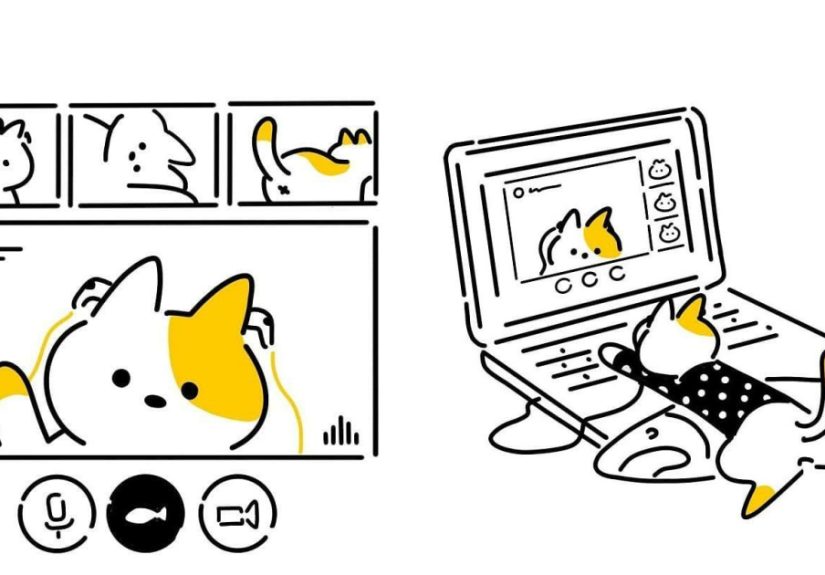
A cat, dead-center in frame, tail waving like an overconfident CEO, while the human desperately tries to look professional.
Bonus points if the cat’s name label reads something like “Mr. Business.”
2) The Keyboard Sit-In (Unionized)
In quarantine, cats didn’t just walk across keyboardsthey staged peaceful protests. I’d draw a cat sprawled across keys with
a look that says, “You can have productivity, or you can have circulation in your legs. Pick one.”
3) The Spreadsheet Stare
Cats have a special talent for looking at a screen like it personally offended them. A bar chart? How dare you. A pivot table?
Unacceptable. In drawings, that expression becomes the universal face of “Monday.”
4) The Snack Budget Crisis
Remote work turned kitchens into break rooms. So I drew cats as “snack auditors,” reviewing cupboards, demanding tuna bonuses,
and filing complaints to HR (Human Resources = Human Refrigerator Section).
5) The “Hybrid Future” Cat
Later-era drawings shifted from full quarantine to hybrid work. The cat now has two identities: “home cat” (comfortable tyrant)
and “office cat” (still tyrant, but with a tiny lanyard and a suspicious badge photo).
How to Turn Quarantine Memories Into Art That Connects
You don’t need to be a museum-level illustrator to make people laugh. You need observation, specificity, and a willingness to
draw the little truths: the messy bun, the pajama bottoms, the mug that says “Monday” on a Thursday, the cat that believes
your laptop is a heated throne.
Make it specific, not generic
- Give the cat a job title: “Senior Nap Engineer,” “Director of Interruptions,” “VP of Keyboard Coverage.”
- Add real remote-work props: sticky notes, ring lights, mismatched chargers, delivery boxes.
- Show the micro-drama: the cat staring at the cursor like it’s a rival professional athlete.
Use contrast for comedy
The funniest quarantine drawings often come from contrast: a cat wearing a tie while actively knocking over a plant;
a “motivational” poster behind a worker whose soul has left the building; a “calm” Zoom background while chaos occurs
just out of frame.
The Pandemic Changed Workand Cats Noticed
U.S. data and research over the past few years has shown that remote work surged during the pandemic and then evolved.
Many people returned to workplaces, while many others stayed remote or moved into hybrid schedules. The result is a new
normal: flexibility is more common, but expectations are also more complicated.
Even if your job became hybrid, the cultural memory of quarantine remains vivid: the sudden isolation, the DIY office setups,
the “can you hear me now?” era, the way pets became emotional support coworkers. Those memories keep showing up in art,
memes, and illustrationsbecause they were shared at scale, and shared experiences are exactly what humor feeds on.
Conclusion: Why These Drawings Still Matter
“Cats working from home” started as a joke, but it became a time capsule. It captured a uniquely strange period in American
life when the boundary between personal and professional dissolved, when stress and loneliness collided with improvisation,
when people used humor to stay afloat.
My quarantine cat drawings are a reminder that resilience can look ridiculousin the best way. Sometimes coping is a deep breath.
Sometimes it’s therapy. And sometimes it’s a sketch of a cat in a headset, accidentally sending “asdkjfh” to the entire company.
What I Learned While Drawing My Quarantine Coworkers (Experiences – ~)
The first cat I drew “working from home” was based on a real moment: my laptop open, my brain trying to remember what day it was,
and a cat strolling across the keyboard like it owned stock in my employer. I remember freezinghalf annoyed, half amazed
because the interruption felt weirdly comforting. The world outside was uncertain, but this creature had one clear mission:
sit on the warm rectangle.
After that, the drawings came quickly. I started noticing the small patterns that made quarantine life feel the same across
different households. People were trying to sound upbeat on calls while quietly managing everything off-camera: kids doing
schoolwork, roommates clanging dishes, neighbors discovering power tools, and cats treating every meeting as a performance.
Once you see it, you can’t unsee itthe way someone’s voice gets extra professional right as a pet appears in frame, like a
reflex. “Yes, absolutely, we can align on that,” they say, while their hand politely slides a cat away from the microphone.
The best part was how the drawings traveled. I’d share onea cat wearing a tie, sitting in a tiny “home office” made from a
cardboard boxand someone would message me: “That is literally my life.” Not “similar,” not “I relate,” but “literally.”
It didn’t matter if they were a manager, a teacher, a freelancer, or someone newly remote for the first time. The cat became
shorthand for all the invisible things we were juggling: distraction, anxiety, loneliness, and the oddly intimate experience
of seeing coworkers’ homes on screen.
I also learned that humor works best when it’s gentle. Quarantine was hard. So the drawings weren’t about mocking people for
strugglingthey were about giving the struggle a silly hat and making it less heavy for a minute. A cat asleep on a printed
“urgent” document is funny, sure, but it also quietly says: we’re doing our best, and sometimes “urgent” can wait five minutes.
Sometimes the win is getting through the day at all.
By the time the world started reopening and remote work shifted toward hybrid schedules, my drawings changed too. The cats became
more “adapted”: a little desk setup, a routine, a recognizable rhythm. But the core stayed the same: cats don’t care about
corporate narratives. They care about sunbeams, snacks, and being exactly where you need your hands to be. In a strange way,
that was the lesson quarantine kept teaching me. Control is limited. Plans change. The cat will sit on the keyboard anyway.
You can fight it, or you can laugh, take a breath, and keep going.