Table of Contents >> Show >> Hide
- Why Childhood Toys Make Surprisingly Powerful Still Life Subjects
- Picking the Right Toy (Hint: It’s Not the Most Expensive One)
- Building a Toy Still Life That Looks Intentional (Not Like a Floor Explosion)
- Materials That Make Oil Paint Behave (So You Don’t Have to Cry)
- My Process: From “Cute Toy” to “Why Is This Suddenly Emotional?”
- How to Paint Toy Materials: Plastic, Vinyl, Fabric, and “Mystery Rubber”
- Making the Painting Feel Like Memory (Not Just a Product Photo)
- Studio Safety and Archival Habits (The Unsexy Stuff That Saves Your Future Self)
- Common Mistakes I’ve Made So You Don’t Have To
- How I Photograph and Share These Paintings (Without Losing the Magic)
- Final Thoughts: Toys Are Time Machines, Oils Are Slow Magic
- of Experience: What Painting My Old Toys Taught Me
I used to think my childhood toys were “just toys.” Then I met my adult brain, which is basically a raccoon:
it hoards shiny memories and gets emotional over a tiny plastic dinosaur with a chewed tail.
So I started painting themin oil, with the kind of care usually reserved for museum masterpieces
and freshly baked cookies you don’t want to drop.
This isn’t about painting the “perfect” toy. It’s about painting the relationship:
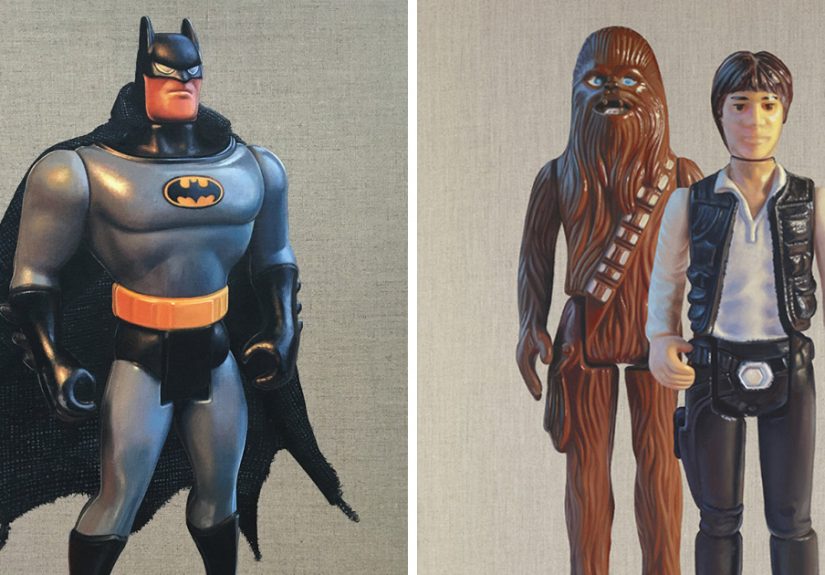
the scuffed Hot Wheels car that survived driveway drag races, the action figure whose elbow joints got loose from heroic overuse,
the teddy bear that looks like it knows all your secrets and refuses to testify.
Oil paint is ideal for this because it can be buttery, precise, luminous, and patientlike a therapist with excellent color theory.
Why Childhood Toys Make Surprisingly Powerful Still Life Subjects
Classic still life paintings are full of symbolic objectsfruit, flowers, skulls, fancy goblets, ominous lemons.
Childhood toys bring a different kind of symbolism: time.
They’re objects designed for play, but they age in public. Scratches, dents, sun-fading, marker “tattoos,”
and that mysterious sticky patch no cleaning wipe can explainthey’re all evidence of a life lived at floor level.
When I paint toys, I’m painting a portrait of a person without showing a face. A toy is a stand-in for the kid who held it:
what they loved, what they imagined, what they carried around like a tiny anchor.
And if you’re thinking, “Okay, that’s deep,” yeswelcome to the emotional support section of the toy aisle.
Picking the Right Toy (Hint: It’s Not the Most Expensive One)
The best subjects aren’t necessarily pristine collectibles sealed in acrylic display cases like they’re about to be launched into space.
The best subjects are the ones with story texture. I look for:
- Wear patterns: rubbed paint on corners, shiny plastic from handling, softened fabric from hugs.
- Distinct silhouettes: a blocky robot, a classic doll shape, a chunky toy truck.
- Color personality: bright primaries, retro pastels, or that oddly specific “1997 teal.”
- Emotional charge: the toy that makes you smile instantlyor makes you say, “I can’t believe I still have this.”
I also think about what kind of painting I want: hyper-real, painterly, or somewhere in the “real enough to feel true” middle.
Small toys can become monumental when you paint them larger than lifesuddenly a two-inch figure has the presence of a marble statue.
Building a Toy Still Life That Looks Intentional (Not Like a Floor Explosion)
Toys are chaotic by nature. That’s part of their charm, but a painting needs structure. I start with a simple setup:
one or two toys, one light source, and a background that doesn’t compete for attention.
The goal is to control values (light and dark) so the toy reads clearly.
Lighting: One Lamp to Rule Them All
I usually use one strong light from a single direction (a desk lamp works). It creates readable shadows and highlights,
and it’s much easier to paint than “mystery lighting” from three windows, two ceiling bulbs, and a glowing laptop screen.
A single light source also makes shiny plastic, glassy eyes, and metallic paint pop in a believable way.
Background Choices That Support the Nostalgia
The background can set the emotional temperature. A neutral gray or warm off-white keeps it classic.
A soft, slightly desaturated color can feel like a faded photo.
Sometimes I use a simple tabletop and a wall, but I avoid busy patterns unless I want the painting to feel playful and loud.
(Some toys demand chaos. I respect their brand identity.)
Materials That Make Oil Paint Behave (So You Don’t Have to Cry)
You don’t need a million supplies, but you do need a few smart choices:
- Surface: a primed canvas, panel, or oil-primed surface for smoother detail.
- Brushes: a mix of bristle (for block-ins) and softer brushes (for edges and blending).
- Palette: a limited set is finewhite, yellow, red, blue, plus a couple earth tones.
- Medium (optional): used sparingly to control flow and transparency.
If I’m working in layers, I follow a simple principle: keep early layers leaner and later layers a touch “fatter”
(more oil/medium) so the painting stays stable as it cures. It’s not a rule to fearit’s just good long-term housekeeping for paint.
My Process: From “Cute Toy” to “Why Is This Suddenly Emotional?”
1) Clean the Toy (Yes, Really)
Dust and grime change how light hits the surface, especially on plastic and glossy paint. I wipe the toy gently,
then let it fully dry. This isn’t a spa dayit’s evidence control. The cleaner the surface, the clearer the shadows and highlights.
2) Draw the Composition (Loose First, Accurate Later)
I sketch the big shapes firstsilhouette, major angles, and where the toy sits in space. Then I refine proportion:
the tilt of a head, the width of a wheel well, the spacing between eyes.
Toys are deceptively tricky because they’re simplified forms with very specific design geometry.
If the eyes are off by two millimeters, the toy goes from “beloved” to “haunted.”
3) Block In Values Before Chasing Color
My favorite shortcut to “it’s working” is focusing on value structure early.
I mass in shadows and midtones so the toy reads in light and dark.
Once the painting has a solid value foundation, color becomes a joy instead of a rescue mission.
4) Build Color in Passes (Like Leveling Up in a Game)
I paint local color (the toy’s “base” color), then adjust temperature shifts: warm light, cool shadows, reflected colors.
Toys often have intense pigmentsbright reds, clean blues, saturated yellowsand oil paint can match that punch
while still looking dimensional.
How to Paint Toy Materials: Plastic, Vinyl, Fabric, and “Mystery Rubber”
Shiny Plastic: Contrast Is the Secret Sauce
Glossy toys live and die by highlight placement. I don’t paint “shiny” as a separate thing
I paint sharp value jumps: bright highlights against darker midtones, with clean edges.
On curved plastic, highlights often stretch into ribbons. On flat planes, they snap into shapes.
The trick is to paint what you see, not what you know about “plastic.”
Matte Plastic and Vinyl: Softer Transitions, Subtle Texture
Matte surfaces have gentler transitions and fewer crisp highlights.
I use softer edges and a slightly rougher brushstroke to suggest that powdery finish many older toys develop.
Vinyl dolls can show a muted sheenlike skin that’s been politely moisturized, not aggressively laminated.
Fabric and Plush: Edge Control Makes It Believable
Plush toys are less about tiny hairs and more about shape and softness.
I soften edges where the fabric turns away from light, and I keep details sharper near focal points (like eyes and stitching).
A few carefully placed strokes can suggest fuzz without turning the painting into a lint portrait.
Making the Painting Feel Like Memory (Not Just a Product Photo)
If I paint every edge equally sharp and every color equally loud, the toy can look like it’s being sold online.
To make it feel like memory, I use:
- Selective focus: crisp detail where I want the viewer to look, softer elsewhere.
- Color harmony: slightly warming or cooling the whole painting to set a mood.
- Quiet backgrounds: so the toy gets to be the main character.
- Story marks: scratches, worn decals, and tiny dents painted with respect.
Sometimes I even exaggerate scale a littlemaking a toy feel heroicbecause that’s how it felt when I was a kid.
You weren’t holding a small robot. You were commanding a mechanical guardian of the living room.
Studio Safety and Archival Habits (The Unsexy Stuff That Saves Your Future Self)
Oil painting is wonderful, but it’s still chemistry plus patience. I keep good ventilation, minimize solvent exposure,
and handle materials like an adult who wants to keep their brain cells.
If I use solvents at all, I use them carefully, close containers, and keep rags managed to reduce fire risk.
For longevity, I paint with stable layering practices, let the work cure appropriately, and finish with a suitable varnish
when the painting is ready. Conservators treat varnish as a protective layer that can be removed or replaced in the future,
which is a comforting thought: even paintings get second chances.
Common Mistakes I’ve Made So You Don’t Have To
- Over-detailing too early: the painting needs structure before eyelashes on a teddy bear.
- Ignoring values: color can’t save a muddy value plan.
- Highlight chaos: highlights must follow the form and light direction, not your excitement.
- All edges the same: varied edges create depth and realism fast.
- Too much medium: “just a little” is the correct amount, almost always.
How I Photograph and Share These Paintings (Without Losing the Magic)
If I’m sharing online, I photograph in even light (natural indirect light is great), straighten perspective,
and avoid heavy filters. The painting should look like itselfjust with fewer shadows from my phone and less evidence
that my studio is held together by caffeine and optimism.
Final Thoughts: Toys Are Time Machines, Oils Are Slow Magic
Painting childhood toys in oil lets me slow down and look closely at objects I once handled without thinking.
Every scuff and faded sticker becomes a visual sentence in a story I didn’t realize I was writing.
And the best part? When someone sees the finished painting, they almost always say,
“I had one of those!”which means the toy did its job again, decades later.
of Experience: What Painting My Old Toys Taught Me
The first toy I painted wasn’t rare or valuable. It was a small plastic truck with one slightly crooked wheel
the kind of flaw you’d only notice after years of pushing it across floors. I set it on my table, aimed a lamp at it,
and expected a fun still life. Instead, I got ambushed by memories: the sound of the wheel ticking on tile,
the way I used to load it with anything that fitLegos, pennies, a doomed cookieand the exact feeling of being
completely busy doing absolutely nothing important. Which, in hindsight, is a talent.
Painting it forced me to pay attention to details I’d never respected. That cheap plastic wasn’t just “red.”
It was red that leaned orange in the light, red that went purple-brown in shadow, and red that turned grayish
where the surface had been rubbed smooth by small hands. I started noticing tiny scratches that curved the same way
my thumb used to rest. That’s when it clicked: a toy records you. Not in a creepy surveillance waymore like a diary
written in wear patterns.
I also learned that nostalgia is sneaky. If I tried to paint the toy “perfect,” like a catalog image, the painting felt cold.
But when I painted the imperfectionsthe missing decal corner, the scuffed edge, the softened highlight where the plastic
had dulledthe painting felt honest. It wasn’t about making the toy look new. It was about making it look known.
That changed how I approached every piece after. I stopped asking, “How do I make this impressive?” and started asking,
“How do I make this true?”
The emotional part surprised me, but the technical lessons surprised me too. Toys are brutal teachers of accuracy.
Their shapes are simplified, so any drawing mistake screams. Their colors are bold, so muddy mixing shows immediately.
Their surfaces are glossy, so highlights will expose your lies. I became better at controlling edges, better at spotting
value relationships, and better at slowing down when I wanted to rush.
The biggest lesson, though, was permission. Painting toys gave me permission to care deeply about something playful.
It reminded me that “serious art” doesn’t have to be solemn. It can be bright plastic and soft fabric and a little humor,
and it can still carry real meaning. Now, when I finish a painting and someone smiles before they even analyze it,
I feel like I’ve done something right: I’ve made a small portal. A viewer steps in, remembers their own toy,
and comes back holding a warm, familiar feeling. That’s worth every slow-drying layer.