Table of Contents >> Show >> Hide
- Quick roadmap
- What a prayer letter is (and isn’t)
- Before you start: 3 small choices that make it easier
- How to write a prayer letter to God in 11 steps
- Step 1: Start with one sentence of intention
- Step 2: Get physically settled (yes, your body counts)
- Step 3: Address God simply
- Step 4: Begin with adoration (who God is)
- Step 5: Tell the truth about what’s going on
- Step 6: Confess honestly (without self-punishment)
- Step 7: Add thanksgiving (specific, not generic)
- Step 8: Make your requests (supplication) in plain language
- Step 9: Pray Scripture (optional, powerful)
- Step 10: Leave a “listening space”
- Step 11: Close with trustand a tiny next step
- A simple structure you can reuse: ACTS
- 3 prayer letter examples you can copy (and personalize)
- If you feel awkward, angry, or numb while writing
- Common mistakes (and gentle fixes)
- Make it sustainable: prayer letter ideas for a “prayer journal” rhythm
- FAQ
- Real-life experiences people often have with prayer letters (extra )
- Conclusion
- SEO tags (JSON)
If talking out loud to God sometimes feels like you’re leaving a voicemail (“Hi… it’s me… again… sorry to bother You…”),
you’re not alone. Writing a prayer letter can be the spiritual equivalent of slowing down, taking a breath, and finally
saying what you actually meanwithout your brain sprinting off to remember laundry, emails, or why you opened the fridge.
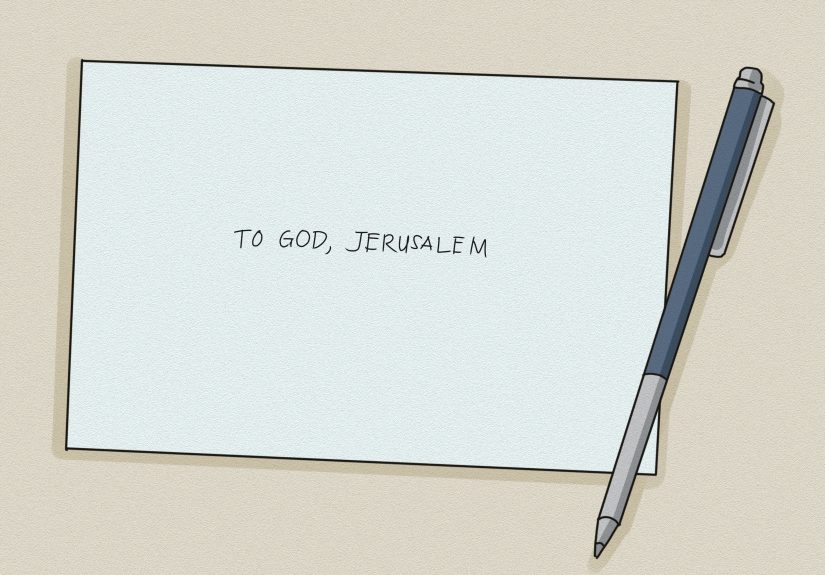
A prayer letter to God is exactly what it sounds like: a written conversation with God. It can be reverent, raw, grateful,
messy, joyful, or all of the above in one page. You don’t need fancy words. You don’t need perfect theology. You just need
honestyand maybe a pen that isn’t stolen by your junk drawer.
Quick roadmap
- What a prayer letter is (and isn’t)
- 11 practical steps you can follow today
- Examples you can borrow (no plagiarism guiltGod already knows)
- Common “I feel weird” problems and how to move through them
- of real-life-style experiences people often have with prayer letters
What a prayer letter is (and isn’t)
It is: a form of prayer through writinglike journaling, but with God as the “To:” line. It’s a way to focus,
name what’s going on inside you, and respond to God with your own words.
It isn’t: a performance, a legal contract, or a magic spell where the “correct wording” unlocks blessings.
You’re not trying to impress Godyou’re learning to be present with Him.
Before you start: 3 small choices that make it easier
Choose a format
Paper notebook, a letter folded and tucked away, or a notes appwhatever you’ll actually use. If handwriting helps you slow down,
go analog. If typing helps you keep up with your thoughts, go digital.
Choose a time boundary
Set a timer for 10–20 minutes. A timer is surprisingly holy: it keeps you from overthinking and gives you permission to stop.
You can always write again tomorrow.
Choose your “tone”
Formal and poetic? Simple and direct? Somewhere between “Dear Lord” and “Hey God, so here’s the situation…”? All are welcome.
The most useful tone is the one that’s honest.
How to write a prayer letter to God in 11 steps
Step 1: Start with one sentence of intention
A short intention keeps you from spiraling into a thousand topics. Try:
“God, I’m writing because I need clarity.”
Or: “God, I want to trust You about this.”
Step 2: Get physically settled (yes, your body counts)
Put your phone face down. Sit comfortably. Take three slow breaths. If you want, begin with a simple phrase like,
“God, I’m here.” The goal isn’t a perfect mood; it’s a willing posture.
Step 3: Address God simply
Write a greeting that fits your relationship with God:
“Dear God,” “Father,” “Lord,” “Jesus,” or even “God…”
This tiny step flips your writing from “thought dump” to “prayer.”
Step 4: Begin with adoration (who God is)
Adoration is basically: “God, You are…” It helps you remember you’re not praying into a void. If you’re stuck, choose one:
- Character: “You are faithful, patient, wise.”
- Past help: “You carried me through last year.”
- Creation: “Thank You for beauty and breath.”
Don’t force hype. Even a small line counts: “God, I don’t feel it today, but I believe You’re good.”
Step 5: Tell the truth about what’s going on
This is the heart of the letter. Write what you’d say if you weren’t trying to sound “spiritual.” Name facts and feelings:
- “Here’s what happened…”
- “Here’s what I’m afraid of…”
- “Here’s what I wish were different…”
If you feel conflicted, write both sides. Example:
“Part of me trusts You. Part of me is panicking.”
Step 6: Confess honestly (without self-punishment)
Confession isn’t groveling. It’s clarity. It’s agreeing with God about what’s offattitudes, choices, patterns, words left unsaid.
Try:
- “I’ve been holding onto resentment.”
- “I’ve tried to control everything.”
- “I keep avoiding the conversation I need to have.”
If you don’t know what to confess, ask:
“God, show me what I’m missinggently.”
Step 7: Add thanksgiving (specific, not generic)
Thanksgiving is where your letter starts breathing again. Go concrete:
- One person who showed you kindness
- One provision you didn’t earn
- One strength God gave you in a hard moment
Even “Thank You for coffee” is acceptable. God is not offended by small gratitude.
Step 8: Make your requests (supplication) in plain language
Now ask for what you needclearly. You can include:
- Wisdom: “Help me know what to do next.”
- Strength: “Help me keep showing up.”
- Provision: “Provide what we need this month.”
- Healing: “Bring comfort and healingbody and mind.”
- Relationships: “Help me forgive. Help us talk well.”
Tip: Write requests as one-sentence bullets. It keeps your letter from becoming a stressed-out novel.
Step 9: Pray Scripture (optional, powerful)
If you read the Bible, include a verse or a paraphrase and turn it into a prayer. For example:
- “God, You say You give wisdomso I’m asking for it.”
- “Be my shepherd today; I feel scattered.”
- “Teach me to love with patience and kindness.”
If you’re new to Scripture, you can start with Psalms (honest emotions) or the Lord’s Prayer (structure).
Step 10: Leave a “listening space”
This is where you stop talking for a minuteon paper. Leave a blank section titled:
“What I sense You might be saying” or “What I need to remember.”
Then write anything that comes with peace, conviction, or clarity. If nothing comes, that’s okay. Silence isn’t failure.
Step 11: Close with trustand a tiny next step
End your letter like you mean it. You can close with:
“Amen,” “I trust You,” “Help me trust You,” or “Into Your hands.”
Then add one practical next step you can take within 24 hours (a text to send, a boundary to set, a conversation to schedule).
This keeps prayer connected to life.
A simple structure you can reuse: ACTS
If you like frameworks, many Christians use ACTS as a prayer pattern:
Adoration, Confession, Thanksgiving, Supplication. Think of it as spiritual guardrailsnot handcuffs.
You can follow ACTS in a prayer letter exactly as written above, or treat it like a checklist you circle back to when you wander.
3 prayer letter examples you can copy (and personalize)
Example 1: When you’re anxious
Dear God,
I feel wound tight today. My mind keeps forecasting worst-case scenarios like it’s getting paid per disaster. You are steady when I’m not.
Help me remember that You’re present in this moment, not just in the “what if” future.
I confess I’ve been trying to control outcomes I can’t control. Thank You for the ways You’ve carried me beforeespecially when I thought I
wouldn’t make it through.
Please give me wisdom for the next step, peace for my body, and courage to do what’s mine to do. Teach me to trust You one hour at a time. Amen.
Example 2: A gratitude “love letter”
Dear Father,
Thank You for the people who have been patient with me. Thank You for ordinary mercies: food, shelter, laughter, a working brain (mostly),
and the gift of another day.
You’ve been kinder than I deserve. I love Younot perfectly, but sincerely. Help my life reflect gratitude, not just my notebook. Amen.
Example 3: Intercession for someone else
Lord,
I’m praying for ________. You know what they’re carrying. Please strengthen them, give them wise support, and open doors for help at the right time.
Give me the right words and the right kind of presencepatient, not pushy.
Thank You that You care more than I do and that You’re already at work. Amen.
If you feel awkward, angry, or numb while writing
Here’s the surprising truth: those feelings can be part of honest prayer, not obstacles to prayer.
- If you feel awkward: Start with one line: “God, I don’t know how to do this.” That counts.
- If you feel angry: Say so respectfully. Many biblical prayers include lament and complaint. God can handle honesty.
- If you feel numb: Write the numbness: “God, I feel nothing. Please meet me anyway.”
Common mistakes (and gentle fixes)
Mistake: Trying to sound impressive
Fix: Write like a real person. God is not grading your vocabulary.
Mistake: Turning the whole letter into a panic spiral
Fix: Use short paragraphs and bullet requests. Return to adoration and thanksgiving for balance.
Mistake: Only asking for things, never listening
Fix: Add a blank “listening space” every time, even if you write only one sentence there.
Mistake: Quitting because you missed a day
Fix: Restart without drama. This is a relationship, not a streak.
Make it sustainable: prayer letter ideas for a “prayer journal” rhythm
If you like the letter format, you can turn it into a simple prayer journaling habit:
- Daily mini-letter (5 minutes): 3 lines: praise, need, thanks.
- Weekly longer letter (20 minutes): reflect on the week; write intercession for others.
- Monthly “look back” letter: re-read highlights and note answered prayers or growth.
Quick prompts when you don’t know what to write
- “God, today I’m carrying…”
- “I’m afraid that…”
- “Help me love ________ well by…”
- “Thank You for…” (list 10 small things)
- “I need wisdom about…”
- “I sense You inviting me to…”
FAQ
Should I handwrite or type?
Either works. Handwriting can slow you down and help you focus; typing can help you keep up with fast thoughts. Choose what you’ll do consistently.
How long should a prayer letter be?
Long enough to be honest, short enough to be repeatable. Some days that’s half a page; some days it’s three sentences.
Is it okay to ask God for specific things?
Yes. You can be specific without being demanding. A healthy posture is: “Here’s what I wantplease guide me, and help me trust You with the outcome.”
Can kids write prayer letters?
Absolutely. Encourage simple “Dear God” letters with gratitude and one request. The goal is sincerity, not sophistication.
Real-life experiences people often have with prayer letters (extra )
When people start writing prayer letters, the first experience is usually reliefnot because every problem disappears, but because the inside of their
head finally stops being a crowded group chat. Putting thoughts into words can feel like moving clutter off a table so you can actually see what’s there.
Many describe a surprising moment of clarity halfway through a page: “Oh… that’s what I’m really worried about.” The letter becomes less of a speech and more
of a mirrorone held up gently in God’s presence.
Another common experience is the “unexpected honesty effect.” Someone begins with a polite sentence“Dear God, thank You for today…”and a few lines later
they’re writing, “I’m disappointed,” “I feel alone,” or “I don’t know how to fix this.” That shift can feel scary at first, especially for people who learned
prayer as only cheerful or formal. But many find that naming real emotions actually deepens their sense of connection with God. The letter gives them permission
to be a whole personfaith and fear in the same paragraph.
People also report a practical benefit: written prayers create a trail. A college student might write weekly letters during a stressful semester and later look
back and notice patternswhat triggers anxiety, what restores peace, what decisions kept coming up. A parent might keep short “Dear God” entries about their
children and, months later, realize how often they asked for patienceand how many ordinary moments of patience actually happened. The page becomes evidence of
growth, not just a record of struggle.
A very human experience shows up around Step 6 (confession): some people initially turn confession into self-criticism. Then they learn to write confession as
clarity instead“I was harsh today. I want to repair.” That shift often leads to concrete action: apologizing, making amends, asking for help, setting boundaries.
In other words, the letter doesn’t stay in the notebook; it leaks into real life in the best way.
Many people also experience “the quiet answer.” Not a booming voicemore like a steady sentence that feels true: “You’re not alone,” “Do the next right thing,”
“Call your friend,” “Rest,” “Be honest.” Sometimes they don’t feel anything in the moment but later realize the letter helped them choose better. That’s one of
the understated gifts of prayer letters: they train attention. They make you more likely to notice courage, gratitude, conviction, and small open doors that you
might have missed while mentally sprinting.
Finally, lots of people experience freedom: freedom from performing, from pretending, from thinking they have to “pray the right way.” A prayer letter becomes a
simple spiritual practice that says, “God, I’m showing up.” And showing upagain and againis often where transformation begins.
Conclusion
Writing a prayer letter to God isn’t about crafting the perfect message. It’s about creating space for honest connection.
Follow the 11 steps, borrow the examples, keep it simple, and let your words be real. If all you can manage today is
“Dear God, help,” that’s still a prayer letterand a pretty good one.