Table of Contents >> Show >> Hide
- Quick cheat sheet: the 9 polite Romanian greetings
- Before we start: a tiny bit of Romanian etiquette that saves you
- The 9 polite ways to say hello in Romanian (with examples)
- 1) Bună! (Hi / Hello)
- 2) Bună ziua! (Good day / Hello)
- 3) Bună dimineața! (Good morning)
- 4) Bună seara! (Good evening)
- 5) Salut! (Hi / Hey)
- 6) Servus! (Hi / Hello friendly and sometimes regional)
- 7) Sărut mâna! (Very polite, traditional greeting)
- 8) Ce mai faceți? (How are you? polite/formal)
- 9) Încântat(ă) de cunoștință! (Nice to meet you)
- Pronunciation and spelling: the tiny marks that change everything
- Common greeting mistakes (and how to avoid the awkward pause)
- Bonus: a simple “polite greeting formula” you can reuse
- Conclusion
- Experiences: what using Romanian greetings feels like in real life (and why it works)
- SEO tags (JSON)
Romanian greetings are refreshingly practical: you can be warm, respectful, and socially competent with just a handful of phrases.
The trick is knowing which hello fits the momentbecause “Hi!” to a friend and “Good day” to a receptionist are not the same vibe
(unless you enjoy being remembered as “that enthusiastic tourist who talks like a sitcom character”).
In this guide, you’ll learn nine polite Romanian greetings, when to use each one, how to pronounce them in a way that won’t scare the vowels,
and a few cultural tipslike when to go formal with dumneavoastră (the respectful “you”) versus casual tu.
Quick cheat sheet: the 9 polite Romanian greetings
If you’re in a hurry (or your taxi is already doing that “I’ll leave without you” roll), start here.
Pronunciations below are approximate and “American-mouth friendly.”
| Romanian | English | Formality | When to use it | Pronunciation (approx.) |
|---|---|---|---|---|
| Bună! | Hi / Hello | Casual-polite | Friends, classmates, peers | BOO-nuh |
| Bună ziua! | Good day / Hello | Formal | Strangers, shops, offices, elders | BOO-nuh ZEE-wah |
| Bună dimineața! | Good morning | Polite | Mornings (work, school, neighbors) | BOO-nuh dee-mee-NYAH-tsuh |
| Bună seara! | Good evening | Polite | Evenings (restaurants, events) | BOO-nuh SEH-ah-rah |
| Salut! | Hi / Hey | Casual | Friends, coworkers you know well | sah-LOOT |
| Servus! | Hi / Hello (regional) | Friendly | Often heard in some regions; informal | SEHR-voos |
| Sărut mâna! | Respectful greeting (“I kiss your hand”) | Very polite / traditional | Elders, especially in traditional settings | suh-ROOT MUH-nah |
| Ce mai faceți? | How are you? (formal/plural) | Polite | After “hello” in formal settings | cheh my fah-CETZ |
| Încântat(ă) de cunoștință! | Nice to meet you | Polite | First meetings, introductions | in-kuhn-TAHT(uh) deh koo-no-SHTIN-tsuh |
Before we start: a tiny bit of Romanian etiquette that saves you
Romanian greetings aren’t just wordsthey’re also “How formal is this situation?” and “Do we know each other?” wrapped into one neat package.
Here are the two biggest etiquette levers you’ll use:
1) Formal vs. informal “you”: dumneavoastră vs. tu
Romanian uses different forms depending on respect and distance. In polite or professional situations, you’ll often use
dumneavoastră (formal “you”). With friends, family, and peers, you’ll use tu (informal “you”).
This matters because it changes verbs and common greetings like “How are you?”
2) Add a title if you want to sound extra respectful
Want to level up your politeness? Pair a greeting with Domnul (Mr./Sir) or Doamna (Mrs./Madam),
especially in formal contexts: Bună ziua, Doamnă! It’s simple, respectful, and makes you sound like you know what you’re doing
(even if you’re still secretly negotiating with Romanian vowels).
The 9 polite ways to say hello in Romanian (with examples)
1) Bună! (Hi / Hello)
Bună is the everyday “hi” that’s friendly and widely used. It’s casual, but still politelike smiling at someone
without committing to a full conversation about your life goals.
Best for: friends, classmates, people your age, casual settings.
Example: Bună! Ce faci? (“Hi! How are you?”)
Tip: If you’re unsure about formality with a stranger, Bună ziua is safer than Bună.
2) Bună ziua! (Good day / Hello)
This is your reliable, polite “hello” for adults you don’t know, customer service, and professional settings.
Literally it’s “good day,” but it functions like “hello” in English.
Best for: shops, offices, hotels, introductions to elders, first meetings.
Example mini-dialogue:
You: Bună ziua!
They: Bună ziua! Cu ce vă pot ajuta? (“Hello! How can I help you?”)
Politeness boost: Bună ziua, Domnule! / Bună ziua, Doamnă!
3) Bună dimineața! (Good morning)
Use this in the morning the same way you would in English. It’s polite in both casual and formal contexts.
If you say it cheerfully before coffee, you deserve an award.
Best for: mornings at work, school, meeting neighbors, entering a café.
Example: Bună dimineața! Aveți o masă liberă? (“Good morning! Do you have a free table?”)
4) Bună seara! (Good evening)
When it’s evening, bună seara is your go-to greeting. It’s polite and common in restaurants, events,
and any “hello, I have social skills” moment after sunset.
Best for: evenings out, formal dinners, meetings later in the day.
Example: Bună seara! Rezervare pe numele… (“Good evening! Reservation under the name…”)
5) Salut! (Hi / Hey)
Salut is a common casual greetinglike “hey” or “hi.” It’s not rude, but it’s not the first choice for a formal setting.
Think: friends, friendly coworkers, someone you already know.
Best for: peers, casual hangouts, quick greetings.
Example: Salut! Ne vedem mai târziu? (“Hey! See you later?”)
When to avoid: job interviews, formal offices, greeting an elder you’ve just met.
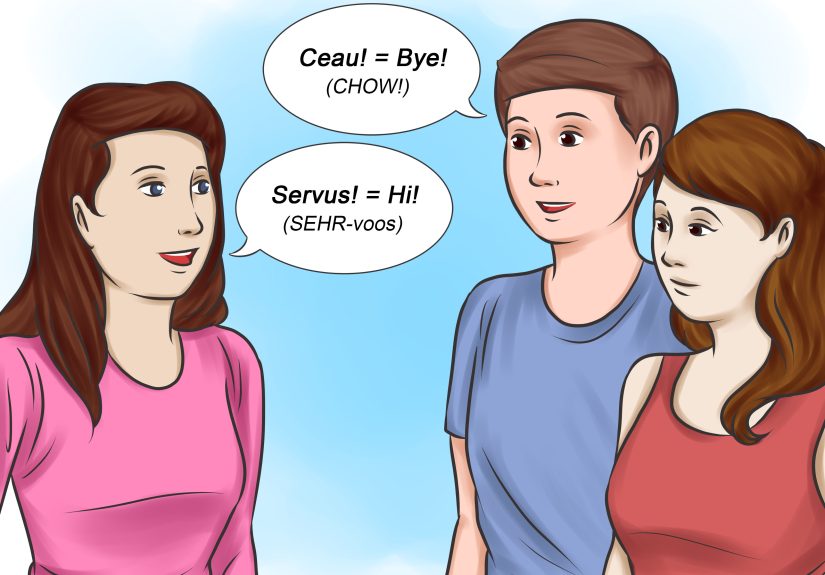
6) Servus! (Hi / Hello friendly and sometimes regional)
Servus is a friendly greeting you may hear in Romania (often associated with certain regions and Central European influence).
It’s informal and warmlike saying “hey there” with a little local flavor.
Best for: casual settings, when locals use it first, friendly groups.
Example: Servus! Ce mai e nou? (“Hi! What’s new?”)
Tip: If you’re not sure, listen firstthen mirror what you hear.
7) Sărut mâna! (Very polite, traditional greeting)
This one is iconic: sărut mâna literally means “I kiss your hand.”
In real life it functions as a respectful greeting, often used toward elders and in more traditional environments.
It can feel old-fashioned, but it’s still recognized and can be warmly received when used appropriately.
Best for: greeting older people (especially in traditional settings), showing respect.
Example: Sărut mâna, doamnă. (“Good day / greetings, ma’am.”)
Use with care: In very modern, casual youth settings, it may sound overly formallike showing up to a group chat in a tuxedo.
8) Ce mai faceți? (How are you? polite/formal)
In Romanian, “hello” often naturally leads into “How are you?” The polite version is Ce mai faceți?
(used for formal “you” and also for plural “you all”). It’s a great follow-up after Bună ziua.
Best for: polite conversation starters, elders, professional settings, meeting more than one person.
Example mini-dialogue:
You: Bună ziua! Ce mai faceți?
They: Bine, mulțumesc. Dumneavoastră? (“Fine, thank you. And you?”)
Casual alternative: Ce mai faci? (informal, for friends).
9) Încântat(ă) de cunoștință! (Nice to meet you)
If you’re meeting someone for the first time, this phrase is a classic.
Romanian has gendered endings here: Încântat (masculine) / Încântată (feminine).
If you want a simpler, widely used alternative, Îmi pare bine! (“Glad to meet you!”) works great.
Best for: introductions, networking, meeting family, first-time conversations.
Example:
You: Bună ziua! Mă numesc Alex. Îmi pare bine.
They: Îmi pare bine! (“Nice to meet you!”)
Pronunciation and spelling: the tiny marks that change everything
Romanian is more “say what you see” than English, which is great news for your sanity. The slightly less-great news is diacritics:
those little marks are not decorationthey’re meaning and sound.
Diacritics you’ll see in greetings
- ă (as in bună): a short “uh” sound
- î / â (as in încântat): a central vowel sound that’s not exactly in English; aim for a tight “ih/uh” in the back of the mouth
- ș (as in cunoștință): “sh”
- ț (as in dimineața): “ts”
If your keyboard doesn’t have diacritics, people will usually still understand you from context, especially in messages.
But when you can include them, it looks more polishedand it reduces the chance you accidentally type something that means “coin” instead of “hello.”
Common greeting mistakes (and how to avoid the awkward pause)
Mixing up formality
When in doubt, go formal first. Bună ziua is a safe default with strangers. You can switch to informal later if invited.
In many cultures, being slightly too polite is forgivable; being too casual too fast can feel disrespectful.
Using “Noapte bună” as a daytime hello
Noapte bună means “good night,” and it’s typically a closing phrase when someone is heading to sleep, not a greeting.
Save it for bedtime (or at least for your dramatic exit).
Forgetting the follow-up
A greeting plus a polite follow-up goes a long way: Bună ziua! Ce mai faceți? is simple, natural, and friendly.
You don’t need to deliver a TED Talkjust show you’re present and respectful.
Bonus: a simple “polite greeting formula” you can reuse
If you want a repeatable pattern, here’s one that works in a lot of situations:
- Greeting: Bună ziua!
- Polite follow-up: Ce mai faceți?
- Optional title/name: Domnule/Doamnă or the person’s name if appropriate
Example: Bună ziua, doamnă! Ce mai faceți? That’s the kind of line that makes people instantly relaxbecause you’re respectful,
clear, and not trying to freestyle a whole grammar system on the spot.
Conclusion
Learning how to say hello in Romanian is a small effort with a big payoff. Whether you stick to the safe and formal Bună ziua,
brighten someone’s morning with Bună dimineața, or show extra respect with Sărut mâna, these greetings help you sound
polite, confident, and culturally aware. Start with two or three that match your most common situations, practice the diacritics that matter,
and let the rest grow naturallyone friendly “Bună!” at a time.
Experiences: what using Romanian greetings feels like in real life (and why it works)
Reading a list of greetings is helpful, but using them is where the language suddenly becomes real. The first “experience” most learners have is
that Romanian greetings feel instantaneously social. You say Bună ziua in a store, and you can almost hear the room
mentally upgrade you from “random stranger” to “polite human who is trying.” That shift is powerfulespecially in places where manners and respect
still matter a lot in everyday interactions.
Another common experience: time-of-day greetings make you feel surprisingly competent. When you walk into a café in the morning
and say Bună dimineața, you’re not just saying “hello”you’re showing you understand the rhythm of the day. It’s like wearing the right
shoes to an event: no one throws a parade, but you can tell you’re not accidentally breaking the vibe.
Formality is where things get interesting. Many learners notice that Romanian has a clear “respect dial.” If you use Bună ziua plus
Ce mai faceți? with someone older (or in a professional setting), the interaction often becomes smoother. You’re not forcing closeness;
you’re offering courtesy. In practice, this can reduce awkwardness when you’re unsure what’s expectedlike when you meet a friend’s parents, speak
with a receptionist, or talk to an older neighbor. Going slightly formal first is usually the safest move.
Then there’s the moment you encounter Sărut mâna. For many people, this greeting feels like stepping into a classic film:
it’s traditional, respectful, and a little dramatic (in a good way). The “experience” here is learning when tradition is welcomed.
If you’re in a more old-school environmentvisiting family, meeting elders, spending time in smaller communitiesusing it carefully can create a
warm reaction because it signals respect and cultural awareness. In very modern, casual youth settings, you may hear it less, so learners often
experience the “mirror rule”: if locals are using formal or traditional greetings, match them; if everyone is casual, stay casual.
You’ll also likely experience how greetings become conversation bridges. In English, “hello” can be the whole opening.
In Romanian, people often flow naturally into a follow-up. Saying Ce mai faci? (informal) or Ce mai faceți? (formal) can turn
a greeting into a friendly mini-connection. Learners often notice that even if they can’t say much else, this one follow-up makes interactions
feel less transactional and more human.
Finally, first introductions are where greetings pay off the most. Imagine meeting someone new at a dinner, a class, or a work setting. You say
Bună ziua, introduce yourself, and add Îmi pare bine or Încântat(ă) de cunoștință. That sequence creates a complete,
culturally appropriate “hello package.” The experience is that people respond more patiently and kindlybecause you’ve already done the respectful
thing. You don’t need perfect grammar to make a great impression. You just need a polite start, a friendly tone, and one or two reliable phrases
you can deliver without panicking.
If you want to make these experiences happen faster, practice greetings in “micro-scenarios”: walking into a shop (Bună ziua),
greeting a friend (Bună or Salut), meeting someone new (Îmi pare bine), and greeting an older person respectfully
(Sărut mâna). When you rehearse them like tiny scripts, your brain stops treating Romanian as a big scary subject and starts treating it
like a useful tool you can actually pick up and use. And that’s when learning gets fun.