Table of Contents >> Show >> Hide
- What Happened: The Photo That Launched 1,000 Unsolicited Opinions
- The Internet Reaction: From “Weird Pose” to “Stop With The Stupid Faces!”
- Mom-Shaming: A Competitive Sport Nobody Signed Up For
- Jessica Simpson’s Long History With Parenting Criticism Online
- So… Was It Really a “Weird Pose”?
- Why This Kind of Backlash Keeps Going Viral
- How to Handle Mom-Shaming (Without Launching Your Phone Into a Lake)
- The Bigger Picture: What the “Weird Pose” Drama Really Reveals
- Conclusion: Let Moms Be Humans (Yes, Even in Photos)
- Bonus: Real-World Experiences With “Mom-Shaming” Energy (and How People Actually Survive It)
There are many ways to end up in the internet’s penalty box: forget to tip your barista, wear socks with sandals, orapparentlystick your tongue out while cheering at your kid’s game.
Jessica Simpson learned that last part the hard way when a playful snapshot with her daughters turned into a mini culture war about “weird poses,” “stupid faces,” and the exhausting Olympic sport known as mom-shaming. Spoiler: the photo was cute, the kids looked happy, and the comments… well, the comments did what comments do.
Let’s break down what happened, why it blew up, what it says about celebrity parenting in the social media era, and how the rest of us can avoid getting emotionally jump-scared by a stranger’s hot take.
What Happened: The Photo That Launched 1,000 Unsolicited Opinions
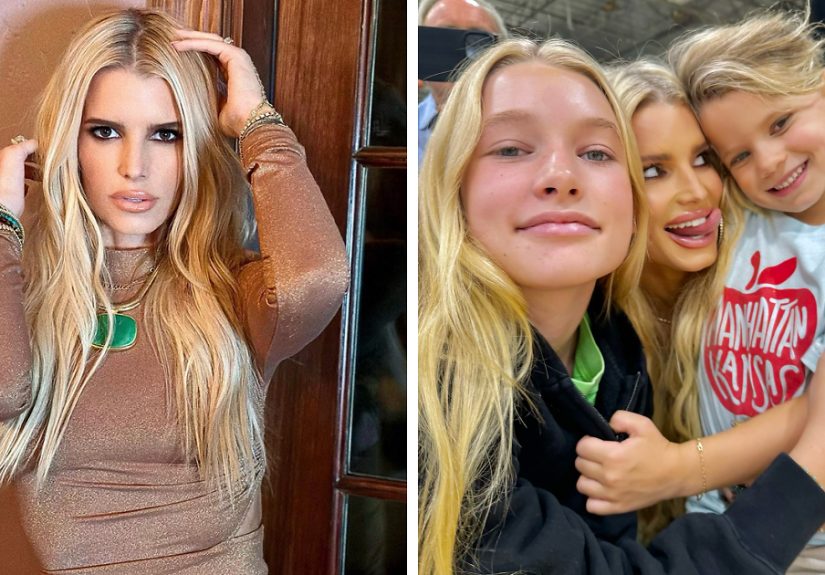
The moment in question was refreshingly normal: a sideline family selfie at a youth basketball game. Jessica Simpson posted a photo with two of her kidsdaughter Maxwell and youngest daughter Birdiewhile they cheered for her son Ace. Everyone looked like they’d stepped away from the action for a quick “proof of life” pic.
Maxwell and Birdie smiled. Jessica, in a move familiar to anyone who has ever tried to get three people to look at the camera at the same time, went with a goofy tongue-out expression. It read less “red carpet” and more “I’m a mom in a folding chair, let me have my silly little moment.”
In other words: a harmless snapshot from the bleachers, not a parenting manifesto.
The Internet Reaction: From “Weird Pose” to “Stop With The Stupid Faces!”
Enter the comment section, a place where compassion goes to die and punctuation goes to vacation without notice. A handful of critics zoomed in on Jessica’s expression and decided it was evidence of something… suspicious? Attention-seeking? “Not normal”? (As if “normal” exists at a kid’s sports game, where parents routinely shout like they’re coaching the NBA Finals.)
Some commenters labeled the pose “weird.” Others went for the direct approach and essentially demanded she knock it off: “Stop with the stupid faces!” Because clearly the greatest threat to modern childhood is a celebrity mom being goofy for half a second while her kids are literally smiling next to her.
Why do people get so pressed about a goofy face?
Social media turns ordinary parenting moments into public performances. A silly expression becomes “trying too hard.” A curated family photo becomes “fake.” A candid one becomes “messy.” The rules are made up, the points don’t matter, and the judgment is always on sale.
There’s also a sneaky expectation baked into celebrity culture: famous women are supposed to be effortlessly polished, but also relatable; glamorous, but also “real”; maternal, but not “mom-ish.” So when a celebrity mom acts like… a mom, some people take it as a personal affront, like she violated an invisible contract.
And yes, plenty of people defended her
The good news: mom-shaming doesn’t get the whole stage. For every nitpicky remark, there are usually plenty of fans (and fellow parents) stepping in with some version of: “She’s having fun. The kids are fine. Please log off and drink water.” Online parenting criticism tends to look loud, but that’s often because negativity travels faster than nuance.
Mom-Shaming: A Competitive Sport Nobody Signed Up For
If you’ve ever felt judged for how you feed your kid, dress your kid, talk to your kid, or let your kid eat something that wasn’t handcrafted from organic moonlight, you already know the vibe. Mom-shaming is the practice of criticizing mothers for parenting choicesespecially the harmless onesoften with a side of moral superiority.
And it’s common. Surveys and reporting over the years have repeatedly found that a majority of mothers of young children say they’ve been criticized about their parenting decisions. What’s especially wild is that the harshest judgment often comes from close circles (family, partners, in-laws), not just random strangers online. But social media adds something extra: scale. You’re no longer dealing with one opinionated aunt at Thanksgiving. You’re dealing with thousands of anonymous aunts with Wi-Fi.
Why celebrity moms get it even worse
Celebrity parenting is like parenting with stadium lighting. People feel entitled to weigh in because fame blurs the line between public and private. A celebrity posts a family moment as a sweet update; the internet treats it like a group project where everyone must “give feedback.”
Add Jessica Simpson’s history of public scrutinyespecially around body imageand you get a perfect storm. When someone has been judged for years, the comment section tends to recycle the same energy, just with different packaging: today it’s a face, tomorrow it’s a lunchbox, next week it’s the angle of a stroller strap.
Jessica Simpson’s Long History With Parenting Criticism Online
If the “weird pose” moment felt familiar, it’s because Jessica Simpson has been a frequent target of online parenting judgment for yearsoften over low-stakes, everyday choices that millions of parents make without a headline attached.
Hair dye and the “too young” debate
One of the most cited examples: Jessica shared a photo of daughter Maxwell with colorful dyed ends, and critics jumped in with the usual “she’s too young” comments. The counterargumentloud and reasonablewas that hair color is temporary, kids love experimenting, and nobody’s childhood is ruined by purple tips. The bigger issue wasn’t the dye; it was the reflex to police a mom’s decision because it didn’t match someone else’s personal rulebook.
Makeup selfies and the “let kids be kids” chorus
Another internet classic: a mother-daughter day that included trying makeup at a cosmetics store became an invitation for critics to panic about lipstick and “age-appropriateness.” Never mind that play is how kids explore identity, costumes, and creativity; the comment section often treats a child in lip gloss like a five-alarm fire.
Strollers, straps, and the hyper-focus effect
Parenting photos also get scrutinized in a uniquely intense way when they involve safety-adjacent gearcar seats, strollers, boats, helmets, you name it. In past years, Jessica faced waves of criticism over how her baby appeared to be strapped into a stroller. These moments are tricky because safety guidance matters, but internet pile-ons often skip the helpful part and sprint straight to judgment. There’s a difference between “Hey, here’s a safer fit” and “You’re a terrible parent,” and the internet loves confusing the two.
Pacifiers, vacations, and the “I know your kid better than you” energy
Even something as common as a pacifier can spark drama. Jessica has faced backlash when photos showed Birdie using one, with critics insisting she was “too old” and forecasting dental doom. Some of those concerns can be grounded in general pediatric advice, but again, the delivery matters. Parenting isn’t a public trial, and medical nuance doesn’t fit neatly into a snarky one-liner.
So… Was It Really a “Weird Pose”?
Let’s be honest: if you scroll through any parent’s camera roll, you’ll find at least one photo where an adult is doing something unflatteringmid-blink, mid-laugh, or making a ridiculous face because the toddler refused to smile unless someone pretended to be a dinosaur.
In the Jessica Simpson photo, the kids are smiling. They’re hugging. The energy reads affectionate and playful. The “weird pose” label says more about the viewer than the family. It’s the classic problem of over-interpreting a single frame and turning it into a personality diagnosis.
Also, and this is important: moms are allowed to be silly in public. Moms are allowed to not look perfect. Moms are allowed to take up space in a photo without being accused of “making it about them.” The internet doesn’t get to demand that women erase themselves from family moments in the name of some imaginary humility standard.
Why This Kind of Backlash Keeps Going Viral
1) Outrage is an algorithm’s love language
Social platforms reward engagement, and nothing gets engagement like judgment. A neutral post (“Cute family photo”) is a speed bump. A spicy take (“She can’t even pose normally!”) is a rocket. The result is a feed that amplifies criticismeven when most people don’t agree with it.
2) Parenting is personal, so criticism feels like identity warfare
People tie their parenting choices to their values. So when they see a different choice, it can feel like a challenge to what they believe is “right.” Instead of thinking, “That works for her family,” they think, “If she’s okay, does that mean I’m overdoing it?” And thenboomdefensiveness in the form of judgment.
3) Celebrity culture encourages armchair intimacy
Celebrities share moments to connect with fans, but the parasocial effect can turn into entitlement. Some people start acting like they’re not just observers, but participantslike they have a vote in the parenting decisions of someone they’ve never met.
How to Handle Mom-Shaming (Without Launching Your Phone Into a Lake)
Even if you’re not famous, the Jessica Simpson “Instagram backlash” story can feel oddly familiar. The good news is you can protect your peace without turning into a hermit who only communicates through carrier pigeons.
Practical ways to shut down online parenting criticism
- Decide what you want social media to be for you. Memory book? Community? Business? Pick a lane and set boundaries accordingly.
- Use the tools. Restrict comments, filter keywords, limit who can message you, or post to close friends when you want a softer landing.
- Don’t debate strangers who came for entertainment. If someone is committed to misunderstanding you, your explanation won’t cure them.
- Keep the “helpful vs. hateful” line clear. Safety-based concerns can be worth considering; moralizing and insults are not.
- Let your real-life village be the loudest voice. Friends, family, professionalspeople who know youshould outweigh a comment section.
If you do respond, keep it short
The most effective clapbacks aren’t scorched-earth essays. They’re calm boundaries: “We’re good, thanks,” “Please be kind,” or the classic “This isn’t an invitation for parenting advice.” Bonus points if you log off right after.
The Bigger Picture: What the “Weird Pose” Drama Really Reveals
The Jessica Simpson moment isn’t about a tongue-out face. It’s about how society treats mothersespecially famous mothersas public property. It’s about how quickly we assume “bad intent” when we see a woman enjoying herself. And it’s about how parenting becomes a stage where everyone wants to be the critic instead of the support.
The irony is that the same culture that demands moms be joyful and grateful also punishes them for showing joy in ways that aren’t perfectly photogenic. We want mothers to be present, but not messy; playful, but not goofy; confident, but not attention-seeking. That’s not a standard. That’s a trap.
If Jessica Simpson’s photo did anything valuable, it exposed how absurd the policing can be. A mom hugged her kids at a game. The kids smiled. The world stayed intact. The only thing that really needed adjusting was the comment section’s blood pressure.
Conclusion: Let Moms Be Humans (Yes, Even in Photos)
The next time you see a celebrity mom getting dragged for a “weird pose,” consider what’s actually happening: strangers are projecting their own expectations onto a split second of someone else’s life. The photo isn’t a problem. The reflex to judge is.
Jessica Simpson doesn’t need permission to be silly with her daughters. Neither do you. Parenting is hard enough without adding “pose correctly for the internet” to the job description.
Bonus: Real-World Experiences With “Mom-Shaming” Energy (and How People Actually Survive It)
Mom-shaming doesn’t only happen to celebritiesit just happens to them with better lighting and a bigger audience. In real life, it can show up in the grocery store aisle, the school pickup line, the family group chat, or (the boss level) a neighborhood Facebook group where someone posts “Just a friendly reminder…” and you can practically hear the judgment through the screen.
Picture this: you’re at a kid’s birthday party and your child refuses to smile for a photo unless you make the goofiest face imaginable. So you do it. You stick your tongue out, cross your eyes, maybe throw in a dramatic pose like you’re auditioning for “Parents Gone Wild: The Musical.” The kids laugh, the photo is adorable, and for two minutes you feel like you’re winning at parenting. Then someone says, “Wow, you’re really doing the most,” in that tone that makes “most” sound like a felony.
Or you post a quick picture after a long dayyour kid is happy, you’re tired, the vibe is realand a distant acquaintance comments, “Must be nice to have time to take selfies.” As if documenting a moment is evidence that you’ve outsourced all responsibility to a team of invisible nannies. The shaming isn’t about the photo; it’s about a weird belief that mothers must constantly prove they’re selfless, serious, and suffering in order to be considered “good.”
Sometimes mom-shaming hides inside “concern.” It starts with “I’m just worried…” and ends with a full dissertation on why your child’s snack choice is basically a criminal conspiracy. It can even come from people you love. Family members may criticize sleep schedules, discipline, screen time, or what you’re feeding your kidoften because they’re remembering outdated advice or repeating what worked decades ago. And because it’s family, it hits harder.
The most useful coping skill isn’t the perfect comebackit’s clarity. Many parents learn to sort feedback into three buckets: (1) helpful (specific, respectful, evidence-based), (2) noise (opinions disguised as rules), and (3) harm (insults, shame, or anything meant to embarrass you). Only bucket #1 deserves even a moment of your energy.
Another survival trick: build a “reality board.” Not a vision boardthis is a mental list of the people who actually know your kid and your life: your pediatrician, your partner, your closest friends, the teacher who sees your child daily, the family member who supports you instead of scoring you. When criticism shows up, you mentally ask: “Does this person belong on the reality board?” If not, their comment doesn’t get a vote.
And if you’re the one who feels the itch to judge another parent (it happens!), the Jessica Simpson story is a great pause button. Before you type, ask: “Am I helping, or am I performing superiority?” If it’s the second one, close the app. Drink water. Go make a goofy face at your own camera roll. The kids will survive. The world will keep spinning. And maybe, just maybe, we can all stop treating motherhood like a public audition.