Table of Contents >> Show >> Hide
- Can You Really Grow Onions Indoors?
- Before You Plant: Choose the Right Onion Type for Indoors
- Indoor Onion Growing Setup (The “Don’t Skip This” Section)
- Method 1: How to Grow Onions Indoors From Seeds
- Method 2: How to Grow Onions Indoors From Bulbs (Sets)
- Method 3: How to Grow Onions Indoors From Cuttings (Kitchen Scraps)
- Common Indoor Onion Problems (and Fixes)
- Harvesting Indoor Onions
- Indoor Onion Growing Tips for Better Results
- Conclusion
- Practical Experiences Growing Onions Indoors (500+ Words)
If your cooking style can be described as “add onions and hope for the best,” you’re in excellent company. Onions are the backbone of soups, stir-fries, tacos, pasta sauces, and that one recipe you swore would take 20 minutes but somehow became a full evening event. The good news? You can absolutely grow onions indoors.
The even better news: you have options. You can start from seeds for the full gardener experience, plant onion sets (small bulbs) for faster results, or regrow green onions from cuttings like a kitchen wizard who refuses to waste produce. The trick is matching your method to your goalgreen tops fast, or actual bulb onions later.
In this guide, you’ll learn how to grow onions indoors step by step, which varieties work best, what kind of light they need, and how to avoid the most common mistakes (like soggy roots and “why is this onion just making leaves forever?” confusion). Let’s get your indoor onion setup working like a tiny produce department on your windowsill.
Can You Really Grow Onions Indoors?
Yesbut with one important caveat: growing onion greens indoors is much easier than growing large dry bulbs indoors. Bulb onions depend heavily on light intensity and day length (the number of hours of light that trigger bulbing). Indoors, you can do it, but you usually need strong grow lights, enough space, and the right variety.
If you’re new to indoor onion growing, start with one of these goals:
- Fastest win: Regrow green onions (scallions) from cuttings in water or soil.
- Moderate effort: Grow green onions from sets or seed in a container.
- Advanced indoor project: Grow full bulb onions under grow lights.
Before You Plant: Choose the Right Onion Type for Indoors
1) Decide What You Want to Harvest
- Green onions / scallions: Best for small spaces and windowsills. Quick harvest, forgiving, and perfect for cut-and-come-again snipping.
- Bulb onions: Need more root room, stronger light, and more patience.
2) Understand Day-Length (This Part Matters More Than People Think)
Onions form bulbs based on day length, not just age. That means if you choose the wrong type for your region/light schedule, the plant may stay leafy or make tiny bulbs. Onion varieties are generally grouped as:
- Short-day onions (best for southern regions)
- Intermediate-day onions
- Long-day onions (best for northern regions)
Indoors, this gets interesting because your grow light schedule can influence growth, but natural seasonal conditions still matterespecially if your plants spend time on a windowsill or move outdoors later. If your goal is just green onions, you can relax a bit: greens are much less fussy than big storage bulbs.
3) Seeds vs. Bulbs vs. Cuttings: Which Method Should You Pick?
- Seeds: Cheapest, widest variety selection, slowest start.
- Bulbs (sets): Fastest path to onion plants, easiest for beginners, limited variety.
- Cuttings: Best no-waste hack for regrowing green onions from kitchen scraps.
Indoor Onion Growing Setup (The “Don’t Skip This” Section)
Container Size
Onion roots are fairly shallow, but bulb onions still need room. If you’re growing for bulbs, use a container with good drainage and enough depth for roots and moisture stability. A deeper container helps prevent constant drying and supports healthier growth. For container onions, a practical target is around 10 inches of soil depth for better results.
For green onions, you can use smaller pots, window boxes, or even a recycled container (as long as it has drainage holes). If there’s no drainage, your onions may file a formal complaint via root rot.
Potting Mix
Use a loose, well-draining potting mix. Onions dislike heavy, compacted soil. A mix with compost blended in works well. Aim for slightly acidic to neutral pH, and avoid garden soil scooped straight from the yard (it compacts easily indoors and can introduce pests).
Light Requirements
Onions want lots of light. A sunny window may be enough for regrowing scallion greens, but for dependable indoor growthespecially from seed or for bulbsuse a grow light. Position lights close enough to prevent lanky growth (follow your light manufacturer’s guidance), and keep a consistent daily light schedule.
If you’re growing full bulbs indoors, think “mini greenhouse” rather than “cute windowsill experiment.” It can be done, but strong light is the difference between success and decorative grass.
Watering
Onions are shallow-rooted, so they need consistent moisture, but not swamp conditions. Water when the top layer of soil starts to dry. The goal is evenly moist soilnever bone dry for days, never soggy. Indoor containers can dry quickly near heaters and sunny windows, so check more often than you think.
Fertilizer
Onions grow best in fertile soil. A balanced fertilizer or a gentle liquid feed can help, especially in containers where nutrients wash out over time. Follow product directions and avoid overfeeding (too much nitrogen can give you lots of leafy growth and disappointing bulbs).
Method 1: How to Grow Onions Indoors From Seeds
Best For
Gardeners who want more variety options, lower cost, and the satisfaction of saying, “I raised these from seed,” at least three times.
Step-by-Step
- Choose your variety. Pick a day-length type that matches your region if you want bulbs. For indoor greens, scallion/bunching onion varieties are especially easy.
- Fill seed trays or small pots. Use pre-moistened seed-starting mix.
- Sow seeds shallowly. Onion seed is typically planted shallow (about 1/4 inch deep is a common guideline).
- Keep moisture consistent. Onion germination can be slow and patchy, so patience matters. Don’t let the surface dry out during germination.
- Provide strong light after sprouting. Seedlings get leggy fast if lighting is weak.
- Trim tops if needed. If seedlings get floppy or too tall, a light trim helps them stay manageable.
- Thin or transplant. If growing bulbs in a container, give each plant enough spacing. For green onions, you can grow more densely and harvest selectively.
How Long Does It Take?
Seeds are the slow lane (the scenic route, if we’re being generous). You’ll get green onion harvests sooner, but mature bulb onions take much longer. Depending on variety and conditions, bulb onions can take several months.
Method 2: How to Grow Onions Indoors From Bulbs (Sets)
What “Bulbs” Means Here
In gardening, “bulbs” usually means onion setssmall dormant onion bulbs grown the previous season. These are one of the easiest ways to start onions at home.
Best For
Beginners who want a faster, simpler start than seeds.
Step-by-Step
- Pick healthy sets. Choose firm sets without mold or mushy spots.
- Prepare a container with drainage. Use a quality potting mix and moisten it before planting.
- Plant at the correct depth. Sets are planted shallowlydeep enough to anchor but not buried excessively.
- Space according to your goal.
- For green onions: plant closer together and harvest some early.
- For bulbs: give more room so bulbs can size up.
- Provide full light / grow light. More light = sturdier top growth and better bulbing potential.
- Water consistently. Keep soil evenly moist, especially while plants are actively growing.
- Harvest strategically. You can “thin by eating”remove every other plant as green onions and leave the rest to bulb up.
Pro Tip
Small sets are often better for bulb production than oversized ones because larger sets may bolt (send up a flower stalk) more easily. If a set bolts indoors, don’t panicjust harvest it sooner and use it fresh.
Method 3: How to Grow Onions Indoors From Cuttings (Kitchen Scraps)
The Easiest Indoor Onion Project
This method is ideal for green onions/scallions. Save the white root ends, place them in water, and they’ll regrow green tops surprisingly fast. It’s simple, low-cost, and weirdly satisfying.
What You Need
- Green onion root ends (with roots attached)
- A small jar or glass
- Fresh water
- A bright window
- (Optional) Pot with potting soil for longer-term growth
Step-by-Step
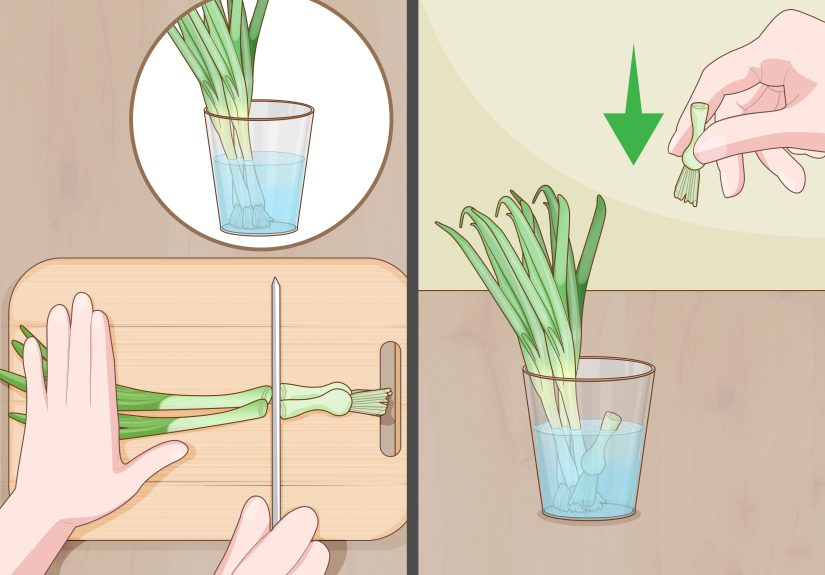
- Trim and save the roots. Leave a bit of the white stalk attached.
- Stand root ends upright in water. Keep the roots submerged, but don’t drown the whole white stalk.
- Place in bright light. A sunny windowsill works well for this method.
- Change the water regularly. Fresh water helps prevent slime and odor.
- Snip greens as needed. You’ll often see new growth within days.
- Transfer to soil for longer life. Water regrowth is great short-term, but plants usually perform better and last longer once moved into potting soil.
Can You Regrow Bulb Onions From Cuttings?
You can regrow green shoots from the root end of some onion scraps, but getting a large, high-quality storage bulb indoors from kitchen cuttings is less reliable than using seeds or sets. For dependable bulb onions, use seeds, transplants, or sets. For quick greens, cuttings are fantastic.
Common Indoor Onion Problems (and Fixes)
Problem: Thin, floppy leaves
Cause: Not enough light. Fix: Add a grow light or increase daily light exposure.
Problem: Yellowing tips
Cause: Irregular watering, low nutrients, or crowded plants. Fix: Improve consistency and thin plants if needed.
Problem: Mushy base / bad smell
Cause: Overwatering or stagnant water (especially with cuttings). Fix: Improve drainage, reduce watering frequency, and change water often for cuttings.
Problem: No bulb formation
Cause: Wrong day-length variety, weak light, overcrowding, or harvesting too early. Fix: Match variety to region, increase light, and give plants enough space and time.
Problem: Flower stalk (bolting)
Cause: Stress, temperature swings, or set size. Fix: Harvest sooner and use fresh; bolting usually reduces storage quality.
Harvesting Indoor Onions
For Green Onions / Scallions
- Snip tops when they’re tall enough for cooking.
- Cut above the growing point if you want regrowth, or harvest the whole plant.
- Regular harvesting often encourages continued leaf production.
For Bulb Onions
- Harvest when tops yellow and begin to flop over.
- Reduce watering as bulbs mature.
- Cure harvested onions in a warm, airy place before storage if you grew true bulb onions.
Indoor Onion Growing Tips for Better Results
- Start small. A pot of scallions teaches you the basics fast.
- Use labels. Onion seedlings can look like “mystery grass” at first.
- Rotate containers. If using a window, rotate pots for straighter growth.
- Thin by eating. It’s efficient and delicious.
- Stagger planting. Start a new pot every 2–3 weeks for a steady kitchen supply.
- Don’t overwater out of kindness. Onions appreciate care, not a spa flood.
Conclusion
Learning how to grow onions indoors is one of the best beginner-friendly gardening projects because it scales with your ambition. Want a quick win? Regrow green onions from cuttings in a jar. Want a more serious harvest? Plant onion sets in containers. Want the full challenge and variety selection? Start from seed under grow lights.
The big secret is simple: give onions enough light, steady moisture, good drainage, and the right spacing for your harvest goal. Do that, and you’ll go from “I buy onions constantly” to “hold on, I’ve got fresh ones growing next to the coffee maker.”
Practical Experiences Growing Onions Indoors (500+ Words)
One of the most useful things I’ve learned from indoor onion growing is that success depends less on “gardening talent” and more on matching expectations to the method. People often start with the dream of giant pantry onions growing happily on a kitchen windowsill, but in real life, the easiest and most rewarding indoor experience is usually green onions first, bulb onions second. That’s not bad newsit’s actually the shortcut to staying motivated.
For example, a common first experience is regrowing scallions from kitchen scraps in a glass of water. It feels almost too easy: save the white ends, stand them upright, add water, and put them near light. Within days, the green tops start stretching upward like they’ve got places to be. This fast response is incredibly encouraging for beginners. The catch (and this surprises a lot of people) is that the growth can slow down after a few rounds if the cuttings stay in water too long. The greens still regrow for a while, but they can become thinner, and the roots may get slimy if the water isn’t changed often. Moving them into potting soil usually fixes that and gives much stronger, longer-lasting growth.
Another very common experience: onion seedlings from seed look fragile at first, and many growers assume they’re failing. They aren’t. Onion seedlings naturally look like fine green threads in the early stages. Indoors, they get floppy when light is too weak or too far away, so the solution is usually better light placementnot more water. This is one of the biggest indoor gardening lessons in general: floppy plants are often asking for light, not a drink. Once growers switch to a grow light and keep the soil evenly moist, seedlings usually become much more manageable.
People growing onion sets indoors often report the most satisfying middle-ground experience. Sets establish quickly, and you can see progress faster than with seed. If planted a little too close, they still give you a useful harvest because you can pull the crowded ones as green onions and leave the rest. That “thin by eating” approach makes indoor onion growing feel forgiving. Even mistakes become toppings.
Spacing is another lesson that shows up in real life. In a small container, onions can look fine for weeks and then suddenly stall because they’re competing for the same water and nutrients. The tops may stay green, but bulb growth barely happens. Beginners sometimes interpret this as a fertilizer problem and feed more, but the real fix is often simple spacing. Once plants have enough room, bulb development improves noticeably. Indoor containers magnify spacing mistakes because there’s less margin for error than in an outdoor garden bed.
Watering rhythm is where most indoor onion growers develop their “gardener instincts.” Onions don’t like to dry out completely, but they also don’t want soggy roots. In practice, this means checking the container regularly and watering based on soil feelnot a rigid calendar. A pot near a bright window may need water much sooner than one in a cooler room. During winter heating season, containers can dry faster than expected, and the onion leaves may show stress before the soil looks obviously dry. After a few weeks, most growers start noticing the pattern and watering becomes much easier.
The most successful indoor onion growers also tend to stagger plantings. Instead of planting one giant container and hoping for perfection, they grow a few batches: one for cuttings, one for quick green onions, and one for a longer bulb experiment. This spreads out the risk and keeps harvests coming. It also makes the whole project more fun, because there’s always something happeningroots forming, greens regrowing, seedlings sprouting, or bulbs sizing up.
In short, real-world indoor onion growing is less about achieving a magazine-cover harvest on day one and more about building a repeatable kitchen-garden habit. Start with the easy wins, learn how your light and watering conditions behave, and then level up. Once you do, onions become one of the most practicaland surprisingly entertainingcrops to grow indoors.