Table of Contents >> Show >> Hide
- What Is Lattice Multiplication?
- Why Lattice Multiplication Works
- When to Use the Lattice Method
- How to Do Lattice Multiplication: 6 Steps
- Worked Example: 32 × 15
- How Lattice Multiplication Compares to Long Multiplication
- Tips for Teaching or Learning Lattice Multiplication
- Common Questions About Lattice Multiplication
- Conclusion
- Extra Experience and Practical Insights on Learning Lattice Multiplication
- SEO Tags
Lattice multiplication is one of those math methods that looks a little fancy at first glance, like it showed up wearing a bow tie. But once you learn the pattern, it becomes a surprisingly simple way to multiply large numbers without losing track of your work. If traditional long multiplication sometimes feels like juggling while riding a skateboard, lattice multiplication can feel more like putting puzzle pieces into neat little boxes.
This method uses a grid, diagonal lines, and a very organized system for writing partial products. It is especially helpful for students who like visual structure, parents who need a calmer way to explain multiplication at the kitchen table, and anyone who has ever stared at a multi-digit multiplication problem and thought, “Well, this escalated quickly.”
In this guide, you’ll learn exactly how to do lattice multiplication in six clear steps, why it works, where students often make mistakes, and how to practice until it feels easy. We’ll also walk through real examples so the process does not stay stuck in theory-land.
What Is Lattice Multiplication?
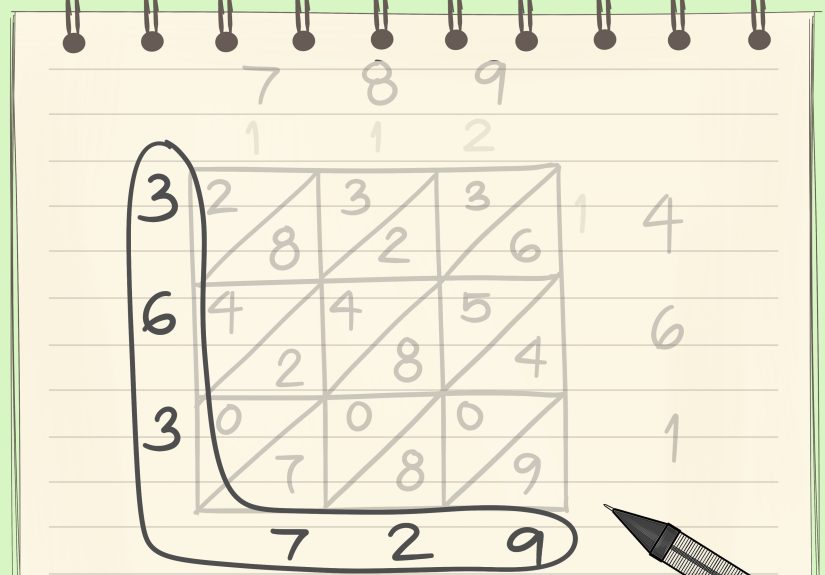
Lattice multiplication is a visual method for multiplying numbers using a rectangular grid. Each box in the grid is divided by a diagonal line. After you place one factor across the top and the other down the side, you multiply the digits that intersect in each box. Then you add along the diagonals to find the final product.
The beauty of the lattice method is that it breaks a big multiplication problem into many tiny multiplication facts. Instead of keeping track of several partial products in your head, you let the grid do the organizing for you. That makes it a useful multiplication strategy for learners who benefit from structure, patterns, and place-value support.
Why Lattice Multiplication Works
Even though lattice multiplication looks different from the standard algorithm, it is based on the same math. You are still multiplying each digit in one number by each digit in the other number. The grid simply arranges those partial products in a tidy visual format. When you add the diagonals, you are combining values according to place value, just like you would in long multiplication.
So no, the grid is not magic. It is organized place value wearing a geometric costume.
When to Use the Lattice Method
Lattice multiplication is especially helpful when:
- you are multiplying two-digit or three-digit whole numbers
- you want a more visual alternative to long multiplication
- you are teaching students who mix up place values in standard form
- you want to check multiplication work in a different way
- you are practicing multiplication facts and place value at the same time
It is not the only good way to multiply, but it is a strong tool to keep in your math toolbox.
How to Do Lattice Multiplication: 6 Steps
Step 1: Draw the Grid
First, count how many digits are in each factor. If one number has two digits and the other has two digits, draw a grid with 2 columns and 2 rows. If you are multiplying a three-digit number by a two-digit number, draw a 3-by-2 grid.
Then draw a diagonal line inside each box from the top right corner down to the bottom left corner. These diagonals matter because they separate the tens digit from the ones digit in each partial product.
Think of the diagonals as tiny apartment walls. The tens digit lives upstairs, and the ones digit lives downstairs.
Step 2: Write the Numbers Around the Grid
Write one factor across the top of the grid, with one digit above each column. Write the other factor down the right side of the grid, with one digit beside each row.
For example, if you are multiplying 47 × 26:
- write 4 and 7 across the top
- write 2 and 6 down the right side
Now each box represents one small multiplication problem. The top digit and the side digit that meet at that box are the pair you multiply.
Step 3: Multiply Each Pair of Digits
Multiply the digit at the top of each column by the digit at the end of each row. Write the product inside the matching box.
Always split the product into two digits:
- put the tens digit above the diagonal
- put the ones digit below the diagonal
If the product is a one-digit number, write 0 for the tens digit. For example, if 2 × 4 = 8, write 0 above the diagonal and 8 below it.
Using 47 × 26:
- 2 × 4 = 08
- 2 × 7 = 14
- 6 × 4 = 24
- 6 × 7 = 42
Each product goes into its own box, split by the diagonal. This keeps the place values from bumping into each other like shoppers on Black Friday.
Step 4: Add Along the Diagonals
Start at the bottom right corner and add the digits in each diagonal strip. Work your way toward the top left. Each diagonal collects digits that belong to the same place value.
If a diagonal adds up to a two-digit number, write the ones digit in that diagonal’s answer spot and carry the tens digit to the next diagonal.
For 47 × 26, the diagonal sums give:
- rightmost diagonal = 2
- next diagonal = 4 + 4 + 4 = 12, write 2 and carry 1
- next diagonal = 0 + 1 + 2 + carried 1 = 4
- leftmost diagonal = 0
That gives you 1222.
Step 5: Read the Answer from Left to Right
Once the diagonal sums are complete, read the digits from left to right, starting at the top left and moving to the bottom right. That string of digits is your final product.
So for 47 × 26, the answer is:
1,222
At this point, your lattice has done its job. It may retire with dignity.
Step 6: Check for Common Mistakes
Before you celebrate, check these details:
- Did you draw the correct number of rows and columns?
- Did you label the top and side with the right digits?
- Did you split each product correctly into tens and ones?
- Did you include zeros when needed, such as writing 08 instead of just 8?
- Did you add the diagonals in the correct direction?
- Did you carry properly when a diagonal sum was greater than 9?
Most lattice multiplication mistakes do not happen in the multiplying. They happen in the setup or in the diagonal addition. In other words, the math is often innocent. The paperwork is suspicious.
Worked Example: 32 × 15
Let’s go through another example in a clean, simple way.
Problem: 32 × 15
Set Up the Lattice
Because both factors have 2 digits, draw a 2-by-2 grid. Place 3 and 2 across the top. Place 1 and 5 down the right side.
Fill in the Boxes
- 1 × 3 = 03
- 1 × 2 = 02
- 5 × 3 = 15
- 5 × 2 = 10
Add the Diagonals
- rightmost diagonal = 0
- next diagonal = 2 + 5 + 1 = 8
- next diagonal = 0 + 1 + 3 = 4
- leftmost diagonal = 0
Read from left to right: 0480
Drop the leading zero, and the final answer is 480.
How Lattice Multiplication Compares to Long Multiplication
Both methods give the same answer. The difference is how the work is organized.
- Long multiplication stacks partial products in rows.
- Lattice multiplication stores partial products inside a grid.
Some students prefer long multiplication because it is faster once mastered. Others prefer the lattice method because it visually separates the work and reduces confusion about place value. Neither method is “the one true ruler of multiplication.” They are simply different roads to the same correct answer.
Tips for Teaching or Learning Lattice Multiplication
Use Graph Paper at First
Graph paper makes it much easier to draw straight boxes and clean diagonals. This reduces setup errors and keeps the work readable.
Practice with Smaller Numbers First
Start with 2-digit by 1-digit or 2-digit by 2-digit problems before moving to larger numbers. Students need to feel comfortable with the structure before tackling bigger products.
Review Multiplication Facts
The lattice method helps with organization, but it does not replace basic multiplication facts. If a learner still hesitates on 6 × 7 or 8 × 4, that will slow everything down.
Color-Code the Diagonals
For beginners, highlighting each diagonal in a different color can make the addition stage easier to follow. It turns a confusing blur into a visible path.
Talk About Place Value
Do not treat the grid like a mysterious ritual. Explain that the diagonals group ones, tens, hundreds, and thousands. That builds deeper understanding and helps students transfer the idea to other multiplication strategies.
Common Questions About Lattice Multiplication
Is Lattice Multiplication Easier?
For many visual learners, yes. It can feel easier because each tiny multiplication fact has its own space. That reduces clutter and can make multi-digit multiplication less intimidating.
Can You Use Lattice Multiplication for Large Numbers?
Yes. The method works for larger whole numbers too. You simply make a bigger grid. The process stays the same, although the diagram takes more time to draw.
Do You Need to Write Leading Zeros?
Yes, when a product is a single digit. Writing 08 instead of 8 is important because it preserves place value inside the box.
Can Lattice Multiplication Help with Understanding?
Absolutely. It can help students see how multiplication is built from smaller products and organized by place value. That visual structure often makes the concept feel more logical and less chaotic.
Conclusion
Lattice multiplication is a smart, visual way to multiply multi-digit numbers step by step. By drawing a grid, labeling the digits, filling each box with partial products, and adding along diagonals, you can solve problems accurately without getting tangled in messy columns. It is especially useful for students who like patterns, clear organization, and a little visual support.
The best part is that lattice multiplication is not just a trick. It reflects the same place-value logic behind standard multiplication, only in a layout that many learners find easier to manage. Once you practice it a few times, the method starts to feel smooth, logical, and maybe even a little fun. Yes, fun. We are all surprised.
If multiplication has ever felt frustrating, the lattice method might be the fresh start you need. One grid, a few diagonals, and suddenly the whole process feels a lot less scary.
Extra Experience and Practical Insights on Learning Lattice Multiplication
One of the most interesting things about lattice multiplication is how often it changes a student’s attitude before it changes their accuracy. A lot of learners do not hate multiplication because they cannot multiply. They hate it because the page gets messy, the steps blur together, and one small mistake wrecks the whole answer. Lattice multiplication gives those students a sense of control. Every digit has a place. Every product has a box. Every diagonal has a job. That kind of visual order can lower stress in a big way.
Parents and teachers often notice that reluctant math learners become more willing to try when the method feels like a drawing activity instead of a wall of numbers. There is something reassuring about building the grid first. It feels less like jumping into deep water and more like putting on floaties before the splash. Students who freeze during standard long multiplication sometimes relax when they see that lattice multiplication turns one huge problem into several very small ones.
Another real-world advantage is error detection. In standard multiplication, a misplaced partial product can be hard to spot. In a lattice, it is easier to check box by box. If the product in one square looks suspicious, you can isolate that tiny step and fix it without redoing the whole problem. That makes the method useful not only for learning but also for reviewing work during homework or test prep.
There is also a confidence factor that matters more than people admit. When students feel successful with one multiplication strategy, they often become more open to understanding other methods too. Lattice multiplication can become a bridge to long multiplication rather than a replacement for it. Once learners see how partial products and place value work inside the grid, the standard algorithm often makes more sense later.
Of course, the method is not perfect for every person. Some students find drawing the lattice time-consuming, especially once they already know standard multiplication well. Others may do great with the multiplying and then rush the diagonal addition. That is normal. The key is to treat lattice multiplication as one strong strategy among several. In math, flexibility is powerful. A student who understands more than one method usually has a stronger overall number sense.
If you are practicing at home, the best approach is to start small, stay neat, and talk through the logic out loud. Say things like, “This 6 times 4 goes in this box,” or “This diagonal represents the tens place.” That kind of language helps the process stick. And after a few rounds, many learners stop seeing lattice multiplication as the “weird extra method” and start seeing it as the method that finally made multiplication click.