Table of Contents >> Show >> Hide
- What Makes Palm Reading “Modern”?
- Before You Start: Set the Mood and the Ground Rules
- Step 1: Read Both Hands, Not Just One
- Step 2: Start With the Big Picture
- Step 3: Read the Major Palm Lines
- Step 4: Look at Mounts, Fingers, and the Thumb
- Step 5: Turn Features Into a Real Reading
- Common Mistakes to Avoid
- Why Palm Readings Can Feel Uncannily Accurate
- A Simple 5-Minute Modern Palm Reading
- Experiences With Modern Palm Reading: What It Feels Like in Real Life
- Final Thoughts
- SEO Tags
If you hear the words palm reading and immediately picture velvet curtains, dramatic gasps, and someone whispering, “I see a tall stranger,” welcome to the club. But modern palm reading is a little different. Today, many people approach it less like a crystal-ball emergency and more like a reflective, intuitive practicepart observation game, part conversation starter, part symbolic storytelling with a human hand as the map.
That is what makes a modern palm reading so interesting. It is not just about memorizing what a line means and pretending you downloaded destiny from someone’s left hand in twelve seconds. It is about noticing patterns, asking smart questions, reading both hands, and interpreting symbols in a way that feels thoughtful, grounded, and surprisingly personal. In other words, less carnival bark, more curious pattern-reader with good lighting.
This guide will show you how to do a modern palm reading step by step. You will learn how to compare hands, identify hand shapes, read the major lines, notice smaller features, and turn all of that into a reading that feels insightful without becoming weirdly absolute. Because the best modern palm readings do not trap people inside predictions. They help people reflect on personality, habits, relationships, and choices.
What Makes Palm Reading “Modern”?
Traditional palmistry is oldvery oldand it has traveled through different cultures, beliefs, and systems of symbolism over time. A modern approach keeps the symbolic language but updates the attitude. Instead of saying, “Your fate is sealed because of this tiny fork near your pinky,” a modern reader might say, “This pattern is often associated with communication shifts or changing priorities. Does that fit anything happening in your life right now?”
That difference matters. A modern palm reading is:
- Interpretive, not absolute. It explores themes, not fixed doom.
- Reflective, not medical. Hands can show wear, posture, and habits, but palm reading is not healthcare.
- Conversational, not theatrical. A good reading invites feedback instead of pretending to know everything.
- Symbolic, not scientific. The meaning comes from a cultural tradition of interpretation, not laboratory proof.
That last point is worth underlining. The lines in your palm are real anatomical creases, not little Wi-Fi signals from the universe. A modern reader can appreciate the symbolism without pretending it is hard science. That balance is where palm reading gets a lot more interestingand honestly, a lot less cheesy.
Before You Start: Set the Mood and the Ground Rules
Before reading anyone’s palm, start with permission. This sounds obvious, but consent is not just for giant life decisions and borrowing fries. Palm reading can feel intimate because you are literally holding someone’s hand and talking about personal themes.
Here is the ideal setup:
- Use natural light or bright soft lighting.
- Ask the person to relax their hand.
- Look at both hands before saying anything dramatic.
- Avoid fear-based predictions about death, illness, or disaster.
- Frame the reading as insight, not certainty.
A good opening line helps. Try something like this: “I read palms in a modern way, so I look at patterns, personality clues, and life themes rather than making scary fixed predictions.” That instantly sets expectations and keeps the reading from veering into low-budget apocalypse theater.
Step 1: Read Both Hands, Not Just One
One of the most common modern palm-reading ideas is that you should compare the dominant and non-dominant hands. The non-dominant hand is often read as your baseline: your natural temperament, built-in tendencies, and raw wiring. The dominant hand is often read as how you have used, developed, or changed those traits through experience.
Think of it this way:
- Non-dominant hand: the rough draft
- Dominant hand: the edited version
If the lines and shapes are fairly similar, readers often interpret that as consistency between inner nature and outer life. If the hands look noticeably different, that can suggest growth, self-reinvention, tension, or a person who has had to work hard to become who they are now.
Already, you can see how modern palm reading works. It is less “You will marry a pirate” and more “You seem like someone whose inner wiring and current life path are not exactly identical.” That feels more useful for actual humans living actual lives.
Step 2: Start With the Big Picture
Before zooming in on lines, look at the overall hand. Modern readers usually begin with visible, structural impressions first. This helps you avoid getting hypnotized by one little line and missing the broader vibe.
Check the Hand Shape
Many modern palm-reading guides use four elemental hand shapes: earth, fire, air, and water. These are symbolic categories, not scientific diagnoses, but they offer a practical place to start.
- Earth hands: square palms, short fingers. Often associated with practical, grounded, dependable energy.
- Fire hands: long palms, short fingers. Often linked with action, confidence, enthusiasm, and impatience.
- Air hands: square palms, long fingers. Often tied to intellect, communication, curiosity, and overthinking.
- Water hands: long palms, long fingers. Often connected with sensitivity, intuition, imagination, and emotional depth.
Do not treat these as prison sentences. A person with “air hands” is not legally required to overanalyze text messages, though they may be spiritually inclined to do so. Use the shape as a starting framework.
Notice Texture, Flexibility, and Finger Style
Ask yourself:
- Is the hand firm or soft?
- Is the skin rough, smooth, dry, or warm?
- Are the fingers straight, knotted, tapered, or widely spaced?
- Does the thumb open easily, or stay close to the hand?
In modern readings, these details often become personality clues. A flexible hand may be read as adaptable. A firm hand may suggest steadiness or strong will. Widely spaced fingers may hint at independence. A strong thumb is often read as determination. None of this works best as a single magic bullet; it works best when several features tell a similar story.
Step 3: Read the Major Palm Lines
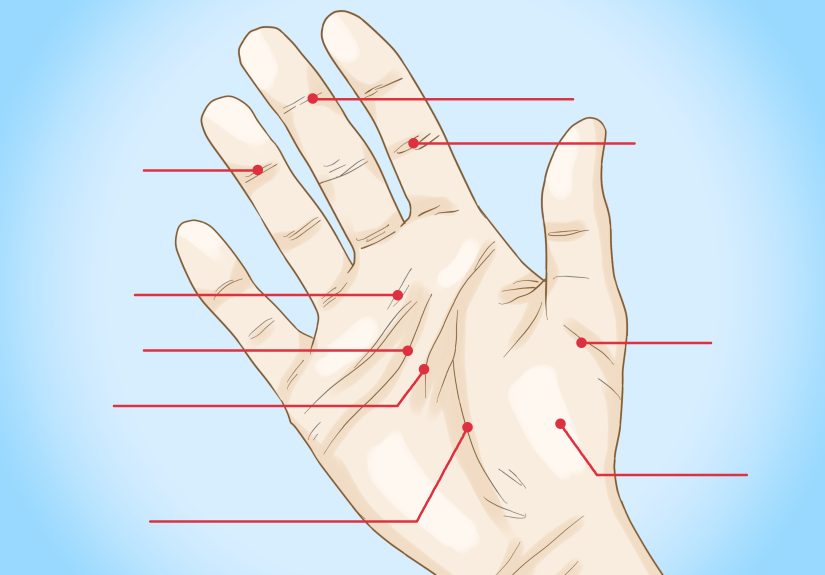
Now for the famous part: the lines. In a modern palm reading, the goal is not to memorize one rigid meaning for each line. The goal is to look at length, depth, clarity, curve, breaks, forks, and comparison between both hands.
The Heart Line
The heart line sits near the top of the palm, beneath the fingers. It is usually associated with emotional style, relationships, affection, and how someone gives and receives care.
Modern interpretations often sound like this:
- Deep, clear line: emotions matter a lot; feelings are not an afterthought.
- Curved line: expressive, warm, open-hearted.
- Straighter line: more controlled, private, or practical in love.
- Breaks or forks: emotional turning points, major lessons, or evolving relationship patterns.
A modern reader does not say, “This break means heartbreak in October at 3:17 p.m.” A better reading is, “You may have experienced a shift in how you trust or attach to people.” That lands with more honesty and less soap-opera fog machine.
The Head Line
The head line runs across the center of the palm and is usually associated with thought patterns, learning style, judgment, and mental habits.
- Long line: sustained focus, strong mental engagement.
- Straight line: practical thinking, structure, logic.
- Curved or sloping line: imagination, intuition, creative thinking.
- Wavy or broken line: mental shifts, complexity, restless ideas, or reinvention.
In a modern reading, this line is great for discussing how someone solves problems. Are they methodical? Abstract? Instinctive? A planner? A chaotic genius with twelve tabs open and no clear intention of closing any of them? The head line can help you frame that conversation.
The Life Line
The life line curves around the base of the thumb. It is probably the most misunderstood line in all of palmistry. A short life line does not mean a short life. Say that again for the people lurking in the back with panic in their eyes.
Modern readers usually connect the life line with vitality, grounding, momentum, resilience, and major life phases.
- Deep line: strong physical presence or steady drive.
- Faint line: lower energy reserve, sensitivity, or a quieter style.
- Wide curve: expansive nature, openness to experience.
- Tighter curve: more protective energy, selectiveness, or contained focus.
- Breaks or branches: major transitions, relocations, reinventions, or fresh starts.
If you only remember one thing from this guide, let it be this: the life line is about how someone moves through life, not how many candles they will need on a future birthday cake.
The Fate Line
The fate line, when visible, tends to run vertically through the center of the palm. Not everyone has a strong one, and that is not a cosmic insult. In modern readings, it is often tied to direction, outside influences, career path, duty, or a sense of calling.
- Clear fate line: strong sense of path or structure.
- Faint or absent fate line: self-directed life, less interest in fixed labels, or a more flexible journey.
- Interrupted line: pivots, career changes, identity changes, or a life path that gets rewritten.
For a modern reader, this line can open great discussion about work, purpose, pressure, and whether someone feels they are steering their own life or being tugged around by deadlines, expectations, and five thousand Slack notifications.
Step 4: Look at Mounts, Fingers, and the Thumb
Once you have the big lines, move to smaller features. The raised pads of the palm are often called mounts. Different traditions assign different meanings, but a simple modern version works well:
- Jupiter mount: ambition, confidence, leadership
- Saturn mount: seriousness, wisdom, responsibility
- Apollo mount: creativity, joy, visibility
- Mercury mount: communication, wit, adaptability
- Venus mount: affection, warmth, appetite for life
- Luna mount: imagination, intuition, emotional atmosphere
You do not need to treat these like a final exam. Just notice which areas seem especially full, flat, or active. Then see whether that matches the rest of the hand.
The thumb also matters in modern readings. It is often associated with willpower, decision-making, and personal style. A strong, open thumb may be read as confident and generous. A thumb that stays tucked close can suggest reserve or caution. Again, the point is pattern, not one-detail prophecy.
Step 5: Turn Features Into a Real Reading
This is where beginners often freeze. They can spot the lines but do not know how to speak the reading out loud. The trick is simple: move from observation to theme to question.
For example:
Observation: Long head line, straight heart line, strong thumb, noticeable fate line.
Theme: Analytical, self-controlled, driven, purposeful.
Question: “You seem like someone who takes commitment and goals seriously, but may not always show emotion in a dramatic way. Do people ever assume you are cooler on the outside than you really are?”
That sounds thoughtful because it is specific without being rigid. You are offering a pattern, not forcing a verdict.
Here is a useful formula:
- Name what you see.
- Translate it into a personality or life theme.
- Invite the person to respond.
- Adjust the reading based on the full hand, not one line.
That conversational style is the heart of a modern palm reading.
Common Mistakes to Avoid
- Do not predict death, disease, or catastrophe. That is irresponsible and unnecessary.
- Do not rely on one line. The whole hand matters.
- Do not ignore real anatomy. Hands have creases because skin folds and moves.
- Do not mistake symbolism for proof. Palmistry is interpretive.
- Do not perform certainty like a magician. Curiosity is more convincing than fake omniscience.
Why Palm Readings Can Feel Uncannily Accurate
Here is the fun twist: palm readings can feel deeply accurate even when they are symbolic rather than scientific. Part of that comes from human psychology. Broad but flattering descriptions often feel personal. People also naturally search for meaning, especially when language is warm, specific-sounding, and emotionally relevant.
That does not mean palm reading is pointless. It means its power may come less from prediction and more from reflection. A good modern reading works because it helps someone notice patterns, name tensions, and think about themselves differently. In that sense, it can function almost like a creative mirror.
And frankly, a creative mirror is still pretty powerful. Humans have been looking for meaning in stories, symbols, and patterns forever. Palm reading just happens to be one of the more portable versions. You do not even need batteries.
A Simple 5-Minute Modern Palm Reading
- Compare both hands. Ask which is dominant.
- Notice shape first. Earth, fire, air, or water?
- Check the thumb and finger spacing. How strong, open, or guarded does the hand look?
- Read the heart, head, life, and fate lines. Focus on depth, shape, and differences between hands.
- Give three themes. For example: “You are independent, mentally active, and emotionally more private than people realize.”
- Ask one reflective question. Let the person join the reading.
That is it. No incense required. No thunder sound effects necessary. No robe rental needed unless you are really committed to the bit.
Experiences With Modern Palm Reading: What It Feels Like in Real Life
One of the most interesting things about learning how to do a modern palm reading is that the experience usually feels less mystical and more human than people expect. Imagine sitting across from a friend at a coffee shop. You take their dominant hand, compare it to the other one, and begin with simple observations. Their fingers are long, their palm is square, and their head line is strong and straight. You mention that they may be mentally driven, analytical, and not always eager to reveal feelings right away. Suddenly they laugh and say, “That is exactly what my family complains about.” The reading works not because you summoned a prophecy, but because you noticed a pattern and gave it language.
In another situation, someone may have a soft water-style hand, a curved heart line, and a life line that looks delicate rather than dramatic. A modern reading might frame that as emotional sensitivity, imagination, and a need to protect energy. The person receiving the reading may say they have always felt things deeply but were told they were “too much.” In that moment, the palm reading becomes a surprisingly gentle form of validation. It does not prove anything in a scientific sense, but it can help someone feel seen.
That is why many people come away from modern palm readings saying the experience felt accurate. Often, the reading reflects back traits they already sensed but had never put into words. Sometimes the value is not in prediction at all. It is in clarity. A person with very different dominant and non-dominant hands may realize how much they have changed over time. A person with a faint fate line may feel relieved by the idea that they are not “off track,” but simply living in a self-directed way. A person with lots of fine lines may start thinking about stress, sensitivity, and boundaries.
There is also something undeniably memorable about the physical experience itself. Hands carry work, habit, age, style, tension, and personality. Even before the symbolism enters the room, holding a hand makes the conversation feel grounded. You are not talking into the void. You are responding to something visible, tactile, and specific. That is part of what makes palm reading feel intimate without needing to become invasive.
Of course, not every experience is magical. Sometimes you will give a reading and the person will shrug, laugh, and say, “I just came here for the vibes.” That is fine too. Modern palm reading does not have to be solemn to be meaningful. It can be playful, social, reflective, and occasionally hilariously accurate in the most ordinary ways. The best experiences usually happen when the reader stays humble, observant, and open. Instead of trying to impress, they try to connect. Instead of declaring fate, they describe themes. And instead of pretending the palm contains every answer, they use the hand as a starting point for a richer conversation about personality, growth, and choice. In the end, that may be the most modern lesson of all: the reading is not just in the palm. It is in the dialogue.
Final Thoughts
If you want to know how to do a modern palm reading well, start here: read both hands, begin with the whole shape, study the major lines, notice smaller details, and speak in themes rather than rigid predictions. Keep the tone grounded, respectful, and curious. Palm reading works best when it invites reflection instead of pretending to deliver unquestionable truth from a thumb crease.
Done well, a modern palm reading can be thoughtful, fun, surprisingly revealing, and far more nuanced than the old stereotype suggests. It is part symbolism, part observation, part conversation, and part human desire to make meaning out of patterns. Which, honestly, is a very human thing to do. Your hands are already talking. Modern palm reading just gives you a better way to listen.