Table of Contents >> Show >> Hide
- What Is a Golden Rectangle?
- Why Construct One Instead of Just Measuring φ?
- Tools You’ll Need
- How to Construct a Golden Rectangle: 8 Steps
- Step 1: Draw a Square
- Step 2: Mark the Midpoint of One Side
- Step 3: Draw a Segment from the Midpoint to the Opposite Corner
- Step 4: Extend the Base Line Past the Square
- Step 5: Swing an Arc to Find the Golden Length
- Step 6: Draw a Perpendicular Line Up from the New Point
- Step 7: Complete the Rectangle
- Step 8: Check the “Golden” Part (Quick Verification)
- Why This Construction Works (No Heavy Math, Promise)
- Common Mistakes (and How to Avoid Them)
- Practical Uses for a Golden Rectangle (Without the Hype)
- FAQ
- Bonus: Practical Experiences and Tips (About )
- Conclusion
The golden rectangle is that famous “looks-right” shape that keeps showing up in geometry classes, design books, and
the occasional overly-confident logo pitch deck. Its secret sauce is the golden ratioan irrational
number (about 1.618) often written as φ (phi). When a rectangle’s long side divided by
its short side equals φ, you’ve got a golden rectangle. And yes, you can construct one with just a straightedge and a
compassno calculators, no sorcery, no bribing your ruler to be more accurate.
In this guide, you’ll learn a classic golden rectangle construction that starts with a square, uses one
diagonal trick, and ends with a rectangle whose proportions are mathematically guaranteed to be golden. Along the way,
you’ll get a simple “why it works,” common mistakes to dodge, and practical ways to use the result in art, architecture,
and digital design (without turning into a golden-ratio evangelist).
What Is a Golden Rectangle?
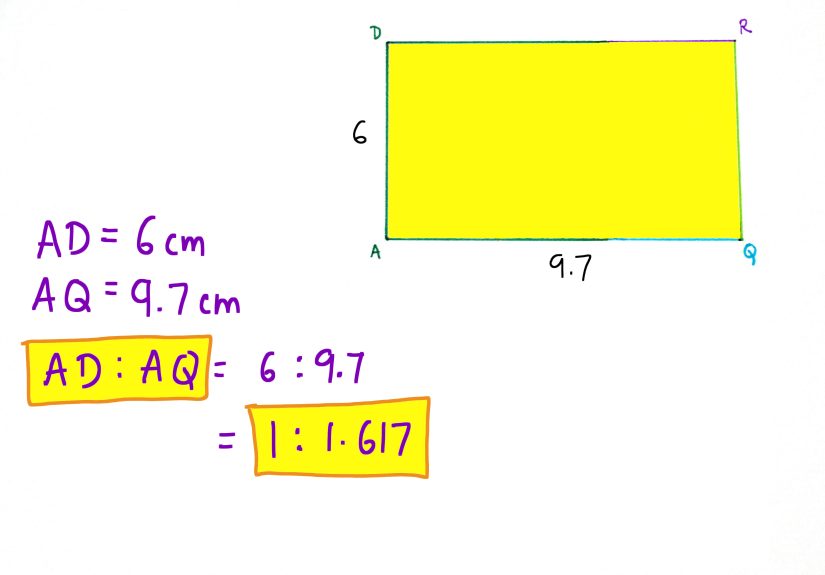
A golden rectangle is a rectangle where the ratio of the longer side to the shorter side equals
φ ≈ 1.6180339887…. One of its coolest properties is self-similarity: remove a square from the
rectangle, and the leftover smaller rectangle has the exact same proportions as the original. It’s like a geometric
déjà vuexcept helpful.
This self-similarity is why golden rectangles often get linked to the “golden spiral” drawing: keep chopping off squares,
sketch quarter-circle arcs inside them, and you get a spiral-like curve that looks pleasing and shows up in textbooks and
design tutorials.
Why Construct One Instead of Just Measuring φ?
Three reasons:
-
Precision without decimals: Straightedge-and-compass constructions give you exact relationships, not
rounded approximations. -
Geometry confidence: If you can construct a golden rectangle, you can usually handle related classics
like perpendicular bisectors, geometric means, and regular pentagon connections. -
Design workflow: In layout work (print or screen), a constructed proportion can be a fast starting frame
for grids, margins, and image crops.
Also, it’s satisfying in the same way perfectly peeling a sticker is satisfyingrare, clean, and slightly addictive.
Tools You’ll Need
- Straightedge (a ruler is fine, but don’t rely on the measurement markings)
- Compass
- Pencil (eraser optional, but emotionally recommended)
- Paper (or a whiteboard, or a geometry appconstruction logic stays the same)
If you’re doing this digitally (Illustrator, Figma, CAD, GeoGebra), you’ll mimic the same steps using circle/arc tools and
intersection snaps.
How to Construct a Golden Rectangle: 8 Steps
This is the classic method: start with a square, find a midpoint, draw a diagonal from that midpoint, swing an arc, and
“grow” the square into a golden rectangle.
Step 1: Draw a Square
Draw a square ABCD. Any size works. For a concrete example, imagine each side is 10 cm,
but you don’t actually need to measurejust make it a real square (equal sides, right angles).
Step 2: Mark the Midpoint of One Side
Choose the bottom side AB. Construct or mark its midpoint M. (If you’re doing a true
compass construction, you’d create the perpendicular bisector of AB and mark the intersection.)
Step 3: Draw a Segment from the Midpoint to the Opposite Corner
Draw a straight line segment from M to the opposite corner C (top-right corner if A is
bottom-left, B bottom-right, C top-right, D top-left). This segment MC is the “magic radius” in a minute.
Step 4: Extend the Base Line Past the Square
Extend the line containing AB to the right beyond point B. You’re making room for the
rectangle to grow.
Step 5: Swing an Arc to Find the Golden Length
Place your compass point at M, set the compass width to the distance MC, and draw an arc
that intersects the extended base line to the right of B. Label that intersection point E.
You’ve now created a new length AE that will become the long side of your golden rectangle.
Step 6: Draw a Perpendicular Line Up from the New Point
Through point E, construct a line perpendicular to the base line (the same direction as the square’s right
side). This will be the rectangle’s new right boundary.
Step 7: Complete the Rectangle
Extend the top side of the square (DC) to meet the perpendicular line through E. Mark that
intersection as F. Connect E to F (vertical edge), and you now have
rectangle A D F E.
Step 8: Check the “Golden” Part (Quick Verification)
If your original square side is s, your new rectangle has short side s and long side
φs. Using the earlier example, if s = 10, then the long side is about
16.18. In practice, a quick check is:
- Measure long side ÷ short side ≈ 1.618 (close is finedrawing tools have real-world limits).
- Or remove the original square and see whether the leftover rectangle “feels” similar (the visual check is surprisingly
decent after you’ve done this once or twice).
Congratulations: you’ve constructed a golden rectangle using pure geometry and the stubborn refusal to accept boring
rectangles.
Why This Construction Works (No Heavy Math, Promise)
The key is that segment MC forms a right triangle where you can compute its length using the Pythagorean
theorem. If the square side is s, then:
- AM is half the side: s/2
- AC (diagonal of the square) has length s√2
- But triangle AMC uses AM and AD (which is s) as legs,
so MC = √(s² + (s/2)²) = s√(5/4) = (s√5)/2
When you swing that radius from M onto the base extension, you effectively add ME = MC to
AM. So:
AE = AM + ME = (s/2) + (s√5/2) = s(1 + √5)/2 = φs
That’s exactly the golden ratio definition in rectangle form: long side is φ times the short side. Your compass didn’t
“approximate φ”it constructed it.
Common Mistakes (and How to Avoid Them)
1) A “Square-ish” Square
If your starting square isn’t truly square, the entire construction inherits that error. Use a right angle tool or construct
the square carefully.
2) Guessing the Midpoint
Eyeballing the midpoint is how golden rectangles become “close-enough rectangles.” Construct the midpoint with a perpendicular
bisector if accuracy matters.
3) Compass Slip
If the compass radius shifts between Step 3 and Step 5, you’ve invented a new ratio. Tighten the hinge and re-check the
radius MC before drawing the arc.
4) Extending the Wrong Side
Extend the base line in the direction that gives you room. If you extend toward the interior of the square, the arc will
intersect where it’s not usefuland geometry will silently judge you.
Practical Uses for a Golden Rectangle (Without the Hype)
The golden rectangle is a tool, not a magical beauty printer. Used thoughtfully, it can help you establish proportions that
are consistent and visually stable.
Graphic Design and Layout
- Poster and book covers: Use the golden rectangle as the outer frame, then remove a square to define a
natural block for titles or imagery. - Web sections: Golden ratio grids can help set hero image crops vs. text columns (especially when you want
something slightly more dynamic than a 50/50 split).
Photography Cropping
Golden rectangle overlays can be a helpful alternative to the rule of thirds when you want subject emphasis that’s a little
tighter and more directional. It won’t rescue a bad photo, but it can refine a good one.
Architecture and Product Design
Designers sometimes use φ-based proportions for façade subdivisions, window groupings, or object silhouettes. The bigger win
is coherence: a consistent proportion used across parts can make a design feel intentional.
FAQ
Is the golden rectangle the same as the Fibonacci rectangle?
Not exactly. Fibonacci rectangles are built from squares whose side lengths follow Fibonacci numbers (1, 1, 2, 3, 5, 8, …).
As those rectangles grow, the ratio of long-to-short sides approaches φ. Golden rectangles use φ directly.
Do I need a compass, or can I do this with a ruler?
A compass-and-straightedge method is the classic “exact” construction. If you’re doing practical drafting, measuring
short side × 1.618 works fine, but you’re approximating.
Does the golden ratio guarantee beauty?
No. It’s a proportion that appears in many mathematical contexts and is often used in design. But beauty depends on context,
content, and execution. Think of φ as a helpful ingredientnot the whole recipe.
Bonus: Practical Experiences and Tips (About )
People’s first real experience constructing a golden rectangle usually follows a predictable emotional arc:
curiosity → mild confusion → “Wait, why am I drawing an arc?” → surprise that it actually works. That surprise is part of the
charm. Unlike many geometry exercises that feel like paperwork for triangles, this one ends with a shape you recognize from
real lifedesign grids, sketchbooks, even those spiral doodles people swear are “nature’s favorite.”
One common experience (especially for beginners) is realizing how much accuracy depends on the boring steps. The midpoint
matters. The square matters. The compass radius matters. If Step 2 is sloppy, Step 8 becomes a negotiation: “It’s basically
1.618… if you squint and believe.” The best practical tip is to slow down on the setupclean midpoint, clean corners, and a
firm compass hinge. It feels slower, but it’s faster than redoing the whole thing after the arc lands a millimeter off.
Another real-world pattern: the golden rectangle is easier to use when you treat it as a framework, not a cage. In
design, people often try to force every element to line up with φ, like it’s a strict diet for layouts. The result can look
stiffironically less “natural” than a simple grid. A better experience is to use the golden rectangle as the outer boundary,
then borrow its internal square subdivision for one or two key decisions: where a headline block ends, where a main image
crop sits, or where negative space gets reserved.
If you’re doing this by hand for art or drafting, a practical “feel-good” move is to construct the rectangle, then immediately
do the self-similarity check: draw the square inside it, remove it, and notice how the leftover rectangle resembles the whole.
That moment makes the ratio feel less like a number and more like a structural relationship. It also builds intuition: you can
start spotting “almost-golden” rectangles and understand why they feel close.
For digital creators, the experience is slightly different: the geometry is easier, but the temptation to over-optimize is
stronger. Software makes it effortless to multiply by 1.618 and call it a day, which is fineexcept you miss the intuition
that comes from construction. A hybrid approach works well: build it once using the geometric method (even digitally, using
circles and intersections), then use the resulting dimensions as a reusable component. It’s like cooking the sauce once, then
keeping it in the fridge for the week.
Finally, a pragmatic note: when you apply golden rectangles to real projects, test them against content. If the golden frame
creates awkward line breaks, cramped buttons, or tiny images, adjust. The best experience is when the ratio supports your
messagequietlywithout demanding applause for being mathematically fancy.
Conclusion
Constructing a golden rectangle is a great example of geometry doing what it does best: turning a simple starting shape (a
square) into a precise proportional relationship (φ) using only basic tools and logic. Follow the 8 steps, keep your midpoint
honest, and your compass steady, and you’ll end up with a golden rectangle you can use for drawings, layouts, and a deeper
understanding of why φ keeps popping up in mathematical design conversations.