Table of Contents >> Show >> Hide
- Why Fabric Softener Dispensers Get So Gross
- Signs Your Fabric Softener Dispenser Needs Cleaning
- What You Will Need
- How to Clean a Front-Load Washer Fabric Softener Dispenser
- How to Clean a Top-Load Washer Fabric Softener Dispenser
- How to Clean a Clogged Fabric Softener Siphon
- Common Mistakes That Cause Buildup
- How Often Should You Clean the Fabric Softener Dispenser?
- How to Prevent Future Residue
- Troubleshooting: When Cleaning Is Not Enough
- Real-World Experiences: What Cleaning the Dispenser Actually Solves
- Conclusion
- SEO Tags
Fabric softener is supposed to leave your laundry feeling cozy, fresh, and less like it spent the day wrestling a porcupine. But when the dispenser gets coated with sticky residue, the whole plan falls apart. Instead of soft towels and smooth T-shirts, you can end up with mystery gunk, funky smells, or a dispenser that treats your fabric softener like a permanent houseguest.
The good news is that cleaning a fabric softener dispenser is usually simple, fast, and oddly satisfying. Whether you have a front-load washer with a drawer or a top-load machine with a cup in the agitator or a dispenser tray, the basic goal is the same: remove buildup, clear the siphon or outlet holes, rinse thoroughly, and keep the area dry enough that residue does not return like an unwanted sequel.
In this guide, you will learn how to clean a fabric softener dispenser in both front-load and top-load washers, what tools to use, what mistakes to avoid, and how to keep buildup from coming back. We will also cover what to do if your dispenser is not removable, how often to clean it, and why a little maintenance can save you from dingy laundry and a cranky washing machine.
Why Fabric Softener Dispensers Get So Gross
Fabric softener is thicker than water and often contains conditioning ingredients that can cling to plastic surfaces. Over time, that coating mixes with detergent residue, minerals from hard water, lint, and the occasional laundry-room mystery. The result is a slimy or waxy film that can block the dispenser and stop it from releasing softener properly.
This is especially common when you overfill the dispenser, use more softener than the product label recommends, skip regular cleaning, or pour softener into the wrong compartment. In some washers, using the wrong settings can also leave softener behind. On others, a clogged siphon cap or blocked hole is the real culprit.
If you have ever wondered why your clothes are not coming out softer, why the drawer smells a little swampy, or why the dispenser cup looks like it is preserving a science experiment, buildup is probably the answer.
Signs Your Fabric Softener Dispenser Needs Cleaning
- Fabric softener is still sitting in the dispenser after the cycle ends
- You see a slimy, sticky, or chalky residue in the drawer or cup
- Your laundry smells musty even after washing
- You notice oily spots or streaks on clothes
- The dispenser has visible clogs around the siphon cap or holes
- Your washer drawer smells stronger than your perfume aisle
What You Will Need
- Warm or hot water
- Mild dish soap or mild liquid detergent
- A soft cloth or sponge
- A soft toothbrush or small cleaning brush
- White vinegar for soaking stubborn residue, if your washer manufacturer allows it
- A dry towel or microfiber cloth
- Cotton swabs for small corners and holes
Before you start, check your owner’s manual for model-specific instructions. Some removable dispenser parts are not dishwasher-safe, and some manufacturers prefer mild soap and water over stronger cleaners. Also, never mix cleaners randomly. Your washing machine is a household appliance, not a chemistry lab.
How to Clean a Front-Load Washer Fabric Softener Dispenser
Most front-load washers store detergent, bleach, and fabric softener in a pull-out drawer. This style is convenient, but it is also the champion of buildup because the drawer has corners, channels, inserts, and tiny siphon parts that collect residue like it is their hobby.
Step 1: Remove the dispenser drawer
Pull the drawer out until it stops. Many models have a release tab or lever that lets you remove it completely. Do not force it. If it is fighting back, the release mechanism is probably being missed, not auditioning for an action movie.
Step 2: Take out removable inserts and caps
Fabric softener compartments often have a removable insert, cap, or siphon piece. Lift these out carefully. If your model has labels or molded markings, make a quick mental note of where everything goes so you do not turn reassembly into a puzzle.
Step 3: Rinse under warm running water
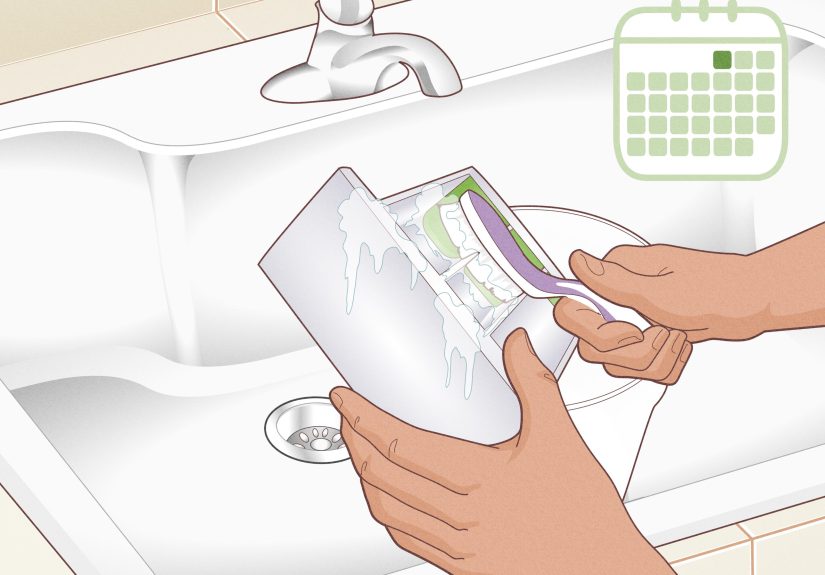
Hold the drawer and the inserts under warm water to loosen softener residue. If the buildup is thick, let the parts soak in warm, soapy water for 10 to 15 minutes. For stubborn film, a vinegar-and-water soak may help, but only use that approach if it is compatible with your washer care instructions.
Step 4: Scrub gently
Use a soft toothbrush or small brush to clean the fabric softener compartment, especially around the MAX line, siphon cap, underside of inserts, and any tiny openings. A soft brush is your best friend here. A steel scrubber is not. This is a cleanup mission, not a plastic-destruction challenge.
Step 5: Clean the dispenser housing
Even if the drawer is sparkling, the cavity it slides into may still be dirty. Use a soft cloth, sponge, or brush with mild soap and water to wipe the inside of the dispenser housing. Reach into corners where residue likes to hide. Cotton swabs can help with tight crevices.
Step 6: Rinse, dry, and reassemble
Rinse every part well so no soap remains. Dry with a towel or let the pieces air-dry. Reinstall the inserts and slide the drawer back in place.
Step 7: Run a rinse or cleaning cycle
Run a rinse cycle or your washer’s cleaning cycle with no laundry inside. This flushes any loosened residue and confirms that water can move through the dispenser properly.
How to Clean a Top-Load Washer Fabric Softener Dispenser
Top-load washers come in a few dispenser styles. Some have a dispenser cup on top of the agitator. Others have a dispenser drawer or tray near the top of the machine. The cleaning method depends on the design, but the overall plan stays familiar: remove what you can, dissolve residue, scrub gently, rinse well, and make sure the softener path is open.
If your top loader has a removable agitator cup
Lift the fabric softener cup off the agitator. On some models it twists off; on others it simply pulls upward. Wash it in warm water with a little mild soap. If you see waxy buildup, soak it first, then brush the inside and the small dispensing holes. Rinse thoroughly and reinstall it securely.
Some manufacturers also recommend running hot water through the cup or filling it with clean water once in a while to help prevent residue buildup. That simple trick can keep the dispenser from turning into a sticky little time capsule.
If your top loader has a fixed dispenser cup
If the cup does not come off, pour hot water into it slowly to loosen buildup. Let it sit briefly, then use a soft brush to clean the visible residue. Wipe with a cloth and run a rinse cycle or quick rinse to flush the cup. Avoid jamming sharp tools into any openings. You want better flow, not accidental damage.
If your top loader has a dispenser drawer
Some high-efficiency top-load models use a removable drawer similar to front-loaders. In that case, remove the drawer, wash the parts in warm, soapy water, scrub away residue, dry them, and reinsert the drawer. If your machine uses an auto-dispenser or bulk reservoir, clean the compartment and lid according to the owner instructions and make sure the system is fully dry before refilling.
How to Clean a Clogged Fabric Softener Siphon
The siphon is the small mechanism that helps pull fabric softener out of the compartment at the right time. When it gets clogged, softener can sit in the drawer after the cycle or drip poorly into the washer.
To clean it, remove the siphon cap or insert if your washer allows it. Rinse it under warm water and use a soft brush or cotton swab to clear the small opening. Hold it up to the light if you need to confirm that the passage is open. Reinstall it tightly, because even a clean siphon can misbehave if it is seated incorrectly.
Common Mistakes That Cause Buildup
- Pouring softener past the MAX line
- Using more softener than the label recommends
- Forgetting to dilute softener when the product or washer instructions require it
- Using the wrong compartment
- Leaving the drawer wet and closed all the time
- Skipping monthly cleaning
- Ignoring a clogged cap, hole, or dispenser path
Another common mistake is assuming the problem is the washer when the real issue is the product amount. More softener does not equal softer clothes. Quite often, it just means more residue, more odor, and more cleaning later. That is not laundry luxury. That is laundry paperwork.
How Often Should You Clean the Fabric Softener Dispenser?
A quick wipe every week or two is smart if you use fabric softener often. A deeper cleaning once a month is a solid rule for most households. If you do laundry constantly, have hard water, or notice residue forming quickly, clean it more often.
Also make time for a full washer cleaning routine. A clean dispenser works best when the whole machine is not coated in detergent residue, mildew, and mineral scale. In other words, do not polish the faucet and ignore the sink.
How to Prevent Future Residue
- Measure fabric softener carefully
- Do not exceed the fill line
- Use the correct compartment every time
- Wipe the dispenser dry after laundry day
- Leave the drawer or lid open for a bit so moisture can evaporate
- Run a washer-cleaning cycle regularly
- Flush the dispenser with hot water occasionally if your model allows it
If your towels are coming out less absorbent or your athletic wear feels coated, consider reducing how often you use fabric softener. Some fabrics simply perform better without it, and your dispenser will be much less likely to grow a gummy beard.
Troubleshooting: When Cleaning Is Not Enough
If you clean the dispenser and softener still does not drain, check a few basics. Make sure the siphon cap is installed properly. Confirm that the correct wash setting was selected if your washer needs a fabric softener or deep-rinse option. Inspect the compartment for cracks or warped plastic. On some machines, low water pressure or a faulty valve may prevent proper flushing.
If the dispenser remains blocked after cleaning and a rinse cycle, or if water never seems to pass through the compartment correctly, it may be time to consult the manual or arrange service. Sometimes the issue is not residue at all. Sometimes the washer is simply waving a tiny white flag.
Real-World Experiences: What Cleaning the Dispenser Actually Solves
In real homes, fabric softener dispenser problems rarely announce themselves with a dramatic speech. They show up in small, annoying ways. A drawer starts smelling musty. A top-load cup looks cloudy and sticky. Clothes come out clean enough, but not quite fresh. Then one day someone notices that the fabric softener is still sitting in the compartment after the cycle, looking unbothered and very much unemployed.
One common experience is the “I thought my detergent was the problem” moment. People often assume the washer is not cleaning well because the detergent is weak or the load is too large. Then they clean the fabric softener drawer and find a thick coating under the insert or inside the siphon cap. Once that residue is removed, the machine starts dispensing normally again and the laundry smells cleaner. It is a reminder that tiny hidden parts can create surprisingly big laundry headaches.
Another familiar scenario happens in top-load washers with agitator-mounted cups. Because the cup sits in plain sight, it seems like it should stay clean automatically. In reality, it often collects a ring of waxy buildup around the rim and in the dispensing holes. People may not notice it until softener starts leaving streaks on clothes or the cup begins to look suspiciously like a candle project gone wrong. A soak in hot water and a gentle scrub usually restores normal flow quickly.
Hard-water homes tend to have a different kind of experience. Residue can feel less slimy and more chalky, and it builds up faster than expected. In those homes, a monthly cleaning schedule makes a huge difference. Waiting until there is a visible clog usually means the cleaning job will take longer and require more patience. Regular light cleaning wins almost every time.
There is also the overfilling problem, which is more common than many people admit. A lot of users assume adding a little extra softener will make blankets softer or clothes smell better. Instead, the dispenser gets overwhelmed, residue forms faster, and the machine may leave product behind. Once people switch to the correct amount and start wiping the drawer dry after use, the problem often calms down dramatically.
Front-load owners frequently report that the biggest improvement comes from cleaning not just the drawer, but the housing where the drawer slides in. That hidden area can trap moisture and residue even when the visible tray looks fine. Cleaning both parts and then leaving the drawer open for a while after laundry day often reduces odor more than expected.
The most useful lesson from all these experiences is simple: dispenser maintenance is small, but the payoff is big. Cleaner dispensing means less residue on clothing, fewer odor issues, and one less reason to glare at the washer like it personally ruined your Saturday. A five- or ten-minute cleanup once a month is usually enough to keep the fabric softener dispenser working the way it should, which is quietly, correctly, and without producing any sticky surprises.
Conclusion
Cleaning a fabric softener dispenser is one of those chores that sounds minor until you skip it for too long. Then suddenly your washer smells strange, your softener stops draining, and your clean laundry feels a little less clean. Thankfully, both front-load and top-load machines respond well to the same basic strategy: remove residue, clear the softener path, rinse thoroughly, and stay consistent with routine maintenance.
If you make dispenser cleaning part of your monthly laundry routine, you will reduce clogs, cut down on odors, and help your washer dispense softener the way it was designed to. Your towels, sheets, and favorite T-shirts may not throw you a parade, but they will probably smell better. In laundry terms, that is basically a standing ovation.