Table of Contents >> Show >> Hide
- Step 1: Understand What You Are Applying For
- Step 2: Research Programs and Campuses Carefully
- Step 3: Check General Admission Requirements
- Step 4: Review Program-Specific Prerequisites
- Step 5: Decide Which Application Form to Use
- Step 6: Know the Deadlines Before You Start
- Step 7: Create and Submit Your OUAC Application
- Step 8: Set Up Your U of T Applicant Portal
- Step 9: Submit Required Documents Correctly
- Step 10: Complete English Language Requirements
- Step 11: Finish Supplemental Applications
- Step 12: Track Decisions, Offers, Scholarships, and Next Steps
- Common Mistakes to Avoid When Applying to U of T
- Application Experience: What the Process Feels Like in Real Life
- Conclusion
Editorial note: This guide is written for web publication and is based on current undergraduate admissions guidance from the University of Toronto, OUAC, and recognized college-application resources. Applicants should always verify deadlines and program requirements for their specific entry year before submitting.
Applying to the University of Toronto can feel a bit like opening a giant map of a city you have never visited: exciting, impressive, and mildly suspicious because there are three campuses, hundreds of programs, several application paths, and enough acronyms to make your browser quietly ask for a coffee break. The good news? Once you understand the process, it becomes much less mysterious.
The University of Toronto, often called U of T, is one of Canada’s most respected universities and a major destination for domestic and international students. Whether you are dreaming about computer science at St. George, psychology at Mississauga, management at Scarborough, engineering, life sciences, humanities, architecture, commerce, or another field, the key is to apply early, follow the correct application route, and submit every required document through the right portal.
This step-by-step guide explains how to apply to University of Toronto in a practical, human-friendly way. No panic. No admissions-code treasure hunt. Just twelve clear steps, plus real-world application experience tips at the end.
Step 1: Understand What You Are Applying For
Before you click any application button, understand the structure of undergraduate study at the University of Toronto. U of T has three campuses: St. George, Mississauga, and Scarborough. Each campus has its own academic personality, program offerings, commute realities, residence options, and student community.
Many students think they are applying directly to a specific major, but at U of T, the process often starts with an admission category. For example, instead of applying directly to every possible life sciences major, you may apply to a broader Life Sciences admission category and later choose a program of study after first year, depending on campus and faculty rules.
This matters because your admission category determines the prerequisites, competitive average, supplementary requirements, and first-year academic path. In other words, do not choose a category because it “sounds close enough.” That is how students accidentally end up reading program calendars at midnight with one eye twitching.
Step 2: Research Programs and Campuses Carefully
U of T offers hundreds of undergraduate programs, so your first job is not to applyit is to narrow the field. Start by comparing program areas, admission categories, campus locations, required high school courses, co-op or experiential learning options, and future career or graduate-school pathways.
For example, a student interested in business may compare Rotman Commerce at the St. George campus with management programs at U of T Scarborough or commerce-related options at U of T Mississauga. A student interested in computer science should pay close attention to the campus, admission stream, math prerequisites, and first-year progression expectations.
Use program research to answer four basic questions:
- Which campus offers the program or admission category I want?
- What high school courses are required?
- Is there a supplementary application, portfolio, profile, audition, or interview?
- What deadlines apply to this specific program?
The best application is not the one with the most dramatic personal statement. It is the one that matches the right applicant to the right program with the right documents submitted on time. Revolutionary concept, apparently.
Step 3: Check General Admission Requirements
The University of Toronto reviews applicants based on their educational background. Ontario high school students, Canadian students outside Ontario, U.S. high school students, international students, transfer students, mature students, and applicants from other systems all follow slightly different requirements.
At the undergraduate level, U of T generally expects strong academic performance in senior-level courses, including required prerequisites for the chosen admission category. All applicants must also present a senior-level English course equivalent to Ontario Grade 12 English. Some programs require mathematics, sciences, or other specific subjects.
If you are applying from the United States, your high school transcript, senior-year courses, standardized testing policies, AP or IB coursework, and program prerequisites may all matter depending on the faculty and admission category. If you are applying from another country, check U of T’s requirements for your curriculum rather than guessing based on a friend’s cousin’s roommate who “got in with vibes.”
Step 4: Review Program-Specific Prerequisites
Program-specific prerequisites are where many applications either become strong or quietly wander into the admissions wilderness. Engineering, computer science, commerce, life sciences, architecture, management, music, and other selective areas may require particular courses, grades, profiles, portfolios, or written components.
For instance, engineering applicants typically need advanced math and science preparation. Commerce or management applicants may need strong math performance and a supplementary application. Architecture-related programs may require additional materials. Some programs may also ask for a personal profile, written responses, or evidence of creative and leadership potential.
Make a checklist for each program choice. If Program A requires calculus and Program B requires a supplementary profile, write that down. If Program C has an earlier document deadline, highlight it. Your future self will thank you, probably with snacks.
Step 5: Decide Which Application Form to Use
Most full-time undergraduate applicants to the University of Toronto apply through the Ontario Universities’ Application Centre, commonly known as OUAC. OUAC is the centralized application system used for Ontario universities.
Applicants applying to more than one Ontario university normally use the OUAC Undergraduate Application. Some international applicants who are applying only to the University of Toronto and meet specific conditions may use the University of Toronto International Application, which is also hosted through OUAC. Former U of T students, internal applicants, mature students, visiting students, or part-time applicants may have different routes.
The key point is simple: choose the application pathway that matches your applicant type. If you use the wrong form, the universe may not explode, but your application process can become slower, messier, and more email-heavy than necessary.
Step 6: Know the Deadlines Before You Start
U of T’s application process usually begins in the fall before the year you plan to start your studies. The university encourages students to apply early, especially if they want to be considered in earlier admission rounds. For recent cycles, early application and document dates have appeared in November and December, while many final undergraduate application deadlines have fallen in January. However, deadlines vary by program, faculty, campus, applicant type, and entry term.
This means you should not rely on one generic deadline floating around the internet. Applied Science and Engineering, Arts & Science, Architecture, Music, Kinesiology, International Foundation Program, and other areas may not all follow the same timeline.
A smart applicant creates a deadline table with four columns: application deadline, document deadline, supplementary application deadline, and scholarship or residence deadline. That little table can save you from the classic admissions horror movie titled, “Wait, That Was Due Yesterday?”
Step 7: Create and Submit Your OUAC Application
When you are ready, create your OUAC account and enter your personal information, academic background, program choices, and contact details. Be careful with your email address because U of T communicates mainly by email and through applicant portals. Use an address you actually check, not the one you created in middle school with twelve random numbers and a regrettable nickname.
You can usually apply to multiple program choices. If you are interested in more than one U of T campus or admission category, list them carefully and understand how each choice will be assessed. Review your application before paying the fee because mistakes in program selection, legal name, applicant type, or academic history can cause delays.
Once submitted, OUAC sends your application data to the University of Toronto. This does not mean your file is instantly complete. It means the first major door has opened, and now you need to watch for the next set of instructions.
Step 8: Set Up Your U of T Applicant Portal
After U of T receives your application from OUAC, the university typically sends an acknowledgment email with instructions for accessing the applicant portal. Most applicants use the Join U of T portal, while engineering applicants may use the Engineering Applicant Portal.
This portal is extremely important. It is where you view required documents, upload materials, track application status, complete supplemental requirements, check messages, and eventually receive admission decisions. Treat it like the command center of your application, not like an optional website you visit when Mercury is in retrograde.
If you do not receive portal instructions after a reasonable processing period, check your spam folder, confirm your OUAC email address, and contact admissions if needed. Do not create duplicate applications just because you are nervous. Nervous clicking is not a strategy.
Step 9: Submit Required Documents Correctly
Document submission is one of the most important parts of applying to University of Toronto. Depending on your applicant type, you may need transcripts, predicted grades, midyear grades, final grades, proof of English language ability, standardized test results, course descriptions, or documents from previous colleges or universities.
U of T generally instructs applicants not to email documents. Instead, students should follow the document list and upload instructions in the applicant portal. Unofficial documents may be reviewed for a provisional admission decision, but official transcripts sent directly from the issuing institution are usually required to finalize an offer.
If your documents are not in English or French, you may need official translations. If you studied at multiple schools, you may need records from each institution. If you are a transfer applicant, course syllabi or postsecondary transcripts may be required.
A practical tip: name files clearly. “Transcript_Grade12_Smith.pdf” is much better than “scan00047_final_FINAL_realfinal.pdf.” Admissions officers are professionals, not archaeologists.
Step 10: Complete English Language Requirements
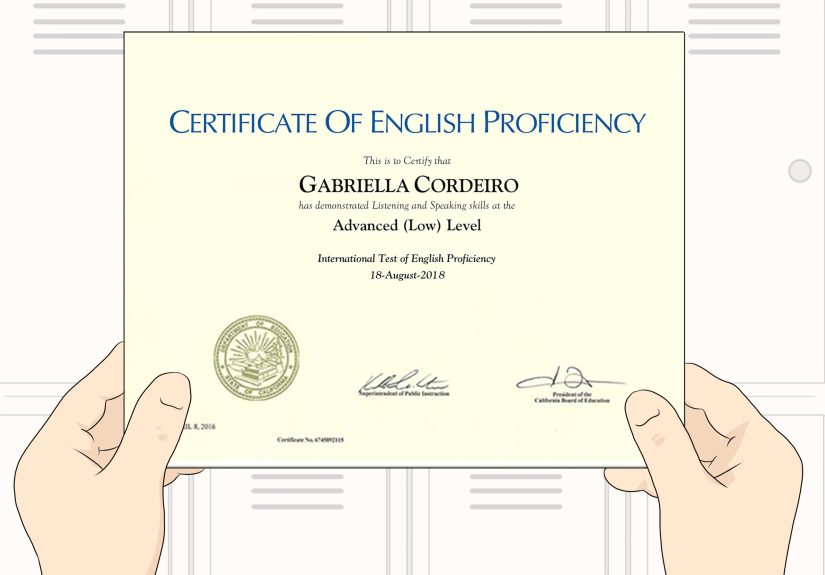
English is the language of instruction and assessment at the University of Toronto. All undergraduate applicants must present a senior-level English course for admission consideration. Some applicants must also provide proof of English language ability through an approved test or recognized exemption.
You may be exempt from English proficiency testing if you have completed enough full-time academic study in an English-language environment that meets U of T’s rules. If you are required to submit test scores, make sure official results are sent properly and early enough to meet document deadlines.
Do not assume that speaking English well in daily life automatically satisfies the requirement. Universities enjoy paperwork the way cats enjoy cardboard boxes: intensely and with no apology. Check the official rules for your background.
Step 11: Finish Supplemental Applications
Some University of Toronto programs require more than grades. Supplemental applications help admissions teams understand your communication skills, interests, preparation, leadership, creativity, or fit for a specific field.
Examples may include the Engineering Online Student Profile, Supplementary Application Forms for certain management or double-degree programs, portfolios for design-related fields, auditions for music, or written statements for specific faculties. Requirements change by year and program, so always check your portal and program page.
For written responses, be specific. Instead of saying, “I am passionate about engineering because I like solving problems,” describe a real project, challenge, course, internship, competition, repair attempt, community need, or moment that shaped your interest. Specificity beats sparkle dust.
For video or interview-style components, practice speaking clearly within time limits. You do not need to sound like a documentary narrator. You do need to answer the question, stay organized, and avoid rambling into the academic equivalent of a weather report.
Step 12: Track Decisions, Offers, Scholarships, and Next Steps
U of T admission decisions are commonly released in rounds, beginning earlier in the year and continuing into late spring or even summer for some programs and applicant types. If you do not receive an offer immediately, it does not automatically mean rejection. Your application may simply be reviewed in a later round.
If admitted, read your offer carefully. Many offers are conditional, meaning you must maintain certain grades, complete required courses, submit final official transcripts, or satisfy English language requirements. Missing a condition can put your offer at risk, which is not the dramatic plot twist anyone wants.
Applicants are automatically considered for many entrance scholarships and admission awards. Some awards require a separate Awards Profile or special application. If you want residence, pay close attention to residence deadlines and instructions. New full-time first-year undergraduate students may be eligible for a residence guarantee if they indicate interest and meet all requirements by the deadline.
International students should also prepare for study permit steps after receiving an offer. U of T does not send official offers through WhatsApp, social media, or random personal email accounts, so be alert for scams. If something looks too good, too urgent, or too weirdly written, verify it through official channels.
Common Mistakes to Avoid When Applying to U of T
Waiting Until the Last Minute
Late applications may still be processed in some cases, but program availability and document deadlines can make last-minute applying risky. Apply early enough to receive portal access and complete supplemental materials.
Ignoring Program Prerequisites
Strong grades cannot always fix missing required courses. If your target program requires calculus, biology, chemistry, physics, English, or another prerequisite, take it seriously.
Uploading Documents Incorrectly
Use the applicant portal instructions. Do not email documents unless the university specifically tells you to. Keep copies of everything you submit.
Using a Parent’s Email Address
U of T generally communicates with the applicant. Use your own active email address and check it often.
Submitting Generic Supplemental Answers
A strong supplemental response shows evidence: what you did, what you learned, why it matters, and how it connects to your chosen program.
Application Experience: What the Process Feels Like in Real Life
Applying to the University of Toronto is not impossible, but it does reward organized students. The experience often starts with excitement: you browse programs, imagine yourself walking across campus, and maybe picture yourself studying in a library that looks suspiciously like it belongs in a movie. Then reality arrives with tabs. Many tabs. OUAC tabs, U of T tabs, program tabs, deadline tabs, document tabs, scholarship tabs. Suddenly your laptop looks like it is trying to apply to university too.
The first lesson from real applicants is that U of T admissions is more structured than emotional. In many U.S. college applications, essays, activities, and recommendations can dominate the story. At U of T, especially for many undergraduate programs, academic preparation and prerequisites carry major weight. Supplemental applications matter where required, but you should not assume every program wants a dramatic life essay. Sometimes admissions wants your grades, your courses, your documents, and proof that you can follow instructions. Romantic? Not exactly. Effective? Very.
The second lesson is that the applicant portal becomes your best friend and your mildly bossy coach. After submitting through OUAC, students often wait for portal access and then discover the real checklist. This is where you see what U of T actually needs from you. The portal may ask for transcripts, test results, English language proof, supplemental forms, or other materials. A smart habit is to log in at least twice a week during the active admissions season. You do not need to refresh it every nine minutes like it is concert-ticket day, but ignoring it for a month is not wise.
The third lesson is that supplemental applications are easier when you prepare examples before seeing the final questions. Make a small “evidence bank” of experiences: a challenging class, a project, a leadership role, a community activity, a job, a family responsibility, a research interest, a creative work, or a problem you solved. Then, when a prompt asks about motivation, teamwork, resilience, ethics, or curiosity, you already have real material. Admissions readers can smell vague answers from three provinces away.
The fourth lesson is that waiting for decisions can be emotionally weird. U of T releases decisions in rounds, so two students who applied at similar times may hear back weeks apart. One friend may get admitted while another is still under review. That delay does not always mean bad news. It may simply mean the file is being considered later, especially if updated grades or documents are involved. During this period, keep your grades strong and your email clean. A cluttered inbox is where important messages go to wear a tiny invisibility cloak.
The fifth lesson is practical: plan finances early. Application fees, document fees, test score reporting, housing deposits, tuition, living costs, textbooks, transit, food, winter clothing, and personal expenses add up. Scholarships help, but not every student receives a major award. International students should be especially realistic about total cost and study permit timelines. Create a budget before accepting an offer so your future self does not discover “surprise math” in September.
The final experience-based tip is to stay calm but not passive. Applying to University of Toronto is a process of small, correct actions: choose the right program, use the right application, submit on time, upload documents properly, finish supplements, monitor decisions, and respond to offers. None of these steps is magical. Together, they build a complete application. Think of it like assembling furniture, except the furniture is your academic future and the instruction manual occasionally says “check portal.” You can absolutely do itjust keep your checklist close and your panic levels low.
Conclusion
Learning how to apply to University of Toronto becomes much easier when you break the process into steps. Start with program research, confirm prerequisites, choose the correct OUAC-based application, submit early, monitor your applicant portal, upload documents correctly, complete supplemental requirements, and track your admission decision carefully.
U of T is competitive, but a strong application is not built from mystery. It is built from preparation, accuracy, timing, and honest evidence of academic readiness. The earlier you understand the process, the less likely you are to spend deadline week arguing with a PDF scanner at 1:00 a.m. And honestly, that is the kind of personal growth every applicant deserves.