Table of Contents >> Show >> Hide
- Meet the USS Gerald R. Ford: Big, Bold, and Eye-Wateringly Expensive
- The Vision: A Supercarrier From the Future
- Where the Plan Went Off the Rails
- Inside the $13 Billion Fiasco
- Why It Happened: Structural Problems, Not Just Bad Luck
- Is the Ford Still a Failure?
- Lessons From a $13 Billion Fiasco
- 500 Extra Words of Hard-Earned Experience
- Conclusion: A Legendary Shipand a Legendary Warning
On paper, the USS Gerald R. Ford looked like something straight out of a sci-fi movie: the world’s most advanced aircraft carrier, bristling with cutting-edge tech, promising more firepower with fewer sailors and lower lifetime costs. In reality, it became a $13 billion cautionary tale about what happens when you cram too much unproven technology into one very large, very expensive ship.
The Ford isn’t a useless hulk drifting around the Atlantic. It has deployed, flown jets, and carried out real-world missions. But the path from bold concept to operational carrier was so bumpyand so priceythat “fiasco” is now permanently attached to its name. Let’s unpack how the “world’s greatest aircraft carrier” turned into a case study in how not to run a mega-project.
Meet the USS Gerald R. Ford: Big, Bold, and Eye-Wateringly Expensive
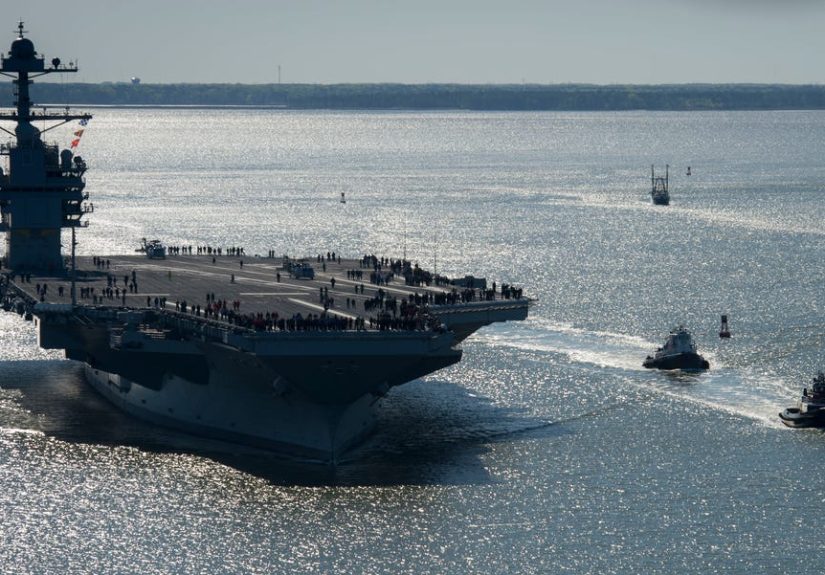
The USS Gerald R. Ford (CVN-78) is the lead ship of the U.S. Navy’s Ford-class carriers and the first new carrier design in more than 40 years. It was meant to be a generational leap beyond the Nimitz-class ships that have dominated the oceans since the 1970s.
The sales pitch sounded great:
- Roughly the same size as a Nimitz, but designed to generate more sorties per day.
- Reduced crew size thanks to automation, cutting long-term personnel costs.
- New nuclear reactors to supply more electrical power for future weapons and sensors.
- Advanced launch and recovery systems to reduce stress on aircraft.
The estimated procurement cost ballooned to about $12.9–13 billion for the lead ship, far above initial expectations, with the Navy once touting that the new design would save about $4 billion in operating costs over the carrier’s life. In practice, delays and technical headaches consumed a big chunk of those projected savings before the ship even left the pier.
The Vision: A Supercarrier From the Future
At the heart of the Ford program was ambition. Instead of sprinkling in one or two new technologies, the Navy and its contractors loaded the ship with 20-plus major innovations all at once. A top Navy admiral later admitted that the Ford carried 23 new technologiesan unusually high level of risk for a single platform.
Electromagnetic Aircraft Launch System (EMALS)
Goodbye steam catapults, hello magnets. EMALS uses electromagnetic force rather than steam pressure to hurl jets off the deck. In theory, it’s smoother on aircraft, allows more precise control, and supports a wider range of launch weightsfrom heavy strike jets to lighter unmanned aircraft. It also fits better with an all-electric, high-power future fleet.
Advanced Arresting Gear (AAG)
On the other end of the flight deck, AAG was supposed to modernize the business of catching returning aircraft. Instead of traditional hydraulic arresting systems, AAG uses energy absorbers and advanced controls to tailor loads and improve reliability. When it works, pilots get safer, smoother landings. When it doesn’t, flight ops grind to a halt.
Dual-Band Radar and New Reactors
The Ford introduced the Dual-Band Radar (DBR), designed to merge multiple radar functions into one integrated system. The ship also carries A1B nuclear reactors that generate significantly more power than the older Nimitz-class plants, leaving room for future lasers, advanced sensors, and other energy-hungry systems.
Advanced Weapons Elevators (AWEs)
Then there were the infamous Advanced Weapons Elevators11 high-capacity, high-speed elevators powered by electromagnetic motors. These elevators were meant to move bombs and missiles from deep inside the ship to the flight deck quickly and safely, increasing sortie rates and combat efficiency.
On paper, this all sounded brilliant. On a whiteboard, it looked like the future. On an actual ship, all at once, it looked like trouble.
Where the Plan Went Off the Rails
Twenty-Three New Technologies, One Giant Risk Bet
The Ford program’s core mistake wasn’t any single technology; it was the decision to integrate so many unproven systems at the same time while the ship was already being built. Government Accountability Office (GAO) reports repeatedly flagged this “concurrency”developing, testing, and installing key systems in overlapping phasesas a major risk driver for cost growth and schedule slips.
Instead of fully proving EMALS, AAG, DBR, and the elevators on land first, the program pushed them onto the ship before they were mature. So, as soon as construction finished, the Navy found itself owning an incredibly complex prototype that still needed years of debugging.
Schedules Slipped, Budgets Blew Up
The Ford was delivered to the Navy in 2017, already behind schedule and with thousands of items unfinished. It was commissioned into service that July, but “commissioned” didn’t mean “ready to fight.” For years after, key systems remained unreliable, incomplete, or still in testing.
Initial plans once envisioned the Ford’s first major deployment around 2018. In reality, initial operational capability didn’t arrive until late 2021, and the ship’s first deployment to Europe didn’t happen until 2022–2023more than five years after commissioning.
Meanwhile, the price tag climbed. Estimates for the lead ship rose into the $12.9–13 billion range, and that’s before counting the extra testing, fixes, and post-delivery work that dragged on for years.
When Testing Meets Reality
The Pentagon’s Director of Operational Test & Evaluation (DOT&E) didn’t mince words. Successive annual reports highlighted “low or unproven reliability” for critical systems such as EMALS, AAG, and the Advanced Weapons Elevators, calling their performance the “most significant challenge” to flight operations and combat readiness.
One report noted that EMALS had been designed to achieve thousands of launches between operational mission failuresbut early testing showed it failing after just a couple hundred launches. That’s not the kind of statistic that makes carrier aviators sleep well at night.
Inside the $13 Billion Fiasco
The Elevator Saga That Wouldn’t End
If the Ford program had a mascot, it would probably be an unfinished weapons elevator surrounded by very stressed engineers.
The elevators were supposed to be a quiet efficiency upgrade. Instead, they became a public embarrassment. When the ship was delivered in 2017, none of the 11 advanced weapons elevators were fully functional. Years later, Navy leaders were still promising that “this time” the elevators would be fixed soon.
By late 2021, the final elevator was declared fully functional, but only after an extended saga that included high-level political pressure, missed deadlines, and intense scrutiny from Congress and oversight bodies.
The good news: the elevators now give the Ford-class excellent weapons-handling capacity. The bad news: the painful path to get there burned time, money, and credibility.
Electromagnetic Growing Pains
EMALS is conceptually brilliant. Practically, it gave the program migraines.
Engineers had to tune incredibly complex power electronics and software while operating at sea. Reliability issues meant more frequent maintenance and unexpected failures, which are not ideal when you’re trying to launch and recover dozens of aircraft a day. DOT&E continued to cite EMALS and AAG as areas of concern even as the ship approached its first full deployment.
Over time, reliability has improved, but the early growing pains were precisely the sort of issues that more thorough land-based testing could have revealed before the systems were integrated into an operational carrier.
Radar, Power, and Integration Headaches
The Dual-Band Radar was another technological leap that turned out to be more expensive and complicated than expected. Later Ford-class ships will use a different radar suite to reduce cost and complexity, a quiet acknowledgment that the original approach was overly ambitious for the budget and schedule.
At the same time, engineers had to integrate new reactors, power distribution systems, and large amounts of digital infrastructure. None of these elements alone doomed the program, but each added friction and risk. Stack enough of those together, and you get schedule slips and eye-watering bills.
Why It Happened: Structural Problems, Not Just Bad Luck
It’s tempting to blame the Ford’s problems on a few bad decisions or some unlucky engineering bugs, but the pattern is bigger than that. Oversight reports and independent analyses keep circling back to the same themes.
Concurrency and Optimism Bias
The acquisition strategy assumed that multiple complex technologies would mature on schedule and perform as promised. That meant ship construction, system development, and integration testing overlapped heavily. When reality didn’t match the optimistic timelines, the result was rework, retrofitting, and extended testing.
Cost Caps vs. Reality
Congress imposed cost caps on the program to keep spending under control. In theory, that should have constrained risk. In practice, the ambitious design and concurrency meant reality pushed right up against those capsand then some. GAO criticized the reliability of cost estimates for follow-on Ford-class ships, pointing out that lessons learned from CVN-78 were not fully reflected in future budgeting at first.
Political and Industrial Pressures
Major warships aren’t just pieces of hardware; they’re also political symbols and job factories. Shipyards, subcontractors, and local economies all have a stake in keeping programs moving. That can create strong pressure to stay on schedule and declare success, even when systems are still immature.
Combine that with the prestige of fielding “the most advanced carrier in the world,” and it’s easy to see how leaders could convince themselves that the risk was worth itor at least manageable. The Ford shows what happens when that confidence isn’t backed up by enough testing and brutal honesty about technical hurdles.
Is the Ford Still a Failure?
Here’s the twist: the Ford today is not the same ship that headlines mocked a few years ago.
After years of fixes and upgrades, the carrier finally headed out for its first deployment to the Atlantic and European regions in 2022–2023. It conducted exercises with allies, operated a full air wing, and showed that its exotic systems could support long periods at sea. Its deployment was even extended in response to crises in the Eastern Mediterranean.
Subsequent plans call for more deployments, including operations near Europe and Latin America, underscoring that the Navy now views the ship as fully part of the fleet rather than a test platform.
So, is it a “fiasco”? From an acquisition and cost-control standpoint, absolutely. The program overpromised, under-delivered for years, and consumed far more time and money than planned. From an operational standpoint, though, the Ford is gradually maturing into the ship it was supposed to bejust after an incredibly expensive and very public learning curve.
Lessons From a $13 Billion Fiasco
The Ford’s story isn’t just about one ship. It’s a playbook for what to avoid in any giant, complex project, whether you’re building aircraft carriers, software platforms, or, frankly, your next “simple” home renovation.
1. Don’t Integrate Everything New at Once
Spreading new technologies across multiple hullsor phasing them in graduallyreduces risk. Instead of 23 new systems on Ship #1, imagine five new systems on the lead ship, then scaling up as they prove themselves.
2. Test Like Your Budget Depends On It (Because It Does)
Land-based test sites are slower and sometimes feel less glamorous than installing gear directly on the ship. But they’re cheaper, safer environments to discover ugly surprises. The Ford’s difficulties with EMALS, AAG, and the elevators show what happens when too many unknowns are pushed into the fleet at once.
3. Be Honest About Risk and Complexity
Optimism is great for recruiting engineers; it’s terrible for budgeting. When planners assume everything will work on the first try, there’s no room for the inevitable setbacks. The Ford illustrates why large programs need brutally realistic assumptions, not wishful thinking dressed up as planning.
4. Protect the Long Term, Not Just the Press Release
Political timelines and budget cycles are short. Warships last 50 years. Rushing complex technology just to hit a public milestone is a recipe for long-term pain. Taking extra years up front to mature systems might have avoided many of the Ford’s most public failuresand the “fiasco” label.
500 Extra Words of Hard-Earned Experience
The Ford’s journey offers some very human lessons, the kind you usually learn the hard waypreferably on something cheaper than a nuclear-powered ship.
Experience #1: The “Everything Upgrade” Trap
Think about the last time you upgraded your tech at home. Maybe you decided to replace your phone, your laptop, your router, and your smart TV in the same weekend. In theory, everything would connect seamlessly, and your digital life would be transformed. In reality, you probably spent two days hunting down Wi-Fi passwords and arguing with a streaming app that suddenly forgot you existed.
The Ford did the same thing, just at national-budget scale. Instead of modernizing in stages, the program tried to leap several generations in one go. The experience shows that there’s a difference between “bold” and “reckless,” and that line is usually drawn where unproven systems outnumber proven ones.
Experience #2: Concurrency Feels EfficientUntil It Isn’t
In many industries, concurrency is tempting: design, build, and test at the same time to move faster. It works when the unknowns are limited. But when almost everything is new, concurrency means that one problem can cascade into many others.
The Ford’s engineers were often testing systems that were still being redesigned while the ship was already afloat. That’s like remodeling your kitchen while simultaneously rewriting your home’s electrical code and installing a new breaker panelwhile you’re cooking dinner. You can do it, but don’t expect it to be pretty.
Experience #3: Reliability Is Boringand Absolutely Essential
Reliability doesn’t make sexy headlines when things go right, but it explodes across the news when things go wrong. The Ford’s EMALS and AAG systems might one day be remembered as successful innovations, but for years they were shorthand for “doesn’t work yet.”
Any complex projectwhether a ship, software platform, or logistics networkeventually comes down to reliability. Can it perform the core mission day after day without constant heroics from the people operating it? The Ford’s early experience says: if reliability isn’t a top priority from day one, it will become your top priority later, and on far worse terms.
Experience #4: Visibility Multiplies Pressure
The Ford was never just another ship under construction; it was the Navy’s flagship program. Every delay, every failed elevator test, every disappointing report showed up in the media and in congressional hearings. That visibility amplified pressure, sometimes encouraging overconfident promises (“we’ll have it working by this date, guaranteed”) that later became headlines when deadlines slipped.
The lesson for big organizations is simple: when you’re building something high-profile, give the technical teams enough roomand honestyto say, “this isn’t ready yet.” Hiding problems rarely makes them cheaper to fix.
Experience #5: Redemption Is Possible, But Expensive
For all its rough beginnings, the Ford is no longer a floating lab experiment. It has completed deployments, worked alongside allies, and demonstrated that many of its innovations can function in real operations. That redemption arc, however, came with a serious price: extra billions, years of delay, and a reputation hit that will follow the program for decades.
In that sense, the Ford’s story is less about failure and more about the cost of over-optimism. The ship is slowly becoming what its designers intended, but getting there required a level of time, money, and patience that no future program should treat as normal.
If there’s one overarching experience to take from this $13 billion saga, it’s this: ambition is essential, especially in national defensebut ambition without disciplined testing, realistic budgets, and phased integration doesn’t just build powerful machines. It builds fiascos.
Conclusion: A Legendary Shipand a Legendary Warning
The USS Gerald R. Ford will likely serve for half a century. Future sailors may know it simply as a workhorse of the fleet, not as the punchline to jokes about broken elevators and glitchy catapults. But the acquisition story behind the ship will stay in textbooks and oversight reports as a warning.
The “world’s greatest aircraft carrier” did eventually reach the ocean and start doing the job it was built for. It just took longer, cost more, and stumbled harder than it ever should have. For anyone planning the next big leap in military techor any huge, complex systemthe Ford’s history is clear: push the boundaries of technology, but respect the boundaries of reality.