Table of Contents >> Show >> Hide
- Why Can a Gut Disease Affect the Eyes?
- The Most Common Eye Problems Linked to Crohn’s Disease
- Symptoms You Should Never Ignore
- How Doctors Diagnose Eye Problems in Crohn’s Disease
- How Treatment Usually Works
- Can Crohn’s Medications Affect the Eyes Too?
- Everyday Tips for Protecting Your Eyes if You Have Crohn’s
- What Crohn’s-Related Eye Problems Often Feel Like in Real Life
- Final Takeaway
- SEO Tags
If you think Crohn’s disease only picks fights with the digestive tract, your eyes would like a word. Crohn’s is an inflammatory bowel disease, but inflammation does not always stay politely inside the intestines. In some people, it wanders off like an unsupervised toddler with a permanent marker and affects the skin, joints, liver, and yes, the eyes. That can mean anything from mild redness and irritation to painful inflammation that needs urgent treatment.
The good news is that most eye problems linked to Crohn’s are treatable, especially when they are recognized early. The not-so-fun news is that many people brush off eye symptoms as allergies, pink eye, screen fatigue, or “I probably just need more sleep,” which is the medical equivalent of shrugging at a smoke alarm. When Crohn’s affects the eyes, timing matters.
This guide breaks down how Crohn’s disease can affect vision and eye comfort, what symptoms to watch for, when it is an emergency, and what treatment usually looks like. We will also get into real-world experiences people often describe, because reading a symptom list is helpful, but hearing what it actually feels like in daily life is even better.
Why Can a Gut Disease Affect the Eyes?
Crohn’s disease is driven by an overactive immune response that causes chronic inflammation in the digestive tract. But the immune system is not exactly famous for staying in one lane. In some cases, the same inflammatory process that irritates the gut also triggers inflammation in other parts of the body. Doctors call these problems extraintestinal manifestations, which is a fancy way of saying, “Crohn’s is being dramatic somewhere else now.”
The eyes are especially sensitive to inflammation. Even a small amount can cause noticeable symptoms because the tissues involved in seeing clearly are delicate and highly specialized. That is why red eyes, pain, light sensitivity, blurry vision, watering, or a gritty sensation should not be dismissed in someone with Crohn’s disease.
Eye symptoms can appear during a Crohn’s flare, alongside other extraintestinal problems like joint pain, or sometimes even before digestive symptoms are fully recognized. That is one reason eye complaints can help doctors see the bigger picture when diagnosing or managing Crohn’s.
The Most Common Eye Problems Linked to Crohn’s Disease
1. Episcleritis
Episcleritis is one of the most common eye issues associated with inflammatory bowel disease. It affects the thin layer covering the white part of the eye, called the episclera. The result is usually a very red eye, mild irritation, burning, tenderness, and watering. It often looks worse than it feels, which is both reassuring and deeply unfair.
One of the key clues with episcleritis is that it often tracks with Crohn’s activity. In plain English, when the bowel disease is flaring, the eye redness may flare too. Vision is usually not seriously affected, and the condition may improve as the underlying intestinal inflammation is brought under control. Some people need lubricating drops or prescribed anti-inflammatory treatment, but many cases calm down without causing permanent damage.
2. Uveitis
Uveitis is the eye problem that gets doctors’ attention fast, and for good reason. It is inflammation of the uvea, the middle layer of the eye. Unlike episcleritis, uveitis is more serious and can threaten vision if treatment is delayed.
Symptoms of uveitis can include eye pain, redness, blurred vision, light sensitivity, headache, and reduced visual sharpness. Some people also notice floaters. A major catch is that uveitis does not always move in sync with Crohn’s flares. Someone can have relatively calm digestive symptoms and still develop significant eye inflammation. In some cases, eye symptoms can even show up before Crohn’s is diagnosed.
That disconnect is one reason uveitis is easy to miss at first. A person may think, “My stomach has actually been okay this week, so this red eye can’t be Crohn’s-related.” Unfortunately, Crohn’s does not always read the same rulebook as the patient. Uveitis usually requires prompt examination by an eye specialist, often with a slit-lamp exam, and treatment may involve prescription eye drops, oral medication, or systemic therapy depending on severity.
3. Dry Eye
Dry eye may sound mild compared with inflammatory conditions like uveitis, but it can still be miserable. People often describe burning, stinging, itching, a sandy or gritty feeling, tired eyes, and intermittent blurry vision that improves after blinking. The discomfort can be especially noticeable when reading, driving, or staring at a screen for too long, which is unfortunate because modern life is basically one long screen-based scavenger hunt.
In Crohn’s disease, dry eye can happen for a few reasons. Inflammation may affect the tear film, and nutritional issues can contribute too. Vitamin A deficiency, especially in people with malabsorption or significant intestinal disease, has been linked to dry eye and other surface eye problems. Even when the condition is not dangerous, it can chip away at quality of life in a big way.
4. Keratopathy
Keratopathy refers to changes involving the cornea, the clear front surface of the eye. In Crohn’s disease, this may involve small corneal deposits or surface abnormalities. Some forms may cause little to no pain and may be found during an eye exam rather than because of dramatic symptoms. Other corneal involvement can cause irritation, blurred vision, or discomfort.
Because the cornea plays such a major role in focusing light, even subtle problems there can feel surprisingly disruptive. Reading may become harder, bright light may feel more annoying, and the eye may simply feel “off” in a way that is hard to describe. That vague feeling is still worth mentioning to a doctor, especially in a person with Crohn’s.
5. Scleritis and Other Rarer Complications
Scleritis is less common than episcleritis, but it is more serious. It involves inflammation of the sclera, the tough white wall of the eye. Unlike episcleritis, scleritis often causes deep, severe pain that can worsen with eye movement. The redness can be intense, and vision may change. This is not the kind of symptom to monitor casually while asking the internet if cucumber slices count as treatment.
Rarely, Crohn’s-related inflammation can affect deeper structures such as the retina, optic nerve, or tissues around the eye. These are uncommon, but they matter because they can significantly affect vision and usually require urgent specialist care.
Symptoms You Should Never Ignore
Some eye symptoms deserve same-day attention, especially in someone with Crohn’s disease. Call a healthcare professional promptly if you develop:
- Eye pain, especially if it is sharp, deep, or severe
- Light sensitivity that feels dramatic or sudden
- Blurry vision, dim vision, or a drop in visual sharpness
- New floaters or a shadow in your vision
- Intense redness in one or both eyes
- Headache, nausea, or a fixed-feeling pupil along with eye symptoms
Those symptoms do not automatically mean permanent damage is happening, but they are not “wait a month and see” problems either. A red eye with no pain might turn out to be irritation. A red eye with pain and light sensitivity is a much bigger deal.
How Doctors Diagnose Eye Problems in Crohn’s Disease
The workup usually starts with a basic question: is this mild surface irritation, or deeper inflammation that could affect vision? That is why many people with Crohn’s and eye symptoms are referred to an ophthalmologist rather than trying random over-the-counter drops and hoping for a plot twist.
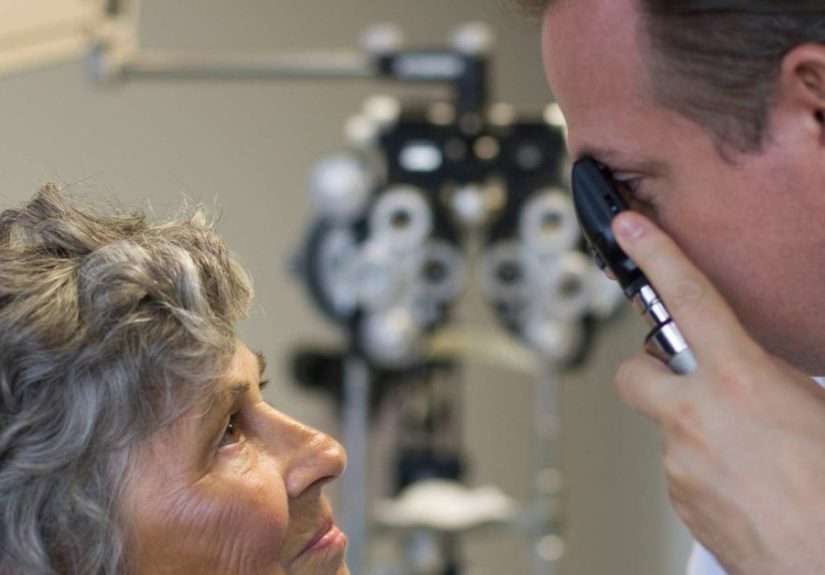
An eye specialist may perform a slit-lamp exam, check visual acuity, evaluate the pupil response, look for inflammation inside the eye, and assess the cornea, sclera, and retina. The clinician will also ask about Crohn’s flares, joint symptoms, current medications, recent steroid use, and any previous eye history.
This matters because not every eye problem in a person with Crohn’s is directly caused by Crohn’s. Dry eye, infection, allergies, medication effects, and unrelated eye disease can overlap. The goal is not just to say, “Yes, the eye is angry,” but to identify why it is angry and what level of treatment it needs.
How Treatment Usually Works
Treatment depends on the part of the eye involved and how severe the inflammation is. Mild surface problems may improve with lubrication and better control of Crohn’s activity. More serious inflammation can require topical corticosteroid drops, pupil-dilating drops, oral steroids, immunomodulators, or biologic therapy.
The big-picture rule is simple: treating the eye alone is not always enough. If Crohn’s inflammation is active systemically, the bowel disease often needs better control too. This is where teamwork matters. Gastroenterologists manage the underlying inflammatory disease, and ophthalmologists manage the eye. When those two specialties communicate well, patients usually do better.
Follow-up is also important. Eye symptoms may improve quickly, but inflammation can still need monitoring. Stopping treatment too soon or skipping follow-up visits can allow the problem to rebound.
Can Crohn’s Medications Affect the Eyes Too?
Yes. Sometimes the disease is the problem, and sometimes the treatment deserves side-eye. Long-term corticosteroid use can increase the risk of cataracts and glaucoma, which is why medication review is part of eye care in Crohn’s disease. That does not mean steroids are bad or should be avoided automatically. It means they need to be used thoughtfully and monitored appropriately.
This is another reason routine eye care matters when Crohn’s is part of the picture. A person may need treatment for inflammatory eye disease and still need protection from medication-related complications over time.
Everyday Tips for Protecting Your Eyes if You Have Crohn’s
- Report new eye symptoms early, even if they seem minor
- Do not assume every red eye is allergies or pink eye
- Keep regular follow-up appointments if you have a history of eye inflammation
- Tell your eye doctor about all Crohn’s medications, especially steroid use
- Use lubricating drops if your clinician recommends them for dry eye
- Pay attention to nutrition and malabsorption issues that may affect eye health
- Notice whether eye symptoms seem to travel with bowel flares or show up independently
Basically, do not gaslight yourself. If your eyes hurt, blur, burn, or suddenly hate sunlight, that is useful information, not an inconvenience.
What Crohn’s-Related Eye Problems Often Feel Like in Real Life
Experience pattern one: the “my eye is red, but I can still function” phase. Many people with episcleritis describe waking up and seeing one eye that looks dramatically red in the mirror. It may feel tender, watery, or mildly irritated, but not truly excruciating. Because the discomfort is often manageable, people may continue working, driving, and doing errands while casually looking like they lost an argument with a leaf blower. Later, they realize the redness showed up during the same period as abdominal pain, more bathroom trips, or general Crohn’s fatigue. That connection can be the clue.
Experience pattern two: the “light suddenly became the enemy” phase. Uveitis often feels very different. Patients commonly describe pain, deeper aching, a headache around the eye, and intense light sensitivity that makes sunlight, phone screens, and even kitchen lighting feel rude. Reading becomes harder. Driving may feel unsafe. Some say the eye feels smaller or tighter, even though that is not exactly what is happening anatomically. What matters is that the symptoms feel unmistakably wrong.
Experience pattern three: the “I thought it was just dry eye” phase. Dry eye can be sneaky. People often report fluctuating blur, burning, scratchiness, and fatigue that comes and goes through the day. One minute the vision is fine, the next it feels filmy until a few blinks clear it. It may be worse in air-conditioned rooms, during long screen sessions, or when Crohn’s symptoms are active and overall health feels shaky. Because dry eye sounds trivial, people sometimes downplay how draining it can be. But chronic irritation can make work, sleep, reading, and concentration harder than expected.
Experience pattern four: the relief of finally having an explanation. One of the most consistent themes in Crohn’s-related eye experiences is that people feel validated once an ophthalmologist connects the dots. Eye symptoms can feel random and scary. When a specialist says, “Yes, this can happen with Crohn’s, and here is the plan,” anxiety often drops quickly. There is real comfort in moving from confusion to a diagnosis.
Experience pattern five: learning not to wait next time. Many people say the first episode taught them the same lesson: do not delay eye care. The next time redness, pain, or light sensitivity appears, they call sooner. That behavior change matters. Early treatment can reduce pain faster, protect vision, and shorten the detour from “This is weird” to “Okay, this is under control.” In that sense, experience becomes a useful teacher, even if it is a very annoying one.
Final Takeaway
Crohn’s disease can affect the eyes in several ways, from mild redness and dryness to more serious inflammation such as uveitis and scleritis. The most important thing to remember is that eye symptoms are not a side note when you have Crohn’s. They are part of the disease story. Some conditions may mirror bowel activity, while others can appear independently and require urgent care even when digestive symptoms seem calm.
If there is a silver lining, it is this: most Crohn’s-related eye problems respond well when they are recognized early and treated appropriately. So if your eyes start acting like they have joined the rebellion, listen to them. Your gut may be talking through them.