Table of Contents >> Show >> Hide
- When the Healer Needs Healing
- The Real Case Behind the Headline
- Can a Hospital Fire a Doctor Who Has Cancer?
- ADA, FMLA, and the Alphabet Soup of Workplace Rights
- Why Cancer Discrimination Still Happens in Healthcare
- Specific Examples of Reasonable Support
- What Doctors Should Do After a Cancer Diagnosis at Work
- What Hospitals Should Do Differently
- Experience-Based Lessons: When the Doctor Becomes the Patient
- Conclusion
The phrase “hospital fires doctor for having cancer” sounds like the setup to a dystopian workplace satirethe kind where the employee handbook is printed on sandpaper and the HR department lives in a windowless basement. Unfortunately, stories like this do not come from fiction alone. In the United States, doctors, residents, nurses, office staff, and other healthcare workers have reported losing jobs, promotions, schedules, insurance, and professional standing after cancer diagnoses disrupted the perfectly polished machinery of hospital life.
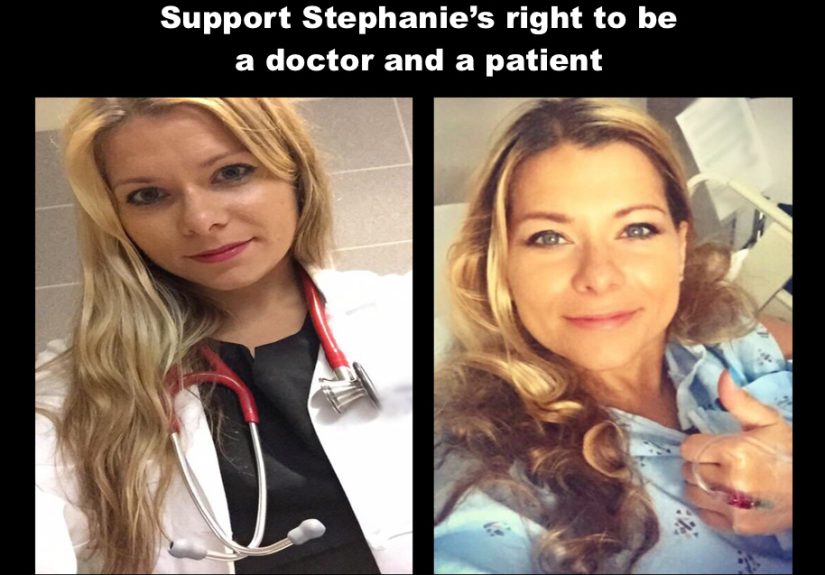
This topic became especially visible after the widely discussed case of Dr. Stephanie Waggel, a psychiatry resident who alleged that she was dismissed from a residency program after being diagnosed with kidney cancer and seeking time for treatment. Her claims drew attention because they challenged a deeply uncomfortable contradiction in medicine: hospitals exist to treat sick people, yet the medical culture has not always been kind when the sick person is wearing the white coat.
To be clear, every employment case has its own facts, and allegations are not the same as a final legal finding. In Waggel’s case, the courts ultimately sided with the university, finding that she had not proved the legal elements required for her ADA and FMLA claims. But the public reaction to the case still matters. It raised a question that remains painfully relevant: What happens when a doctor becomes a patientand the workplace refuses to make room for both?
When the Healer Needs Healing
The medical profession has a long tradition of toughness. Physicians train through overnight shifts, emotional emergencies, missed meals, and inboxes that reproduce like rabbits. Residents, in particular, work under intense pressure while being evaluated constantly. The message is often subtle but unmistakable: keep going, keep smiling, and please do not become inconvenient.
Cancer, however, is not impressed by professional expectations. It does not care that a doctor has rounds at 6 a.m., notes to finish, patients to see, or a residency review committee to impress. A cancer diagnosis may require surgery, chemotherapy, radiation, follow-up scans, fatigue management, infection precautions, mental health support, and time to recover. These are not “extras.” They are part of staying alive.
That is why the idea of a hospital firing a doctor for having cancer strikes such a nerve. Hospitals are supposed to understand illness better than anyone. If a grocery store manager misunderstands chemotherapy fatigue, that is still unfair, but perhaps less surprising. When a medical institution treats cancer-related care as a professional defect, the irony is so thick you could chart it in a pathology report.
The Real Case Behind the Headline
The headline has often been connected with Dr. Stephanie Waggel, who began a psychiatry residency at George Washington University Hospital in 2014. According to reporting at the time, she was later diagnosed with kidney cancer and alleged that after she informed her program, she experienced discrimination, retaliation, deficiency letters, and eventual dismissal. The university denied her account and maintained that the dismissal involved performance and professionalism concerns rather than cancer discrimination.
The later court record added an important legal layer. The D.C. Circuit Court of Appeals affirmed summary judgment for the university in 2020. The court concluded that Waggel had not properly requested an ADA accommodation, had pursued leave under the FMLA, and had not shown enough evidence for a jury to conclude that her termination was because of disability discrimination. In other words, the public story was emotionally powerful, but the legal outcome was more complicated.
That complexity is exactly why this topic deserves careful analysis. “A hospital fired a doctor for having cancer” is a viral headline. The bigger, more useful question is: How can healthcare institutions prevent cancer, medical leave, disability accommodations, and performance concerns from being mashed together into a bureaucratic smoothie nobody wants to drink?
Can a Hospital Fire a Doctor Who Has Cancer?
Under U.S. employment law, an employer generally cannot fire a qualified employee simply because the employee has cancer, has a history of cancer, or is perceived as disabled because of cancer. The Americans with Disabilities Act, commonly known as the ADA, protects qualified workers with disabilities, including many people with cancer, when the employer is covered by the law.
However, the law does not mean every termination involving a worker with cancer is automatically illegal. Employers may still discipline or terminate employees for legitimate, documented, non-discriminatory reasons, such as serious performance failures, misconduct, patient safety concerns, or inability to perform essential job functions even with reasonable accommodation. That is where many cases become difficult. The employer says, “This is about performance.” The employee says, “This is about my illness.” The evidence decides which version survives.
Hospitals have additional responsibilities because patient safety is not a decorative slogan on a lobby wall. A doctor who is too impaired to safely care for patients may need leave, modified duties, supervision adjustments, or temporary reassignment. But “patient safety” should not become a magic phrase used to avoid the interactive process required by disability law. A serious institution should evaluate facts, medical documentation, essential job duties, and reasonable accommodationsnot workplace gossip, fear, or the ancient medical tradition of pretending doctors are made of titanium.
ADA, FMLA, and the Alphabet Soup of Workplace Rights
The ADA and the Family and Medical Leave Act, or FMLA, are two major laws that may matter when a doctor or hospital employee has cancer. They overlap, but they are not identical. Think of them as two different tools in the same emergency kit: one is not a substitute for the other, and neither works very well if nobody opens the kit.
The ADA: Reasonable Accommodation
The ADA focuses on disability discrimination and reasonable accommodation. For a cancer patient, a reasonable accommodation might include a modified schedule, time off for treatment, temporary reassignment away from physically demanding work, permission to attend medical appointments, extra breaks, reduced exposure to infection risks, telework for non-clinical tasks, or a phased return after surgery. In a hospital setting, accommodations must be balanced with clinical duties, staffing needs, licensing requirements, and patient safety.
The key phrase is “reasonable accommodation,” not “whatever the employee wants” and not “whatever the employer feels like offering on a Tuesday.” The process should be interactive. The employee explains the work-related limitation. The employer reviews essential job functions. Both sides explore practical options. Documentation may be requested. The goal is to help a qualified employee keep working when possible.
The FMLA: Protected Medical Leave
The FMLA gives eligible employees up to 12 workweeks of unpaid, job-protected leave in a 12-month period for qualifying medical and family reasons, including a serious health condition. Cancer treatment often qualifies, especially when it involves surgery, continuing treatment, incapacity, or ongoing medical care. During FMLA leave, eligible employees may also keep group health insurance under the same terms as if they had continued working.
But eligibility matters. To qualify for FMLA leave, an employee usually must have worked for the employer for at least 12 months, completed at least 1,250 hours of service during the prior 12 months, and work at a location where the employer has enough employees within the required distance. Residents and early-career physicians may run into timing problems because they are often new to a program. That gap can create real hardship: cancer does not politely wait until someone’s leave benefits mature.
Why Cancer Discrimination Still Happens in Healthcare
You might assume hospitals would be model employers for workers with medical conditions. After all, they contain oncologists, disability paperwork, ethics committees, and enough laminated policy binders to build a small fort. Yet cancer-related workplace problems still happen in healthcare because institutions are run by humansand humans can be biased, rushed, frightened, undertrained, and allergic to nuance.
Some supervisors may assume a worker with cancer will be unreliable. Others may resent schedule changes. Some may confuse temporary limitations with permanent inability. In residency programs, the problem can be worse because residents occupy an awkward position: they are doctors, trainees, employees, learners, and evaluation subjects all at once. Asking for help may feel risky when the person approving leave also writes evaluations.
The culture of medicine can also punish vulnerability. Many physicians internalize the idea that needing care is weakness. A resident may fear being labeled “not committed.” An attending may delay treatment because the department is short-staffed. A physician may skip therapy, scans, or follow-up appointments because nobody wants to be the colleague who “causes coverage problems.” This is not professionalism. It is slow-motion self-neglect wearing a badge.
Specific Examples of Reasonable Support
A hospital that wants to do the right thing should not wait for a lawsuit to discover compassion. Practical support can be simple. A physician undergoing chemotherapy may need fewer overnight calls during treatment weeks. A surgeon recovering from an operation may need temporary non-operative duties. A resident with severe fatigue may need protected time for scans or lab work. A doctor with immune suppression may need masking support, infection-control precautions, or avoidance of high-risk exposures when clinically feasible.
Documentation should be clear but not invasive. An employer usually does not need every intimate detail of a cancer diagnosis. It needs enough information to understand the limitation, expected duration, and accommodation need. The employee does not need to turn a private medical life into a departmental newsletter. “I need intermittent leave for treatment and recovery” is not the same as “Please gather everyone for a PowerPoint about my lymph nodes.”
Good managers also separate performance from medical status. If there are real performance concerns, document them consistently and fairly. If concerns appear only after a cancer disclosure, expect scrutiny. If standards are enforced against the sick employee but ignored for everyone else, expect even more scrutiny. Fairness is not just morally attractive; it is excellent legal hygiene.
What Doctors Should Do After a Cancer Diagnosis at Work
A doctor or resident facing cancer should not have to become a part-time employment lawyer while also becoming a patient. Still, a few steps can help protect both health and career. First, understand whether the issue is leave, accommodation, workload, schedule, safety, insurance, or all of the above. Second, put important requests in writing. Third, keep copies of medical notes, leave approvals, emails, schedules, evaluations, and accommodation discussions.
It can also help to use precise language. Instead of saying, “I am overwhelmed,” a worker might write, “Because of treatment-related fatigue and scheduled chemotherapy, I am requesting a modified call schedule for six weeks and protected time for appointments.” Specific requests are easier to evaluate and harder to dismiss as vague dissatisfaction.
If a hospital refuses to engage, delays repeatedly, removes duties without explanation, pressures resignation, threatens insurance, or suddenly discovers a stack of performance concerns immediately after diagnosis, the employee may want to speak with HR, a union representative if applicable, a disability office, a program ombudsperson, or an employment attorney. The goal is not to start a war. The goal is to avoid being quietly pushed out while everyone calls it “policy.”
What Hospitals Should Do Differently
Hospitals should build systems that assume healthcare workers are human. That sounds obvious, but apparently it requires repeating, preferably in bold font. A strong cancer accommodation policy should explain how employees request support, who reviews the request, how confidentiality is protected, how leave laws interact, and how temporary schedule changes are handled.
Residency programs need even more clarity. Residents should know where to seek help without fear that every medical appointment will become an evaluation problem. Program directors should receive training on ADA, FMLA, state leave laws, confidentiality, retaliation, and the difference between legitimate remediation and disability-related punishment. A resident should not have to choose between an MRI and a milestone evaluation.
Institutions should also plan coverage before crises happen. A hospital that depends on one sick resident never taking leave has a staffing problem, not a resident problem. Compassionate planning is not only humane; it protects patients. Exhausted, untreated, terrified doctors are not the foundation of safe care. They are a warning sign with a pager.
Experience-Based Lessons: When the Doctor Becomes the Patient
People who have lived through serious illness while working in medicine often describe the experience as a role reversal that arrives without permission. One day they are explaining lab values; the next day they are staring at their own scan results, trying to remember how breathing works. The professional vocabulary is familiar, but the emotional geography is completely different. Knowing the medicine does not make fear vanish. Sometimes it makes the fear more detailed.
A doctor with cancer may understand survival statistics, staging, treatment protocols, and side effects. That knowledge can help with decision-making, but it can also make every symptom feel like a footnote in a journal article nobody wanted to read. When a workplace responds with suspicion instead of support, the injury doubles. The person is not only fighting disease; they are fighting to be believed.
Colleagues often matter more than official slogans. A supportive chief resident who quietly helps arrange coverage, a nurse who checks in after surgery, an attending who says “go to your appointment, we’ll handle this,” or an administrator who processes leave without drama can change the entire experience. Small acts of competence become enormous when someone is ill. Nobody needs confetti. They need predictable schedules, privacy, insurance, and not being treated like a broken printer.
The opposite experience leaves scars. Workers who are questioned repeatedly, penalized for appointments, excluded from opportunities, or pressured to return too soon may recover physically while losing trust in the institution. That loss of trust spreads. Other employees notice. They learn whether the hospital’s values are real or whether “we care for our people” belongs in the same drawer as expired cafeteria coupons.
For doctors, the emotional cost can be especially sharp because identity is tied so tightly to competence. Medicine trains physicians to be reliable, useful, calm, and available. Cancer interrupts that identity. A doctor may feel guilty for needing help, ashamed of fatigue, embarrassed by visible side effects, or afraid that colleagues will see them differently. A healthy workplace counters that shame directly. It says: illness does not erase your skill, your dignity, or your place here.
The best institutions treat a cancer diagnosis as a coordination challenge, not a character flaw. They ask what the employee needs to perform safely. They protect confidentiality. They document fairly. They avoid gossip. They train supervisors. They remember that today’s patient may be tomorrow’s attending, mentor, researcher, or department chair. Most importantly, they understand that caring for caregivers is not charity. It is infrastructure.
The lasting lesson is simple: a hospital should never be more comfortable treating cancer in a stranger than accommodating it in an employee. When doctors become patients, the medical system has a rare chance to prove that its compassion works in-house, not just in brochures. If it fails, people remember. If it succeeds, people remember that too.
Conclusion
“Hospital fires doctor for having cancer” is more than a shocking headline. It is a mirror held up to medical culture, employment law, disability rights, and the way institutions respond when high-performing professionals become medically vulnerable. U.S. law offers important protections through the ADA, FMLA, and related state laws, but rights only work when people understand them, request them clearly, and institutions apply them in good faith.
Hospitals should know better than most employers that illness is not a moral failure. A cancer diagnosis should trigger support, planning, confidentiality, and fairnessnot retaliation, silence, or a sudden enthusiasm for paperwork. Doctors can be doctors and patients. Hospitals can protect patients and employees. The real test is whether healthcare institutions can practice the care they preach.