Table of Contents >> Show >> Hide
- What Is an HIV Rash?
- What HIV Rash Can Look Like in Pictures
- When Does an HIV Rash Show Up?
- Other Symptoms That Often Show Up With Early HIV Rash
- Not Every Rash Is HIV
- Skin Problems in People Already Living With HIV
- Can HIV Medicine Cause a Rash?
- HIV Rash Treatment: What Actually Helps?
- When to Get Tested for HIV
- When an HIV Rash Is an Emergency
- Can an HIV Rash Go Away on Its Own?
- Bottom Line
- Experiences People Commonly Describe Around HIV Rash
A rash can send your brain straight into panic mode. One minute it is a few spots on your chest, and the next minute you are deep into a late-night internet spiral convinced your skin is trying to file a dramatic complaint. When the topic is HIV, that worry can feel even heavier. The truth is a little less cinematic and a lot more useful: an HIV rash is real, but it is not unique, it does not look exactly the same on everyone, and it cannot diagnose HIV by itself.
HIV-related rashes can show up for different reasons. In some people, a rash appears during the early stage of infection, often alongside flu-like symptoms. In others, skin changes happen later because HIV weakens the immune system, allowing infections and inflammatory skin problems to become more noticeable. A rash can also be triggered by HIV medications. That is why the phrase HIV rash is a little sneaky. It sounds like one specific thing, but it can actually describe several different skin problems.
This guide breaks down what an HIV rash may look like in pictures, when it tends to appear, how it is treated, when to get tested, and when to stop Googling and call a medical professional. Skin can offer clues, but it is a terrible gossip columnist. It hints. It does not confirm.
What Is an HIV Rash?
An HIV rash is a skin eruption that may appear during acute HIV infection, after an immune system has been weakened over time, or as a reaction to medication used to treat HIV or another infection. It may look red, pink, purple, darker than the surrounding skin, or lighter than the surrounding skin depending on skin tone and the underlying cause.
Some rashes are flat. Some are raised. Some are itchy. Some are merely annoying, while others are a flashing neon sign that says, “Please call your doctor now.” In early HIV, the rash is often described as a widespread eruption of small spots or bumps. In people already living with HIV, the skin issue may instead be caused by shingles, seborrheic dermatitis, molluscum contagiosum, herpes, fungal infections, or medication sensitivity.
The key point is simple: HIV can be associated with a rash, but a rash alone does not mean a person has HIV. Many far more common conditions, from viral illnesses to eczema to allergic reactions, can look similar.
What HIV Rash Can Look Like in Pictures
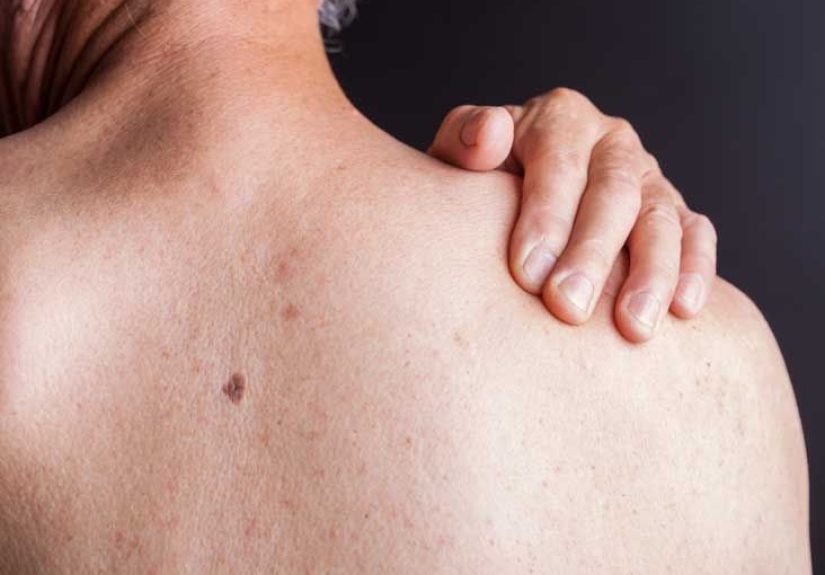
If you search for pictures of HIV rash, you will notice something important right away: there is no single “official” look. That is frustrating, yes, but also medically accurate. In the early stage of HIV, the rash often appears as small flat or slightly raised spots and bumps. It may be scattered or widespread, and it often shows up on the trunk, face, neck, or upper limbs. Some people describe it as looking like a measles-like or viral rash.
On lighter skin tones
In photos, the rash may appear pink to red, with patches or tiny bumps that blend together in places. It can look like a typical viral rash rather than something dramatic and unmistakable.
On darker skin tones
The rash may look deeper red, violaceous, brownish, or simply darker than nearby skin. In some cases, inflammatory skin conditions may also leave lighter patches after the rash settles down. This is one reason online image searches can be misleading. A rash that is obvious in one skin tone may look more subtle in another.
What you may notice besides color
The texture can matter just as much as the color. The skin may feel rough, slightly raised, or tender. Some people also have mouth ulcers, a sore throat, fatigue, swollen lymph nodes, or fever at the same time. If blisters, peeling skin, facial swelling, or painful sores in the mouth appear, that is not a “wait and see” moment. That is a “get medical advice promptly” moment.
In other words, pictures can help you understand possibilities, but they are terrible at giving certainty. Two very different conditions can look surprisingly alike, and two cases of HIV-related rash can look surprisingly different.
When Does an HIV Rash Show Up?
If a rash is tied to acute HIV infection, it usually appears during the earliest stage of infection, often within about 2 to 4 weeks after exposure. This phase is sometimes called acute retroviral syndrome. Not everyone has symptoms during this stage, and not everyone with symptoms gets a rash. Some people have a rough week or two of flu-like illness, while others feel completely normal.
That timing matters because early HIV can be easy to mistake for the flu, mono, COVID-19, or another viral infection. A person may have fever, chills, sore throat, body aches, fatigue, swollen lymph nodes, night sweats, mouth sores, and a rash, then assume they simply caught a nasty bug. The body may calm down, the rash may fade, and the person may think the issue is over. Unfortunately, that is not how HIV works. The symptoms can resolve while the infection continues silently.
Other Symptoms That Often Show Up With Early HIV Rash
A rash linked to early HIV often arrives with other symptoms instead of traveling solo. Common companions include:
- Fever or chills
- Sore throat
- Swollen lymph nodes
- Fatigue that feels bigger than a normal tired day
- Muscle aches or joint pain
- Night sweats
- Mouth ulcers or mouth sores
- Headache
- Diarrhea in some cases
This is why clinicians do not look at a rash in isolation. They look at the whole picture: symptoms, timing, recent exposures, medical history, medications, and testing.
Not Every Rash Is HIV
This section deserves to wear a flashing sign. Many conditions can mimic an HIV rash. A viral exanthem from another virus, syphilis, drug reactions, contact dermatitis, eczema, seborrheic dermatitis, scabies, heat rash, fungal infections, and shingles can all create skin changes that overlap in appearance.
That overlap is exactly why self-diagnosis is unreliable. A rash does not come with subtitles. Even experienced clinicians often need the clinical history and an HIV test to sort things out. If a person has possible recent exposure to HIV and develops flu-like symptoms with a rash, testing matters more than guessing from photos.
Skin Problems in People Already Living With HIV
In people with untreated or advanced HIV, skin conditions become more common because the immune system is under stress. That does not mean every skin problem is severe, but it does mean the skin may become an early clue that something needs medical attention.
Common issues may include:
- Seborrheic dermatitis: flaky, greasy, itchy patches on the scalp, face, or chest
- Herpes infections: recurrent sores around the mouth or genitals
- Shingles: a painful blistering rash, usually on one side of the body
- Molluscum contagiosum: clusters of small flesh-colored or pink bumps
- Thrush and other opportunistic infections: signs that the immune system may be struggling
Sometimes the skin issue is not from HIV itself but from the body’s reduced ability to keep other infections and inflammatory conditions under control. In short, the immune system gets busy, the skin gets loud.
Can HIV Medicine Cause a Rash?
Yes. Some HIV medicines can trigger a rash, especially after a new medication is started. Many medication-related rashes are mild and improve over days to weeks, but some are serious and should never be brushed off like a random inconvenience.
Contact a healthcare professional promptly if a rash appears after starting a new medicine, especially if it comes with fever, blisters, peeling skin, mouth sores, joint pain, fatigue, facial swelling, or trouble breathing. A mild rash may only need monitoring or a medication adjustment, but a severe drug reaction is a genuine medical concern.
One smart rule: do not stop prescribed HIV treatment on your own without medical guidance unless you are told to do so in an urgent care setting. Abrupt medication changes are not a good DIY project.
HIV Rash Treatment: What Actually Helps?
Treat the underlying cause
The best treatment depends on why the rash is happening. If the rash is part of acute HIV infection, the big priority is diagnosis and prompt HIV treatment with antiretroviral therapy, often called ART. ART does not just target the virus. It also helps protect the immune system and lowers the risk of future complications.
If the rash is medication-related
A clinician may recommend watching the rash, offering supportive care, or changing the medication if needed. The response depends on how severe the rash is and whether other warning symptoms are present.
If another infection or skin condition is responsible
Treatment may include antivirals for herpes or shingles, antifungal treatment for fungal infections, or dermatology-directed treatment for inflammatory conditions like seborrheic dermatitis. This is one reason an accurate diagnosis matters. “Put cream on it and hope for the best” is not a medical strategy.
What you can do for comfort
While waiting for medical advice, gentle skin care can help. Avoid harsh soaps, heavily fragranced products, and hot showers if the skin is irritated. Loose clothing, cool temperatures, and resisting the urge to scratch can also make a difference. Basic skin comfort measures are fine, but they should not replace testing or medical evaluation if HIV is a possibility.
When to Get Tested for HIV
The only way to know whether HIV is the cause of a rash is to get tested. No photo, article, friend, or very confident internet stranger can do that for you.
If you think you were exposed to HIV within the last 72 hours, seek medical care immediately and ask about post-exposure prophylaxis, or PEP. PEP is time-sensitive, so this is a same-day issue, not a “maybe tomorrow” issue.
Testing windows also matter:
- NAT tests can often detect HIV about 10 to 33 days after exposure.
- Lab-based antigen/antibody tests can often detect infection about 18 to 45 days after exposure.
- Antibody tests, including many rapid and self-tests, usually take longer and may not detect infection until several weeks later.
If testing is done too early, a negative result may not be the final answer. A healthcare professional can help determine whether repeat testing is needed based on the timing of exposure and the type of test used.
When an HIV Rash Is an Emergency
Seek urgent medical care if a rash is accompanied by any of the following:
- Blistering or peeling skin
- Painful sores in the mouth, eyes, or genitals
- High fever
- Trouble breathing or swallowing
- Facial swelling
- A rapidly spreading rash with severe illness
These features can suggest a serious drug reaction or another condition that needs immediate evaluation. In this situation, the rash is not the side plot. It is the plot.
Can an HIV Rash Go Away on Its Own?
Sometimes, yes. A rash related to acute HIV may fade after days or weeks, and some medication rashes also resolve. But the disappearance of the rash does not prove that everything is fine. HIV can continue progressing after the skin clears. That is why symptom improvement should never replace testing.
Bottom Line
An HIV rash can be one clue among many, but it is not a diagnosis by itself. It may show up early as part of acute HIV infection, later because of infections related to weakened immunity, or after a medication reaction. In pictures, it may look like a viral rash with small spots or bumps, but appearances vary widely by person, cause, and skin tone.
The smartest move is not to compare your skin to twenty-three internet photos and declare a verdict. It is to pay attention to timing, symptoms, possible exposure, and testing. When HIV is diagnosed early and treated with ART, outcomes are dramatically better. So if a rash is making you worry, let testing do what photos cannot: give you a real answer.
Experiences People Commonly Describe Around HIV Rash
Many people who later learn more about HIV say the rash was confusing precisely because it did not seem dramatic enough to be memorable. One person may notice a scattered rash across the chest and back after a week of feeling feverish and exhausted. Another may think the issue is an allergy because the skin is irritated but not painfully severe. A third may assume it is stress, detergent, or weather because the spots fade just as quickly as they arrived. That uncertainty is common. HIV-related rash is often less “movie scene” and more “something feels off, but I cannot prove why.”
People also describe how easy it is to dismiss the full cluster of symptoms. A sore throat feels like a cold. Swollen glands feel like a routine infection. Night sweats become “maybe the room was hot.” The rash becomes “probably nothing.” What often stands out in hindsight is not one symptom alone, but several symptoms showing up at once. That pattern matters more than any single spot on the skin.
For people already living with HIV, the experience can be different. Some describe ongoing flaky skin on the scalp, around the nose, or on the chest that keeps returning even after over-the-counter products. Others talk about frequent cold sores, shingles, or unusual bumps that linger longer than expected. In those situations, the skin is less of a sudden alarm and more of a repeated reminder that the immune system and treatment plan need attention.
Medication-related experiences can be equally stressful. Someone may start a new HIV medicine, notice a rash days later, and immediately fear the worst. In many cases, the rash turns out to be mild and manageable with close medical follow-up. In other cases, it becomes clear that the treatment needs to be adjusted. The common thread is that most people feel better when they stop guessing and start communicating with a clinician. Uncertainty tends to be louder than facts.
Emotionally, the experience is often shaped by stigma as much as symptoms. People may hesitate to get tested because they are afraid of what the result could mean, or because they worry about being judged. That delay is understandable, but it is not helpful. One of the most repeated lessons from patient stories, clinic education, and public health messaging is that early testing gives people more options, more control, and more peace of mind. A negative test can calm the spiral. A positive test can open the door to treatment that works.
In practical terms, the most useful experience-based takeaway is this: if a rash appears around the same time as flu-like symptoms or after a possible exposure, do not rely on visual guesswork. If you are living with HIV and develop a new or changing rash, especially after starting medication, do not downplay it. Skin symptoms can be minor, but they can also carry important clues. The best outcomes usually begin the same way: someone notices a change, takes it seriously, gets tested or evaluated, and replaces fear with information.