Table of Contents >> Show >> Hide
- Why Vintage Photos Of Grandparents Feel So Powerful
- What Makes A Grandparent Photo “Cool” Anyway?
- Old Family Photos Are Tiny History Books In Disguise
- Why People Love Sharing Cool Grandparent Photos Online
- How To Read The Details In A Vintage Photo
- Why Preserving These Photos Matters
- How To Encourage More People To Share Their Grandparents’ Photos
- What These Photos Really Give Us
- Extra Reflections: The Experience Of Discovering Grandparents Through Photos
- Conclusion
Somewhere between the leather jacket, the sharp side part, the cat-eye sunglasses, the cigarette holder, the convertible, and the “I absolutely did not ask for your opinion” facial expression, a beautiful truth emerges: our grandparents were never boring. They were never born old. They were young once, stylish once, rebellious once, flirtatious once, dramatic once, and, in many cases, cooler than the rest of us on our very best day.
That is exactly why vintage photos of grandparents hit so hard. One minute you think you are opening a dusty family album. The next minute you are staring at a black-and-white masterpiece of your grandmother looking like a movie star on a fire escape, or your grandfather leaning on a motorcycle like he personally invented charisma. These old family photos do more than make us smile. They collapse time. They remind us that family history is not a list of names on a tree. It is people with swagger, humor, heartbreak, dreams, and really excellent coats.
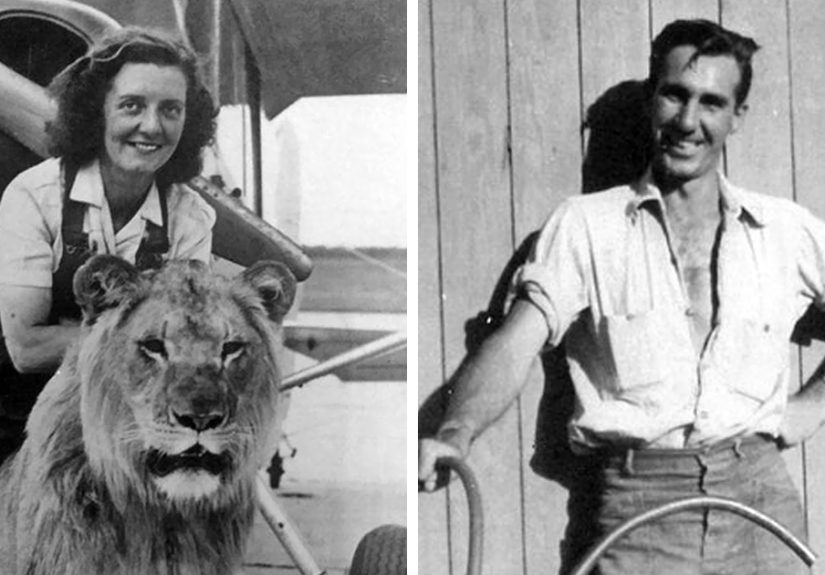
So, hey Pandas, if you have vintage photos of your grandparents being cool, share them proudly. Not just because they are adorable, stylish, or internet-gold-level iconic, but because they tell us something meaningful about identity, memory, and the way photography preserves everyday life. A great retro family picture is not only cute. It is cultural evidence. It is social history with better cheekbones.
Why Vintage Photos Of Grandparents Feel So Powerful
There is a special kind of shock that comes from seeing an older relative in their youth. It is not just surprise. It is perspective. We tend to meet our grandparents in their “settled” era. We know them as careful drivers, soup makers, coupon clippers, porch sitters, holiday hosts, or the reigning authorities on whether the thermostat has been touched. Then a photo appears, and suddenly Grandma is wearing trousers like a wartime pin-up mechanic, and Grandpa is standing with a grin that says he definitely ignored at least one sensible rule.
That emotional jolt matters. Vintage family photos force us to see older relatives as full people rather than fixed roles. They were not always “Grandma” or “Grandpa.” They were dancers, soldiers, waitresses, athletes, factory workers, artists, students, road-trippers, heartbreakers, and occasional fashion risks. The coolest old photos do not merely prove they were attractive. They prove they had a life before our version of them began.
This is one reason old family photographs remain so compelling in the digital age. A polished modern selfie can be fun, but a faded print with silvering at the edges feels earned. It has traveled through drawers, basements, envelopes, albums, cross-country moves, and the occasional terrifying plastic grocery bag of “important photos.” It survived. And because it survived, it carries weight.
What Makes A Grandparent Photo “Cool” Anyway?
Cool is slippery, but in vintage photos it usually reveals itself immediately. Sometimes it is style. A perfectly tailored dress, slicked-back hair, bold lipstick, cowboy boots, a varsity jacket, a uniform worn with confidence, or a pair of sunglasses so sharp they deserve their own agent. Sometimes it is posture. Your grandfather leaning against a truck as if he has never rushed a single day in his life. Your grandmother sitting cross-legged on a porch rail with the calm of someone who already knows she looks fantastic.
Sometimes the cool factor is accidental. Maybe the photo catches an ordinary moment, but the details turn it into magic: a jukebox in the corner, a diner booth, a gas station road map, a tiny dog in a sweater, a cigarette smoke curl hanging in the light, a beach towel from a decade when beach towels had personality. These images feel cinematic because time has edited them for us. The outfits, cars, furniture, signage, and body language all become clues.
And then there is attitude. The best vintage photos of grandparents are often the ones where they are not trying to be impressive. That is exactly what makes them impressive. Cool is often just confidence caught off guard.
Style, Setting, And Pure Main-Character Energy
Look closely at old family pictures and you start noticing how many stories fit into one frame. A leather handbag can suggest a first job in the city. A mechanic’s uniform might point to wartime industry or postwar trade work. A roadside motel sign can hint at the golden age of American road trips. A dance hall, stoop, church picnic, boardwalk, or city sidewalk can quietly tell you where leisure happened, how people socialized, and what freedom looked like at the time.
That is why vintage photos of grandparents do not just document a face. They document a world. Fashion trends, transportation, architecture, recreation, and social rituals all sneak into the image. A single snapshot can reveal whether a family was urban or rural, formal or playful, practical or flamboyant, struggling or thriving, rooted or restless. In other words, the photo is not just about who your grandparents were. It is also about the era that shaped them.
Old Family Photos Are Tiny History Books In Disguise
One of the reasons online communities love retro family pictures is simple: they make history personal. Historical dates can feel abstract. A stylish grandmother roller-skating in the 1950s does not. A grandfather in wide lapels and impossible sideburns suddenly makes the 1970s feel less like a chapter heading and more like a lived afternoon. These images bring scale to the past. They remind us that every era people now call “vintage” was once just Tuesday.
That is also why so many people get emotional when sharing grandparents’ photos on social media. They are not only showing off old-school cool. They are rescuing context. A family photo can reveal what migration looked like, what workwear looked like, what courtship looked like, what joy looked like during hard years, and how ordinary people presented themselves to the camera. For many families, especially those without formal written records, photos become primary evidence of identity and belonging.
Even the imperfections tell the truth. Crooked framing, overexposed skies, fingerprints, soft focus, or bent corners can make a picture feel more intimate, not less. These details remind us that photography was once precious but still wonderfully imperfect. Not every image was taken to be posted, optimized, filtered, or judged by strangers. Some were taken just to remember a day, a person, a dress, a haircut, a grin, a trip, or a moment when life briefly looked exactly right.
Why People Love Sharing Cool Grandparent Photos Online
There is something irresistibly wholesome about discovering that your relatives had range. Online, these photos travel fast because they trigger the same joyful chain reaction: surprise, laughter, admiration, then reflection. First comes, “Wait, that is my grandfather?” Then comes, “Why does he look like he was in a jazz band and three love triangles?” Finally, the deeper feeling arrives: “I wish I had asked him more.”
That last part matters. Sharing vintage photos of grandparents often opens the door to family storytelling. Once the image is out, people start naming names, correcting dates, remembering addresses, identifying old cars, arguing about whether that was Chicago or Cleveland, and revealing the backstory behind the pose. The photo becomes a conversation starter. It is memory bait in the best possible sense.
And in families where someone has passed away, the effect can be even more powerful. A shared image can revive voice, mannerisms, humor, and forgotten details. A granddaughter posts a glamorous 1962 beach snapshot, and suddenly an aunt remembers the exact swimsuit, an uncle remembers the road trip, and a cousin remembers being told that she could out-dance everybody at weddings. One picture. Ten stories. That is the real magic.
The Internet Loves Confidence That Predates The Internet
Part of the charm is that older photos feel wonderfully unbranded. No hashtags. No ring light. No “link in bio.” Just a person standing there, radiating style and self-possession like it is no big deal. In an age of endless performance, vintage cool can feel refreshing because it often appears uncalculated. Of course people posed back then too, but the result still feels different. The image often seems less like content and more like evidence that somebody truly knew how to enter a room.
That is why a photo of your grandparents being cool can resonate even with strangers. We all recognize authenticity when we see it. Especially if it is wearing saddle shoes, a pencil skirt, a letterman sweater, or a mechanic’s cap.
How To Read The Details In A Vintage Photo
If you want to get more from old family photos, slow down and read them like artifacts. Start with clothes. Are they homemade, tailored, uniform-like, formal, practical, trendy? Clothing can hint at class, region, occupation, and occasion. Then look at the setting. Is it a studio portrait, a backyard, a city street, a dance hall, a roadside stop, a military base, or a living room? Background details can help date the photo or reveal a family’s routines and aspirations.
Then look at body language. Who is touching whom? Who looks relaxed? Who looks like they are trying not to laugh? Who seems to be the center of gravity in the image? Families often communicate hierarchy, affection, and personality without saying a word. A grandparent with one foot casually propped on a car bumper may be telling you more than a census record ever could.
Do not ignore objects either. Cameras, records, books, sports gear, luggage, lunch pails, picnic baskets, radios, handbags, and hair tools can all act like breadcrumbs. They tell you what mattered, what was affordable, what felt special, and what counted as modern at the time. In a single vintage snapshot, ordinary stuff becomes historical evidence.
Why Preserving These Photos Matters
Sharing is great. Preserving is better. If you are lucky enough to inherit old family albums or loose prints, treat them like the treasures they are. The point is not to lock them away like museum objects and never touch them again. The point is to keep them safe enough to keep telling stories. A curled snapshot of your grandfather in a bowling shirt might not seem important to the outside world, but to your family it could be priceless.
The smartest move is usually a two-step one: protect the original and make a digital copy. Scan the image, label it with names and dates if you know them, and save that information somewhere relatives can find it later. An unidentified beautiful stranger in your family archive is still interesting. An identified beautiful stranger named “Aunt Louise, summer 1958, Atlantic City, won a pie-eating contest two hours later” is gold.
You do not need to be an archivist to do this well. You just need a little patience, a little curiosity, and a willingness to ask older relatives questions while you still can. Family memory is fragile. Photos help, but names, places, and stories disappear faster than people think. Label now. Laugh now. Ask now.
How To Encourage More People To Share Their Grandparents’ Photos
If you want family members to join in, make it easy and fun. Do not begin with a solemn lecture about heritage. Begin with, “Please explain why Grandpa looks like he fronted a rockabilly band in this picture.” Humor opens the door. Once people start laughing, they start remembering.
Try creating a family challenge: share one cool grandparent photo and one story behind it. Ask simple prompts. What was happening that day? Where was this taken? What was their job then? What music did they love? What was the family rumor about this outfit, haircut, or road trip? These questions often produce better material than formal interviews because they feel conversational rather than clinical.
You can also organize photos by theme: best outfit, best vehicle, best date-night picture, most rebellious expression, best dance-floor energy, most mysterious cigarette pose, most obvious future grandparent who was once a menace. Suddenly the archive becomes interactive, and people who never cared about genealogy start paying attention.
What These Photos Really Give Us
At their best, vintage photos of grandparents being cool do something modern culture rarely does well: they honor age by reconnecting it with youth. They remind us that growing older is not a loss of identity but a layering of identities. The glamorous young woman becomes the practical grandmother. The grinning athlete becomes the quiet grandfather with the recliner and hard candy. The point is not that they used to be cool and are not anymore. The point is that cool was always there. Time just changed the costume.
These photos also challenge the lazy stereotype that the past was drab and the people in it were less expressive, less stylish, or less interesting than we are. Not even close. Give one old family photo five seconds and it will usually humble an entire camera roll.
So yes, share the vintage photos. Share the one where your grandmother looks like she could win an argument with the moon. Share the one where your grandfather looks like he taught James Dean how to lean. Share the one where they are on a porch, in a diner, at a lake, on a train platform, in Sunday clothes, in work boots, in military uniform, in wedding attire, or laughing so hard the image blurs. Share them because they are beautiful. Share them because they are funny. Share them because they prove personality is hereditary, for better or for chaos.
Extra Reflections: The Experience Of Discovering Grandparents Through Photos
There is also a quieter experience tied to all this, and it deserves its own space. Finding a cool old photo of your grandparents can feel strangely intimate, even if the image is decades older than you are. You are looking at a version of someone you never met, even if you knew them your whole life. That feeling is hard to describe until it happens. It is part recognition, part mystery, part grief, part delight.
Maybe you find a snapshot in a cookie tin, tucked between greeting cards and expired warranties. Maybe it slips from an album while you are looking for holiday pictures. Maybe a relative texts a scanned image to the family group chat with twelve question marks and no context. However it happens, the effect is immediate. The room changes. People lean in. Someone says, “Oh wow.” Someone else says, “That is definitely your nose.” And suddenly a person you thought you knew becomes larger, younger, funnier, and more complicated.
For many people, these photos create the first real bridge to a family past that had always felt foggy. Not everyone grows up hearing detailed stories about earlier generations. Some families are natural storytellers; others keep everything in sealed emotional vaults guarded by casserole recipes. A photo can crack that vault open. A stylish portrait, a beach picture, a prom snapshot, or a road-trip image gives everyone something concrete to react to. It lowers the pressure. Instead of asking, “Tell me your life story,” you can ask, “Where was this?” That small question often leads somewhere much bigger.
There is also comfort in realizing that your grandparents were once figuring things out too. In old photos they are often not yet “established.” They are still becoming themselves. They are trying on adulthood, fashion, work, romance, confidence, and ambition. For younger relatives, that can be reassuring. The family elders were not born wise. They were improvising with excellent hair.
And sometimes the experience is bittersweet. You may discover a tenderness you never got to see in person. A grandfather known for being stern is suddenly smiling like sunshine. A grandmother remembered as practical and reserved is caught mid-laugh, glamorous and loose, wearing joy like it was custom-made. These moments can feel healing. They do not erase hardship, conflict, or loss. But they round out the person. They return texture to someone memory had flattened.
That is why the act of sharing these photos matters beyond nostalgia. It is a way of saying, “You were here, and you were vivid.” It is a way of offering dignity to ordinary lives. Not everybody gets a biography, a museum, or a documentary voice-over. Most people get a few stories, a few names, and, if luck is on their side, a handful of pictures that outlast them. Those pictures become proof that a life was not generic. It had flair. It had style. It had one absolutely unforgettable afternoon in 1964 when your grandmother looked cooler than the entire modern internet combined.
So if you have one of those photos, do not keep it hidden until the album disintegrates and the names fade with it. Scan it. Label it. Share it. Ask about it. Laugh with it. Let younger people see that aging did not erase their grandparents’ spark. It carried it forward. And let older relatives enjoy the sweetest plot twist of all: discovering that the family finally understands they were icons all along.
Conclusion
Vintage photos of grandparents being cool are funny, stylish, emotional, and unexpectedly profound. They preserve fashion, personality, family stories, and slices of everyday history in a way few objects can. More than that, they remind us to see older relatives as fully human: young once, bold once, complicated once, and often cooler than anyone gave them credit for. So go ahead, Pandas. Open the albums. Raid the boxes. Ask the questions. Then post the proof. The legends deserve their flowers.