Table of Contents >> Show >> Hide
- What Is a Half Moon Garden Holster, Exactly?
- Why Wear a Garden Tool Holster Instead of Using Pockets?
- Design Details That Separate “Nice” from “Actually Useful”
- How to Choose the Right Fit for Your Tools
- Five Practical Ways to Use a Half Moon Garden Holster
- Tool Hygiene and Maintenance: The Not-So-Glamorous Superpower
- Leather Care for a Garden Holster (Without Overthinking It)
- Who the Half Moon Garden Holster Is Perfect For
- Alternatives (If You Love the Idea but Want a Different Style)
- Buying Checklist: Five Questions to Ask Before You Commit
- Bonus: Field Notes (About ) Life With a Half Moon Garden Holster
- Conclusion
Every gardener has a “tool teleportation” mystery. You set your pruners down for two seconds, stand up, and suddenly they’ve joined a witness protection program under a hydrangea.
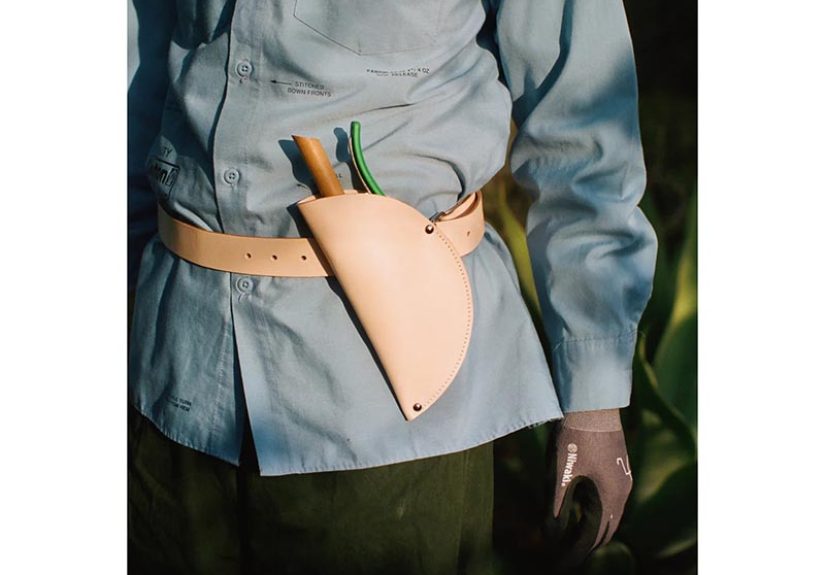
A Half Moon Garden Holster is the antidote: a simple, wear-it-on-your-belt tool holder that keeps one essential cutting tool parked in the same spot all day.
This article digs into what a Half Moon-style holster is, why it’s oddly life-changing for pruning and harvesting, and how to use it safely (because nobody wants a “secateurs surprise” while crouching).
We’ll also talk leather, fit, tool care, and real-world setupsplus a long “field notes” section at the end, because gear only matters if it works when the tomatoes are trying to take over your zip code.
What Is a Half Moon Garden Holster, Exactly?
Think of it as a minimalist garden tool holster: usually leather, usually curved (the “half moon” shape), and designed to carry one primary hand toolmost often
pruning shears (secateurs), a compact folding saw, or a slim weeding knife. Instead of loading you up like a medieval blacksmith, it focuses on the tool you reach for
50 times a session.
Many Half Moon-style holsters are built from vegetable-tanned leather, the kind that starts lighter and gradually deepens in color with sunlight, handling, and time.
That patina isn’t a flawit’s the “proof of work” look that makes the holster feel like it belongs in the garden, not in a costume department.
Why Wear a Garden Tool Holster Instead of Using Pockets?
1) Your hands stay in the workflow
Gardening is full of micro-movements: snip, tuck, tie, pinch, pull. When your tool lives in a holster, you stop interrupting the rhythm to dig through pockets or walk back to a bucket.
That adds up fastespecially during deadheading, pruning, or harvesting.
2) You lose fewer tools (and fewer minutes)
The classic tool-loss sequence goes like this: set pruners on the ground, step away, return, and stare at your garden like it’s gaslighting you.
A belt holster makes your tool’s “home base” obvious, consistent, and harder to forget.
3) It can be safer than “blade roulette”
Sharp tools in back pockets are a bad idea, and sharp tools dropped in garden beds are worse. A dedicated pruner holster keeps blades oriented away from your body
and reduces the chance of accidental contact when you’re moving around quickly.
Design Details That Separate “Nice” from “Actually Useful”
The half-moon curve (why it matters)
A curved holster body can hug your hip instead of sticking out like a rigid box. That means fewer snags on fence posts, fewer “why is my pouch hooked on the tomato cage?” moments,
and less poking when you bend at the waist.
Vegetable-tanned leather (and the patina payoff)
Veg-tanned leather is popular because it’s firm, moldable, and ages beautifully. It can also be a little dramatic at firstlight leather shows scuffs and water marks more easily.
The upside is that, over time, those marks blend into a warm, worked-in color that looks better the more you use it.
Belt attachment: loop vs. clip
A simple belt loop is stable and quiet. A clip is faster on/off. For garden use, stability usually winsespecially if you’re crouching, kneeling, and standing
(aka doing squats you didn’t consent to).
Stitching, rivets, and edge finishing
Look for reinforced seams where the tool’s handle rubs the most. Smooth edges matter more than people think; rough edges can chew up shirts, snag gloves, and feel annoying against your side.
Good finishing is the difference between “cute accessory” and “I forget I’m wearing it.”
How to Choose the Right Fit for Your Tools
Measure the tool you’ll carry most
Most gardeners use the holster for pruners, so start there. Consider the handle thickness and whether the tool has a locking latch that might catch.
If you plan to carry a folding saw, check the saw’s closed width and how deep the holster sits on your belt.
Pick a belt that won’t sag
A holster is only as comfortable as the belt holding it up. A sturdy belt distributes weight better and prevents the holster from tilting outward.
If your belt folds like a tortilla, your holster will flop like a confused fish.
Placement: front, side, or back?
For most gardeners, the sweet spot is slightly to the sideeasy to reach, but not directly on your hip bone.
If you wear it too far forward, you may bump it while bending. Too far back, and sitting or crouching can get awkward.
Try it empty first, then loaded, and do a few kneels and reaches to test comfort.
Five Practical Ways to Use a Half Moon Garden Holster
Setup 1: Pruners for deadheading and light pruning
If you’re cleaning up perennials or shaping shrubs, pruners are the tool you grab constantly. A holster keeps them available without you thinking about it.
Bonus tip: for branches beyond pruner capacity, switch tools instead of forcing a cutclean cuts are healthier for plants and easier on your hands.
Setup 2: Folding saw for thicker stems and cleanup
A compact folding saw is great for thicker woody growth where pruners struggle. The holster keeps it from disappearing into the grass.
Make sure the saw is folded and secured before you movegardening should not feel like a low-budget action movie.
Setup 3: Harvest knife or hori-hori for quick digging and slicing
For harvesting greens, cutting twine, opening soil pockets for transplants, or popping out stubborn roots, a slim knife or hori-hori can be a workhorse.
Many gardeners like a sheath system specifically because it keeps sharp edges covered between uses.
Setup 4: “One tool + one habit” system
The holster works best when paired with a habit: tool goes back in the holster every time.
Make it automaticsnip, holster; cut, holster. After a week, you’ll stop losing tools and start losing fewer minutes.
(You may still lose track of time. Gardens are time machines.)
Setup 5: Add a tiny accessory without turning into a pack mule
If your holster design allows, you can clip a small ring for gloves, plant labels, or a roll of soft tie tape.
Keep it minimalthe magic is staying light and mobile, not recreating a hardware store around your waist.
Tool Hygiene and Maintenance: The Not-So-Glamorous Superpower
Clean and disinfect cutting tools to reduce plant disease spread
Pruners can move plant pathogens from one plant to another. A simple approach is to clean off visible sap and debris,
then disinfect periodicallyespecially when working on plants that look diseased or stressed.
Many gardeners use 70% isopropyl alcohol for quick wipe-downs, because it’s fast and doesn’t require mixing.
A diluted bleach solution is another option for deeper cleaning, but it can be harder on metal if you don’t rinse and dry well.
Dry and lightly oil metal parts
Moisture is the enemy of clean cuts. After cleaning, dry tools thoroughly and apply a light oil to prevent rust.
It’s a small step that keeps pruners snappy and saws smooth.
Sharpen regularly (your hands will notice)
Sharp pruners make cleaner cuts, reduce hand fatigue, and help plants heal better. Many gardeners use a file or diamond sharpener
to refresh the edge without complicated disassembly. If you’re crushing stems instead of slicing them, that’s your sign.
Leather Care for a Garden Holster (Without Overthinking It)
Expect marksthen watch them blend into patina
Veg-tanned leather often shows water spots and darkens in sunlight. That’s normal. Over time, the color evens out into a warm tone
that looks better than pristine, because gardens are not pristine.
Basic cleaning routine
- Brush off dry soil with a soft cloth or brush.
- If it’s muddy, wipe with a slightly damp cloth and let it dry at room temperature (no blasting it with heat).
- Condition lightly once in a while if it gets stifftoo much product can make it greasy and attract dirt.
Rain happensplan for it
A little moisture isn’t the end of the world, but soaking wet leather can stain. If you get caught in a downpour, remove the holster,
dab excess water, and let it dry naturally. The garden will forgive you. Your leather will, too.
Who the Half Moon Garden Holster Is Perfect For
- Home gardeners who want fewer trips back to the shed and fewer lost tools.
- Flower growers and market gardeners who harvest or deadhead all day and need speed.
- Pruning-heavy gardeners (roses, fruit trees, vines) who constantly reach for cutting tools.
- Gift givers who want something practical that also looks “designer” without being fussy.
Alternatives (If You Love the Idea but Want a Different Style)
Garden apron
Great for carrying lots of small items (packets, labels, twine), but it can feel bulky and swing around when you move fast.
Tool belt pouch
Useful if you carry multiple tools, but larger pouches can turn into a catch-all where sharp edges meet delicate fingers.
If your goal is speed and simplicity, a single holster is often the cleaner solution.
Bucket or caddy
Good for hauling gear, not great for “I need my pruners every 30 seconds.” If you’re mostly stationary, it’s fine.
If you roam, you’ll eventually abandon it somewhere like a forgotten suitcase.
Buying Checklist: Five Questions to Ask Before You Commit
- What’s my main tool? (pruners, folding saw, knife)
- Will my belt support the weight? (sturdy belt = better comfort)
- Can I kneel comfortably? (test placement: side beats front for many people)
- Is the opening secure? (tool shouldn’t slide out when you bend)
- Do I want patina or perfection? (veg-tan ages; synthetic stays consistent)
Bonus: Field Notes (About ) Life With a Half Moon Garden Holster
The first time I wore a Half Moon Garden Holster, I did the classic gear mistake: I expected it to “feel useful” immediately.
Instead, it felt like wearing a polite little leather taco on my beltcute, slightly mysterious, and not yet part of my gardening muscle memory.
Then the real test started: the garden day that includes everything.
Morning began with tomatoes. You know the drill: prune suckers, tie stems, step back, realize you tied the wrong stem, repeat.
With the holster, the pruners stopped becoming a “where did I put that?” problem. The difference wasn’t dramatic like fireworks;
it was subtle like good kitchen mise en place. My hand reached, the tool was there, and my brain stayed focused on the plant instead of on scavenger hunting.
The next surprise was crouching. I’d been worried the holster would jab me in the ribs or snag on everything. Placement fixed that.
Sliding it slightly off-center (not fully front, not fully back) meant I could kneel beside the bed without getting poked.
When I stood up, I didn’t have to pick my tool up firstbecause I never put it down in the first place.
That sounds obvious, but gardeners are very good at making life harder out of habit.
By midday, I was deadheading flowers and trimming herbs. This is where “one-tool living” really shines. A big apron is great
when you’re hauling seed packets and tags, but it can feel like wearing a sail in the wind. The holster felt light.
I could move quickly along the beds, snip, and keep goingno bouncing pockets, no sharp handles digging into my jeans.
Then came the moment every outdoor accessory faces: dirt and water. I brushed against damp foliage and later splashed a bit while watering.
The leather darkened in tiny spots, and for about five seconds I had a “nooo, my beautiful gear!” reaction.
After that, I remembered the whole point: gardening is messy, and the holster is supposed to age with you.
The marks didn’t look ruined; they looked honest. Like the holster had officially clocked in for work.
The biggest change happened at cleanup. Normally, I spend the last ten minutes walking around like a detective:
pruners? gloves? ties? why is the label marker in the compost? With the holster, the pruners were already accounted for.
I wiped them down, gave them a quick disinfecting wipe after working on a questionable branch, and hung everything up.
The garden still had plenty of chaos. My tools didn’t have to be part of it.
Conclusion
A Half Moon Garden Holster is a small piece of kit with an outsized impact: it keeps your most-used garden tool accessible,
reduces tool loss, supports a smoother workflow, and adds a touch of durable style that looks better with age.
If you prune, harvest, or trim often, a well-made holster can feel like gaining an extra handwithout actually growing one.
(Although if you do, please let science know.)