Table of Contents >> Show >> Hide
- What Makes This Greek Chicken Skillet Actually Work
- Ingredients You’ll Need
- Step-by-Step: How to Make Greek Chicken Skillet
- Chicken Doneness, Timing, and Food Safety (Without the Panic)
- Easy Variations (Pick Your Own Greek Adventure)
- What to Serve With Greek Chicken Skillet
- Make-Ahead, Storage, and Reheating
- Troubleshooting (Because Life Happens)
- Printable Recipe Card
- Experience Notes: The Greek Chicken Skillet Effect (Extra )
- Conclusion
If weeknight dinner had a love language, it would be one-pan. And if one-pan dinners had a vacation home, it would be somewhere on a sunny Greek islandwhite walls, blue shutters, and a suspicious amount of feta.
This Greek chicken skillet is bright, briny, and cozy all at once: lemon + garlic + oregano for that classic Greek-inspired vibe, juicy chicken with a good sear, bursty tomatoes, Kalamata olives, and a feta finish that melts just enough to be dramatic (but not so much it disappears like your motivation after 3 p.m.).
What Makes This Greek Chicken Skillet Actually Work
Greek flavors are bold, but they’re not complicated. The “secret” is layering: citrus for lift, oregano for that unmistakable Greek profile, and a little pan sauce magic so everything tastes like it meant to be together.
- Quick marinade (even 10 minutes helps) punches flavor into the chicken fast.
- Searing first builds browning, which becomes the flavor base of the skillet sauce.
- Tomatoes + olives bring sweet-and-salty contrast so you don’t need a sugary sauce.
- Feta at the end = creamy salt bomb that makes people ask, “What did you DO to this?”
Ingredients You’ll Need
For the chicken (and a fast Greek-style marinade)
- 1 ½ pounds boneless, skinless chicken thighs (most forgiving) or chicken breasts (leaner)
- 2 tablespoons olive oil
- Zest + juice of 1 lemon (save extra wedges for serving)
- 3–4 cloves garlic, finely minced
- 2 teaspoons dried oregano
- 1 teaspoon paprika (optional, but highly recommended for warmth and color)
- 1 teaspoon kosher salt (use less if your olives are super salty)
- ½ teaspoon black pepper
- Optional but excellent: 1 teaspoon Dijon mustard OR 1 tablespoon red wine vinegar
For the skillet sauce + mix-ins
- 1 small red onion (or 2 shallots), thinly sliced
- 1 pint cherry or grape tomatoes
- ½ cup Kalamata olives, pitted (or another briny olive you like)
- 1 teaspoon dried oregano (yes, againGreek cooking is not shy)
- ½ cup chicken broth (or water in a pinch)
- 2 big handfuls baby spinach (optional, but it makes you feel like a person who drinks enough water)
- ½ cup crumbled feta (plus more for serving if you live deliciously)
- 1–2 tablespoons chopped fresh parsley or dill
Step-by-Step: How to Make Greek Chicken Skillet
You’ll need a large skillet (12-inch is ideal). Cast iron is great, but any heavy-bottom skillet works. The goal is: sear, simmer, finish, and pretend you meant to keep cleanup minimal.
- Marinate the chicken (10–30 minutes).
In a bowl, mix olive oil, lemon zest and juice, garlic, oregano, paprika, salt, pepper, and any optional Dijon/vinegar. Toss chicken until coated. If you’ve got time, let it sit while you slice the onion and rinse the tomatoes. If you don’t have time, congratulationsyou’re still making dinner. - Sear for flavor.
Heat a large skillet over medium-high heat. Add a drizzle of olive oil if your pan is dry. Sear chicken 3–5 minutes per side (thighs may take a touch longer) until deeply golden. Transfer chicken to a plate. Don’t worry if it’s not cooked through yetthat’s what the next steps are for. - Build the sauce base.
Reduce heat to medium. Add sliced onion and cook 2–3 minutes, scraping up browned bits. Add tomatoes, olives, and oregano. Stir and cook 2 minutes to wake everything up. - Deglaze and simmer.
Pour in broth and stir, scraping the pan again (those browned bits are the whole point). Bring to a gentle simmer. - Finish cooking the chicken in the sauce.
Nestle chicken back into the skillet with any juices from the plate. Cover (or partially cover) and simmer 6–10 minutes, depending on thickness, until the chicken is cooked through. If using chicken breasts, keep a close eyelean meat goes from “juicy” to “why is it like this” quickly. - Add spinach (optional) and feta.
Stir in spinach and let it wilt for 30–60 seconds. Turn off heat, then sprinkle feta over the top. Let it sit 2 minutes so the feta softens slightly. - Finish like you’re on a cooking show.
Top with parsley or dill, add a squeeze of lemon, and serve straight from the skillet. (Bonus points if you say “family style” while placing it on the table.)
Chicken Doneness, Timing, and Food Safety (Without the Panic)
The easiest way to keep chicken juicy is to cook it correctlymeaning you’re not guessing. Use a thermometer and aim for the safe internal temperature, checking the thickest part. If you’re using thighs, they can handle a little extra time without drying out; breasts need more precision.
A practical trick: pull the skillet off the heat once the chicken is just about done and let carryover heat finish the job. This gives you a wider “juicy window,” especially for chicken breasts.
Easy Variations (Pick Your Own Greek Adventure)
1) Greek chicken skillet with orzo
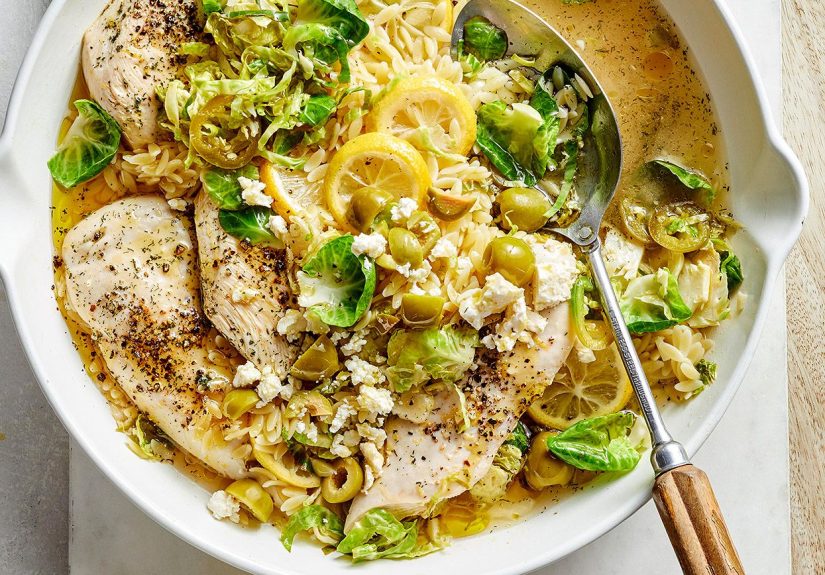
Want this to be a full “one-pan, no sides required” situation? After the onions soften, stir in ¾ cup dry orzo and toast it for 30 seconds. Add 1 ¾ cups broth total (instead of ½ cup), simmer, then nestle the chicken back in. Cook until orzo is tender, adding a splash more broth if needed. Finish with feta and dill for serious restaurant energy.
2) Greek chicken and rice skillet
Use par-cooked rice if you want it fast: stir in 2–3 cups cooked rice near the end, let it soak up sauce, then top with feta. If you want to cook rice in the skillet, use long-grain rice and adjust liquid/time like you would for a pilaf.
3) Creamy “tzatziki-inspired” finish
Turn off heat and stir in 2–4 tablespoons Greek yogurt (do it off heat so it doesn’t curdle). Add dill, lemon, and cucumber on the side for that cool-and-creamy vibe.
4) Low-carb version
Skip the grains, double the spinach, and add chopped zucchini or bell peppers. Serve with cauliflower rice or a crunchy Greek salad. The skillet sauce does not care what you do with itit will still taste great.
5) Pantry-friendly “no fresh tomatoes” option
Use 1 (14–15 oz) can diced tomatoes (drained slightly if you want it thicker). Simmer a few extra minutes to concentrate the flavor. Still finish with feta, because we have standards.
What to Serve With Greek Chicken Skillet
- Warm pita (to scoop up sauce like it’s your job)
- Greek salad with cucumber, tomato, olives, and feta
- Lemony roasted potatoes if you’re feeding hungry people who think “salad” is a rumor
- Simple rice or orzo to catch every drop of that skillet sauce
Make-Ahead, Storage, and Reheating
This recipe is weeknight gold because it reheats well. Store leftovers in an airtight container in the fridge. Reheat gently on the stove with a splash of broth (or water) to loosen the sauce. If you microwaving, cover loosely and heat in short bursts so the chicken doesn’t turn rubbery.
If you want to prep ahead: mix the marinade in the morning, toss in the chicken, and refrigerate. Dinner later becomes a simple sear-and-simmer situation.
Troubleshooting (Because Life Happens)
My chicken is dry
Likely overcooked, especially if using breasts. Next time: slice breasts into cutlets, sear quickly, and finish in the sauce just until done. Thighs are your best friend if you want stress-free juiciness.
My sauce is too thin
Simmer uncovered for a few minutes to reduce. Tomatoes release water; reduction fixes that. You can also stir in a spoonful of feta and let it melt slightly to thicken.
It’s too salty
Olives and feta vary wildly in saltiness. Use low-sodium broth, rinse olives if needed, and add feta at the end so you can taste first.
Printable Recipe Card
Greek Chicken Skillet (Lemon, Olives & Feta)
Serves: 4
Time: 10 minutes prep + 20 minutes cook (plus optional marinating)
Skill level: Weeknight-capable
Ingredients
- 1 ½ lb boneless, skinless chicken thighs (or breasts)
- 2 tbsp olive oil
- Zest + juice of 1 lemon
- 3–4 garlic cloves, minced
- 2 tsp dried oregano + 1 tsp dried oregano (divided)
- 1 tsp paprika (optional)
- 1 tsp kosher salt, ½ tsp black pepper
- 1 small red onion, sliced
- 1 pint cherry tomatoes
- ½ cup Kalamata olives, pitted
- ½ cup chicken broth
- 2 handfuls baby spinach (optional)
- ½ cup crumbled feta
- Parsley or dill, chopped
Directions
- Mix olive oil, lemon zest/juice, garlic, 2 tsp oregano, paprika, salt, and pepper. Toss chicken to coat.
- Sear chicken in a hot skillet over medium-high heat until golden, 3–5 minutes per side. Remove to a plate.
- Lower heat to medium. Cook onion 2–3 minutes. Add tomatoes, olives, and remaining oregano; cook 2 minutes.
- Add broth, scrape up browned bits, and bring to a gentle simmer.
- Return chicken to skillet. Cover and simmer until cooked through. Add spinach to wilt (optional).
- Turn off heat. Top with feta and herbs. Finish with an extra squeeze of lemon and serve.
Experience Notes: The Greek Chicken Skillet Effect (Extra )
There’s a specific kind of joy that comes from a dinner that smells expensive but isn’t. The Greek chicken skillet is that joy in skillet form. In a lot of households, the first “experience” with this recipe starts the same way: you open the fridge, see chicken, and think, “I can’t do another plain chicken situation.” Then you remember lemons exist. Suddenly you’re zesting like you’re auditioning for a cooking show, and the kitchen starts smelling bright and sharp in the best waylike your week just got a little more organized, even if your laundry says otherwise.
Another very real moment: the sear. The first time you hear that chicken hit the hot pan and actually sizzle (not sad steaming), you feel unstoppable. It’s a tiny win, but it’s a win. And then the browned bits appear, and you realize those aren’t “burned parts to scrub later”they’re flavor. When you deglaze with broth and scrape the pan, you’re basically turning “cleanup anxiety” into “restaurant-level sauce.” That’s personal growth.
The flavor experience is a crowd-pleaser because it hits multiple notes without being confusing. Lemon wakes everything up, oregano gives you that Greek-inspired signature, tomatoes add sweetness, and olives bring that briny punch that makes the dish taste finished. People who swear they “don’t like olives” often like them here because they’re not eating a plain olivethey’re getting olive as part of the sauce, like a supporting actor who suddenly steals the scene.
This skillet is also a choose-your-own-adventure for different nights. Some nights it’s a fast dinner served with pita and a chopped salad. Other nights it becomes meal prep: you portion it with rice or orzo, and suddenly Tuesday lunch feels less like leftovers and more like a plan. If you’re cooking for a family or roommates, it’s the kind of dish where people wander into the kitchen early asking, “When is it ready?” because the smell does the marketing for you.
It’s also quietly flexible for picky eaters. If someone doesn’t want tomatoes, they can load up on chicken and feta. If someone doesn’t want feta (rare, but it happens), they can squeeze extra lemon and add herbs. If you’re trying to eat lighter, you can pile it over spinach or cauliflower rice and still feel satisfied because the sauce brings the comfort. If you want comfort-comfort, you serve it with roasted potatoes and let the lemony pan juices mingle with everything on the plate like they own the place.
And maybe the best experience of all: the “one pan” part. After dinner, you’re not staring down a sink full of pots. You’re rinsing a cutting board, washing a knife, and giving the skillet a quick clean. It’s the kind of meal that lets you end the night feeling like you cooked something special and still have time to relax. In the weeknight dinner universe, that’s basically a superpower.
Conclusion
This Greek chicken skillet recipe is the weeknight sweet spot: bold Mediterranean flavor, minimal cleanup, and enough flexibility to match whatever your fridge is doing. Make it once, and you’ll start seeing lemons as less of a garnish and more of a lifestyle. Add pita, a salad, or a pot of rice, and you’ve got a dinner that tastes like a getawayno passport required.