Table of Contents >> Show >> Hide
- What a Government Shutdown Actually Means
- Why Government Shutdowns Keep Happening
- What Closes, What Limps Along, and What Stays Open
- The Real Cost of a Shutdown Is Bigger Than the Slogan
- Recent Shutdown Drama Shows the Problem Is Not Going Away
- Why the Public Usually Hates Shutdown Theater
- How Washington Could Stop Doing This to Itself
- Conclusion: Midnight Is Not the Problem. The Planning Is.
- Shutdown Stories From the Ground: What This Feels Like in Real Life
There are few traditions in Washington more reliable than lawmakers staring at a deadline, making grave faces on television, and acting shocked when midnight arrives exactly on schedule. A government shutdown is the political version of forgetting your anniversary and then claiming you were “monitoring the situation.” Everyone knows the date is coming. Everyone knows the consequences. And yet, somehow, when funding expires, the city still behaves like the clock pulled a fast one.
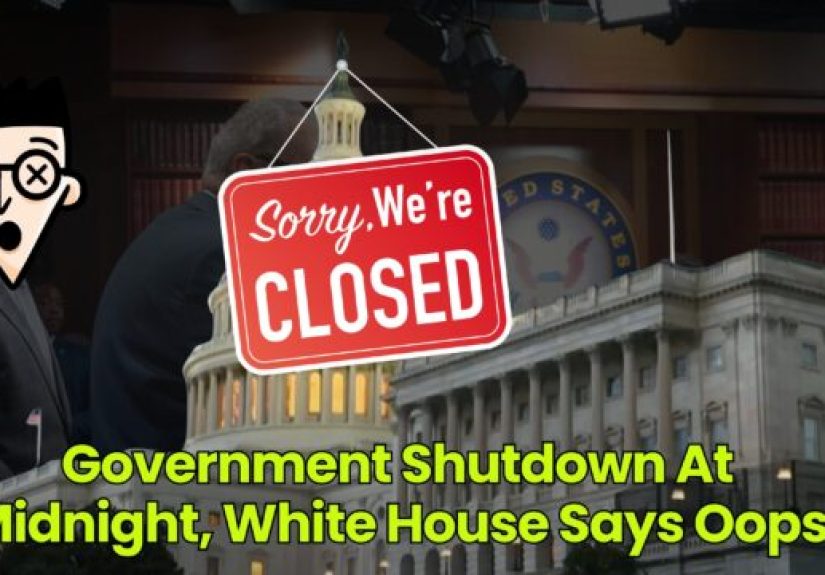
That is what makes the phrase government shutdown at midnight feel so absurd. Midnight is not a surprise guest. It is the least sneaky time on Earth. But when Congress fails to pass appropriations bills or a continuing resolution before funding runs out, parts of the federal government grind to a halt, workers are furloughed or forced to work without pay, services slow down, and the public gets a front-row seat to another episode of As the Capitol Turns.
This article breaks down what a shutdown really is, why it keeps happening, what services are affected, how it hits real people, and why this ritual of last-minute budget panic is more expensive than the theatrical speeches make it seem. Spoiler alert: it is not just a political headache. It is an economic drag, a management failure, and a cruel way to treat workers and families who depend on government services.
What a Government Shutdown Actually Means
A government shutdown happens when Congress does not pass the spending laws needed to fund agencies and the president does not sign a stopgap measure in time. When the legal authority to spend money lapses, agencies funded through annual appropriations cannot keep operating as usual. That is why “midnight” matters. It is often the exact moment a continuing resolution expires or a new fiscal year begins without fresh funding in place.
This does not mean the entire federal government instantly goes dark like someone tripped over the national extension cord. Some operations continue because they are considered essential for protecting life and property, because they are funded through different mechanisms, or because they have carryover money or permanent appropriations. In plain English: the government does not disappear, but it becomes patchy, weird, slow, and deeply inconvenient.
Who keeps working?
Military personnel, air traffic controllers, law enforcement officers, border personnel, emergency response staff, and many other “excepted” workers often keep doing their jobs during a shutdown. The catch is brutal: many of them may be required to work without receiving paychecks until the shutdown ends. So yes, the government still expects people to show up, perform high-stakes jobs, and somehow pay rent using vibes and patriotism.
Who gets furloughed?
Employees whose duties are not legally excepted are typically furloughed, meaning they are temporarily placed in nonpay, nonduty status. They stay home. Work pauses. Backlogs grow. Public services become harder to access. And even though federal workers are now generally guaranteed back pay after a shutdown ends, that delayed paycheck does not magically pause mortgages, groceries, childcare bills, gas costs, or prescription refills.
Why Government Shutdowns Keep Happening
If shutdowns are so disruptive, why does Washington keep flirting with them like it is trying to impress an ex? The answer is a messy combination of polarization, legislative brinkmanship, and the fact that budget deadlines are often treated as leverage points rather than governance obligations.
Congress is supposed to pass regular appropriations bills before the fiscal year starts. In practice, lawmakers frequently miss that deadline and rely on short-term continuing resolutions, or CRs, to keep money flowing. A CR is basically Congress saying, “We are not done with the budget, but please do not set the building on fire yet.” The problem is that repeated short-term fixes create recurring cliff edges. Every new deadline becomes another opportunity for grandstanding, hostage-taking, and negotiations that somehow always happen five minutes before the buzzer.
Shutdown politics also persist because the pain is unevenly distributed. Lawmakers can posture in ideological terms, but the immediate burden lands on federal employees, contractors, travelers, veterans, researchers, park visitors, small businesses, and families waiting on program administration. In other words, the people with the least control over the crisis often get hit first.
What Closes, What Limps Along, and What Stays Open
One reason government shutdown coverage gets confusing is that the effects vary by agency. Different departments have different funding structures, contingency plans, and legal authorities. So rather than one neat national switch labeled Open or Closed, a shutdown creates a strange checkerboard of service levels.
Services that often continue, though not always smoothly
- Social Security payments: Benefits usually continue, but customer service can slow and administrative tasks may face delays.
- Air travel safety functions: TSA and air traffic control generally continue, though staffing shortages can create long lines and stress.
- Military operations: National defense functions continue, but the pay drama can become its own morale crisis.
- Mail delivery: USPS usually keeps operating because it is generally funded through its own revenue, not annual appropriations.
Services that may slow, scale back, or close
- National parks and museums: Some may partially operate, others may close, and visitor services can shrink fast.
- Administrative processing: Permits, paperwork, compliance reviews, and other behind-the-scenes functions often stall.
- Research and grants: Federal review panels, grant processing, and agency support can be delayed.
- Public-facing support: Wait times rise, websites stop updating normally, and casework becomes slower and more frustrating.
Then there is the contractor problem, which gets less attention than it should. Federal employees generally receive back pay after a shutdown ends. Contractors often do not. If your company depends on federal work and the contract pauses, that lost income may simply be lost. This is one reason shutdowns can ripple outward into local economies, small firms, and communities far from Washington.
The Real Cost of a Shutdown Is Bigger Than the Slogan
Shutdowns are sometimes sold as a sign of fiscal discipline, but in practice they are closer to fiscal self-sabotage. The government does not save money in some clean, elegant way. It delays work, piles up backlogs, wastes planning time, hurts productivity, forces agencies into contingency mode, and then often pays workers retroactively anyway.
The economic damage is real. Analysts have repeatedly found that shutdowns reduce output, delay federal spending, disrupt consumer demand, and create permanent losses that do not fully bounce back after the government reopens. Think of it like slamming the brakes on a moving truck, then acting surprised when boxes fly everywhere. Even if you restart the engine later, the mess is still there.
The political class also tends to underestimate the psychological cost. A shutdown tells workers that their labor is essential but their paycheck is negotiable. It tells citizens that basic governance is apparently an optional subscription service. And it tells markets, businesses, and households that Washington’s preferred budgeting method is somewhere between roulette and improv theater.
Recent Shutdown Drama Shows the Problem Is Not Going Away
Anyone hoping shutdown chaos was a relic of the past got a rude reminder in the 2025 and 2026 funding fights. In March 2025, Congress passed a funding measure only hours before a shutdown would have begun, once again proving that America’s most durable bipartisan tradition is panic at the eleventh hour. That crisis was avoided, but not because the system worked gracefully. It was avoided because lawmakers swerved just before hitting the guardrail.
Later in 2025, the country faced a real partial shutdown after a funding deadline passed without a deal. That episode renewed public frustration over unpaid workers, shuttered or reduced services, and the sheer absurdity of recurring budget cliffhangers in the world’s largest economy. By that point, the script was familiar: stern speeches, finger-pointing, dire warnings, and then a practical lesson in how many public systems depend on people who are being asked to wait for money they already earned.
Then came the 2026 Department of Homeland Security funding lapse, which pushed the dysfunction into even sharper relief. Airport security disruptions, missed paychecks, and a prolonged impasse showed how dangerous it is when “essential” functions depend on employees absorbing financial pain for weeks. When the people screening passengers, responding to disasters, or handling national security duties start missing rent or leaving jobs, shutdown rhetoric stops being abstract and starts becoming operational risk.
That is the part shutdown defenders rarely emphasize. You can brand a funding fight as a noble stand for principle all you want. But if your strategy ends with exhausted workers, delayed services, and emergency improvisation to restore pay after the damage is done, you are not demonstrating competence. You are demonstrating how expensive dysfunction can become.
Why the Public Usually Hates Shutdown Theater
Most Americans do not follow appropriations law for fun. They follow outcomes. Can they get help? Can they travel? Can they reach an office? Can they trust that the people running the government understand the basics of planning ahead? Shutdowns fail this test because they make avoidable chaos look normal.
Even voters who like budget restraint tend to dislike performative breakdowns. A shutdown is not a smart spreadsheet solution. It is a blunt-force tactic that turns everyday administration into collateral damage. It also weakens confidence in institutions at a time when public trust is already fragile. After enough shutdown threats, citizens stop hearing strategic arguments and start hearing: “Sorry, your government forgot to govern again.”
How Washington Could Stop Doing This to Itself
There is no shortage of ideas for reducing shutdown risk. Congress could adopt automatic continuing resolutions that temporarily maintain funding if lawmakers miss the deadline. It could enforce stronger consequences for failing to pass appropriations on time. It could use more realistic budgeting calendars. It could even embrace the radical notion that funding government operations is not a side quest.
None of these fixes would solve political disagreement. Democracies are built for disagreement. But they would reduce the ability of elected officials to use millions of workers and service recipients as bargaining chips. A healthy system should allow fierce debate over spending priorities without converting that debate into airport lines, unpaid Coast Guard families, stalled applications, and closed visitor centers.
Until then, shutdown threats will remain one of Washington’s favorite bad habits: dramatic, avoidable, and somehow always introduced as if nobody saw them coming.
Conclusion: Midnight Is Not the Problem. The Planning Is.
The title joke writes itself because the truth is already ridiculous. When the government shuts down at midnight, it is not because the White House or Congress got ambushed by the concept of time. It is because political incentives rewarded delay, confrontation, or theatrical brinkmanship over boring but necessary competence.
A shutdown is not a clean policy tool. It is a visible failure of routine governance. It hurts workers, frustrates the public, weakens trust, and often costs more than it saves. The next time Washington acts stunned that midnight has once again arrived right on schedule, Americans would be fair to respond with the traditional national phrase for this situation: “You had one job.”
Shutdown Stories From the Ground: What This Feels Like in Real Life
For many people, a government shutdown sounds distant until it barges into everyday life wearing steel-toed boots. The first experience is often confusion. A federal worker reads a late-night email, tries to decode whether they are “excepted” or furloughed, and then realizes their family budget now depends on language that sounds like it was written by a committee of lawyers trapped in an elevator. If they are furloughed, they stay home and wait. If they are excepted, they keep working and wait. Either way, waiting becomes the national management strategy.
Then comes the practical math. The rent is due. Car insurance is due. The credit card bill is due. The electric company, sadly, is not moved by a stirring Senate floor speech. A delayed paycheck may be legally recoverable later, but the grocery store does not accept “retroactive compensation” as a form of payment. That is why shutdown experiences are so stressful: the crisis is political at the top, but financial at the bottom.
Travelers feel it differently. A family heading to visit relatives notices airport lines getting longer, staffing thinner, and tempers shorter. Nobody at the checkpoint is trying to ruin anyone’s vacation. They are just doing a difficult public-facing job while the people in charge play budget chicken. The traveler’s irritation is real, but so is the worker’s exhaustion. A shutdown turns routine logistics into a chain reaction of tiny failures that everybody remembers.
Then there are contractors and small businesses. Maybe you run a firm that services a federal office, processes data, or supports a program that suddenly slows down. Your invoices get delayed. Your staff hours shrink. Unlike many federal employees, you may not see that money restored later. So while Washington debates “temporary disruption,” local employers may be making very permanent decisions.
Public experiences vary too. A retiree can still receive a Social Security payment, but getting help with a problem may take longer. A family planning a national park trip finds partial closures, fewer services, or changing rules. A researcher waiting on a federal review panel loses time. A veteran, student, applicant, or caregiver spends an extra hour on hold and learns that “limited operations” is government-speak for “please lower your expectations.”
The strangest part of the shutdown experience is how quickly abnormal things start being described as normal. News anchors casually explain who is working without pay. Workers exchange tips on emergency budgeting. Citizens check whether offices are open as if this were a blizzard instead of a self-inflicted legislative wound. That is what makes shutdowns feel so upside down. The country begins adapting to a problem that did not need to exist in the first place.
And yet, people do what people always do: they cope. They carpool. They cut spending. They swap shifts. They postpone purchases. They joke darkly. Humor becomes a survival skill because the alternative is screaming into a reusable coffee mug. In that sense, the shutdown experience is deeply American: the public shows resilience while the system shows off its worst habits.