Table of Contents >> Show >> Hide
- Why a Modern Dining Room Still Matters (Even If You Eat Over the Sink Sometimes)
- The Modern Dining Room Formula: Clean Lines + Warm Layers
- 1) Start with the anchor: the table (shape, size, and breathing room)
- 2) Comfortable chairs are not optional (this is not a museum exhibit)
- 3) Lighting: the fastest way to “modernize” without redoing everything
- 4) Rug rules that prevent the “chair snag shuffle”
- 5) Walls, art, and the “blank space panic”
- 6) The centerpiece: simple, low, and conversation-friendly
- Fall Wreaths: The Small Upgrade That Makes Your Home Feel Instantly Seasonal
- Bringing the Two Favorites Together: A “Friday Favorites” Weekend Refresh Plan
- Common Dining Room Mistakes (and Quick Fixes That Feel Like Magic)
- Experience Notes: What People Learn After a Few “Friday Favorites” Weekends (About )
- Conclusion
There are two kinds of Fridays: the kind where you blink and it’s Monday, and the kind where you look around your home and think,
“Okay… if I don’t do something about this dining room, my chairs may file a formal complaint.” This “Friday Favorites” mood is exactly
why roundup-style inspiration (hello, Remodelaholic energy) is so fun: you get one strong modern dining room idea, one seasonal fall wreath idea,
and suddenly your weekend has a planwithout requiring a full-blown renovation, a second mortgage, or the ability to tolerate paint samples named
“Cloud Whisper.”
In this article, we’re blending two favorites that work beautifully together: a modern dining room that feels clean and welcoming, and a fall wreath
that brings instant “come on in” charm. You’ll get practical design guidelines (the stuff that actually prevents stubbed toes and chair-leg rug wars),
style ideas that feel current, and DIY-friendly examples you can copy without accidentally creating a craft-supply avalanche.
Why a Modern Dining Room Still Matters (Even If You Eat Over the Sink Sometimes)
A dining room is one of the few spaces that can be both everyday-functional and celebration-ready. Modern dining rooms are especially good at this because
they lean on a few principles that age well: simple shapes, purposeful lighting, comfortable seating, and a balanced mix of textures.
“Modern” doesn’t have to mean cold, sterile, or “this room is for looking at, not living in.” The best modern dining rooms feel inviting because they use
warm materials (wood, linen, leather, woven textures) and smart proportionsso the room is easy to move through, easy to clean, and easy to host in.
The Modern Dining Room Formula: Clean Lines + Warm Layers
1) Start with the anchor: the table (shape, size, and breathing room)
A modern dining room almost always begins with a table that reads “intentional.” That might be a sleek rectangular top, a round pedestal base, or a
minimalist oval that softens hard angles. The key isn’t just styleit’s spacing.
- Leave comfortable clearance. Aim for enough room to pull chairs out and walk behind them without doing the sideways crab-walk.
- Choose a shape that fits the room. Rectangles suit long rooms; rounds work wonders in tighter spaces and keep conversation easy.
- Plan for real life. If you host often, consider extendable tables and measure for the “table expanded” version of your life.
2) Comfortable chairs are not optional (this is not a museum exhibit)
Modern chairs can be sculptural, but comfort matters more than drama. If guests shift around like they’re auditioning for a sitcom dinner scene, it’s a sign.
Look for supportive backs, a seat height that pairs well with your table, and materials that don’t feel like sitting on a stylish insult.
A modern look doesn’t require matching chairs. In fact, mixing chair styles (or adding two slightly different end chairs) often makes a dining room feel
more collected and personallike you have hobbies beyond scrolling for “neutral dining room inspo” at 1 a.m.
3) Lighting: the fastest way to “modernize” without redoing everything
If the dining room is the stage, the chandelier is the spotlight. A strong modern fixture instantly updates the vibeespecially if the table and chairs are
fairly simple.
A practical guideline many designers use: hang the bottom of the chandelier roughly 30–36 inches above the tabletop for an 8-foot ceiling.
If your ceiling is higher, raising the fixture about 3 inches per additional foot helps keep proportions right and sightlines comfortable.
Add a dimmer if you canit’s the easiest “mood switch” you’ll ever install.
- Modern tip: choose a fixture with clean geometry (linear bars, globes, minimalist rings) if you want a crisp, contemporary look.
- Warm-modern tip: mix finishes (black + brass, matte metal + wood accents) to avoid a flat, one-note room.
4) Rug rules that prevent the “chair snag shuffle”
A rug adds warmth, texture, and sound absorptionplus it can make a modern room feel less echo-y and more “stay awhile.” But dining room rugs have one job:
keep chair legs on the rug even when the chairs slide out.
A widely used rule: choose a rug that extends about 24 inches beyond the table on all sides. This gives chairs room to move without catching
on the rug edge like it’s trying to start a feud.
- Low pile is your friend. It’s easier to clean and chairs glide better.
- Pattern hides crumbs. This is not a moral failing. It’s strategy.
- Measure for extension leaves. If you use them often, size your rug for the “table expanded” footprint.
5) Walls, art, and the “blank space panic”
Modern dining rooms usually avoid clutter, but that doesn’t mean bare walls. Consider one large-scale piece of art, a trio of coordinated prints, or a
textured wall treatment (paneling, slats, or subtle wallpaper) that adds interest without visual chaos.
A common modern styling move is to keep the palette restrained (neutrals, black, warm wood) and let texture do the heavy liftinglinen curtains, a woven
centerpiece tray, ceramic vases, or a statement bowl.
6) The centerpiece: simple, low, and conversation-friendly
Centerpieces don’t need to be tall or fussy. In a modern dining room, low arrangements look polished and keep sightlines open. Think: a shallow bowl of
seasonal fruit, a line of candles on a tray, or a simple vase with greenery. The goal is “styled,” not “I need a map to find my water glass.”
Fall Wreaths: The Small Upgrade That Makes Your Home Feel Instantly Seasonal
If interior design had a cheat code, it would be the wreath. You can keep the same sofa, the same dining table, the same everythingand a fall wreath still
makes the whole place feel updated, cozy, and ready for apple-scented candles to do their annual takeover.
What makes a wreath feel “modern” (not craft-store-collision)
Modern fall wreaths tend to use fewer elements, more intentional spacing, and stronger shape. Instead of stuffing every leaf, pinecone, and pumpkin onto one
ring, a modern wreath often does one of these:
- Monochrome foliage: all eucalyptus, all magnolia, or all oak leaves for a clean, elevated look.
- Asymmetry: greenery concentrated on one side (half-wreath style) for a contemporary feel.
- Unexpected neutrals: cream, tan, muted rust, dusty green, and soft bronze instead of loud orange overload.
- Natural texture contrast: dried grasses + smooth leaves, or berries + matte greenery.
Color palettes that look good from September through Thanksgiving
Want a wreath that doesn’t feel “too Halloween” or “only October 3rd”? Try these balanced palettes:
- Modern organic: sage + cream + warm wood tones
- Soft autumn: muted rust + dusty green + tan
- Classic fall (but calmer): deep burgundy + olive + touches of gold
- Minimalist harvest: magnolia leaves + subtle berries + a linen bow
DIY fall wreath: a simple build that looks expensive
You don’t need a hot glue spiral of doom to make a wreath that looks polished. Here’s a straightforward approach:
- Pick your base: grapevine, wire ring, or a hoop. Grapevine is forgiving; a hoop looks crisp and modern.
- Choose 2–3 “main” materials: for example, eucalyptus + dried grasses + small berries.
- Build in layers: start with greenery to set shape, then add texture, then add small accents.
- Secure smartly: floral wire is cleaner and more adjustable than glue for many stems.
- Finish with restraint: one bow or one focal cluster often looks more modern than five competing focal points.
Where to hang it (and how to keep it looking nice)
The classic spot is the front door, but fall wreaths also look great indoorsover a mantel, on a large mirror, or above a dining room sideboard.
For longevity, faux and preserved wreaths do best when protected from harsh sun and heavy weather. If your entry gets direct sunlight, rotating the wreath
occasionally can help maintain color.
Bringing the Two Favorites Together: A “Friday Favorites” Weekend Refresh Plan
Here’s the fun part: a modern dining room and a fall wreath can be styled to feel like one cohesive seasonal moment. Think of the wreath as the “welcome,”
and the dining room as the “stay awhile.” When both share a similar palette and texture story, your home feels intentional without feeling staged.
Step-by-step: a cohesive look in 2–6 hours
- Choose a shared palette: pull one color from the wreath (sage, rust, cream) and repeat it subtly in the dining roomnapkins, candles,
or a small centerpiece element. - Upgrade lighting mood: add a dimmer setting for dinner hours, or add a pair of lamps/battery sconces on a sideboard for soft glow.
- Refresh the table styling: a runner in linen texture + a low bowl with greenery instantly reads “modern organic.”
- Do the “rug check”: if chairs catch on the rug edge, consider a larger rug or repositioning. Your future self will thank you.
- Add one seasonal touch indoors: small branches in a vase, mini pumpkins in a bowl, or a candle in a warm amber scent (not seven at once).
Specific examples that work well
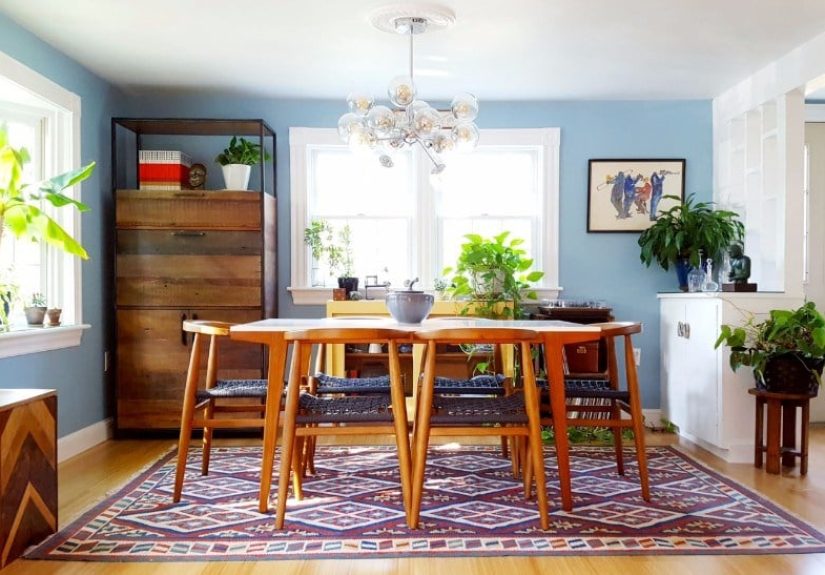
Example A: Warm modern. A medium-tone wood table, black spindle or wishbone-style chairs, a simple linear chandelier, and a fall wreath made
of magnolia leaves with a muted rust ribbon. Add a shallow bowl with pears and a few taper candles for an easy centerpiece.
Example B: Crisp contemporary. A light oak or white table, sculptural chairs, globe chandelier, and an asymmetrical eucalyptus wreath with
a cream bow. Add a textured runner and a ceramic vase with dried grasses to tie it together.
Example C: Small-space modern. A round pedestal table in a corner, two to four comfy chairs, a plug-in pendant or swag light, and a slimmer
wreath (half-wreath or hoop style) hung on an interior wall near the dining nook. Keep the centerpiece minimal so the space feels open.
Common Dining Room Mistakes (and Quick Fixes That Feel Like Magic)
Mistake 1: A rug that’s too small
If chair legs slide off the rug when someone stands up, it’s not just annoyingit’s unsafe. Size up so chairs stay on the rug even when pulled out.
This single change can make the entire room feel more “finished.”
Mistake 2: Lighting that’s either too high, too low, or too “dentist office”
Recheck chandelier height and add a dimmer. If the overhead light feels harsh, layer in softer light sourceslamps, sconces, or warm-temperature bulbs.
Dinner should feel cozy, not like a job interview.
Mistake 3: A dining room that looks great but isn’t practical
Modern design works best when it’s livable. If the chairs aren’t comfortable, or the table is too precious to use, the room won’t get enjoyed. Choose
durable finishes, wipeable surfaces, and styling that can survive an actual meal.
Experience Notes: What People Learn After a Few “Friday Favorites” Weekends (About )
Home refreshes look effortless onlinefresh flowers, perfect lighting, no visible mail pilesbut real-life projects teach you things the pretty photos don’t.
Here are experience-based lessons homeowners and DIYers commonly report after trying the “modern dining room + fall wreath” kind of weekend update.
1) The dining room is an emotional space, not just a functional one
People often notice that once the dining room feels welcoming, they use it more. It becomes the place for coffee and emails, kids’ homework, board games,
or a quick lunch that isn’t balanced over the sink. A modern dining room can actually increase how relaxed the space feels because there’s less visual
noise. When the room isn’t shouting 47 different decor messages, the people in it get to be the main event.
2) Chair comfort is the “hidden hero” of hosting
Many hosts learn the hard way that stunning chairs don’t matter if guests can’t sit comfortably for more than 20 minutes. After a few gatherings, people
tend to prioritize supportive backs, seat padding, and “easy to scoot” legs over ultra-trendy shapes. The most common upgrade story goes like this:
“We bought these chairs because they looked amazing… and then we bought chair pads because we wanted to keep our friends.”
3) Rug sizing is the difference between calm and chaos
The dining room rug is where modern style meets physics. If chairs catch on the edge, the room feels fussy and frustrating. People who size up often say
the room instantly feels calmereven if nothing else changesbecause movement becomes easy. A larger rug also makes the dining zone feel “anchored,” which
is especially helpful in open-concept spaces.
4) A fall wreath is the fastest way to make an entry feel cared for
Homeowners often describe wreaths as a “one-step personality upgrade.” It’s a small signal that says, “Someone lives here who occasionally wins the battle
against chaos.” Even people who don’t decorate much tend to enjoy wreaths because they’re low effort: hang it up, step back, feel proud, resist the urge
to text everyone you know a photo of your front door.
5) Modern seasonal decor works best when it’s edited
A common experience is starting with a simple wreath plan… then getting carried away in the craft aisle. The projects that look most modern in the end
are usually the ones where people stop at two or three materials, repeat a limited palette, and leave some negative space. The result feels intentional,
not overcrowded. If you’re unsure, a good trick is to hang the wreath, walk away for five minutes, and come back with fresh eyes. If one element feels
“too loud,” remove it. You won’t miss itand your wreath will breathe again.
Conclusion
A “Friday Favorites” refresh doesn’t need to be huge to be satisfying. A modern dining room is about comfort, proportion, and warmthclean lines that
still feel human. A fall wreath is a small seasonal detail that makes your home feel welcoming from the curb. Put them together, and your weekend project
turns into a home that feels more intentional, more inviting, and a lot more ready for whatever Friday night bringswhether that’s friends, family, or
takeout eaten at the table like a functional adult.