Table of Contents >> Show >> Hide
- Before You Panic: A 5-Minute “Is It Actually Dead?” Checklist
- Reason #1: No Power at the Wall (Outlet, Breaker, or GFCI)
- Reason #2: Control Lock (Child Lock) Is On
- Reason #3: The Start Button Needs a Real Press (Not a Quick Tap)
- Reason #4: The Door/Lid Isn’t Closing or Locking (So the Washer Won’t Start)
- Reason #5: Water Isn’t On (YesSome Models Won’t Start Without It)
- Reason #6: The Washer Needs a Reset (The Classic “Turn It Off and On Again,” But for Laundry)
- Reason #7: A Component Failed (Control Board, User Interface, Timer, Fuse, Wiring, or Switch)
- When to Call for Service (and What to Tell the Tech)
- How to Prevent “Won’t Turn On” Drama Next Time
- Real-World Experiences: What People Commonly Run Into (500+ Words)
- 1) “It’s dead.” (It wasn’t. The GFCI was.)
- 2) “The buttons don’t work.” (Control Lock: 1, Human: 0.)
- 3) “I pressed Start and nothing happened.” (Because it wanted a long press.)
- 4) “Door is closed.” (The washer disagreed.)
- 5) “We just moved it and now it won’t start.” (Water valves were off.)
- 6) “It’s possessed.” (Reset fixed it.)
- 7) “It keeps dying randomly.” (Often a deeper electrical/control issue.)
- Conclusion
Your Whirlpool washer has chosen violence: you press Power, nothing happens, and your laundry basket starts giving you judgmental looks.
The good news? “Not turning on” is often something simple (and sometimes hilariously simple, like “the outlet is off”).
The better news? You can usually narrow it down fastwithout turning your laundry room into a DIY electrical lab.
This guide walks you through the 7 most common reasons a Whirlpool washer won’t power up or won’t start, plus what to check first,
what your washer is trying to tell you (hello, mysterious button lights), and when it’s time to call in a pro.
Before You Panic: A 5-Minute “Is It Actually Dead?” Checklist
- Check the outlet: Plug in a lamp or phone charger. If that doesn’t work, the washer isn’t the problem.
- Check the breaker (and any GFCI): Laundry outlets are often on circuits that trip after a surge or overload.
- Make sure it’s not locked: Control Lock/Child Lock can make the panel act “possessed.”
- Press and hold Start: Many Whirlpool models need a 2–3 second hold, not a quick tap.
- Close the door/lid like you mean it: If the lock doesn’t engage, the washer may refuse to start.
- Try a reset: A short power cycle can “wake up” a stuck control board.
If none of the above changes anything, keep reading. The trick is figuring out whether you’re dealing with
(A) no power to the machine or (B) the machine has power but won’t run.
Those are two totally different mystery novels.
Reason #1: No Power at the Wall (Outlet, Breaker, or GFCI)
This is the #1 culprit because it’s boring, common, and extremely committed to ruining your plans.
If your washer’s display is blank and there are no lights, start here.
What it looks like
- No display, no beeps, no lights, no response.
- It worked yesterday. Today it’s a decorative cube.
What to try (safe checks)
- Test the outlet: Plug in a lamp/charger. If it’s dead, focus on the outlet/circuit.
- Reset the breaker: Find your panel and reset the laundry circuit (flip OFF, then ON).
- Look for a tripped GFCI: Some laundry areas share a GFCI outlet upstream (bathroom/garage/laundry). Press Reset.
- Check the plug: Make sure the washer plug is fully seatedvibration can loosen it over time.
- Avoid extension cords: They can cause voltage drop and “weird” washer behavior.
Red flag: If you smell burning, see scorch marks at the outlet, or the breaker trips repeatedly,
stop using the outlet and get help. That’s not a “try again later” situation.
Reason #2: Control Lock (Child Lock) Is On
Control Lock exists to prevent accidental button mashingespecially from curious kids, curious cats, or your own hip while grabbing detergent.
When it’s on, your washer can seem totally unresponsive even though it has power.
Clues it’s Control Lock
- You see a lock icon, “LoC,” or “LC.”
- The panel lights up, but the buttons don’t do anything useful.
- You swear you didn’t enable it… which is exactly what Control Lock wants you to think.
What to do
On many Whirlpool washers, you press and hold the Control Lock button (or the button labeled “Hold 3 sec”) for about
3 seconds until the lock indicator turns off. Some models count down “3-2-1” on the display.
If you’re not sure which button controls it, check your model’s control panel labels (it’s often printed right there).
Pro tip: If the controls seem “sticky,” wipe the panel with a lightly damp microfiber cloth and dry it.
Detergent residue + humidity can make buttons behave like they’re half-pressed.
Reason #3: The Start Button Needs a Real Press (Not a Quick Tap)
Many modern Whirlpool washers don’t start with a quick tap. They want commitment.
That means press and hold Start for a couple seconds.
If you tap it like you’re skipping a song, the washer may just stare back in silence.
What it looks like
- The display turns on, you choose a cycle, but nothing happens when you hit Start.
- Some models show a countdown (like “3…2…1…”) while you hold Start.
What to try
- Select your cycle again (yes, again), then press and hold Start for 2–3 seconds.
- If you changed settings mid-way, press Pause/Cancel once, then re-select the cycle.
- If the panel is acting glitchy, jump to Reason #6 (Reset).
Also, make sure the washer is in a “ready” state. Some models won’t start if the door/lid is open,
or if they’re still trying to drain from a previous cycle.
Reason #4: The Door/Lid Isn’t Closing or Locking (So the Washer Won’t Start)
Washers have safety switches that confirm the door/lid is closed. If that signal doesn’t register,
the washer may refuse to startbecause spinning water at high speed with an open lid is… not ideal.
Common scenarios
- Front load: Door looks closed but isn’t firmly latched. The lock never engages.
- Top load: Lid isn’t closing fully, or the lid lock/lid switch isn’t sensing closure.
- A small item (sock, hoodie string) is caught in the door gasket/strike area.
What to try (no tools required)
- Close firmly: Don’t slam, but do close the door/lid with a solid push.
- Check the seal area: Remove any clothing caught near the latch or gasket.
- Look for obvious misalignment: If the door seems saggy or crooked, it might not meet the latch correctly.
- Listen: On many models you’ll hear a click when the lock engages after pressing Start.
If the washer consistently won’t lock (or the lock light flashes endlessly), the issue may be a
door latch/lock assembly (front load) or a lid switch/lid lock (top load).
Those are usually fixablebut they’re also the point where calling service can save you time and stress.
Reason #5: Water Isn’t On (YesSome Models Won’t Start Without It)
It feels unfair, but it’s common: if your washer can’t sense proper water flow, it may refuse to start or it may stop early.
Whirlpool guidance often emphasizes making sure both hot and cold supply valves are open and hoses are connected properly.
What it looks like
- The washer powers on but won’t begin filling.
- You may see an error code or hear brief valve noise with no water coming in.
What to check
- Confirm hot and cold valves at the wall are fully open.
- Make sure hoses aren’t kinked or crushed behind the machine.
- If your home recently had plumbing work, the valves may have been shut off and never reopened.
If the washer starts but then stops, check your display for a code. Error codes are often the fastest way to narrow down what the washer is unhappy about.
Reason #6: The Washer Needs a Reset (The Classic “Turn It Off and On Again,” But for Laundry)
Power surges, brief outages, and even a random control “hiccup” can leave a Whirlpool washer stuckespecially if the display is frozen,
buttons don’t respond, or the washer won’t start even though it has power.
Simple reset you can do safely
- Turn the washer off.
- Unplug it (or switch the washer’s breaker off).
- Wait about 5 minutes to let residual power drain from the control.
- Plug back in (or turn breaker on), then try Power + select a cycle + hold Start.
If your washer comes back to life after a reset, that’s a strong hint the issue was control-related rather than a hard mechanical failure.
If it keeps happening, you may be dealing with a failing control componentor an electrical supply problem that needs attention.
Reason #7: A Component Failed (Control Board, User Interface, Timer, Fuse, Wiring, or Switch)
If you’ve confirmed the outlet has power, tried a reset, checked Control Lock, and ensured the door/lid is properly closed,
the next possibility is an internal component failure. This is where symptoms matter a lot.
Common “hard failure” signs
- Blank display with confirmed power at the outlet (and the outlet works for other devices).
- The washer powers on sometimes, then dies randomly.
- Buttons light up but cycles won’t begin.
- You see repeated error codes even after resets.
What’s often involved
- Main control board: The washer’s “brain.” If it fails, the washer may not power up or may refuse to start.
- User interface board/control panel: If the panel is dead or unresponsive, the washer can feel “off” even with power.
- Door lock/lid switch: If the washer can’t confirm closure, it won’t run.
- Fuse/wiring issue: Less common, but possibleespecially if there was a surge or moisture intrusion.
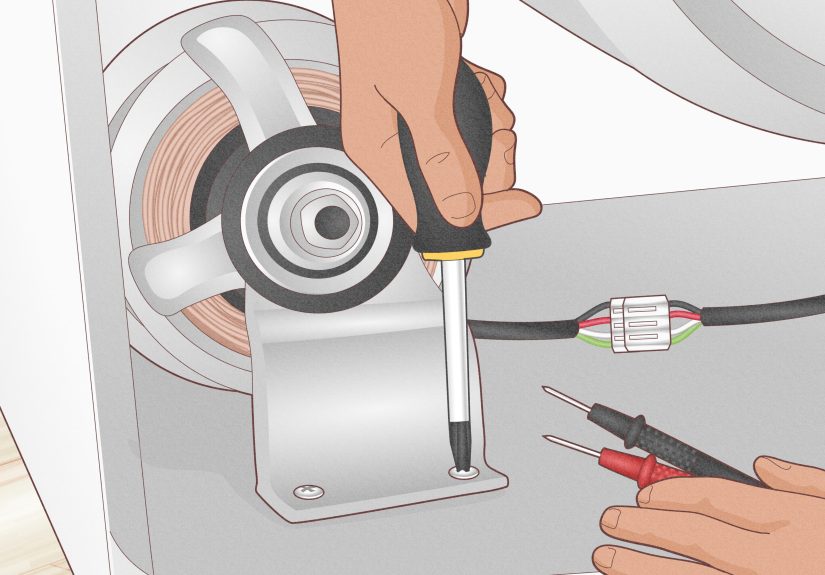
Safety note: Diagnosing internal electrical parts typically requires removing panels and testing components.
If you’re not trained for that, it’s smarter (and safer) to schedule service than to guess. A wrong guess can waste money and time.
Don’t skip this: check recalls and warranty
If your washer is acting dangerously (overheating smell, visible smoke, repeated tripped breakers), stop using it and unplug it.
It’s also worth checking whether your model has any service announcements or recalls and whether it’s still under warranty coverage.
When to Call for Service (and What to Tell the Tech)
Call for help if:
- The outlet has power, but the washer stays completely dead.
- It powers on but won’t lock the door/lid consistently.
- It resets, works once, then fails again.
- You see persistent error codes (especially after power cycling).
- There’s any sign of overheating, burning smell, or repeated breaker trips.
To make service faster, write down:
- Model and serial number (often on the door frame for front load, under the lid for top load).
- What happens when you press Power (blank screen? beeps? lights?).
- Any error code shown.
- The steps you already tried (outlet check, Control Lock, reset, door/lid check).
How to Prevent “Won’t Turn On” Drama Next Time
- Keep the latch area clean: Lint and detergent residue can interfere with door/lid sensors.
- Don’t overload: Overstuffed loads can strain locks and confuse balance sensing.
- Keep the control panel dry: Wipe spills quickly; moisture can cause phantom inputs.
- Use the right detergent amount: Too many suds can trigger weird stopping behavior in some machines.
- Consider surge protection (if appropriate): Especially in areas with frequent power flickers.
Real-World Experiences: What People Commonly Run Into (500+ Words)
Below are common, real-life scenarios homeowners run into when a Whirlpool washer “won’t turn on.” If one sounds familiar,
you might be only minutes away from a fix.
1) “It’s dead.” (It wasn’t. The GFCI was.)
A classic: the washer has a blank display, no lights, no sound. The homeowner assumes the washer is toastuntil they plug in a lamp
and discover the outlet is dead too. In many homes, the laundry outlet is protected by a GFCI that’s not obviously connected.
Sometimes the tripped GFCI is in a nearby bathroom, garage, or a different laundry receptacle upstream.
Once the GFCI is reset (or the breaker is reset), the washer “magically” returnslike it was only pretending to be broken to test your character.
2) “The buttons don’t work.” (Control Lock: 1, Human: 0.)
Another frequent one: the panel lights up, but nothing respondsespecially if you keep hearing a beep that feels like it’s mocking you.
On many Whirlpool models, Control Lock disables most inputs until you hold the correct button for about three seconds.
People accidentally activate it while wiping the panel, leaning in to reach a shelf, or even closing the detergent drawer with enthusiasm.
The giveaway is a lock icon or “LoC/LC.” The fix is usually fast, and the emotional recovery is… also fast, once the laundry starts.
3) “I pressed Start and nothing happened.” (Because it wanted a long press.)
Modern washers don’t always treat Start like a light switch. They often require a press-and-hold to prevent accidental starts.
This one happens a lot when someone is used to older machines: they tap Start, look away, come back, and the washer is still waiting.
The simple changepress and hold Start for 2–3 secondssolves it instantly. If your model shows a “3-2-1” countdown,
it’s basically the washer saying, “Hold the button, friend. We’re doing this together.”
4) “Door is closed.” (The washer disagreed.)
Front-load doors can look closed but not be closed enough to engage the lock. Sometimes a thick towel edge, a hoodie string,
or even a small sock gets pinched near the gasket. The washer senses “not locked,” so it refuses to start.
People often fix it by simply opening the door, clearing the obstruction, and closing it firmly.
Top-load versions have a similar story: the lid closes, but the lid switch/lid lock isn’t sensing contactespecially if the lid is slightly misaligned.
The washer isn’t being dramatic; it’s being safe. (Annoying, but safe.)
5) “We just moved it and now it won’t start.” (Water valves were off.)
After installation, cleaning behind the washer, or plumbing repairs, it’s surprisingly easy to forget to turn water valves back on.
Some Whirlpool models won’t run properly if they can’t fill as expected, and a “won’t start” complaint is really a “can’t fill” problem.
The fix is simply opening both hot and cold valves and making sure hoses aren’t kinked from being shoved too close to the wall.
6) “It’s possessed.” (Reset fixed it.)
Power flickers and surges can leave a washer control board frozenlights on, but no meaningful response.
A proper reset (unplug or breaker off for about five minutes) clears the glitch for many people.
If the washer repeatedly freezes, that’s when it shifts from “quirk” to “symptom,” and service becomes the time-saving move.
7) “It keeps dying randomly.” (Often a deeper electrical/control issue.)
When a washer powers on sometimes and then goes blank, or works once after a reset and then refuses again, homeowners often chase easy causes
but this pattern frequently points to a failing control board, user interface, or an intermittent connection.
The best “experience-based” advice here: document what happens, note any error codes, and don’t keep running it if it trips breakers or smells hot.
That’s the situation where professional diagnosis is worth it.
Conclusion
When a Whirlpool washer won’t turn on, the cause is usually one of seven: power supply issues, Control Lock, Start button behavior,
door/lid lock problems, water supply issues, a control reset need, or a failed component.
Start with the quick checks, do a safe reset, and pay attention to what the display (or lack of display) is telling you.
If you’ve confirmed power and done the basics, don’t feel bad about calling servicemodern washers are basically computers that do laundry.
Sometimes the “fix” is simply letting a trained person talk to the computer.