Table of Contents >> Show >> Hide
- First, Picture the Big Rule: Check, Call, Care
- Picture 1: Heavy Bleeding Press, Don't Peek
- Picture 2: Minor Cuts and Scrapes Clean, Cover, Watch
- Picture 3: Burns Cool Water, Not Kitchen Experiments
- Picture 4: Choking Encourage Coughing, Then Act Fast
- Picture 5: CPR and AED Push Hard, Use the Machine
- Picture 6: Nosebleeds Lean Forward, Not Back
- Picture 7: Seizures Clear the Area, Time It, Stay Nearby
- Picture 8: Sprains and Strains Rest, Ice, Compression, Elevation
- Picture 9: Heat Illness Cool Down Quickly
- Picture 10: Poisoning Call Poison Help, Don't Guess
- Picture 11: Stroke Warning Signs Think FAST
- Picture 12: Animal Bites and Stings Clean, Watch, Get Help
- What Should Be in a Basic First-Aid Kit?
- First Aid Experiences: Real-Life Lessons That Stick
- Conclusion: First Aid Is a Skill, Not a Superpower
Note: This article is for general education and web publishing. It does not replace emergency care, professional first-aid training, or medical advice. In a serious emergency, call 911 or your local emergency number immediately.
First aid is one of those life skills everyone hopes they never need, right up there with changing a tire in the rain or explaining to a toddler why glitter is not a food group. But when something goes wronga burn in the kitchen, a choking scare at dinner, a fall on the sidewalk, or a nosebleed that looks far more dramatic than it usually isbasic first-aid knowledge can turn panic into action.
This guide to first aid dos and don’ts in pictures is written like a visual checklist: what you should picture doing, what you should absolutely not do, and when the situation needs professional help. Think of each section as a “mental image” you can remember quickly when adrenaline is doing its best impression of a fog machine.
First, Picture the Big Rule: Check, Call, Care
Before handling any emergency, remember the simple sequence: check the scene, call for help, and give care. First, make sure the area is safe. You cannot help someone if you become the second emergency. Look for traffic, fire, chemicals, electrical hazards, unstable objects, or anything else that could put you in danger.
Next, check the person. Are they awake? Are they breathing normally? Are they bleeding heavily? If the situation looks serious, call 911 immediately. If others are nearby, point to one person and say, “You, call 911,” instead of tossing a vague “somebody call.” In emergencies, “somebody” often becomes “nobody” while everyone stares like confused meerkats.
Do
- Stay calm and speak clearly.
- Call 911 for life-threatening problems.
- Use gloves or a barrier if available.
- Follow dispatcher instructions.
- Keep the person still and comfortable unless staying put is unsafe.
Don’t
- Rush into an unsafe scene.
- Move someone with a possible head, neck, or back injury unless there is immediate danger.
- Give food, drink, or medication to someone who is confused, very drowsy, or not fully alert.
Picture 1: Heavy Bleeding Press, Don’t Peek
If someone is bleeding heavily, the goal is simple: apply firm, steady pressure. Use clean gauze, a towel, a shirt, or whatever clean cloth is available. Press directly on the wound and keep pressing. This is not the time to keep lifting the cloth every seven seconds to “see how it’s doing.” That resets the clotting process and annoys the body, which is already having a very bad afternoon.
If blood soaks through, add another layer on top and continue pressure. For life-threatening bleeding from an arm or leg, a trained first-aid provider may use a tourniquet. A tourniquet should be applied only when needed and according to training, because “I saw it in a movie once” is not a credential.
Do
- Apply direct pressure with a clean dressing.
- Call 911 for severe, fast, or uncontrolled bleeding.
- Keep the injured area as still as possible.
- Wash your hands before and after helping, if possible.
Don’t
- Remove the first dressing if it becomes soaked.
- Use powders, ointments, or home remedies on a serious wound.
- Pull out an object stuck deeply in a wound; stabilize it and wait for emergency help.
Picture 2: Minor Cuts and Scrapes Clean, Cover, Watch
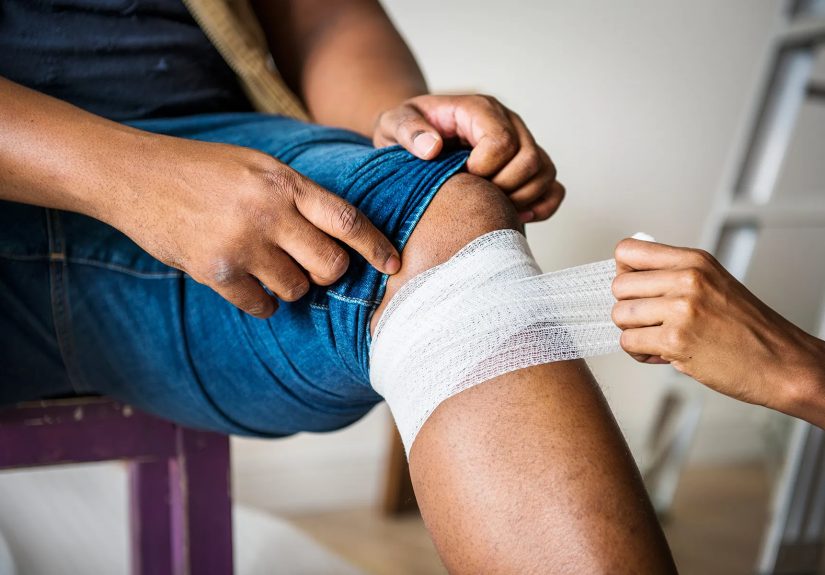
For small cuts and scrapes, first wash your hands. Rinse the wound gently with clean running water to remove dirt. Pat around the area dry, apply a clean bandage, and change it daily or whenever it becomes wet or dirty. Small wounds are like houseplants: they do better when you check them, but they do not need dramatic over-attention.
Watch for warning signs such as increasing redness, swelling, warmth, worsening pain, pus, fever, or red streaks spreading from the wound. If any of these appear, seek medical care. Also get help for deep punctures, animal bites, dirty wounds, wounds from rusty objects, or injuries where tetanus vaccination may not be up to date.
Do
- Rinse with clean water.
- Cover with a sterile bandage.
- Change dressings regularly.
- Seek medical advice for bites, deep wounds, or signs of infection.
Don’t
- Scrub aggressively.
- Use harsh chemicals inside the wound.
- Ignore increasing redness, swelling, or pain.
Picture 3: Burns Cool Water, Not Kitchen Experiments
For a minor thermal burn, cool the area under cool running water. Remove tight rings, watches, or clothing near the burn before swelling starts, but do not remove anything stuck to the skin. After cooling, cover the burn loosely with a clean, nonstick dressing.
The classic bad advice is to put butter on a burn. Please do not butter the person. They are not toast. Also avoid toothpaste, oils, ice directly on the skin, or random internet potions that sound like they were invented by a medieval candle maker.
Call 911 or seek urgent care for major burns, burns involving the face, hands, feet, genitals, large joints, electrical burns, chemical burns, smoke inhalation, or burns that are deep, large, white, charred-looking, or painless in the center.
Do
- Cool minor burns with cool running water.
- Remove tight jewelry near the burn area.
- Cover loosely with a clean dressing.
- Get emergency help for serious burns.
Don’t
- Apply butter, oil, toothpaste, or ointments to a serious burn.
- Use ice directly on the burn.
- Break blisters.
- Peel away clothing stuck to burned skin.
Picture 4: Choking Encourage Coughing, Then Act Fast
Choking can turn a normal meal into a terrifying moment. If a person can cough forcefully, speak, or breathe, encourage them to keep coughing. Do not slap their back while they are still moving air well; that can make things worse.
If the person cannot breathe, speak, or cough effectively, call 911 and begin appropriate choking first aid. For adults and children over 1 year, this may include abdominal thrusts if you are trained. If the person becomes unresponsive, lower them carefully to the ground and begin CPR if trained, following emergency dispatcher instructions.
Do
- Ask, “Are you choking?”
- Encourage strong coughing if they can breathe.
- Call 911 if the airway is blocked.
- Use trained choking rescue steps when needed.
Don’t
- Stick your fingers blindly into the mouth.
- Give water to “wash it down.”
- Delay calling for help when the person cannot breathe.
Picture 5: CPR and AED Push Hard, Use the Machine
If someone is unresponsive and not breathing normally, call 911, send someone for an AED, and start CPR if you know how. Hands-only CPR for adults means pushing hard and fast in the center of the chest. An AED is designed to talk you through the steps, so do not be afraid of it. It is basically the calmest person in the room, and it comes with voice instructions.
Good CPR and early AED use can help keep blood moving until professionals arrive. If you are not trained, the emergency dispatcher can guide you. If you are trained, follow your current certification instructions.
Do
- Call 911 immediately.
- Start CPR when someone is unresponsive and not breathing normally.
- Use an AED as soon as it is available.
- Continue until help arrives, the person responds, or you are too exhausted to continue safely.
Don’t
- Wait around hoping someone else will begin.
- Be afraid to use an AED.
- Stop CPR repeatedly to check for changes.
Picture 6: Nosebleeds Lean Forward, Not Back
For a nosebleed, sit upright and lean slightly forward. Pinch the soft part of the nose and hold steady pressure. Leaning back is an old habit, but it sends blood toward the throat, which can cause swallowing, coughing, or nausea. Forward is your friend.
Seek medical care if the nosebleed follows a serious injury, the person has trouble breathing, takes blood thinners, feels faint, or bleeding does not stop after repeated attempts at steady pressure.
Do
- Sit upright.
- Lean forward slightly.
- Pinch the soft part of the nose.
- Keep pressure steady.
Don’t
- Tilt the head back.
- Pack the nose deeply with tissue.
- Blow the nose immediately after bleeding stops.
Picture 7: Seizures Clear the Area, Time It, Stay Nearby
During a seizure, protect the person from nearby hazards. Move hard or sharp objects away, cushion the head if you can do so safely, and time the seizure. Stay with the person until they are fully alert. When movement stops and the person is breathing, place them on their side if possible.
Call 911 if it is the person’s first known seizure, the seizure lasts longer than five minutes, another seizure follows quickly, the person is injured, has trouble breathing, is pregnant, is in water, or does not return to normal awareness afterward.
Do
- Protect the person from injury.
- Time the seizure.
- Loosen tight clothing around the neck.
- Stay calm and speak reassuringly as they recover.
Don’t
- Hold the person down.
- Put anything in their mouth.
- Give food, drink, or pills until they are fully awake.
Picture 8: Sprains and Strains Rest, Ice, Compression, Elevation
A twisted ankle can make even the most graceful person suddenly resemble a folding chair. For sprains and strains, use the RICE approach: rest the injured area, apply ice wrapped in cloth, use light compression, and elevate the limb when possible.
Get medical help if there is severe pain, obvious deformity, numbness, inability to bear weight, or symptoms that do not improve after a couple of days. A sprain may look simple, but bones and ligaments do not always send a polite memo explaining what happened.
Do
- Rest the injured area.
- Use wrapped ice for short periods.
- Apply gentle compression.
- Elevate when possible.
Don’t
- Apply ice directly to skin.
- Force movement through severe pain.
- Assume every swollen joint is “just a sprain.”
Picture 9: Heat Illness Cool Down Quickly
Heat illness can sneak up during sports, yard work, outdoor jobs, festivals, or that one “quick walk” that becomes a sweaty negotiation with the sun. Heat exhaustion may cause heavy sweating, weakness, dizziness, headache, nausea, or cool clammy skin. Move the person to a cooler place, loosen clothing, cool them with wet cloths or fans, and offer small sips of water if they are fully alert.
Heat stroke is a medical emergency. Warning signs include confusion, fainting, seizures, very high body temperature, or hot skin. Call 911 immediately and begin cooling the person while help is on the way.
Do
- Move the person out of heat.
- Cool with water, fans, shade, or air conditioning.
- Call 911 for confusion, fainting, or worsening symptoms.
Don’t
- Ignore mental confusion in hot weather.
- Give drinks to someone who is not fully alert.
- Send the person right back into the heat after they “feel better.”
Picture 10: Poisoning Call Poison Help, Don’t Guess
Poisoning can involve swallowed substances, inhaled fumes, chemicals on skin, or splashes in the eyes. The best first step is to call Poison Help at 1-800-222-1222 in the United States or use a trusted poison guidance tool. If the person is unconscious, having trouble breathing, or having seizures, call 911 immediately.
Do not make someone vomit unless Poison Control or a medical professional specifically tells you to. Keep the container or label nearby if it is safe to do so. Details matter: what substance, how much, when it happened, and the person’s age and weight can guide the right response.
Do
- Call Poison Help or 911 depending on severity.
- Move away from fumes if inhalation is involved.
- Rinse skin or eyes with clean water for chemical exposure when appropriate.
- Save the product container for responders.
Don’t
- Induce vomiting without expert instruction.
- Give random home remedies.
- Wait for symptoms if the exposure could be dangerous.
Picture 11: Stroke Warning Signs Think FAST
Stroke first aid is mostly about recognizing the signs and calling 911 fast. Use FAST: Face drooping, Arm weakness, Speech trouble, Time to call 911. Other signs may include sudden confusion, trouble seeing, dizziness, loss of balance, or a sudden severe headache.
Do not drive the person yourself unless emergency services are unavailable and dispatch tells you otherwise. An ambulance can begin care on the way and alert the hospital before arrival. With stroke, minutes matter, and “let’s wait and see” is not a treatment plan.
Do
- Call 911 immediately for stroke symptoms.
- Note the time symptoms began.
- Keep the person safe and comfortable.
Don’t
- Give food, drink, or medication.
- Let the person sleep it off.
- Delay because symptoms seem mild or brief.
Picture 12: Animal Bites and Stings Clean, Watch, Get Help
For minor animal bites, wash the area gently with soap and running water, control bleeding with light pressure, and cover with a clean bandage. Seek medical care for bites that are deep, on the face or hands, from unknown animals, from wild animals, or showing signs of infection. Rabies risk, tetanus protection, and infection prevention are all reasons to get professional advice.
For insect stings, move away from the insects, remove a visible stinger by scraping it away, wash the area, and use a cold pack wrapped in cloth. Call 911 for signs of a severe allergic reaction, such as trouble breathing, swelling of the face or throat, widespread hives, dizziness, or fainting.
Do
- Wash bites and stings with soap and water.
- Use a cold pack for swelling.
- Seek help for deep bites, infection signs, or allergic reactions.
Don’t
- Ignore bites from unknown animals.
- Scratch stings aggressively.
- Assume swelling plus breathing trouble will pass on its own.
What Should Be in a Basic First-Aid Kit?
A first-aid kit does not need to look like a hospital supply closet. Start with adhesive bandages, sterile gauze, roller bandages, medical tape, disposable gloves, antiseptic wipes, tweezers, scissors, a cold pack, a CPR face shield, a digital thermometer, and a first-aid instruction card. Add personal items such as emergency contacts, allergy information, prescription details, and any doctor-recommended emergency medicine.
Check your kit every few months. Replace expired items, restock used supplies, and keep kits in practical places: home, car, sports bag, workplace, and travel bag. A first-aid kit buried under holiday decorations in the garage is technically present but emotionally unavailable.
First Aid Experiences: Real-Life Lessons That Stick
The most useful first-aid lessons often come from ordinary moments. Picture a family picnic where someone slices a finger while cutting fruit. The person helping does not need to deliver a medical lecture. They wash their hands, apply firm pressure, keep the hand still, and cover the cut. The lesson is simple: calm action beats dramatic reaction. People remember the helper who says, “I’ve got you,” not the person who announces, “Wow, that’s a lot!” like a sports commentator.
Another common experience happens in kitchens. A cook touches a hot pan handle, then instinctively waves their hand in the air while everyone offers advice from three generations of folklore. The best helper guides them to cool running water, removes rings before swelling begins, and skips butter, oil, and toothpaste. The burn may still hurt, but at least it is not now wearing dairy.
At youth sports games, sprains are practically part of the soundtrack. A player rolls an ankle, and a crowd forms instantly. One person says to walk it off. Another suggests stretching it. A better first-aid response is to stop play, rest the ankle, apply wrapped ice, use gentle compression, elevate it, and get medical evaluation if pain is severe or walking is difficult. The experience teaches a valuable rule: toughness is not the same as wisdom. Sometimes the bravest sentence is, “Let’s get this checked.”
Nosebleeds are another classic. Many people still tilt their heads back because that is what adults told them years ago. Then they feel blood running down the throat and wonder why first aid suddenly tastes like pennies. Leaning forward and pinching the soft part of the nose is easier, cleaner, and more sensible. It also looks less like someone is auditioning for a dramatic movie poster.
Choking incidents teach the importance of not freezing. In restaurants, schools, and homes, people often hesitate because they are afraid of doing the wrong thing. The first step is observation: can the person cough or speak? If yes, encourage coughing. If not, call for emergency help and use trained choking rescue steps. Confidence comes from training, and training turns fear into a checklist.
Heat illness often teaches its lesson on days when people underestimate the weather. Someone at an outdoor event becomes dizzy, weak, and nauseated. The smart response is not “drink a soda and power through.” It is shade, cooling, rest, water if fully alert, and emergency help if confusion or fainting appears. Heat can escalate quickly, so the person who takes symptoms seriously may prevent a dangerous situation.
The biggest experience-based lesson is this: first aid is not about being heroic in a cinematic way. It is about noticing, calling, protecting, pressing, cooling, cleaning, and staying with someone until help arrives. Most good first aid looks boring from the outside. That is exactly the point. Boring is wonderful when the alternative is chaos wearing running shoes.
Conclusion: First Aid Is a Skill, Not a Superpower
Learning first aid dos and don’ts gives you a practical advantage in everyday emergencies. You do not need to memorize a medical textbook. You need to remember the basics: check the scene, call for help, control bleeding, cool burns, avoid old myths, recognize serious warning signs, and know when professional care is needed.
The best first aid is calm, simple, and timely. It respects limits. It does not guess wildly, perform kitchen chemistry, or wait for emergencies to become “interesting.” Keep a stocked kit, take a certified first-aid/CPR/AED course when possible, and refresh your knowledge regularly. One day, the picture in your mind may help someone right in front of you.