Table of Contents >> Show >> Hide
- What Is Filing Cabinet No. 1?
- Why Filing Cabinets Still Matter in a Digital World
- A Short History of the Filing Cabinet, Because Office Furniture Has a Backstory Too
- What Makes a Filing Cabinet Worth Buying?
- How to Organize Filing Cabinet No. 1 Without Losing Your Mind
- The Biggest Filing Mistakes People Make
- Why Filing Cabinet No. 1 Works So Well for Modern Homes
- Final Thoughts
- Experiences Related to Filing Cabinet No. 1
- SEO Tags
The “paperless office” has been promised for so long that it now feels like one of those mythical creatures people swear they saw once in 2012. And yet, here we are: still dealing with birth certificates, warranties, tax forms, signed contracts, school records, medical paperwork, and a stubborn stack of receipts that somehow multiplies when nobody is looking.
That is exactly why a good filing cabinet still earns its square footage. And when the cabinet in question is Filing Cabinet No. 1a clean, modern, compact design rather than a hulking gray office relicit becomes more than a storage box. It becomes a quiet little systems upgrade for your daily life.
This guide looks at what Filing Cabinet No. 1 represents in practical terms: smart document storage, home-office sanity, better records organization, and a reminder that even in a digital-first world, paper still has a nasty habit of being important.
What Is Filing Cabinet No. 1?
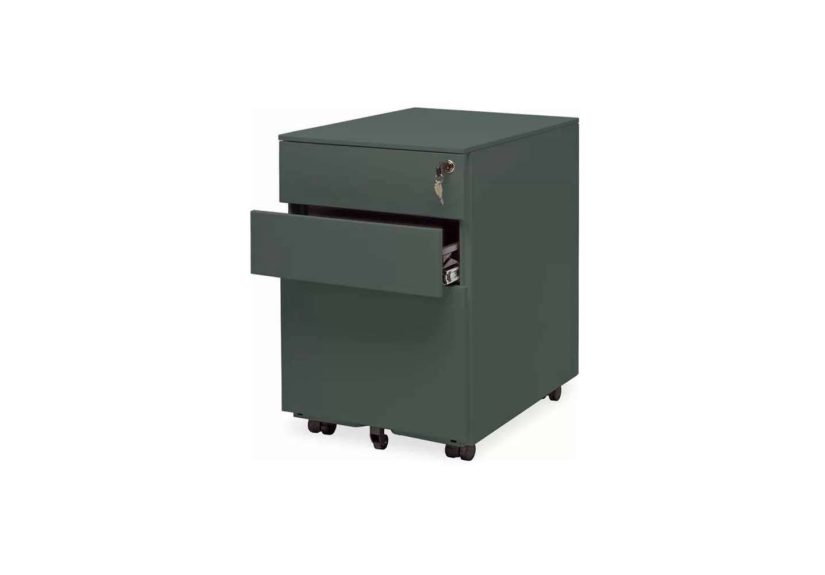
At the most literal level, Filing Cabinet No. 1 is the name of a modern filing cabinet sold by Blu Dot. It is intentionally simple: powder-coated steel, a compact footprint, full-extension drawer slides, locking storage, and casters so it can roll where you need it. In other words, it is not trying to be dramatic. It is trying to be useful. Frankly, that is a charming personality trait in furniture.
The appeal of a modern filing cabinet like this is that it does not scream “regional insurance office, 1994.” It fits into a home office, a studio apartment, a guest-room workspace, or even a living room corner where you are trying very hard to pretend your life is effortlessly organized.
That balance matters. People do not just want file storage anymore. They want storage that is secure, compact, movable, and good-looking enough that it does not tank the room. Filing Cabinet No. 1 works because it understands that modern workspaces are often shared with real life: coffee mugs, chargers, kids’ permission slips, and the occasional emotional support sticky note.
Why Filing Cabinets Still Matter in a Digital World
Digital tools are excellentuntil you need the original title, the notarized copy, the signed form, or the warranty card you absolutely meant to scan but did not. Paper has a way of hanging around wherever legal, financial, medical, educational, and property records are involved.
That is why a home office filing cabinet still solves a real problem. It gives important documents one official address. Not “somewhere in the kitchen drawer.” Not “in a folder on the counter.” Not “under a pile of mail that has become part of the architecture.” One place.
Proper filing is not about becoming a paper hoarder with labels. It is about retrieval. If you can find what you need in 20 seconds instead of 20 minutes, your system is working. If you can lock away sensitive material like passports, tax records, contracts, and insurance documents, your system is doing even better.
A good filing cabinet also helps you decide what deserves to stay in paper form. That list is usually shorter than people think, which is good news for anyone who has ever opened a mystery folder labeled “Misc. Important” and immediately regretted every life choice that led there.
A Short History of the Filing Cabinet, Because Office Furniture Has a Backstory Too
The filing cabinet may look boring, but its history is surprisingly tied to the way modern information work developed. The shift to vertical filing changed how documents were sorted, indexed, retrieved, and managed. It helped turn paper from “a pile of stuff on a desk” into a system.
That is the real magic here: a filing cabinet is not just furniture. It is infrastructure for memory. It supports classification, retention, and access. Governments, archives, universities, and large institutions still rely on formal file plans because organized records save time, reduce risk, and preserve important decisions.
At home, the same principle applies on a smaller scale. You may not be running a federal records office, but you probably do need to know where your mortgage paperwork lives, whether the appliance warranty still exists, and how quickly you can pull last year’s tax documents if an accountant emails you with the phrase “just one more thing.”
So yes, the filing cabinet is humble. But humble furniture has been quietly holding civilization together for a long time.
What Makes a Filing Cabinet Worth Buying?
1. Size That Matches Your Real Life
Start with the obvious question: what are you actually storing? A few active household files, or enough paperwork to qualify as your own tiny bureaucracy? Filing Cabinet No. 1 shines when you want a compact, everyday-use cabinet rather than a massive records vault.
2. Locking Storage
A lockable file cabinet is not just for corporate drama. It makes sense at home too, especially for identity documents, financial statements, contracts, and anything containing private information. Security is less glamorous than a new desk lamp, but more useful when it counts.
3. Mobility
Casters are underrated. A rolling cabinet can move under a desk, slide next to a worktable, or shift out of the way when your “office” turns back into a dining room. In small homes, mobility is not a bonus feature. It is survival.
4. Drawer Function
Full-extension drawers are a big deal because they let you reach the back without performing a wrist-based archaeological dig. Good slides, easy access, and stable movement make filing less annoyingwhich means you are more likely to actually do it.
5. Document Fit
Check whether the cabinet supports letter-size files, legal-size files, or both. That sounds basic, but buying a beautiful cabinet that does not fit your documents is a very elegant way to make yourself miserable.
6. Materials and Style
Steel remains popular because it is durable, secure, and easy to maintain. But style matters too. Today’s buyers want a filing cabinet that works with home décor instead of looking like it was rescued from an accounting department liquidation sale.
How to Organize Filing Cabinet No. 1 Without Losing Your Mind
The best filing cabinet organization system is not the prettiest one on social media. It is the one you will still use six months from now.
Create Broad Categories First
Keep it simple. Try categories like:
- Personal identification
- Taxes and finance
- Home and property
- Medical and insurance
- Work and contracts
- Warranties and manuals
- School and family records
Use Folders, Not Chaos
A drawer full of loose papers is not a filing system. It is a cry for help. Use clearly labeled folders and place documents in a consistent orderalphabetical, chronological, or by type. Choose one method and stick with it.
Separate Active From Archive
Keep current, frequently used papers in the easiest-to-reach section. Move older material out once it is no longer active. If something must be retained but rarely touched, it should not be living in prime drawer real estate like it pays rent.
Do a Retention Check
Not everything deserves immortality. Some documents should be kept permanently, some for a defined number of years, and some can be shredded when no longer needed. The trick is knowing the difference. When in doubt, keep essential legal, tax, medical, and property records longerand dispose of outdated duplicates, convenience copies, and irrelevant clutter sooner.
Protect Sensitive Material
If it contains personal information, use the lock. Also consider keeping the most sensitive folders together rather than scattering them across the cabinet like a scavenger hunt with identity theft stakes.
The Biggest Filing Mistakes People Make
Filing cabinets fail for predictable reasons, and almost none of them are the cabinet’s fault.
- Keeping too much: Overstuffed drawers slow down retrieval and turn useful storage into paper lasagna.
- Using vague labels: “Stuff,” “Important,” and “Various” are not categories. They are emotional states.
- Mixing everything together: Personal, financial, medical, and home records should not all mingle like they are at a networking event.
- Ignoring routine maintenance: A cabinet needs occasional cleanup or it becomes a museum of expired information.
- Buying looks only: If the cabinet is pretty but lacks locking storage, smooth drawers, or the right size, you bought décor with trust issues.
Why Filing Cabinet No. 1 Works So Well for Modern Homes
What makes Filing Cabinet No. 1 interesting is not that it reinvents filing. It is that it respects the reality of how people live now. Most people are not building dedicated corporate offices at home. They are carving out work zones in bedrooms, hallways, dens, and apartment corners.
In that environment, furniture has to multitask. A filing cabinet needs to store paperwork, support workflow, move when necessary, and look calm while doing all of it. The clean steel design, compact dimensions, and rolling base give this kind of cabinet a practical edge. It feels less like office baggage and more like a grown-up tool.
And honestly, there is something satisfying about knowing exactly where your important papers are. Not exciting, maybe. But extremely satisfying. The older you get, the more thrilling “I found it immediately” becomes.
Final Thoughts
Filing Cabinet No. 1 may sound plain, but that is part of its charm. It represents a truth many people rediscover the hard way: orderly document storage is not old-fashioned. It is efficient, protective, and oddly calming.
A good filing cabinet will not transform your life overnight. It will, however, spare you from digging through random drawers for tax paperwork, reprinting forms you already had, or storing sensitive documents in places that make future-you say, “Why would you do this to us?”
If you want a modern filing cabinet that supports real life rather than just office aesthetics, Filing Cabinet No. 1 captures the essentials beautifully: secure storage, mobility, compact design, and enough visual restraint to work almost anywhere. In a world drowning in both digital clutter and paper leftovers, that kind of quiet usefulness is not boring. It is brilliant.
Experiences Related to Filing Cabinet No. 1
Living with a cabinet like Filing Cabinet No. 1 changes your day in small ways first, then in bigger ways you do not notice until later. At first, it just seems like a nice-looking piece of office furniture. You roll it into place, load a few hanging folders, lock the drawer, and think, “Great, I am organized now.” That feeling lasts about 14 minutes, right up until real life starts handing you fresh paperwork again. But here is where the cabinet earns its keep: instead of paper floating around the house like administrative confetti, everything begins landing in the same place.
One of the most common experiences is the sudden disappearance of the “important paper pile.” You know the one. It sits on a counter, desk edge, or dining table and somehow becomes both invisible and terrifying. Once a filing cabinet is in the room, that pile loses its power. Tax forms go into the tax folder. Home insurance papers go into the insurance folder. Appliance warranties go into the home folder. For the first time, paper stops being a roaming problem and becomes a fixed system.
Another real-world experience is how much easier stressful moments become. When you need a passport, a lease, a vehicle title, a school record, or a signed contract, you rarely need it “sometime this month.” You need it now. That is when a compact, lockable cabinet feels less like furniture and more like a quiet emergency-prep device. You open one drawer, pull one folder, and move on with your life like an organized adult in a commercial.
There is also a design experience that surprises people. A modern filing cabinet does not make a room feel more corporate; done right, it makes the space feel calmer. Because the visual clutter is gone, the entire room works better. The desk looks cleaner. The shelves feel less busy. Even the chair seems to be trying harder. When the cabinet has a simple steel finish and a modest footprint, it blends in instead of bossing the room around.
Over time, the cabinet also changes behavior. People become more likely to file papers immediately because the system is easy. That matters. The best organization tool is not the one with the most categories; it is the one that reduces friction. Filing Cabinet No. 1 works well because it is compact, movable, and straightforward. No ceremony. No puzzle. Just open, file, done.
Perhaps the most underrated experience is peace of mind. Not thrilling, not glamorousjust deeply useful. You stop wondering where the important documents are. You stop losing things that should never be lost. You stop treating every form like a future scavenger hunt. And that, in real life, is worth a lot.