Table of Contents >> Show >> Hide
- Why Flank Steak Loves a Marinade
- The Easy Flank Steak Marinade Recipe (My Go-To)
- Cooking Flank Steak: 3 Easy Methods
- The Most Important Step: Slice Against the Grain
- Make It Yours: 5 Easy Marinade Variations
- What to Serve With Marinated Flank Steak
- Food Safety & Marinade Smarts (Quick but Important)
- FAQ: Easy Flank Steak Marinade
- Real-World Experiences: What Cooking This Actually Feels Like (and What You Learn Fast)
- Conclusion
Flank steak is the underdog of the beef world: lean, bold, and a little bit stubborn. It’s not here to be
“fork-tender” straight out of the packageit’s here to make you earn it. The good news? A simple,
no-drama marinade can do most of the heavy lifting while you pretend you’re a culinary genius.
This guide gives you an easy flank steak marinade recipe that’s fast to mix, flexible to
customize, and designed for real life (read: minimal dishes, maximum flavor). You’ll also learn exactly how
long to marinate, the best ways to cook flank steak, and the slicing trick that turns “chewy” into “why didn’t
I make more?”
Why Flank Steak Loves a Marinade
Flank steak comes from a hard-working area of the cow, which means it’s flavorful but can feel tough if cooked
or sliced the wrong way. A marinade helps in three practical ways:
- Flavor boost: Soy sauce, garlic, and acids cling to the surface and deliver big taste fast.
- Better browning: A little sugar (or honey) encourages caramelizationaka “steak glow-up.”
- Improved tenderness: Salt and acid can soften the surface and help the meat hold onto moisture.
One important reality check: marinades don’t magically season the center of a steak like a teleportation device.
Most of the impact happens near the surface, especially early on. That’s why a well-balanced marinade matters
more than a 48-hour soak that turns your steak into a science project.
The Easy Flank Steak Marinade Recipe (My Go-To)
This is the “it works every time” marinade: salty, tangy, lightly sweet, garlicky, and friendly with grills,
ovens, and cast-iron pans. It’s also easy to riff on, which means you can keep making it without getting bored.
Ingredients (for 1.5–2 lb flank steak)
- 1/2 cup low-sodium soy sauce
- 1/3 cup olive oil (or neutral oil like avocado)
- 1/4 cup lime juice or red wine vinegar
- 2 tbsp honey or brown sugar
- 1 tbsp Worcestershire sauce
- 1 tbsp Dijon mustard
- 3–4 cloves garlic, minced (or 1 1/2 tsp garlic powder)
- 1 tsp black pepper
- 1/2 tsp crushed red pepper flakes (optional, but fun)
- 1 tbsp minced fresh herbs (optional: parsley, cilantro, or rosemary)
Optional add-ins: 1 tsp smoked paprika (for a grill vibe), 1 tsp ground cumin (taco energy),
or 1 tbsp grated ginger (fresh, zingy, and a little fancy).
Instructions
-
Mix the marinade: In a bowl or measuring cup, whisk together soy sauce, oil, lime juice (or vinegar),
honey (or brown sugar), Worcestershire, Dijon, garlic, pepper, and optional heat/herbs. -
Reserve sauce (optional but smart): If you want extra sauce for serving,
pour 1/4 cup of the marinade into a separate container before it touches raw meat.
Refrigerate it. -
Marinate the steak: Place flank steak in a zip-top bag or shallow dish. Pour in the marinade,
press out air, and seal. Turn to coat. - Refrigerate: Marinate for 1 to 12 hours. (More on timing below.)
-
Prep to cook: Remove steak from marinade and let excess drip off. Pat the surface dry with paper towels
(especially if your marinade includes honey/sugarthis helps prevent burning and improves searing).
How Long to Marinate Flank Steak (The Sweet Spot)
- 30–60 minutes: Great if you’re short on time. You’ll still get noticeable flavor.
- 2–6 hours: The “weekday champion” rangebig flavor, great texture.
- 8–12 hours: Best for deep surface flavor and a more relaxed chew.
- Over 12–24 hours: Usually unnecessary for this marinade. Very acidic mixes can make the surface soft or “mushy.”
If your life is chaos (relatable), aim for 2–6 hours and call it a win. If you’re meal-prepping, marinate overnight
and cook the next day.
Cooking Flank Steak: 3 Easy Methods
Flank steak shines with high heat and a short cook. The goal is a flavorful crust outside and juicy
meat inside. Then you rest it and slice it correctly (more on that in a second, because it’s basically the cheat code).
1) Grill (Best for Classic Flavor)
- Preheat grill to high (you want it hot).
- Grill steak about 4–6 minutes per side depending on thickness.
- Use a thermometer if you can. Pull it when it’s where you like it.
- Rest 5–10 minutes before slicing.
Tip: If flare-ups happen (thanks, oil), move the steak to a cooler zone for a moment,
then return to finish.
2) Cast-Iron Skillet (Best for Apartment Warriors)
- Heat a cast-iron skillet over medium-high until very hot.
- Add a small amount of oil (if needed).
- Sear flank steak 3–5 minutes per side.
- Optional: finish in a 400°F oven for 2–4 minutes if it’s thick.
- Rest, then slice.
Tip: Patting the steak dry is extra important here to avoid steaming. We want sizzle, not sadness.
3) Broil (Best for “It’s Too Cold to Grill” Season)
- Set oven to broil and place a rack about 4–6 inches from the heat.
- Line a sheet pan with foil and use a broiler-safe rack if you have one.
- Broil steak about 4–6 minutes per side.
- Rest, then slice.
Tip: Keep an eye on itbroilers go from “perfect” to “jerky audition” fast.
Temperature Notes (Because Everyone Likes Their Steak Differently)
Many people enjoy flank steak around medium-rare to medium for tenderness. If you’re using a thermometer,
you might pull it earlier because temperature rises during resting.
- Medium-rare: ~130–135°F (after resting it will climb a bit)
- Medium: ~140–145°F
Food-safety guidance for whole cuts of beef is commonly listed at 145°F with a rest period.
Choose the doneness that matches your comfort level and your household needs.
The Most Important Step: Slice Against the Grain
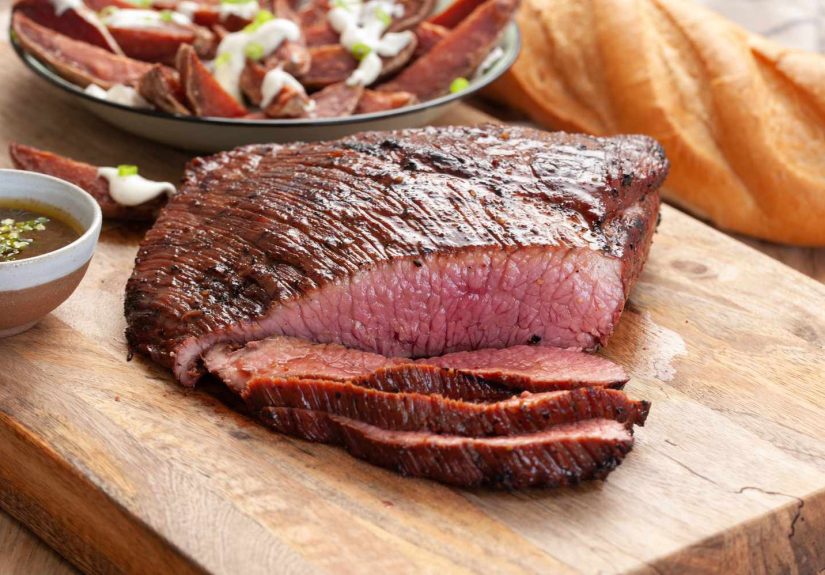
If flank steak had a therapist, they’d say: “It’s not you, it’s the grain.” Flank steak has long muscle fibers.
If you cut with the grain, each bite feels like chewing a shoelace (a flavorful shoelace, but still).
Here’s the move:
- Let it rest 5–10 minutes so juices redistribute.
- Find the grain (the lines running through the meat).
- Slice across those lines at a slight angle into thin strips.
Thin slices + against the grain = tender. It’s math, but delicious.
Make It Yours: 5 Easy Marinade Variations
1) “Carne Asada-ish” Citrus & Spice
Swap vinegar for orange juice + lime juice. Add cumin, chili powder, and a pinch of oregano. Great for tacos.
2) Balsamic Herbhouse
Use balsamic vinegar, add rosemary and oregano, and keep the mustard. This one tastes like you lit a candle and
suddenly your kitchen has “ambience.”
3) Ginger-Scallion Soy
Add grated ginger, sliced scallions, and a little sesame oil. Serve with rice and something crunchy (cucumber salad is nice).
4) Spicy-Sweet BBQ Starter
Add smoked paprika and a spoonful of ketchup or tomato paste. It’s tangy, sweet, and grills beautifully.
5) Minimalist “I Have Four Ingredients” Marinade
Soy sauce + vinegar + garlic powder + black pepper. It’s shockingly goodand will make you feel like you hacked dinner.
What to Serve With Marinated Flank Steak
Flank steak is a team player. Here are some crowd-pleasers:
- Tacos: warm tortillas, sliced steak, onions, cilantro, salsa.
- Steak salad: greens, cherry tomatoes, avocado, crunchy pepitas, simple vinaigrette.
- Rice bowls: rice, steak, quick pickled onions, cucumbers, spicy mayo.
- Sandwiches: toasted roll, steak, caramelized onions, provolone.
- Meal prep: steak + roasted veggies + a drizzle of reserved (clean) marinade as sauce.
Food Safety & Marinade Smarts (Quick but Important)
- Always marinate in the refrigeratornot on the counter.
-
Don’t reuse marinade that touched raw meat unless you boil it first.
(Better: reserve some marinade before adding the steak.) - Pat the steak dry before cooking if the marinade has sugar/honey to reduce burning and improve searing.
This is the unglamorous part of cooking, but it’s how we keep “steak night” from turning into “why do I feel like this?”
FAQ: Easy Flank Steak Marinade
Should I poke holes or score the steak?
Light scoring (shallow crisscross cuts) can help the marinade cling and may improve bite-through. Don’t go wildthis
isn’t a craft project. A little goes a long way.
Do I rinse the marinade off before cooking?
No rinsing. Let excess drip off, then pat it dry. Rinsing washes away flavor and makes it harder
to brown.
Can I freeze flank steak in the marinade?
Yesthis is a great meal-prep trick. Freeze the steak in the marinade in a zip-top bag, then thaw in the fridge.
The steak will marinate as it thaws. (Still: discard or boil used marinade.)
What if my steak turns out tough?
Tough flank steak is usually one of three things: overcooked, not rested, or sliced with the grain. Next time,
cook a touch less and slice thinly against the grain. That alone fixes most “chewy steak” situations.
Real-World Experiences: What Cooking This Actually Feels Like (and What You Learn Fast)
There’s the recipe version of flank steak, and then there’s the real-life versionthe one where you’re hungry,
someone is asking “how much longer,” and you’re trying to remember if you already salted the thing. Over time,
home cooks tend to have a few repeat moments with flank steak marinades, and honestly, they’re kind of comforting.
First, most people are surprised by how quickly the flavor shows up. You’ll hear a lot of “overnight is best,”
and yes, it can be great, but a one- to two-hour marinade often tastes far more impressive than it has any right to.
The first time someone tries this on a weeknight, the reaction is usually: “Wait… that’s it? That’s all I had to do?”
It’s the culinary equivalent of discovering your printer actually works on the first try.
Second, there’s a learning curve with sweetness. Honey and brown sugar are amazing for browning, but they can also
go from “caramelized” to “deeply committed to being black” if your heat is too aggressive or your steak surface is
too wet. A common upgrade is patting the steak dry before cooking and keeping the heat high but controlledhot enough
to sear, not so hot that the sugar burns before the steak cooks through. Once people make that adjustment, they often
say the steak tastes more “steakhouse” and less “campfire accident.”
Third, many folks discover the magic of the zip-top bag. A shallow dish works, but bags coat the steak more evenly and
take up less space in the fridge. People also like that you can flip the bag once or twice and feel productive, like
you’re “actively cooking,” even though the fridge is doing all the work. (The refrigerator deserves more credit in
modern cuisine, but it’s humble and doesn’t brag.)
Fourth, slicing becomes a small personal victory. Someone will inevitably slice the first flank steak the wrong way,
realize it’s a bit chewy, and then the next time they’ll remember to cut against the grainand suddenly it’s tender,
juicy, and easy to eat in tacos or salads. That moment feels like leveling up. It’s not complicated, but it’s powerful.
People often start serving flank steak more confidently after that because they understand they control the texture at
the cutting board.
Finally, flank steak marinades become a gateway to “freestyle cooking.” After a few wins, home cooks start swapping
ingredients: lime for vinegar, ginger for garlic, maple for honey, a spoonful of mustard for extra punch. They’ll use
the same base marinade for steak bowls, fajitas, and quick salads. And once you realize the formula workssalty + acid
+ fat + aromatics + a touch of sweetyou don’t need a strict script. You just need a bowl, a whisk, and the confidence
to say, “This seems right,” and then let the grill confirm it.
If you’re new to flank steak, this recipe is a strong starting point. If you’ve cooked it a dozen times, it’s still
a reliable fallback. Either way, the best “experience tip” is simple: don’t overthink it, don’t overcook it, and
alwaysalwaysslice against the grain. Your jaw will thank you.