Table of Contents >> Show >> Hide
- What a Sun Shade Can (and Can’t) Do
- The Science: Why Your Car Turns Into a Greenhouse
- Heat Protection: How Much Difference Does a Sun Shade Make?
- UV Protection: Will Sun Shades Prevent Fading and Cracking?
- What Sun Shades Protect the Most (Spoiler: Your Dashboard Loves Them)
- Types of Sun Shades: What Works Best?
- How to Use a Sun Shade for Maximum Protection
- Sun Shade vs. Window Tint vs. “I Park Under That One Tiny Tree”
- Will a Sun Shade Protect Your Car’s Paint?
- Buying Checklist: How to Pick a Sun Shade That Actually Works
- FAQ: Quick Answers to Common Sun Shade Questions
- Real-World Experiences: What Drivers Notice (The Extra You Asked For)
- 1) The “steering wheel test” becomes survivable
- 2) A/C feels like it gets to “normal” faster
- 3) Dash glare and that “sticky shine” look can improve over time
- 4) Parents become very invested in seatbelt buckle temperature
- 5) The shade becomes a habitor it becomes clutter
- 6) People discover “fit” matters more than they expected
- 7) The best results come from stacking strategies
- Conclusion: So, Do Sun Shades Really Protect Your Car?
You know that moment when you open your car door and get hit with air that feels like it came straight
from a hair dryer set to “regret”? Your steering wheel is auditioning for a cast-iron skillet, the seatbelt
buckle is basically a branding iron, and your dashboard looks like it’s one heatwave away from filing for
workers’ comp.
So… do sun shades really protect your car, or are they just shiny windshield décor that makes you look
like you’ve joined a futuristic space program? The honest (and surprisingly satisfying) answer: yes,
sun shades helpbut they’re not a magic force field. Used correctly, they reduce heat load, slow interior
fading and cracking, and make your car more comfortable to return to. Used poorly (or not at all), your car
keeps doing what cars do in the sun: turning into a portable greenhouse with cupholders.
What a Sun Shade Can (and Can’t) Do
What it does well
- Blocks direct sunlight from blasting your dash, steering wheel, and front seats.
- Reduces interior surface temperatures, which helps slow cracking, warping, and fading.
- Lowers the heat load your A/C has to fight when you start the car.
- Protects sensitive items (think: screens, adhesives, leather/vinyl finishes) from repeated heat stress.
What it doesn’t do
- It won’t keep the cabin “cool” like an air conditioner. Your car will still heat upjust less aggressively.
- It doesn’t protect the outside of your car (paint, clear coat, headlights) from UV and weathering.
- It’s not a safety solution for kids or pets. Even with a shade, a parked car can reach dangerous temperatures quickly.
- It can’t stop all UV because a lot enters through side and rear glassespecially UVA.
The Science: Why Your Car Turns Into a Greenhouse
A parked car heats up fast because sunlight (shortwave radiation) enters through the glass and gets absorbed
by the dashboard, seats, and interior surfaces. Those surfaces re-radiate energy as heat (longwave infrared),
which doesn’t escape as easily through the windows. The result is a greenhouse-like trap: heat builds, surfaces
get hotter, and the cabin temperature climbs quickly.
This is why “cracking the windows” is usually a minor improvement at bestand why the first 10–30 minutes
matter the most when the sun is hitting your vehicle. If you’ve ever said, “I’ll just be five minutes,” your car
has heard that before. Many times. It remains unimpressed.
Heat Protection: How Much Difference Does a Sun Shade Make?
Real-world results vary because the sun is not a controlled laboratory coworker who follows instructions.
Your results depend on windshield angle, cloud cover, ambient temperature, vehicle color, interior materials,
and how well the shade fits. But the pattern is consistent: sun shades reduce heat buildupespecially
on the dashboard and front cabin surfaces that take the brunt of direct sun.
What you can realistically expect
-
Lower cabin air temperature compared to no shade (often reported in the ~10–15°F range with basic
sunshade use, with better results from higher-coverage, better-insulated designs). -
Much lower surface temperatures on the dash, steering wheel, and front seats because you’re blocking
direct radiation (the part that makes things feel instantly painful). -
Faster “comfort recovery” once you start driving and the A/C kicks in, since the interior isn’t starting
from the surface-temp equivalent of lava rock.
Here’s the key idea: your cabin air might still be hot, but the “touch points” are less brutal. That’s
protection you can feel immediatelyespecially if you’ve ever tried to grab a steering wheel and briefly met
your ancestors.
UV Protection: Will Sun Shades Prevent Fading and Cracking?
Sun damage inside a car isn’t just about “heat = uncomfortable.” UV and heat accelerate aging in plastics,
vinyl, leather coatings, and adhesives. Over time you can get fading, drying, brittleness, and cracking
particularly on the dashboard and upper door trims where sunlight hits hardest.
Important nuance: windshield vs. side windows
Many people assume car glass blocks “the sun.” In reality, glass blocks most UVB fairly well, but UVA is a different story.
Windshields (laminated glass) tend to offer better UVA reduction than side windows (often tempered glass),
which can let significantly more UVA through. That matters because UVA contributes to long-term material
degradation and can also affect skin exposure during driving.
A windshield sun shade helps because it blocks a big chunk of the light and energy entering through the
largest sheet of glass in your vehicle. But if you want to seriously reduce UV exposure inside the cabin,
a sun shade works best as part of a combo approachespecially with UV-blocking window film where legal.
What Sun Shades Protect the Most (Spoiler: Your Dashboard Loves Them)
If your car interior had a “most stressed employee” award, your dashboard would win every year. It sits
under the windshield like it’s sunbathing for a living. A good windshield shade protects:
- Dashboards (fading, cracking, warping, sticky finishes)
- Steering wheels (surface breakdown and “why is this 1,000 degrees” moments)
- Infotainment screens (heat stress isn’t great for electronics or adhesives)
- Front seats (especially leather/vinyl surfaces and stitching)
- Interior plastics (trim and coatings that get chalky or brittle over time)
- Anything you left on the dash (sunglasses, mounts, and that gum you forgot existed)
Types of Sun Shades: What Works Best?
1) Custom-fit reflective windshield shades
These are the “I came prepared” option. Custom-fit shades cover more area with fewer gaps, which is a big deal
because tiny gaps add up to a lot of sunlight over hours of parking. Many have multi-layer construction that
reflects and insulates, not just reflects.
2) Universal foldable accordion shades
Usually affordable and easy to find. They work, but fit varies. If it leaves large gaps around the edges, you’re
letting the sun sneak in like it owns the place.
3) Pop-up twist shades
Lightweight, quick to deploy, and sometimes quick to annoy you when they explode into a giant circle at the worst
possible moment. They can be effective if they fit well, but many are thinner and less insulating.
4) Umbrella-style windshield shades
A newer favorite because they’re fast to open and store. They can provide solid coverage, but quality varieslook
for sturdy ribs and edge coverage that actually reaches the corners.
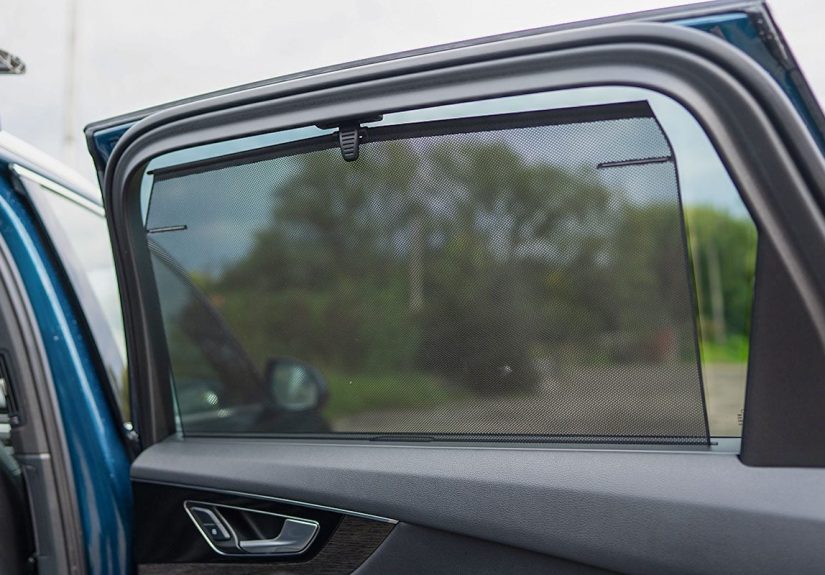
5) Side-window shades (bonus protection)
Great for keeping sunlight off passengers and reducing overall heat load. They’re especially useful if your car sits
for long periods or you live somewhere that treats summer like an extreme sport.
How to Use a Sun Shade for Maximum Protection
- Deploy it correctly: reflective side facing out (unless the product instructions say otherwise).
- Lock it in place: use your sun visors to hold it tight against the windshield.
- Reduce gaps: choose a size/shape that reaches the edges and corners.
- Park smart: point the windshield into the sun when possible so the shade does the most work.
- Combine tactics: shade + tinted/UV film + shade parking beats any single strategy.
- Keep the windshield clean: dirt films can reduce reflectivity and trap heat.
Quick reality check: if your sun shade is sliding down and leaving half your dashboard exposed, it’s not a sun shade.
It’s a reflective suggestion.
Sun Shade vs. Window Tint vs. “I Park Under That One Tiny Tree”
Sun shades are great, but they’re one tool. Here’s how the main options stack up:
Windshield sun shade
- Best for: quick heat reduction and dash/steering wheel protection while parked
- Limitations: doesn’t address side-window UVA and heat as well
- Cost: generally low to moderate
Quality window tint / UV window film (where legal)
- Best for: long-term UV reduction (especially UVA), glare reduction, and overall heat control
- Limitations: up-front cost, legal limits vary by state, installation quality matters
- Cost: moderate to high
Shaded parking + smart timing
- Best for: the biggest “free” reduction in heat load
- Limitations: depends on availability and sun movement (trees do not sign contracts)
- Cost: free, unless you count the emotional cost of losing the shady spot
Cracking windows slightly
- Best for: minor improvements in some conditions
- Limitations: often doesn’t meaningfully slow heating; also security/weather risks
- Cost: free, plus potential “why is my car wet” surprises
Will a Sun Shade Protect Your Car’s Paint?
Not really. A windshield shade mainly protects the interior. If your goal is exterior protectionpaint oxidation,
clear coat wear, headlight hazelook at:
- Regular washing and waxing/sealant (reduces oxidation and contamination bonding)
- Ceramic coatings (durable protection, but not invincible)
- A full car cover for long outdoor parking (best for comprehensive UV protection)
- Covered parking (the undefeated champion)
Buying Checklist: How to Pick a Sun Shade That Actually Works
Coverage and fit
The best shade is the one that covers your windshield without leaving sunbeams around the edges. Custom-fit
shades usually win here.
Reflective + insulating construction
Reflective surfaces bounce sunlight back out, while insulating layers slow heat transfer. Thin reflective sheets help,
but multi-layer designs often perform better for longer parking sessions.
Ease of use
If deploying it feels like wrestling a tent in a windstorm, you won’t use it consistently. The best sun shade is the one
you’ll actually put up on Tuesday when you’re late and already mad at traffic.
Durability
Look for reinforced edges and frames that won’t bend into abstract art after a month.
FAQ: Quick Answers to Common Sun Shade Questions
Do sun shades work better than tinted windows?
They do different jobs. Sun shades are excellent for parked-car protection through the windshield. Tint/UV film is better
for ongoing UV reduction (especially through side windows) and heat control while driving and parked.
Can I use a sun shade while driving?
No. Anything that obstructs your view is unsafe and likely illegal. Sun shades are for parked vehicles.
Do sun shades prevent heatstroke risk?
No. They may reduce heat load, but a parked car can still become dangerously hot quickly. Never leave children or pets in
a parked vehicle, even “for a minute.”
What’s better: reflective silver or dark fabric?
Generally, the reflective layer matters most because it’s what bounces energy back out. The best designs combine reflectivity
with insulation and good windshield coverage.
Real-World Experiences: What Drivers Notice (The Extra You Asked For)
Statistics are nice, but most people don’t buy a windshield sun shade because of a spreadsheet. They buy it because they
have been personally victimized by a sun-baked steering wheel. Here are the experiences drivers commonly report when they
start using sun shades consistentlyespecially in hot, sunny regions or during long workday parking.
1) The “steering wheel test” becomes survivable
Without a shade, the steering wheel and dash soak up direct sunlight and can feel instantly punishing to touch. With a
shade, drivers often say the wheel is still warm, but no longer “why do I smell my fingerprints” hot. The biggest difference
is usually in the first minute after getting in: less flinch, less frantic sleeve-wrapping, less bargaining with the universe.
2) A/C feels like it gets to “normal” faster
People notice the A/C doesn’t have to fight as hard at startup. It’s not that the cabin magically becomes coolyour car is
still a sunlit boxbut the air often feels less like a sauna blast and more like a manageable heat wave. If you do lots of
short stops (errands, deliveries, school pickup), that reduced cooldown time feels like a real quality-of-life upgrade.
3) Dash glare and that “sticky shine” look can improve over time
Drivers who park outdoors daily often notice their dashboard stays nicer longer: less dull fading, fewer surface changes,
and fewer “why is this plastic turning into chalk” moments. Some also report needing fewer interior dressings to keep things
looking freshbecause the sun isn’t relentlessly cooking the same surfaces day after day.
4) Parents become very invested in seatbelt buckle temperature
Anyone who has buckled a child into a car seat in summer understands: the metal parts do not care about your schedule.
Using a windshield shade can help reduce the “hot hardware” problem up front, and adding side-window shades can further
cut radiant heat on the back seat. Parents often say it’s not just comfortit’s fewer tears and fewer panicked “don’t touch
that!” warnings.
5) The shade becomes a habitor it becomes clutter
The biggest difference between people who love sun shades and people who abandon them is consistency. Drivers who pick a
shade that deploys quickly (and stores neatly) tend to use it daily. Drivers who pick a shade that’s awkward, bulky, or
constantly collapses tend to stop using it, and the shade becomes permanent trunk décor next to old grocery bags and that
mysterious bungee cord you swear you’ll need someday.
6) People discover “fit” matters more than they expected
A common upgrade path looks like this: someone buys a cheap universal shade, notices it helps a little, then gets annoyed
by the gaps and upgrades to a better-fitting option. When the shade reaches the corners and sits flush, it doesn’t just
feel more premiumit usually performs better because less sunlight sneaks through to roast the dashboard.
7) The best results come from stacking strategies
Drivers who get the most dramatic improvement usually combine a windshield shade with smarter parking and, where legal,
high-quality window tint/UV film. The shade tackles the big windshield “solar doorway,” the tint reduces side-window UVA
and overall heat load, and shaded parking keeps the sun from pounding the vehicle in the first place. The takeaway from
real-world use is simple: a sun shade is the easiest win, but it’s even better as part of a system.
Conclusion: So, Do Sun Shades Really Protect Your Car?
Yeswindshield sun shades genuinely protect your car’s interior by reducing direct sunlight, lowering surface temperatures,
and slowing the UV-and-heat aging that leads to fading, drying, and cracking. They also make day-to-day life better because
you’re not climbing into a rolling greenhouse after every stop.
The smart expectation is “meaningful improvement,” not “instant refrigerator.” If you want maximum protection, choose a
shade with good coverage, use it every time you park in direct sun, and pair it with shaded parking and UV-blocking window
film where allowed. Your dashboard will thank you, your A/C will work less dramatically, and your steering wheel will stop
trying to become a cookware brand.