Table of Contents >> Show >> Hide
- What Is the Deep Autumn Color Palette?
- Best Colors for Deep Autumn
- Colors Deep Autumn May Want to Use Carefully
- How to Build a Deep Autumn Wardrobe
- Deep Autumn Outfit Ideas
- Deep Autumn Makeup Guide
- Jewelry and Accessories for Deep Autumn
- Hair Color Ideas for Deep Autumn
- Deep Autumn vs. Other Autumn Palettes
- How to Wear Prints and Patterns
- Deep Autumn Capsule Wardrobe Example
- Common Deep Autumn Styling Mistakes
- Experience Notes: Living With a Deep Autumn Palette
- Conclusion
The Deep Autumn color palette is what happens when fall gets dressed for an elegant dinner, orders espresso, and refuses to apologize for looking expensive. Also called Dark Autumn, this seasonal color family is rich, warm, grounded, and quietly dramatic. Think roasted coffee, antique gold, forest green, dark olive, burnt sienna, mahogany, aubergine, and the kind of brick red that makes a plain sweater look like it has a trust fund.
Deep Autumn sits between Autumn and Winter in the seasonal color analysis system. That means it borrows the earthy warmth of Autumn and the depth of Winter. The result is a palette that feels bold but not neon, warm but not sugary, and sophisticated without trying too hard. It is ideal for people who look especially harmonious in deep, warm, slightly muted colors rather than icy pastels, bright candy shades, or stark high-contrast black-and-white combinations.
This guide breaks down the best Deep Autumn colors, wardrobe ideas, makeup shades, jewelry, hair color inspiration, outfit examples, and real-life styling experiences so you can use the palette confidently without turning your closet into a pumpkin spice museum.
What Is the Deep Autumn Color Palette?
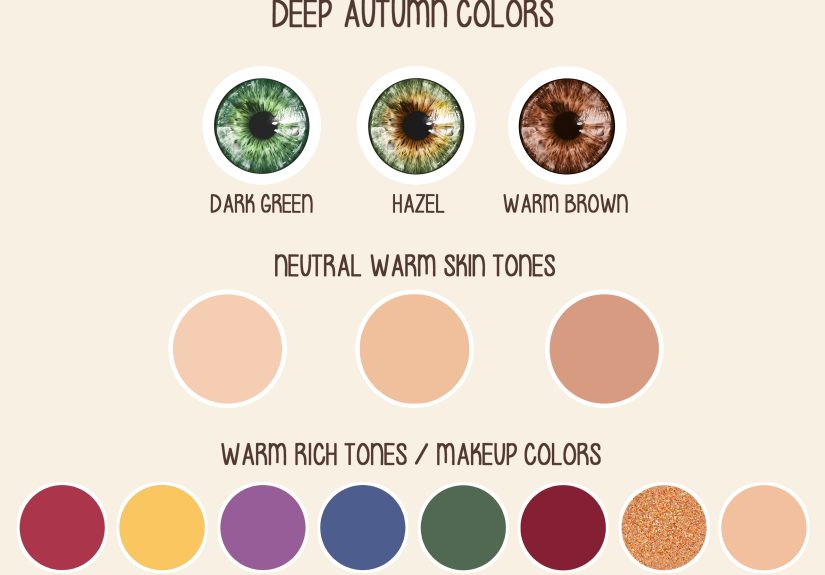
The Deep Autumn palette is a seasonal color group defined by three main qualities: depth, warmth, and richness. The colors are generally medium-dark to very dark, neutral-warm in undertone, and saturated enough to feel powerful without becoming electric. They are not dusty in the same way Soft Autumn colors are, and they are not as bright or icy as Deep Winter colors.
Imagine a landscape in late October: dark tree bark, copper leaves, golden sunlight, mossy stones, burgundy berries, espresso shadows, and warm leather boots crunching through leaves. That is the Deep Autumn mood. It has texture. It has drama. It has “I read novels in a café and know exactly which coat makes me look mysterious” energy.
Deep Autumn Color Characteristics
Deep Autumn colors usually have these traits:
- Warm or neutral-warm undertone: Colors lean golden, brown, olive, copper, or earthy rather than icy blue or silver-gray.
- Deep value: The palette is darker overall, with rich shades like espresso, pine, oxblood, and dark teal.
- Moderate saturation: Colors are rich and present, but not neon, fluorescent, or overly bright.
- Earthy depth: The shades feel natural, grounded, and slightly smoky.
Best Colors for Deep Autumn
The best Deep Autumn colors are warm, intense, and grounded. They have enough depth to support a dramatic look but enough softness to avoid looking harsh. These shades work beautifully in clothing, accessories, makeup, and even nail polish.
Signature Deep Autumn Colors
- Chocolate brown
- Espresso
- Dark olive
- Forest green
- Warm navy
- Deep teal
- Petrol blue
- Rust
- Burnt orange
- Terracotta
- Brick red
- Oxblood
- Mahogany
- Mustard gold
- Aubergine
- Warm charcoal
These colors are not shy, but they are not loud either. They are the color equivalent of a person who speaks calmly and somehow everyone listens.
Best Neutrals for Deep Autumn
Neutrals are the backbone of a Deep Autumn wardrobe. Instead of relying only on black, bright white, or cool gray, Deep Autumn looks especially cohesive in warmer neutrals.
- Espresso brown
- Dark chocolate
- Warm charcoal
- Camel
- Deep taupe
- Olive drab
- Warm navy
- Cream instead of stark white
- Cognac leather
If black feels too severe, try espresso, dark olive, or warm charcoal. These alternatives still give structure and polish but usually blend more naturally with the Deep Autumn color story.
Colors Deep Autumn May Want to Use Carefully
No color is “forbidden.” Fashion should be useful, not bossy. However, some colors may feel less harmonious with the Deep Autumn palette when worn close to the face, especially in large blocks.
Cool, Icy, or Neon Shades
Cool pastels, icy blue, blue-based pink, neon yellow, bright fuchsia, and sharp white can compete with Deep Autumn’s warm richness. They may still work as small accents, nail colors, prints, or pieces worn farther from the face. For example, a cool pink handbag can look playful with a chocolate dress, but a cool pink turtleneck may feel visually disconnected from the rest of the palette.
Pure Black and Stark White
Deep Autumn can often wear black better than lighter Autumn types because of its darker value. Still, pure black may feel a bit flat compared with espresso, dark bronze, or warm charcoal. Stark white can look sharp, while cream, ivory, oatmeal, or warm beige usually feels more connected to the palette.
How to Build a Deep Autumn Wardrobe
A great Deep Autumn wardrobe does not need to be huge. It needs smart color anchors, a few mood-setting statement shades, and textures that make the palette come alive. Deep Autumn is especially good at looking polished with fewer pieces because the colors already carry visual depth.
Step 1: Choose Your Base Neutrals
Start with two or three core neutrals. For example:
- Espresso brown
- Dark olive
- Warm navy
These can appear in trousers, skirts, coats, blazers, shoes, belts, and bags. Once your basics are connected by color, outfit planning becomes much easier. Your closet starts acting like a helpful assistant instead of a chaotic group project.
Step 2: Add Rich Accent Colors
Accent colors give the wardrobe personality. Try rust, deep teal, mustard, burgundy, copper, aubergine, or forest green. These shades work well in sweaters, blouses, scarves, dresses, and jackets. If you prefer a minimalist look, choose one accent at a time. If you enjoy bolder styling, combine two Deep Autumn accents, such as teal with rust or burgundy with olive.
Step 3: Use Texture to Add Dimension
Deep Autumn colors become even more beautiful in textured fabrics. Suede, leather, corduroy, velvet, wool, tweed, ribbed knits, brushed cotton, satin, and silk can all add dimension. A simple rust sweater in a flat fabric is nice. A rust ribbed knit with a dark brown belt? Suddenly, the outfit has a plot.
Deep Autumn Outfit Ideas
Here are practical outfit combinations using the Deep Autumn color palette.
Casual Everyday Outfit
Pair dark denim with a moss green sweater, cognac loafers, and a chocolate crossbody bag. Add small gold hoops or a bronze watch. The outfit is relaxed but intentional, perfect for errands, coffee, casual office days, or looking like you absolutely have your life together while buying cereal.
Workwear Outfit
Try warm charcoal trousers, an ivory blouse, a dark olive blazer, and espresso shoes. If you want more personality, add a burgundy belt or a deep teal silk scarf. This combination feels professional without defaulting to the usual black suit formula.
Date Night or Dinner Outfit
A deep aubergine dress with gold jewelry and chocolate heels creates a dramatic but warm effect. If dresses are not your style, try black-brown trousers, a satin rust top, and a dark leather jacket. The goal is depth, softness, and warmthnot looking like you got into a fight with a highlighter.
Weekend Outfit
Wear camel wide-leg pants with a forest green tee, a denim jacket, and cognac sandals or boots. Deep Autumn works beautifully with denim, especially darker or medium-blue washes. For a stronger seasonal look, choose denim with warm stitching or pair it with brown leather accessories.
Deep Autumn Makeup Guide
Deep Autumn makeup is at its best when it looks warm, dimensional, and slightly earthy. The goal is not heavy makeup; it is harmony. Even a simple look can feel polished when the colors are right.
Best Lip Colors
Great lip shades for Deep Autumn include:
- Brick red
- Terracotta
- Brown-red
- Warm berry
- Oxblood
- Cinnamon
- Deep rosewood
- Burnt coral
Cool bubblegum pinks or blue-based magentas may feel separate from the palette, while warm reds and brown-based shades often look more connected. A brick lipstick can do the work of three accessories and one motivational speech.
Best Eye Makeup
Deep Autumn eye colors can include bronze, espresso, dark olive, copper, warm taupe, chocolate, antique gold, and deep plum. Instead of stark black eyeliner, try espresso, bronze, olive-black, or dark brown. These shades still define the eyes but keep the warmth of the look intact.
Best Blush and Bronzer
For cheeks, consider terracotta, cinnamon, warm rose, toasted peach, or soft brick. Bronzer should lean golden or neutral-warm rather than gray, pink, or orange in an obvious way. The best blush looks like it belongs with the rest of the face, not like it arrived late to the meeting and brought neon confetti.
Jewelry and Accessories for Deep Autumn
Deep Autumn usually pairs beautifully with warm metals. Gold, bronze, brass, copper, and antique finishes often feel especially natural. Rose gold can also work when it leans warm and not too pink.
Best Metals
- Yellow gold
- Antique gold
- Bronze
- Copper
- Brass
- Warm rose gold
Best Gemstone Colors
Try amber, garnet, smoky quartz, tiger’s eye, citrine, jade, olive tourmaline, warm topaz, and deep turquoise. These stones echo the palette’s richness and add interest without feeling icy or overly bright.
Hair Color Ideas for Deep Autumn
Hair color is personal, and no palette should make anyone feel boxed in. Still, if you want a color that harmonizes with Deep Autumn, look for warm, deep, and dimensional tones.
Deep Autumn Hair Color Inspiration
- Espresso brown
- Dark chocolate brown
- Chestnut
- Mahogany brown
- Auburn brown
- Warm black-brown
- Caramel or coppery lowlights
Very ashy tones, platinum blonde, or blue-black shades may feel cooler than the palette. If you love them, wear them. But if your goal is Deep Autumn harmony, warmer brown-based tones usually blend more naturally.
Deep Autumn vs. Other Autumn Palettes
Autumn is not one single palette. It has several variations, and knowing the difference can help you shop with more confidence.
Deep Autumn vs. True Autumn
True Autumn is warmer and often more obviously golden, with shades like pumpkin, goldenrod, warm camel, and leaf green. Deep Autumn is darker, richer, and slightly more neutral. If True Autumn is a sunny pumpkin patch, Deep Autumn is a candlelit library with a leather chair.
Deep Autumn vs. Soft Autumn
Soft Autumn is gentler, lighter, and more muted. It often includes sage, warm taupe, dusty peach, and soft camel. Deep Autumn needs more depth and contrast. Soft Autumn whispers; Deep Autumn speaks in a low, excellent voice.
Deep Autumn vs. Deep Winter
Deep Winter is also dark and dramatic, but it is cooler and clearer. Deep Winter often handles black, white, jewel tones, and icy contrast more easily. Deep Autumn prefers warmth, earthiness, and richness. If you are deciding between the two, compare colors like pine green, espresso, and rust against black, icy white, and sapphire. Your best group will usually look more connected and less separate from you.
How to Wear Prints and Patterns
Deep Autumn patterns work best when the overall print stays warm, dark, and grounded. Animal prints, paisley, dark florals, plaid, tortoiseshell, and abstract earthy prints can all look excellent.
Best Pattern Colors
Choose prints that include shades like chocolate, rust, olive, cream, burgundy, bronze, mustard, and deep teal. A dark floral dress with olive leaves and burnt orange flowers can look more cohesive than a pastel floral with icy pink and mint.
Pattern Scale and Contrast
Because Deep Autumn has depth, it can often handle medium-to-bold patterns. However, the best print depends on personal style. A minimalist might prefer a subtle chocolate-and-camel stripe. A maximalist might reach for dark paisley with teal, copper, and burgundy. Both can work if the colors stay within the palette.
Deep Autumn Capsule Wardrobe Example
Here is a simple Deep Autumn capsule wardrobe idea:
- Espresso trousers
- Dark denim jeans
- Olive utility jacket
- Camel coat
- Cream knit top
- Rust sweater
- Forest green blouse
- Warm navy skirt
- Burgundy dress
- Cognac boots
- Chocolate belt
- Antique gold jewelry
With these pieces, you can create casual, work, dinner, and weekend outfits without needing a closet that requires its own ZIP code.
Common Deep Autumn Styling Mistakes
Using Too Much Stark Black
Black can be useful, but Deep Autumn outfits often look more interesting with espresso, dark olive, or warm charcoal. These shades give similar depth while supporting the palette’s warmth.
Choosing Colors That Are Too Light
Very pale colors can feel disconnected if they dominate the outfit. When wearing lighter shades, choose cream, warm beige, camel, or muted gold, and anchor them with deeper colors.
Forgetting About Texture
Deep Autumn thrives on texture. Matte, brushed, woven, ribbed, suede, and leather finishes bring richness to the palette. A simple outfit can look more complete when the fabrics have depth.
Following the Palette Too Strictly
A color palette should be a tool, not a fashion courtroom. If you love a color outside Deep Autumn, wear it in a way that makes sense for you. Use it in accessories, prints, shoes, nail polish, or lower-contrast combinations. Personal style matters more than passing an imaginary seasonal color exam.
Experience Notes: Living With a Deep Autumn Palette
One of the most useful experiences with the Deep Autumn color palette is realizing how much easier shopping becomes when you stop chasing every trend color. Before understanding this palette, many people buy random pieces because they look good on a mannequin, in a social media post, or under store lighting that could make a paper bag look glamorous. Then the item comes home, meets the rest of the closet, and suddenly everyone is uncomfortable.
Deep Autumn styling teaches you to look for connection. A rust sweater should work with your dark denim, your camel coat, your brown boots, and your olive jacket. A burgundy dress should feel at home with gold earrings, espresso heels, and a warm-toned bag. When the palette is consistent, your wardrobe starts multiplying outfits naturally. You do not need to own more; you need pieces that speak the same visual language.
A practical experience many Deep Autumn dressers discover is that brown is not boring. In fact, brown becomes the hero neutral. Espresso trousers can look softer than black but just as polished. Chocolate leather accessories can warm up an outfit instantly. Camel coats, cognac boots, and dark olive bags can make even a basic jeans-and-sweater outfit look styled on purpose. Brown is not the color of giving up. Brown is the color of knowing what you are doing.
Another helpful lesson is that makeup does not have to be complicated. A warm brown eyeliner, a cinnamon blush, and a brick-red lip can create a finished look without requiring twenty products or a degree in blending. Deep Autumn makeup works best when it feels warm and dimensional. Even a small switch from cool pink lipstick to rosewood or terracotta can make the whole face feel more coordinated with the outfit.
People who use the Deep Autumn palette often notice that texture becomes their secret weapon. A forest green cotton shirt is nice, but a forest green velvet blazer is memorable. A plain brown bag is useful, but a pebbled leather or suede version adds character. A burgundy knit dress can look cozy, elegant, and effortless at the same time. Texture makes Deep Autumn colors feel alive, especially because the palette is inspired by natural materials like bark, leaves, spice, soil, leather, and stone.
The biggest experience-based tip is to start small. You do not need to replace your wardrobe in one dramatic weekend. Begin with one warm neutral, one accent color, and one accessory. For example, try espresso pants, a cream top, and gold earrings. Next, add a rust cardigan or olive jacket. Over time, you will see which colors feel most natural for your lifestyle. Some people lean into dark academia shades like espresso, burgundy, and forest green. Others prefer a softer earthy look with camel, bronze, olive, and cream.
Deep Autumn is not about becoming someone else. It is about noticing which colors make your style feel more intentional. Once you understand the palette, getting dressed can feel less like solving a puzzle and more like choosing a mood: cozy, polished, dramatic, relaxed, artistic, professional, or quietly luxurious. And honestly, who does not want a wardrobe that makes Monday morning slightly less rude?
Conclusion
The Deep Autumn color palette is rich, warm, grounded, and expressive. It blends the depth of Winter with the earthy warmth of Autumn, creating a wardrobe language full of espresso browns, olive greens, brick reds, burnt oranges, dark teals, antique golds, and luxurious textures. Whether you are building a capsule wardrobe, refreshing your makeup bag, choosing jewelry, or simply trying to shop with more focus, Deep Autumn offers a practical and beautiful framework.
The best part is that this palette is flexible. You can make it classic, casual, romantic, dramatic, minimalist, or bold. Use the colors as a guide, not a cage. Start with warm neutrals, add rich accents, play with texture, and let your personal style have the final word. Deep Autumn is not just a color category; it is a styling shortcut to depth, warmth, and confidence.