Table of Contents >> Show >> Hide
- What Is Still Life, Really?
- Why Still Life Feels So Current Right Now
- A Short History of Still Life, Minus the Dusty Lecture Feeling
- Still Life Photography: The Genre Learns to Blink
- Still Life in Interior Design: The Rise of the Meaningful Vignette
- How to Create a Modern Still Life at Home
- Objects That Make Excellent Still Life Subjects
- The Emotional Power of Ordinary Things
- Current Obsessions: Still Life as a Lifestyle Lens
- A 500-Word Experience: Living With Still Life Every Day
- Conclusion: Still Life Is Not Still at All
Still life is having a very stylish second act. Actually, make that a 47th act, because this art form has been quietly surviving every aesthetic earthquake from Dutch Golden Age drama to Pop Art punchiness, from museum walls to kitchen counters, from oil paint to iPhone camera rolls. If you have ever arranged a ceramic bowl, a half-read book, a wrinkled linen napkin, and one heroic lemon on a table and thought, “Wait, why does this look like a magazine spread?” congratulations. You have entered the still life zone.
The phrase “Current Obsessions: Still Life” sounds simple, but it points to something surprisingly deep: our renewed love for ordinary objects that feel calm, tactile, personal, and beautifully composed. In a world where feeds scroll faster than a toddler with espresso, still life offers a pause. A pear becomes a sculpture. A coffee cup becomes a mood. A shelf of collected objects becomes a tiny autobiography. The best still life arrangements are not just pretty; they say, “This is what I noticed today, and somehow it mattered.”
Whether you are interested in still life photography, still life painting, interior styling, home decor vignettes, or the quiet luxury of a well-placed fruit bowl, this classic genre is suddenly everywhere again. And the funny thing is, it never really left. It simply waited patiently on the table, next to the oranges.
What Is Still Life, Really?
At its most basic, still life is an arrangement of objects. Those objects may be natural, like flowers, fruit, shells, insects, and leaves, or manmade, like glassware, books, textiles, tools, ceramics, and furniture. But that definition is only the doorway. The real magic begins when the objects start talking to one another.
A bowl of apples can suggest abundance. A wilting flower can whisper about time. A wine glass can sparkle with pleasure, fragility, or just excellent lighting. A pair of scissors on a worktable can feel practical, poetic, or faintly threatening depending on the composition. Still life turns the ordinary into a visual sentence.
Historically, artists used still life to show technical skill. Could they paint transparent glass? Could they capture the fuzzy skin of a peach? Could they make a silver platter so convincing that viewers wanted to polish it? But the genre also became a playground for symbolism. Everyday objects carried messages about wealth, mortality, faith, desire, domestic life, and the slightly awkward truth that even the ripest fruit eventually becomes compost.
Why Still Life Feels So Current Right Now
Still life fits the present moment because it gives us three things many people are craving: slowness, personality, and material presence. After years of ultra-minimal rooms, disposable trends, and digital overload, people are returning to objects with texture, history, and emotional weight. A chipped handmade mug can feel more interesting than a perfect mass-produced one. A small cluster of shells from a beach trip can carry more atmosphere than an expensive accessory chosen only because an algorithm said “coastal.”
Interior design has also been moving toward warmth, saturated color, curved forms, tactile materials, and personal style. That shift naturally supports the still life mindset. Instead of hiding everything behind smooth cabinet doors, people are styling open shelves, coffee tables, mantels, and bedside corners with meaningful pieces. The goal is not clutter for clutter’s sake. It is thoughtful display: a small visual story that makes a room feel lived in rather than staged by a robot with a beige mood board.
This is why still life works so well for modern homes. It lets you create beauty without remodeling, buying an entire new sofa, or explaining to your budget why it now lives in exile. You can make a still life with what you already own: a vase, a candle, a book, a stone, a spoon, a linen towel, a branch from the yard. Suddenly your sideboard looks intentional. Your windowsill has a narrative arc. Your kitchen counter is no longer “where the mail goes to die”; it is a composition.
A Short History of Still Life, Minus the Dusty Lecture Feeling
Ancient Roots and Symbolic Objects
Still life has ancient roots. Long before the term became associated with European painting, artists represented food, vessels, flowers, and household objects in mosaics, wall paintings, and decorative settings. These images often suggested prosperity, hospitality, ritual, or beauty. People have always liked looking at nice things arranged nicely. Humanity: complicated, but consistent.
The Dutch Golden Age and the Drama of the Table
Still life became especially important in Northern Europe during the 1600s and 1700s. Dutch and Flemish painters created dazzling arrangements of fruit, flowers, seafood, silverware, glass, imported porcelain, musical instruments, books, and skulls. These paintings were not casual snapshots of breakfast. They were elaborate performances of skill and meaning.
Many Dutch still lifes celebrated global trade and prosperity, but they also carried moral warnings. A peeled lemon could suggest beauty with bitterness beneath. A fading blossom reminded viewers that life is short. A skull, because subtlety apparently had the day off, pointed directly to mortality. These vanitas still lifes asked viewers to admire earthly pleasures while remembering that none of them lasts forever. Basically: enjoy the oysters, but maybe call your mother.
Modernism: Apples Get Weird, in the Best Way
By the time artists like Paul Cézanne approached still life, the genre became less about copying objects perfectly and more about exploring perception, structure, color, and form. Cézanne’s apples are famous not because they look like grocery-store produce but because they seem to tilt, pulse, and rebuild space. His tabletops refuse to behave. Bowls lean. Fruit has gravity and attitude.
Modern artists used still life to ask fresh questions: How do we see? How does a flat surface create depth? What happens when an object becomes shape, rhythm, or color? This is one reason still life remains powerful. It can be realistic, abstract, symbolic, decorative, conceptual, or all of the above before lunch.
Pop Art and Consumer Culture
In the 20th century, still life absorbed the language of advertising and consumer culture. A tabletop could include soda bottles, packaged food, printed labels, shiny plastics, and supermarket abundance. Artists such as Tom Wesselmann reworked the still life tradition through bright, seductive images of American consumption. The objects were familiar, but the message was sharper: desire itself had become part of the display.
This is where still life starts to look suspiciously like our own world. Today’s objects are also loaded with signals. A matcha whisk, a rechargeable lamp, a vintage ashtray used for jewelry, a stack of art books, a tube of fancy hand cream, a mushroom-shaped lampeach object says something about taste, identity, aspiration, and the tiny theater of daily life.
Still Life Photography: The Genre Learns to Blink
Still life photography proves that the genre is not trapped in old oil paintings. Photographers have used still life to explore light, time, memory, commercial desire, and the strange emotional life of objects. A photograph of two eggs, a bottle, or a folded cloth can feel just as composed and mysterious as a painting from the 17th century.
Contemporary still life photography often plays with art history. Some artists recreate famous paintings with real objects, then photograph the setup, creating a delicious little puzzle: Is it a painting? A photograph? A performance? A very patient grocery list? Photographic still life can also be stark and modern, using minimal objects, shadow, and negative space to create mood. In a phone-camera age, it has become one of the most accessible art forms. You do not need a studio. You need a window, a surface, and the courage to move a spoon three millimeters to the left.
Still Life in Interior Design: The Rise of the Meaningful Vignette
In home decor, still life appears as the vignette: a small arrangement of objects that creates a focal point. A good vignette might live on a console table, open shelf, nightstand, kitchen counter, mantel, bathroom ledge, or entryway bench. It is the domestic cousin of the painted still life, and it has the same basic ingredients: composition, contrast, symbolism, and a little bit of restraint.
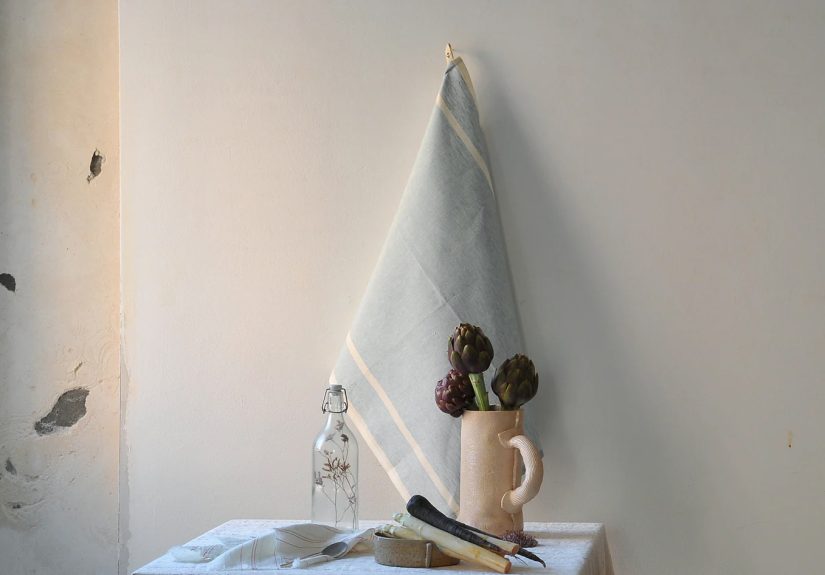
The best home still lifes feel collected rather than purchased in one panicked afternoon. Mix smooth and rough textures. Pair old with new. Use height variation. Leave breathing room. A ceramic pitcher, a small framed drawing, a stack of linen napkins, and a bowl of figs can create more atmosphere than a dozen generic decorations yelling “FARMHOUSE” in distressed lettering.
Still life styling also pairs beautifully with current interior trends: warm palettes, expressive stone, saturated millwork, organic curves, handcraft, and personal collections. The most interesting rooms now tend to feel layered and specific. They are not trying to look like everyone else’s saved folder. They have their own pulse.
How to Create a Modern Still Life at Home
1. Start With One Anchor Object
Choose one object with presence: a vase, bowl, lamp, sculpture, framed artwork, stack of books, or unusually charismatic vegetable. This anchor gives the arrangement a center of gravity. Without it, your vignette may look like a group project where nobody read the instructions.
2. Add Contrast
Still life loves contrast. Combine matte and glossy, soft and hard, tall and short, round and angular, natural and manmade. Try a glass vase beside a rough clay bowl, or a polished brass candlestick near a frayed linen runner. Contrast makes the eye linger.
3. Use Odd Numbers, But Do Not Become a Math Prisoner
Groups of three, five, or seven often feel natural because they create rhythm without perfect symmetry. But rules are tools, not tiny decorative dictators. If four objects look fantastic together, let them live. The still life police are not coming.
4. Think About Light
Light is the secret sauce. Morning light gives still life a gentle, hopeful feeling. Late afternoon light adds drama. Side light reveals texture. Overhead light can be harsh, although it does make fruit look like it is being interrogated. Place your arrangement near a window and observe how it changes throughout the day.
5. Let Something Be Imperfect
A perfect still life can look sterile. A bruised pear, a folded newspaper, a fading flower, or a slightly uneven stack of books adds humanity. Imperfection gives the scene life. The goal is not showroom perfection; it is believable beauty.
Objects That Make Excellent Still Life Subjects
Some objects are natural performers. Fruit is classic for a reason: lemons, pears, figs, peaches, pomegranates, and apples bring color, shape, and symbolism. Flowers add movement and fragility. Ceramics bring texture and shadow. Books suggest intellect, leisure, or the noble fantasy that you will finish all twelve on your nightstand.
Other strong still life subjects include shells, candles, glassware, woven baskets, antique tools, stationery, textiles, mirrors, jewelry, stones, branches, herbs, bread, tea cups, seed pods, and small sculptures. The most compelling objects usually have one of three qualities: beautiful form, personal meaning, or visible evidence of use. A pristine vase is nice. A vase inherited from your grandmother, with a hairline crack and a story attached, is better.
The Emotional Power of Ordinary Things
Still life matters because objects hold memory. A bowl is not just a bowl if it belonged to your first apartment. A recipe card is not just paper if it carries someone’s handwriting. A stone is not just a stone if you picked it up on a trip when you were trying to become a different version of yourself. Still life gives those objects a stage.
That is why the genre feels so intimate. Portraits show faces. Landscapes show places. Still lifes show the things we keep near us. They reveal appetite, ritual, ambition, grief, care, humor, and taste. Sometimes they reveal that we own too many candles, but nobody needs that kind of negativity.
Current Obsessions: Still Life as a Lifestyle Lens
To be obsessed with still life right now is not necessarily to become a painter or art historian. It is to notice composition in daily life. The breakfast plate. The hallway hook. The desk after a long workday. The garden clippings in a jar. The stack of mail beside a single heroic mug. Still life encourages us to look before we edit, to arrange before we replace, and to appreciate before we consume more.
It also creates a refreshing antidote to trend fatigue. Instead of chasing every new micro-aesthetic, you can curate from your own world. Your still life might be rustic, modern, maximalist, minimalist, coastal, academic, romantic, or completely unclassifiable. The point is not to match a label. The point is to build a small scene that feels honest.
A 500-Word Experience: Living With Still Life Every Day
My favorite way to understand still life is not in a museum, although museums are wonderful places to remember that humans have been dramatic about fruit for centuries. It is at home, in those tiny moments when ordinary objects suddenly arrange themselves into something worth noticing. The first time I became truly aware of it, I was not trying to be artistic. I was cleaning the kitchen, which is to say I was moving clutter from one surface to another with great purpose and limited success.
On the table sat a chipped white bowl, three lemons, a wooden spoon, and a folded blue dish towel. The afternoon light came through the window at an angle that made everything look more intelligent than it had any right to look. The lemons glowed. The spoon cast a long shadow. The towel looked painterly, which was impressive because ten minutes earlier it had been used to rescue coffee from the counter. Nothing in the arrangement was expensive. Nothing had been styled. But for a few seconds, the table looked like it was quietly saying, “Pay attention.”
That is the experience still life offers. It turns attention into atmosphere. Once you begin seeing it, you see it everywhere. A bedside table with a paperback, reading glasses, and a half-full water glass becomes a portrait of a night. A windowsill with basil, scissors, and a cracked terracotta pot becomes a small gardening memoir. A bathroom shelf with soap, a linen towel, and a shell from last summer becomes a vacation you can visit while brushing your teeth.
I started making small still lifes intentionally after that. Not elaborate ones. No velvet curtains. No pheasants. No skulls, though I respect the old masters and their commitment to emotional clarity. I began with what was already around: a candle, a matchbox, a vase, a stone, a tiny dish for keys. I learned quickly that still life is less about owning beautiful things and more about seeing relationships between things. A dark object can ground a pale arrangement. A shiny object can wake up a matte one. A living stem can soften a hard edge. Empty space is not wasted space; it is where the arrangement breathes.
The biggest surprise was how calming the practice became. Arranging objects slowed me down. It made me notice dust, yes, but also texture, shadow, proportion, and memory. It made me rotate flowers before they collapsed completely, move books to where I would actually read them, and keep sentimental objects visible instead of buried in drawers. A still life is a gentle form of housekeeping for the eye and the mind.
Now, when a room feels flat, I do not immediately think, “I need to buy something.” I think, “What needs to be seen differently?” Sometimes the answer is a bowl of oranges. Sometimes it is a framed postcard leaning against a stack of books. Sometimes it is removing three objects so one can finally speak. Still life teaches that beauty is often not missing. It is merely waiting to be arranged.
Conclusion: Still Life Is Not Still at All
Still life may be built from unmoving objects, but the genre itself is alive, adaptable, and surprisingly modern. It carries centuries of art history while fitting perfectly into today’s homes, photographs, shelves, and rituals. It can be symbolic or simple, polished or imperfect, museum-worthy or made from whatever is currently on your breakfast table.
The renewed obsession with still life reflects a larger cultural desire for slower looking, meaningful objects, tactile spaces, and personal style. It reminds us that beauty does not always require spectacle. Sometimes it requires a pear, a shadow, a ceramic bowl, and enough attention to notice that the ordinary has been quietly magnificent all along.