Table of Contents >> Show >> Hide
- Why Your Colorwork Curls (and How DBJ Fixes It)
- What “Hacked Knitting Machine” Means (In Normal-Human Terms)
- Project Overview: What You’re Making
- Tools and Materials You’ll Want on Hand
- Pattern Prep: Turning Pixels into Stitches
- Machine Setup: The Not-So-Glamorous Part That Makes Everything Work
- Software Setup: AYAB and the “Tell the Needles What to Do” Moment
- Knitting the Scarf: A Workflow That Stays Sane
- Finishing: Clean Edges Without Tears
- Troubleshooting and Pro Tips
- Design Variations That Keep This Project Addictive
- Hands-On Experience: What Making This Scarf Feels Like (The Extra )
- Conclusion
If you’ve ever machine-knit a gorgeous color patternonly to watch the edges curl up like a snack chip with ambitionyou’ve met the
classic stockinette problem. It’s not your yarn being dramatic. It’s physics doing its thing. The good news: you can absolutely make a
color-patterned scarf that lies flat, looks tidy on both sides, and still lets you “print” designs from a computer like you’re running a
tiny yarn-based newspaper press.
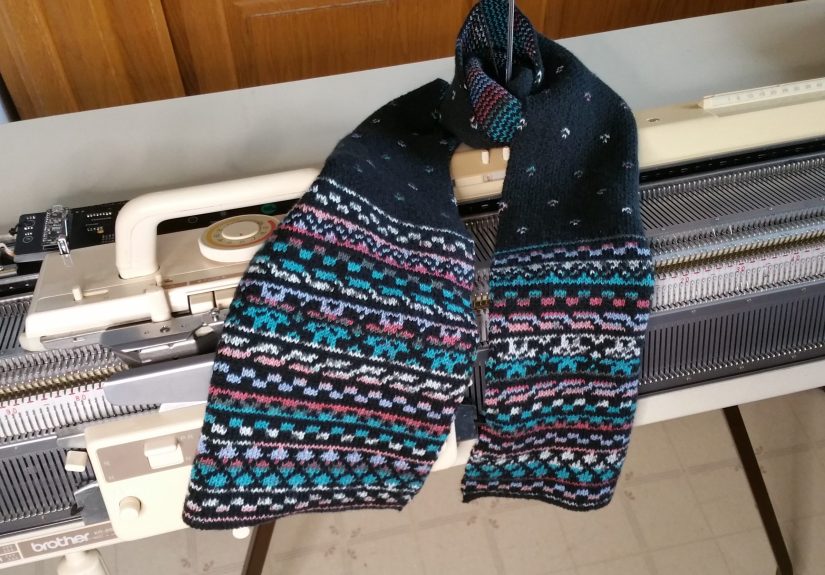
This guide walks through how makers create a double bed jacquard (DBJ) scarf using a hacked knitting machine
setup (often the open-source AYAB interface on certain Brother machines). We’ll cover the “why” behind DBJ, the “how” of
turning pixels into stitches, and the “please don’t throw the carriage out the window” troubleshooting that makes the difference between
a showpiece scarf and a pile of colorful regret.
Why Your Colorwork Curls (and How DBJ Fixes It)
Single-bed stockinette naturally curls because the knit structure pulls differently on each side. That’s manageable for sweaters or wall
hangings, but a scarf that behaves like a phone charger cable is not the vibe. Double bed jacquard solves this by using
both the main bed and the ribber bed to create a thicker, balanced fabric that lays flat. Bonus: DBJ tucks the “floats” (those long
strands that normally hang out on the back of colorwork) into the structure so both sides look neat and wearable.
Think of DBJ as “double knitting’s machine-knitting cousin”: warmer, more stable, and far more polite about edges.
What “Hacked Knitting Machine” Means (In Normal-Human Terms)
Many vintage electronic knitting machines were designed around proprietary pattern input methodslike scanned picture cards or external
disk drives. “Hacking” in this context usually means replacing or bypassing those old inputs with modern hardware and software so you can
load designs from a computer. The popular approach for certain Brother models is AYAB (All Yarns Are Beautiful), an open
hardware/software project that lets a computer control needle selection for patterning.
Other well-known approaches exist too, including floppy-drive emulation workflows for machines that saved patterns to external drives.
The big idea is the same: stop entering pixels by hand, and start sending patterns digitallybecause your time is valuable and your
patience deserves health insurance.
Project Overview: What You’re Making
The classic Make:-style build is a long, narrow scarf knit in DBJ, usually about 7.5 inches wide and roughly
59 inches long for a full-length version (dimensions vary by pattern and row count). A popular two-yarn version uses a
black yarn plus a variegated yarn to create a multi-color effect without needing extra feeders for every shade. A
three-yarn version can create high-contrast motifs like leopard-style patterning by swapping yarns during the workflow.
Difficulty, Cost, and Time (Reality Check)
- Difficulty: Moderate (translation: doable, but not “I’ll just wing it”)
- Cost: Often low if you already have the machine/ribber; yarn and small extras are usually the main spend
- Time: Expect a long session arcsetups, swatches, knitting, and finishing add up
Tools and Materials You’ll Want on Hand
Knitting Setup
- Knitting machine + ribber capable of DBJ (common example: Brother main bed with KR-series ribber)
- Color changer (helpful for smooth yarn switching; not strictly required for all workflows)
- Weights and cast-on comb for stable tension
- Fine knit bar (optional but often helpful for clean stitch formation)
Hacked Pattern Input (Common Options)
- AYAB interface (hardware + software) for supported Brother models
- Computer with reliable USB/serial connection and sleep disabled (yes, really)
Yarn
- Two-color version: One solid “background” yarn + one contrast yarn (variegated yarn is a fun cheat code)
- Three-color version: Light/medium/dark palette that stays distinct at a glance
- Waste yarn for finishing steps and clean edges
DBJ tends to behave best with yarns that feed smoothly and aren’t too thick, because you’re knitting a denser structure across two beds.
If you’re new to DBJ, choose yarns you can easily see (high contrast) so diagnosing issues is less like solving a mystery in a foggy room.
Pattern Prep: Turning Pixels into Stitches
The modern magic trick is that many hacked workflows accept a simple image file where
one pixel equals one stitch. For two colors, it’s often a black-and-white PNG. For three colors, the software may map
shades or indexed colors to yarn slots. Either way, your pattern design process becomes a blend of knitting logic and pixel art.
Start with a Scarf-Friendly Design
- Repeatable motifs: Great for scarves because they hide small tension variations
- High-contrast shapes: Easier to read in knitted form than tiny details
- Mind the width: Choose a stitch width that fits your needle selection comfortably
The Variegated Yarn Trick (Two Yarns, Many Colors)
One of the most satisfying “maker hacks” is using a variegated yarn as your contrast yarn. The pattern stays two-color in structure, but
your contrast areas shift colors automatically as the yarn changes along the length. The result looks like intentional complexity, while
you smugly know it’s just clever yarn selection.
Image Processing Tips That Actually Matter
- Keep edges bold: Fine lines can disappear in knit texture
- Use dithering carefully: It can create shading, but too much turns into visual “static”
- Test a small swatch first: Screens lie; stitches don’t
Machine Setup: The Not-So-Glamorous Part That Makes Everything Work
DBJ is one of those techniques where success comes from setup discipline. It’s not about being “gifted.” It’s about being stubbornly
consistent with beds, needle ranges, and tension. The general flow is: set up the machine and ribber, thread yarns, configure software,
cast on in a way that supports double-bed fabric, then start the patterned rows.
Needle Selection and Centering
For a scarf, you’ll select a moderate-width needle range so the fabric is wearable and stable on the beds. Centering the design avoids
weird edge stress and makes finishing cleaner. If your workflow uses software that references needle numbers (or color-coded needle zones),
choose a range that keeps the pattern centered and leaves margin on both sides.
Cast-On: Full Needle Rib as a Foundation
DBJ often starts from a cast-on related to full needle rib or a tubular/circular approach, because it creates a sturdy edge and aligns
both beds for the double-layer structure. Many knitters set the ribber to half pitch so needles from each bed interleave
properly without colliding. You’ll typically begin with tighter tension and gradually work up to your target settings over the first rows
to avoid flare at the edge.
Software Setup: AYAB and the “Tell the Needles What to Do” Moment
With AYAB-style workflows, you generally load your image file, select a knitting mode appropriate for ribber/DBJ patterning, pick the
number of colors, and confirm starting row and needle range. For two-color DBJ, you can often supply a black-and-white pattern image just
like you would for single-bed Fair Isle, and the software handles color separation and needle selection.
Practical tip: disable computer sleep and anything that might interrupt USB/serial communication. Nothing says “handmade”
like a scarf that ends abruptly because your laptop decided it deserved a nap.
Knitting the Scarf: A Workflow That Stays Sane
Step 1: Swatch Like You Mean It
Before committing to a full scarf length, knit a small samplelong enough to remove from the machine, relax, and measure. DBJ fabric
behaves differently than single bed stockinette; it’s thicker, often tighter, and can need tension adjustments on each bed. Swatching is
how you avoid knitting an entire scarf that feels like cardboard armor.
Step 2: Establish Stable Fabric Before the Long Run
After cast-on, knit a few setup rows so the fabric hangs cleanly with weights and the stitch formation looks consistent. Check for
dropped stitches, tucks where you expected knits, and uneven edge behavior. Fix problems earlybecause they multiply with every row.
Step 3: Run the Patterned Rows
Once the software and machine are synchronized, you’ll knit through the design row by row. Many systems provide audible cues or on-screen
prompts for changes (especially when finishing a full-length image). Keep an eye on:
- Yarn feed: smooth, untangled, and seated in the correct slot
- Carriage travel: steady speed helps consistent stitches
- Needle action: latches open, no bent needles, no “mystery resistance”
Three-Color DBJ: How It Usually Works in Practice
Most domestic machines knit with two yarns per pass, so three-color DBJ generally means you’re swapping one yarn in and out between
segments or passes according to the method your software and machine support. A color changer (or extra mast setup) makes this much more
manageable. The biggest lesson: be consistent with which yarn corresponds to which tone, and label everything like you’re
running a tiny textile lab.
Finishing: Clean Edges Without Tears
DBJ scarves often finish beautifully when you close the open end in a way that matches the cast-on edge. Common approaches include:
Option A: Grafting (Kitchener-Style Closing)
Grafting can make the end look nearly identical to the start, creating a seamless “tube-like” finish. It takes patience: you work stitch
by stitch, snugging periodically so the tension matches your knitted rows. It’s slowbut the result looks impressively intentional.
Option B: Three-Needle Bind Off (Hand Finish)
If grafting feels like performing surgery on yarn, a three-needle bind off is a solid alternative. It creates a slightly more structured
ridge, but it’s straightforward and sturdy.
Option C: Single-Bed Join + Bind Off
Another approach is to transfer stitches so you can join and bind off in a simplified way, especially if you prefer to minimize hand
sewing. The goal is always the same: prevent the end from flaring, keep the fabric flat, and avoid a finish that looks like it lost a
wrestling match with your needle.
Troubleshooting and Pro Tips
Problem: The Carriage Feels Like It’s Pushing Through Concrete
- DBJ is densetry slightly looser tension (in small increments)
- Check yarn thickness; overly heavy yarns can be miserable in full needle rib DBJ
- Confirm half-pitch alignment and that beds aren’t colliding
Problem: Random Tucks or Mis-Knits
- Make sure the yarn is feeding smoothly (no snagging at the mast or changer)
- Consider a fine knit bar if your machine supports it
- Slow down and watch needle latchesspeed hides small issues until they’re big issues
Problem: Pattern Looks “Shifted”
- Recheck centering and needle range selection
- Confirm your image width matches your stitch count exactly
- Make sure you started on the intended row and the software/machine synced correctly
Design Variations That Keep This Project Addictive
Once you’ve made one scarf, it gets hard not to make five more. Some ideas that work well with hacked patterning:
- “Faux Isle” motifs: traditional-looking repeats with modern color palettes
- High-contrast graphics: bold geometric patterns that read cleanly at a distance
- Photo-based designs: simplified, dithered images for a woven-poster vibe
- Text or banners: pixel fonts translate beautifully to stitch grids
The key is to respect the medium: knitting is low-resolution compared to screens, but it has texture, depth, and warmth that pixels can’t
fake. Design for stitches, not for monitors.
Hands-On Experience: What Making This Scarf Feels Like (The Extra )
The first time you run a hacked knitting setup for a long scarf, it feels a little like hosting a dinner party where your guests are
yarn cones, a laptop, and a machine that was engineered decades ago. Everything can behave beautifully… until one tiny detail decides to
improvise. That’s not meant to scare youit’s meant to prepare you for the real “maker experience,” which is mostly: observe, adjust,
repeat, and occasionally laugh at yourself.
Early on, the biggest emotional win is simply watching the machine select needles in a pattern you designed. You load a black-and-white
PNG, click Knit, and suddenly your scarf is no longer “random stripes I can do half-asleep.” It’s a deliberate graphic. That moment tends
to flip a switch in your brain: you stop thinking of the knitting machine as a craft tool and start thinking of it as a printer that
happens to use yarnand requires you to be the motor.
Swatching becomes your best friend. Not glamorous, but wildly empowering. A short sample teaches you how your yarn behaves in DBJ: whether
it wants more slack, whether the ribber bed needs a different setting than the main bed, and whether your contrast yarn is going to look
bold or muddy once knitted. People often underestimate how much a yarn’s finish matters here. A shiny synthetic can make motifs pop; a
fuzzy wool can soften edges and turn crisp pixels into watercolor. Neither is “wrong,” but the result is differentand it’s better to
learn that on six inches than sixty inches.
During the long knit, the rhythm becomes almost meditative: pass the carriage, check the yarn path, listen for cues, glance at the
software, repeat. You start noticing small thingslike how a slight change in pulling speed can affect stitch consistency, or how a
variegated yarn creates surprising color moments that look planned even when they weren’t. This is where the project gets fun: your scarf
becomes a collaboration between your pattern file and the yarn’s own color journey.
The “oops” moments tend to be predictable. A cone snags. A mast guide slips. The carriage feels heavier and you realize a latch is half
closed on a needle that’s been quietly plotting against you. The trick is to pause early, not late. Makers who enjoy this project long
term usually adopt a calm habit: every few rows, take a breath, scan the needles, and confirm the yarn is feeding cleanly. It feels slow
at first, but it’s faster than ripping back a section of dense DBJ fabric.
Finishing is where you learn patience in a new language. Closing the end neatly (especially with grafting) is the final “professional
touch” that makes the scarf look store-quality. It’s also the point where many people discover they’ve been knitting slightly tighter
than they sew. The fix is simple: work a few stitches, snug gently, compare to the knitted tension, and keep going. The best part is the
revealwhen you remove the waste yarn and the edge suddenly looks clean, symmetrical, and intentional. At that moment, you’ll forget the
fiddly bits and start planning your next pattern. That’s how they get you.
Conclusion
A color-patterned scarf made with a hacked knitting machine is equal parts textile craft and playful engineering. Double bed jacquard
delivers the flat, polished fabric you want for scarves, while modern pattern input (like AYAB-style workflows) turns your machine into a
pixel-to-stitch translator. Start with a bold pattern, swatch carefully, keep your setup stable, and treat finishing as the final design
stepnot an afterthought. Once you’ve nailed one scarf, you’ll have the skills to knit hats, panels, and all kinds of “yarn graphics”
that look far more complicated than they actually are.