Table of Contents >> Show >> Hide
- What the Chase Freedom® Student Card Offered
- Is the Chase Freedom® Student Card Still Available?
- What Replaced It in Spirit: Chase Freedom Rise®
- Who the Freedom Student Card Was Best For
- Where the Freedom Student Card Fell Short
- Best Alternatives for Students in 2026
- How to Actually Use a Student Card the Smart Way
- Final Verdict
- Extended Experiences and Practical Scenarios (500+ Words)
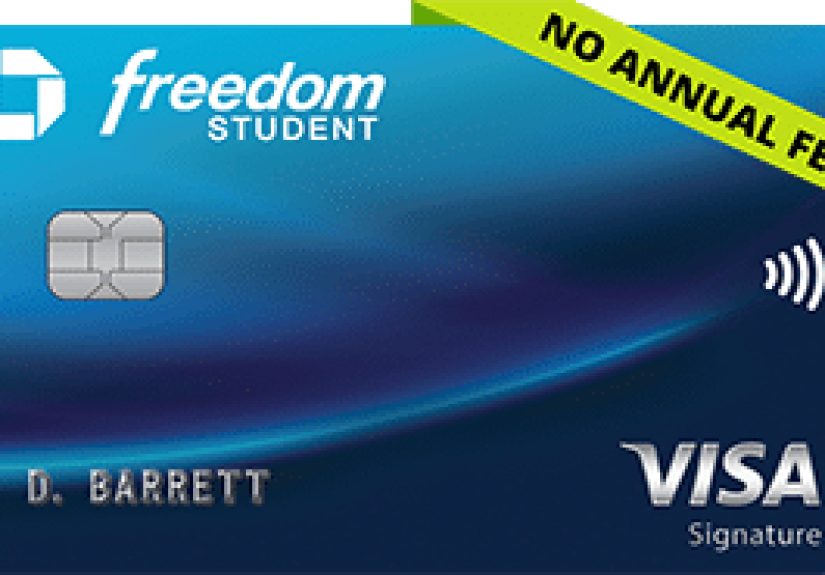
If you’ve been shopping for a student credit card, you’ve probably seen older reviews for the Chase Freedom® Student and thought, “Nice 1% cash back, no annual fee, and a little bonus for being responsible? That sounds… suspiciously adult.” You’re not wrong. It was a simple, beginner-friendly option with a few surprisingly decent perks.
But here’s the important plot twist: the Chase Freedom Student is now more of a “greatest hits” card than a current one. In other words, many reviews still exist (including the Money Crashers angle), but Chase now points students and people new to credit toward the Chase Freedom Rise® instead. So this review does two jobs: it breaks down what made the Freedom Student card appealing, and it explains whether that 1% cash back setup still makes sense compared with what students can get now.
If you want the short version before we dive in: the Freedom Student card was a solid credit-building card with predictable rewards, but it was never the most generous earner. It worked best for students who wanted a simple “starter card” and could benefit from its good-standing bonus and credit-building features. In today’s market, though, there are stronger student and beginner cards that offer higher flat-rate cash back or richer bonus categories.
What the Chase Freedom® Student Card Offered
At its core, the Chase Freedom Student card was built for one thing: helping students start a credit history without making rewards complicated. No spinning wheels. No category calendars taped to your dorm wall. Just a flat reward rate and a few incentives to develop good habits.
Core Features That Made It Popular
- 1% cash back on most purchases (simple and predictable)
- No annual fee (which is basically the minimum standard for student cards now, but still important)
- $50 welcome bonus after a qualifying first purchase (historically a nice touch for a student card)
- $20 annual good-standing bonus for up to five years
- Potential credit limit increase after making on-time payments
That “good-standing” bonus is really what gave the card personality. Plenty of starter cards say, “Please behave responsibly.” The Freedom Student card actually said, “Please behave responsibly, and here’s $20.” It wasn’t life-changing money, but for a student budget, that can cover a week of coffee runs or part of a textbook bill.
The Big Catch
The trade-off was the earning rate. A flat 1% cash back is easy to understand, but it’s not especially competitive anymore. Several student-focused cards now offer 1.5% cash back on everything or 5% cash back in rotating categories (with activation), which can beat Freedom Student pretty quickly if you spend even modestly each month.
There was also a foreign transaction fee on the Freedom Student card, which made it a weaker choice for study-abroad students or anyone who makes international purchases. That may not matter if your world is “campus, grocery store, campus again,” but it matters a lot once passports and semester exchanges enter the chat.
Is the Chase Freedom® Student Card Still Available?
In practice, this is now a legacy review topic. Current credit card listings and major review sites note that the Freedom Student card is no longer available, and Chase’s own education content now states that Chase does not currently offer student credit cards. Instead, Chase steers students to cards designed for people who are new to credit, especially the Chase Freedom Rise®.
That matters because many articles (including older reviews) describe the Freedom Student as if you can still click “Apply” today. If you’re reading those pages for research, great. If you’re trying to apply right now, you’ll want to focus on current options.
What Replaced It in Spirit: Chase Freedom Rise®
If Freedom Student was the old “starter deck,” Freedom Rise is the updated expansion pack. It’s not labeled a student card, but Chase clearly positions it for students and people new to credit. And in several ways, it improves on the old Freedom Student formula.
Why Freedom Rise Is More Competitive
- 1.5% cash back on all purchases instead of 1%
- $0 annual fee
- $25 statement credit for enrolling in automatic payments (with conditions)
- Automatic annual evaluation for upgrade to Chase Freedom Unlimited®
- Approval boost possibility if you have at least $250 in Chase checking or savings
That last point is especially interesting. Chase explicitly notes that having at least $250 in a Chase checking or savings account can improve your approval chances. For students with little or no credit history, that’s a practical tip and it gives you something actionable beyond “have a good score,” which is not exactly helpful when you’re new to credit and your score is basically a mystery wrapped in a PDF.
Who the Freedom Student Card Was Best For
Even though it’s not the current application path, the Freedom Student card is still worth reviewing because it reflects what many students actually need from a first card:
1) Students Who Wanted a Simple Cash-Back Setup
The Freedom Student card didn’t require category strategy. If you spend $1, you get 1 cent back. That simplicity is underrated for first-time cardholders who are more focused on learning how billing cycles, due dates, and statement balances work than on optimizing points.
2) Students Focused on Building Credit, Not Maximizing Rewards
The card’s good-standing bonus and potential credit limit increase encouraged the right behavior: pay on time, keep the account open, and avoid mistakes. For a first credit card, that’s often more valuable than squeezing an extra 0.5% cash back out of pizza and streaming subscriptions.
3) Students Already Interested in Chase’s Ecosystem
Chase has long been attractive because of its broader ecosystem (cash back cards, travel cards, banking, and credit score tools). Starting with a beginner-friendly Chase card could make sense if you planned to eventually graduate to a stronger Chase card later.
Where the Freedom Student Card Fell Short
Let’s be honest: the Freedom Student card was a decent starter, but it wasn’t a rewards powerhouse. Money Crashers and other reviewers have pointed out the same core drawbacks, and they still hold up in 2026.
1) The 1% Cash Back Rate Is Thin
Flat-rate 1% cash back is fine. It is not exciting. It’s the plain bagel of rewards structures.
Here’s a quick example:
- If you spend $500/month, that’s $6,000/year.
- At 1% cash back, you earn $60/year.
- At 1.5% cash back, you earn $90/year.
That’s a $30 difference every year just from choosing a higher flat-rate card. The Freedom Student card’s $20 good-standing reward helped narrow that gap, but only if you qualified and only during the first five years.
2) Foreign Transaction Fee Was a Problem
For students who study abroad or buy from international websites, a foreign transaction fee can quietly eat into your rewards. That’s one reason many reviewers suggested looking at alternatives if international spending was even occasionally on the menu.
3) It Required Stronger Credit Than Some Students Had
One unusual downside noted by reviewers: Freedom Student wasn’t always as accessible as some beginner cards. In plain English, some students with limited or thin credit profiles could have a harder time qualifying than they would with more forgiving student or “new to credit” cards.
Best Alternatives for Students in 2026
If you like the idea of the Freedom Student card but want current options, these are the types of cards worth comparing now:
Chase Freedom Rise®
This is the natural Chase replacement for most students. It offers 1.5% cash back on all purchases, a $25 automatic-pay enrollment bonus, and a clear upgrade path if you build a good payment history. It’s a better match for today’s market than the old 1% setup.
Discover it® Student Cash Back
If you don’t mind a little more effort, Discover’s student cash back card can be much more rewarding. It offers rotating 5% categories (with activation), 1% on other purchases, and Discover’s Cashback Match at the end of the first year. It also keeps the no-annual-fee standard, which is exactly what you want on a first card.
Capital One Quicksilver Rewards for Students
If your goal is “simple, but better,” Quicksilver Student is a strong fit. It offers 1.5% cash back on every purchase, a $0 annual fee, and a small cash bonus for new cardholders. It also markets pre-approval tools that can help students check their odds without risking a hard inquiry upfront.
Bank of America Student Credit Cards
Bank of America also offers student-focused cards designed to help establish credit and build good habits, with options that lean toward cash rewards, travel rewards, or lower interest features depending on what you care about most.
How to Actually Use a Student Card the Smart Way
Whether you choose a Chase beginner card, Discover, Capital One, or another issuer, your first card’s real job is not “buy stuff.” It’s “build trust with the credit system without paying interest.” Glamorous? No. Effective? Very.
1) Pay on Time Every Time
This is the non-negotiable rule. Payment history is the biggest factor in FICO scoring, so a single late payment matters more than most beginners realize. If you remember only one thing from this review, let it be this: set up autopay and then still check your account manually like a responsible detective.
2) Keep Utilization Low
Credit utilization is how much of your available credit you’re using. A common rule of thumb is to keep it under 30%, and lower is better.
Example: If your first card has a $500 limit, try to keep your balance under $150 before the statement closes. Want to be extra careful? Aim for $50 to stay near 10%.
This is where a higher credit limit can help. Freedom Student’s old “on-time payments can lead to a limit increase” feature was valuable because a bigger limit makes it easier to keep utilization low without changing your spending much.
3) Pay in Full If You Can
Rewards are fun. Interest is not. If you carry a balance and pay interest, you can wipe out your cash back fast. A card earning 1% or 1.5% cash back becomes a bad deal if you’re paying double-digit interest on revolving balances.
4) Check Your Credit Reports Regularly
Students are often so focused on scores that they ignore the reports behind them. That’s backwards. Review your credit reports regularly to catch errors, fraud, or weird accounts you don’t recognize. Free weekly online reports are available, and checking them is one of the easiest “adulting” wins you can get.
5) Understand the Under-21 Rules
If you’re under 21, issuers apply ability-to-pay rules when reviewing your application. In plain English, you may need to show qualifying income (or meet other requirements) instead of just listing household money you can’t reliably access. If approval is a problem, alternatives like secured cards or authorized-user status may be a smarter on-ramp.
Final Verdict
The Chase Freedom® Student Credit Card was a respectable starter card in its day. It had a clear mission help students build credit while earning simple rewards and it did that well enough. The no-annual-fee setup, $20 annual good-standing bonus, and potential credit limit increase made it feel more thoughtful than many “starter” products.
But the card’s biggest weakness was always the same: 1% cash back is just not that competitive. And now that the card is effectively off the table for new applicants, the review is most useful as a benchmark for what students should look for today: no annual fee, at least 1.5% flat cash back (or better category rewards), credit-building tools, and a realistic approval path.
If you want to stay in the Chase family, Freedom Rise is the current card to watch. If you want stronger category rewards or other features, Discover and Capital One offer compelling student-friendly options. Either way, the “best” first credit card is the one you can qualify for, use responsibly, and keep in good standing while your credit history grows up alongside you.
Extended Experiences and Practical Scenarios (500+ Words)
To make this review more useful than a simple feature list, let’s talk about the real-world experience of using a card like the Chase Freedom Student and why so many students liked it even when the rewards were only 1%.
Picture a first-year college student moving into a dorm with a tiny mini-fridge, a big tuition bill, and a budget that changes every week. They’re not trying to “optimize rewards strategy” like a points blogger. They just need a card for groceries, textbooks, and the occasional ride across town. In that situation, the Freedom Student card made sense because it was predictable. Every purchase earned the same rate, and the rules were easy to remember. For a beginner, that simplicity reduces mistakes.
Another common experience: students who got their first card and immediately learned that the credit limit is the real boss. Let’s say your limit is $500. You spend $220 on books, $90 on groceries, and $60 on a weekend trip. Suddenly you’re at $370, which is 74% utilization. You may still plan to pay in full and that’s great but if the balance reports before you pay it off, it can still affect your credit profile. This is exactly why the Freedom Student card’s potential credit limit increase after on-time payments felt like a meaningful perk. It wasn’t just “more spending room”; it helped students manage utilization more comfortably.
There’s also the psychology factor. The annual $20 good-standing bonus was small, but it was smart. Students often respond better to visible rewards than abstract lectures about credit scores. “Keep the account in good standing and get a bonus” is clear, motivating, and easy to track. That kind of feature can reinforce the habit loop: use card responsibly → pay on time → get rewarded → repeat. It’s not flashy, but it’s effective behavioral design.
On the flip side, some students quickly outgrew the card. This usually happened in year two or three when they started spending more and noticed that 1% cash back was lagging behind friends with 1.5% flat-rate cards or 5% rotating-category cards. The difference doesn’t look dramatic on paper, but over a full year it adds up. If you spend $8,000 annually, the gap between 1% and 1.5% is $40. Add better intro offers from competing cards, and the Freedom Student card starts to feel like a “training wheels” option rather than a long-term keeper.
Study-abroad students had another pain point: foreign transaction fees. Even if your spending overseas is modest, a fee on every international purchase can quietly erase the value of your rewards. Students planning a semester abroad often discovered this too late right around the time they bought a flight, booked lodging, or started tapping their card for coffee in another country. That’s one reason current student card comparisons now pay much more attention to foreign transaction fees than older beginner reviews used to.
One more real-world scenario worth mentioning: students who applied and got denied because they assumed “student card” meant “automatic approval.” It doesn’t. Approval still depends on the issuer’s underwriting, your income, your credit profile (if any), and ability-to-pay rules. In those cases, the better move was often to try a different beginner card, open a checking account relationship first, or start with a secured card. That’s also why Chase’s current messaging around Freedom Rise is more practical it gives newcomers concrete ways to improve approval odds instead of just listing benefits.
So the overall experience lesson is this: the Freedom Student card was never the highest-earning student card, but it was a useful starter for people who needed structure and a gentle path into credit. Today, students should take that same mindset simple, low-cost, credit-building focused and apply it to the current options that offer stronger rewards and more modern features.