Table of Contents >> Show >> Hide
- The short answer (without the drama)
- Why cartilage piercings (helix, conch, tragus) can feel “headache-y”
- How a piercing can trigger different types of headaches
- Helix vs. other piercings: which ones are most likely to “talk to your head”?
- The daith piercing migraine myth (a respectful reality check)
- What’s normal after a helix/cartilage piercing (and what’s not)
- How to reduce headache risk (without becoming a hermit)
- When to talk to a piercer vs. a clinician
- FAQ: quick answers people actually want
- Real-Life Piercing + Headache Experiences (and What They Teach You)
- Conclusion
Quick confession: your ear is not a quiet roommate. Give it a new piece of metal and it may throw a tiny, dramatic house partycomplete with swelling, tenderness, and (sometimes) a headache you didn’t RSVP for.
So, can piercings give you headaches? Yesespecially in the early days, and especially with cartilage piercings like a helix, conch, tragus, or industrial. But it’s usually an indirect connection: soreness, inflammation, pressure, sleep disruption, or irritation can nudge your head into “nope” territory. Rarely, a headache can be a clue that something is wrong (infection, allergic reaction, or pressure-related irritation) and you should take it seriously.
This guide breaks down the most common ways ear piercings and headaches overlap, what’s normal, what’s not, and how to keep your helix from acting like it pays rent in your skull.
The short answer (without the drama)
Most people do not get ongoing headaches from piercings. If you do, it’s typically temporaryright after the piercing, during swelling, or when something keeps bumping it (hello, headphones and hairbrushes).
That said, a piercing can contribute to headaches when it triggers one of these “headache ingredients”:
- Pain + stress response (your nervous system gets spicy)
- Inflammation (especially in cartilage)
- Pressure (sleeping on it, tight jewelry, helmets, headphones)
- Sleep disruption (a very underrated migraine/tension trigger)
- Skin irritation or allergic reaction (often nickel-related)
- Infection (more likely with cartilage than earlobes)
Why cartilage piercings (helix, conch, tragus) can feel “headache-y”
Cartilage piercings are famous for being cute and cranky. Compared with a lobe piercing, cartilage tends to:
- Swell more and stay tender longer
- Get irritated easily from pressure and snags
- Heal more slowly (which means more time to get annoyed by everyday life)
Now add the fact that your ear is wired with sensory nerves that communicate with areas near the jaw, neck, and temple. When the ear is inflamed or pressured, some people experience referred painmeaning the discomfort feels like it spreads beyond the ear. That can show up as a temple ache, a tight jaw, or a “headband” sensation that resembles a tension headache.
Helix piercing + headache: the most common patterns
If a helix piercing is going to trigger a headache, it usually happens in one of these scenarios:
- Day 1–3 throbbing: normal post-piercing tenderness + adrenaline crash
- Pressure headaches: sleeping on the piercing, resting your head on your hand, tight beanies, helmets, or over-ear headphones
- “My hair hurts” migraine days: if you’re migraine-prone, any touchy area can feel extra intense
- Delayed irritation: the piercing was fine until you changed jewelry too soon, bumped it repeatedly, or started wearing heavy/poor-quality metal
How a piercing can trigger different types of headaches
1) Tension-type headaches (the “my scalp is wearing skinny jeans” feeling)
Tension headaches often come from muscle tightness and stress. A fresh piercing can contribute by:
- making you unconsciously clench your jaw or tense your neck
- making you avoid turning your head normally (hello, stiff neck)
- raising baseline stress because your ear is yelling every time you put on a shirt
Clue it’s tension-related: a dull, steady ache; tightness around forehead/temples; shoulders feel like they’re holding grudges.
2) Migraine (the “light hurts my feelings” headache)
If you get migraines, you already know your nervous system has a flair for the theatrical. During a migraine attack, some people experience allodyniapain from touch that normally wouldn’t hurt (like brushing hair, wearing glasses, or lying on a pillow). That means a tender helix or cartilage piercing can feel much worse during migraine days, and the irritation can pile onto the attack.
Clue it’s migraine-related: one-sided pounding; nausea; sensitivity to light/sound; touch sensitivity around the head/face.
3) Pressure headaches (a very fixable villain)
This is the simplest and most common piercing-headache connection: too much pressure for too long.
Common culprits:
- sleeping on the pierced side
- tight jewelry (post too short, swelling has no room)
- over-ear headphones or earbuds that press the cartilage
- motorcycle helmets, sports helmets, beanies, headbands
Clue it’s pressure-related: headache appears after wearing/doing the thing; improves when pressure stops; ear feels hot or extra swollen.
4) Headache from infection (rare, but don’t ignore it)
Most piercing irritation is not an infection. But cartilage infections can be more serious than lobe infections because cartilage has different blood supply dynamics and can be harder to treat when infection takes hold.
Signs that suggest infection rather than normal healing:
- increasing redness, warmth, swelling, or worsening pain (instead of gradual improvement)
- thick yellow/green discharge, foul smell, or persistent pus
- fever or feeling unwell
- the ear looks significantly inflamed, especially around cartilage
If you suspect infectionespecially in cartilagedon’t “tough it out.” Get medical guidance. An untreated cartilage infection can lead to complications you really don’t want starring in your mirror.
5) Headache from metal sensitivity or contact dermatitis
If your piercing itches like it’s trying to communicate in Morse code, and the skin looks rashy, scaly, or blistery, consider an allergic contact dermatitiscommonly triggered by nickel in jewelry. Irritated skin can lead to persistent discomfort, poor sleep, and that annoying low-grade headache that makes everything feel louder.
Clue it’s allergy-related: intense itching, rash, dry/peeling skin, symptoms that flare after switching jewelry, or irritation that doesn’t match your aftercare quality.
Helix vs. other piercings: which ones are most likely to “talk to your head”?
Everyone’s anatomy and pain sensitivity differ, but here’s the general vibe:
- Helix / forward helix: common pressure issues (pillows, hair, headphones) and swelling can create temple/side-of-head discomfort.
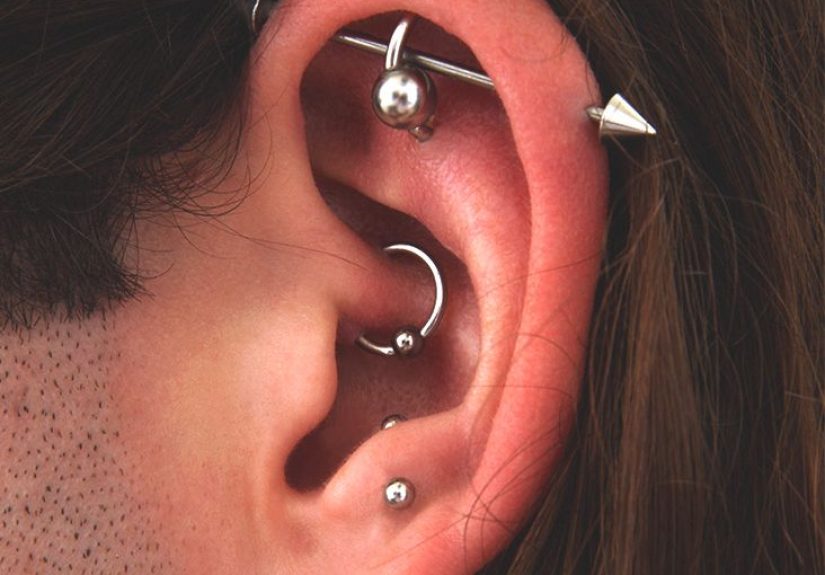
- Industrial: more surface area + two points of trauma = higher irritation potential; pressure and snagging are frequent.
- Tragus: earbuds can be a problem; chewing or jaw tension may feel more noticeable.
- Conch: over-ear headphones can press directly on it; swelling can make it feel “deep.”
- Daith: often discussed in migraine circles; evidence for migraine relief is weak and most support is anecdotal.
The daith piercing migraine myth (a respectful reality check)
The daith piercinga cartilage piercing through an inner ear foldgets marketed as a migraine “fix.” Some people report improvement, and their experience is real. But from a medical evidence standpoint, the story is shakier.
Major headache organizations have noted that any benefit is widely believed to be placebo for many people. There’s also a documented case report discussing daith piercing in chronic migraine context (which is interesting, but not the same as strong clinical proof). The practical takeaway:
- If you want a daith because you like the look, go for it (with a reputable piercer).
- If you want it solely to treat migraines, talk to a clinician who treats headache disorders and consider evidence-based options first.
What’s normal after a helix/cartilage piercing (and what’s not)
Normal (especially early on)
- mild to moderate soreness
- swelling and warmth that gradually improves
- tenderness when bumped
- clear or slightly yellowish crusting/lymph fluid (not thick pus)
- occasional “throb” after cleaning or accidental pressure
Not normal (get help)
- pain that keeps getting worse after the first few days
- spreading redness, significant heat, or worsening swelling
- thick yellow/green discharge, foul odor, or fever
- jewelry embedding into the skin
- severe headache plus systemic symptoms (seek urgent care)
How to reduce headache risk (without becoming a hermit)
Choose jewelry that doesn’t start a war
- Prefer high-quality materials (often implant-grade options) and avoid mystery metals.
- If you’re sensitive to jewelry, consider nickel-free choices and ask your piercer about material specs.
Use the “no pressure” sleep strategy
- Try a travel pillow so your ear sits in the hole like it’s on vacation.
- If you’re a side sleeper, rotate sides or adjust pillow height temporarily.
- If your headache is showing up in the morning, your pillow may be the real culprit.
Clean it like a grown-up (gentle, consistent, not aggressive)
- Use sterile saline (0.9% sodium chloride) and keep it simple.
- Avoid harsh products that can delay healing or irritate skin.
- Don’t twist the jewelry constantlyirritation is not a love language.
Headphone and hat diplomacy
- Switch to on-ear alternatives or adjust how they sit while healing.
- If earbuds press on a tragus/daith area, take breaks or use a different style.
- Keep anything that touches the ear clean (phone, helmet padding, pillowcase).
Control the “migraine stack”
Many headaches aren’t from one thingthey’re from everything lining up at once: poor sleep, dehydration, stress, skipped meals, and a tender ear that won’t stop auditioning for a drama series.
If you’re prone to migraines or frequent headaches, prioritize:
- stable sleep schedule
- hydration
- regular meals
- stress management (yes, annoyingbut effective)
When to talk to a piercer vs. a clinician
Call your piercer if:
- you suspect the jewelry is too tight or poorly positioned
- you have repeated snagging/irritation bumps
- you need help with cleaning technique or jewelry downsizing timing
Contact a clinician promptly if:
- symptoms suggest infection (especially cartilage)
- you have fever, spreading redness, or severe swelling
- your headache is intense, persistent, or paired with feeling sick
- you suspect an allergic reaction that won’t calm down
Note: This article is educational and not a substitute for personalized medical advice.
FAQ: quick answers people actually want
Can a helix piercing cause migraines?
It usually doesn’t cause migraine as a root condition, but it can trigger migraine symptoms in people who are already migraine-proneespecially through pain, pressure, or poor sleep.
How long can piercing-related headaches last?
Most are short-lived: a few days after piercing, or intermittently when swelling flares or pressure happens. If headaches persist for weeks or escalate, look for triggers like sleep position, jewelry pressure, irritation, allergy, or infection.
Can an infected cartilage piercing make you feel sick?
Yes. If infection is spreading or significant, you can feel unwell and may develop fever. That’s a “get help” moment.
Is daith piercing a real migraine treatment?
Evidence is limited, and major migraine resources caution that reported benefit is widely believed to be placebo for many. If you want one, choose it for aesthetics firstand treat migraine with evidence-based care.
Real-Life Piercing + Headache Experiences (and What They Teach You)
The stories below are common patterns people report and piercers frequently discussthink of them as “composite” experiences, not medical case files.
1) The “I woke up with a headache and a grudge” helix sleeper
Someone gets a fresh helix piercing, feels brave, and goes to bed thinking, “I won’t roll onto it.” Spoiler: they roll onto it. They wake up with a tender ear, a slightly swollen rim, and a headache that feels like a tight band around the side of the head. The ear isn’t infectedit’s just been pressure-marinated for six hours. Lesson: a travel pillow can be the most glamorous medical device you’ll ever own. Morning headaches that improve after getting up and removing pressure are often a strong clue the pillow is the villain.
2) The headphone enthusiast with a conch piercing
A music lover gets a conch piercing and returns to life with over-ear headphones. At first it’s fine. Then the swelling phase hits and the ear starts to feel “deep sore,” like the ache has moved inward. After a long work session, they notice a dull headache around the ear and temple. They assume the piercing “causes headaches,” but the pattern is consistent: headphones on for hours = pressure + heat + irritation. Lesson: pressure management is everything. Short breaks, adjusting fit, switching devices temporarily, and keeping headphone padding clean can reduce irritation and the headache tag-along.
3) The migraine-prone person who discovers allodynia the hard way
Someone who already gets migraines adds a forward helix piercing to their ear stack. On a normal day, it’s tender but manageable. On a migraine day? The same ear feels like it’s been personally insulted by oxygen. Even gentle touch (hair, mask loop, pillow) feels amplified, and the pain seems to radiate toward the temple. Lesson: the piercing isn’t necessarily “creating” migraine, but it can become a sensory amplifier during attacks. Planning aheadavoiding pressure, minimizing touch, and being extra kind to sleep and hydrationcan lower the chance that the piercing becomes the straw that breaks the nervous system’s back.
4) The “new jewelry, new chaos” metal sensitivity flare
A cartilage piercing finally feels healed, so someone swaps jewelry to something cute-but-suspiciously-cheap. Within days: itching, redness, flaky skin, and a low-grade headache that seems to show up because sleep gets worse and the ear feels constantly irritated. The piercing site looks more like dermatitis than infectionitch is the star of the show. Lesson: jewelry materials matter. If symptoms flare after a jewelry change, reverting to a known safe material and consulting a clinician (or dermatologist) can save you weeks of misery.
5) The “it’s not getting better” cartilage infection scare
This one starts like normal healinguntil it doesn’t. Pain increases, the ear gets warmer and redder, swelling ramps up, and the discomfort isn’t just annoyingit’s intense. The person also feels run-down, and the headache becomes more constant. Lesson: cartilage infections can be serious. When symptoms are escalating instead of improving, and especially if there’s thick discharge or systemic symptoms, don’t play detective at home. Prompt care can prevent complications and shorten the overall ordeal.
Bottom line from these experiences: when a piercing “gives you a headache,” the root cause is often pressure, irritation, sleep disruption, or inflammationand those are usually solvable with practical adjustments and timely help when warning signs show up.
Conclusion
Piercingsespecially helix and other cartilage piercingscan be linked to headaches, but usually through indirect pathways: pain, pressure, sleep disruption, migraine sensitivity, irritation, allergy, or infection. The good news is that most of these triggers are manageable. Prioritize gentle aftercare, avoid pressure (especially while sleeping), choose quality jewelry, and treat worsening redness, heat, swelling, discharge, or systemic symptoms as a reason to get professional help.