Table of Contents >> Show >> Hide
- The quick answer: Can lice jump?
- Head lice 101: What they are (and what they aren’t)
- How head lice spread (spoiler: mostly by closeness)
- Myth-busting corner: Let’s retire a few rumors
- How to check for lice (without losing your mind)
- Treatment: What actually works (and what to skip)
- Cleaning the house: The sane approach
- Prevention: Practical tips that don’t ruin anyone’s life
- FAQ: Fast answers to common lice questions
- Real-world experiences: What lice outbreaks actually feel like (and what people learn)
- Conclusion
If you’ve ever felt a sudden scalp itch and immediately imagined a tiny insect doing parkour from one head to another… you’re not alone.
The good news: head lice are not Olympic jumpers. The mildly annoying news: they are expert crawlers with a stubborn work ethic.
Let’s clear up what lice can (and can’t) do, what nits actually are, and how to handle an infestation without turning your home into a hazmat scene.
The quick answer: Can lice jump?
No. Head lice cannot jump, and they also cannot fly. They move by crawling and clinging to hair with specialized claws.
So if lice spread in a classroom or household, it’s usually because heads got close enough for a “hair-to-hair bridge.”
That detail matters because it changes how you prevent and respond to lice. You don’t need to fear a louse launching itself across the room.
You do want to be mindful of close contactthink hugs, selfies with heads pressed together, sleepovers, roughhousing, and contact sports.
Head lice 101: What they are (and what they aren’t)
Head lice (sometimes labeled by the medical term pediculosis capitis) are tiny insects that live on the scalp and feed on small amounts of blood.
They’re common, especially among school-aged kids, and while they’re frustrating, they’re not a sign of being “dirty,” and they’re not known for spreading disease.
Meet the cast: Lice vs. nits
People often say “lice” when they mean two different things:
- Live lice are the moving insects. They’re small, fast, and good at hiding, which is why many people don’t actually see them at first.
-
Nits are lice eggs attached to hair shafts, usually close to the scalp where the temperature is warm enough for development.
Nits can look like dandruff, but unlike dandruff, they’re glued on and don’t brush off easily.
The life cycle in plain English
A nit can hatch into a young louse (a “nymph”), which then grows into an adult. Adults lay more eggs, and the cycle continues.
This is why many treatments involve a repeat step: even if you knock out live lice, missed eggs can hatch later.
How head lice spread (spoiler: mostly by closeness)
The most common route is direct head-to-head contact. Lice crawl from one person’s hair to another’s when hair touchessimple, unglamorous,
and annoyingly effective.
Do lice spread through hats, pillows, and brushes?
It’s possible, but it’s generally less common than head-to-head spread. Why? Head lice don’t thrive away from the scalp. They need the warmth and regular feeding
that a human head provides. Off the head, they don’t last long, and eggs away from scalp warmth usually don’t do well either.
Still, “less common” isn’t “never.” If people share items that touch hairhats, hair accessories, brushes, combs, some headphonesthere’s a small risk.
The practical takeaway is balanced: avoid item-sharing during an active case, but don’t panic-clean the universe.
Why it can feel like lice “jumped” anyway
Lice move quickly, and they’re hard to spot. When an infestation shows up, it can feel suddenlike a mystery teleportation event.
In reality, lice can be present for a bit before itching becomes noticeable, and many exposures happen during everyday close contact people don’t even remember.
Myth-busting corner: Let’s retire a few rumors
Myth: “Only dirty people get lice.”
False. Head lice are equal-opportunity irritants. They don’t check your shampoo brand, your zip code, or your laundry schedule.
Lice spread by contact, not cleanliness.
Myth: “My dog/cat gave my child lice.”
Nope. Head lice are human parasites. Pets don’t serve as a reservoir for human head lice in the way people fear.
Myth: “If there are nits, there must be an active infestation.”
Not always. Nits can remain after successful treatment, and sometimes what looks like a nit isn’t one.
Finding live, crawling lice is the clearest sign of an active case.
That’s also why many medical and school health recommendations focus on evidence of live lice rather than just a few nits.
Myth: “Kids must stay home until every nit is gone.”
Many expert recommendations discourage strict “no-nit” policies because they can lead to unnecessary missed school and stigma.
What matters most is starting appropriate treatment and reducing ongoing spreadwithout treating kids like they brought a medieval curse to homeroom.
How to check for lice (without losing your mind)
Lice detection works best when you’re methodical. A quick glance rarely catches themlice are basically tiny escape artists.
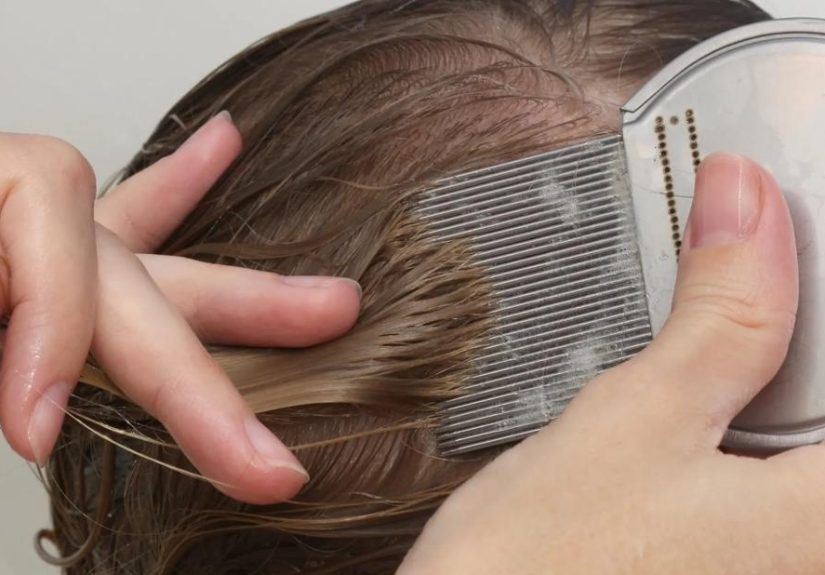
A fine-tooth lice comb and good lighting are your best friends here.
Common signs
- Itching on the scalp (often behind the ears or at the nape of the neck)
- A tickling or “something moving” sensation
- Small red bumps or irritation from scratching
- Trouble sleeping (lice are more active in the dark)
Where to look
Focus behind the ears, near the neckline, and along the hairline. Nits often sit close to the scalp and can appear as tiny, oval specks firmly attached to hair.
If you can flick it off like lint, it’s probably not a nit.
A simple, effective approach
- Wet the hair (wet combing can slow lice down).
- Use a fine-tooth comb and work in small sections.
- Wipe the comb on a white tissue or paper towel to spot lice more easily.
- Repeat consistently and thoroughly.
Treatment: What actually works (and what to skip)
Treating head lice is usually about two things: killing live lice and managing eggs/nits so you don’t get a second wave.
Different families choose different strategies depending on age, skin sensitivity, product availability, and prior treatment history.
Over-the-counter options
Many families start with OTC products labeled for head lice. These typically require careful timing and label-following.
Some products target live lice more than eggs, which is why repeat treatment is often recommended on a schedule.
If you’re treating a child, follow age restrictions and safety guidance on the product label, and check with a clinician if you’re unsure.
Prescription treatments
If OTC products fail (or if a clinician thinks a different approach is better), prescription treatments can be used.
This is especially helpful when there’s suspected resistance, repeated reinfestation, or complicated cases.
The underrated hero: Combing
A quality lice comb used carefully can remove live lice and nits. Combing takes patience (and maybe a pep talk), but it can be very effective,
especially when repeated over days.
What not to do
- Do not use flammable or harsh household chemicals on the scalp or hair.
- Do not “over-treat” with repeated applications beyond label instructions.
- Do not rely on unproven hacks that irritate the scalp and don’t reliably eliminate lice.
When to call a clinician
Consider medical guidance if the person with lice is very young, has a scalp infection, has allergies or skin conditions,
or if multiple careful treatment cycles haven’t worked.
Cleaning the house: The sane approach
Here’s the truth: lice don’t want to live in your carpet. They want to live on a scalp. So home cleaning should be targeted, not frantic.
Focus on items that touch the head
- Wash bedding, pillowcases, hats, and recently worn clothing using hot water when appropriate, then dry on high heat if the fabric allows.
- Soak combs and brushes in hot water per public health guidance and practical recommendations.
- For items that can’t be washed, temporarily sealing them in a bag can be a reasonable option.
Skip the extremes
You generally don’t need foggers, fumigation, or deep-cleaning every surface like you’re prepping for a Hollywood biohazard set.
Overdoing it adds stress without meaningfully improving results.
Prevention: Practical tips that don’t ruin anyone’s life
Since the main risk is close hair contact, prevention is mostly about reducing opportunities for lice to crawl from head to head.
That’s doable without turning kids into socially isolated hermits.
Helpful habits
- Encourage kids to avoid head-to-head contact during play when possible.
- Avoid sharing hats, hairbrushes, combs, hair ties, and certain head-touching accessories during outbreaks.
- For long hair, tying it back can reduce incidental hair-to-hair contact.
- Do quick checks when there’s a known exposure (sleepovers, camps, classroom notifications).
And remember: prevention is about lowering risk, not achieving perfection. Lice happen, even in families doing “everything right.”
FAQ: Fast answers to common lice questions
Can lice live in pillows or on couches?
They can end up there briefly, but head lice generally don’t do well off a human scalp. The bigger risk is repeated close contact with an untreated head,
not a couch plotting your downfall.
Do nits fall out of hair?
Nits are glued to hair shafts, so they usually don’t just fall out like dandruff. As hair grows, old nits can end up farther from the scalp.
That’s one reason distance from the scalp can be a useful clue when you’re assessing what you’re seeing.
Can you get lice from swimming pools?
The most common spread is still head-to-head contact. Water doesn’t make lice magically leap between swimmers.
Close contact in changing areas, shared towels, or hair contact is more relevant than the pool itself.
How long do lice live?
Lice thrive on the scalp where they can feed and stay warm. Away from the scalp, they generally don’t last long.
That’s why targeted cleaning is more useful than whole-house panic.
Can you treat lice in one day?
You can start treatment in one day, but complete control often takes longer because you may need follow-up steps to address newly hatched lice.
Think “process,” not “one-and-done.”
Real-world experiences: What lice outbreaks actually feel like (and what people learn)
The science of lice is straightforwardcrawl, cling, lay eggs, repeat. The experience of lice, however, is an emotional obstacle course that includes
surprise itching, mild chaos, and at least one person Googling at 2 a.m. with a thousand-yard stare.
The stories below are common, realistic situations (shared as composite examples) that reflect what many families and schools go through.
1) The sleepover surprise
It usually starts with an innocent sleepover: pizza, movies, and kids piled together taking selfies with their heads pressed close.
Two weeks later, a parent notices nonstop scratching during homework. The first check shows what looks like dandruffuntil it refuses to brush away.
Cue the lice comb, the flashlight, and the sudden realization that “tiny and fast” is not a comforting design feature.
What families often learn here is that lice exposure doesn’t mean anyone did anything wrong. It means kids were kidsclose together, sharing space, leaning on each other.
The best response is calm: check everyone’s hair, treat the active case correctly, and communicate with the other household without blame.
In many families, the real breakthrough is emotional: turning down the shame and turning up the practical plan.
2) The classroom note that sparks a neighborhood-wide itch
If you’ve ever received a “there’s been a case of head lice in the class” message, you’ve seen how fast anxiety spreadsfaster than lice, honestly.
Suddenly, every parent is scratching their scalp while reading the email. Kids come home convinced their hair “feels weird.”
Someone’s aunt suggests a home remedy that sounds like it was invented in a pirate novel.
The most helpful families are the ones who treat it like a normal nuisance: they check hair carefully, follow treatment directions, and skip dramatic measures.
They also resist the urge to socially exile a child who had lice. Schools and clinicians often emphasize that lice are common and manageable.
What works best socially is kindness and privacybecause nobody needs to be known as “the kid who brought lice” for the rest of middle school history.
3) The “We treated it… why is it back?” week
One of the most frustrating experiences is doing treatment, feeling victorious, and then noticing new itching later.
Often, the reason isn’t that lice can jump or that your vacuum missed a secret colony. It’s usually one of three things:
(1) not enough combing or missed sections, (2) a missed follow-up step when eggs hatch later, or (3) reinfestation from close contact with someone who still has live lice.
Families who get through this phase tend to become unexpectedly organized.
They create a “lice kit” (fine-tooth comb, clips for sectioning, good lighting), set a schedule for re-checks, and coordinate with caregivers.
The vibe shifts from panic to project management. Nobody wants to become a head-lice operations managerbut if you must, at least do it with confidence.
4) The teen perspective: embarrassment, then relief
Teens often describe the worst part as embarrassment. They worry friends will find out, they avoid leaning in for group photos,
and they overthink every itch like it’s broadcasting a public announcement.
Then, after a calm conversation and a clear plan, many feel relieved: lice don’t mean you’re gross, and you can handle it.
A lot of teens also become the voice of reason in their friend groupexplaining that lice crawl, they don’t jump, and you don’t need to burn your hoodie collection.
When someone can name the facts, the fear loses power. And honestly, that’s the most valuable outcome: knowledge that makes the whole situation smaller and more manageable.