Table of Contents >> Show >> Hide
- Why Polar Bear Macarons Are So Irresistible
- What Makes a Great Macaron Shell
- How to Shape Polar Bear Macarons Without Losing Your Mind
- The Best Cheesecake Filling for Macarons
- Decorating Tips for the Polar Bear Face
- Common Macaron Problems and How to Fix Them
- Why Aging the Macarons Improves Everything
- Serving Ideas for Winter Parties and Holiday Tables
- Are Polar Bear Macarons Worth the Effort?
- Experience: What It Feels Like to Make Brrr! Polar Bear Macarons With Cheesecake Filling
- Conclusion
Some desserts arrive quietly. These do not. Polar bear macarons with cheesecake filling waddle onto the table looking adorable, slightly dramatic, and fully aware that everyone is about to say, “Wait, you made those?” They are crisp on the outside, chewy in the center, creamy in the middle, and just cute enough to make people hesitate before taking the first bite. Only hesitate, though. Nobody hesitates for long around cheesecake filling.
If you have ever wanted a showstopping cookie that feels equal parts bakery case and winter cartoon, this is it. The beauty of this dessert is that it combines two crowd-pleasers: the classic French macaron shell and a tangy, rich cheesecake-style filling. The shell gives you that delicate almond meringue snap; the filling brings creamy balance so the whole thing tastes less “look at me” and more “please hand me another one.”
In this guide, we will break down what makes these polar bear macarons work, how to keep the shells smooth and full-footed, how to make a cheesecake filling that holds up, and how to decorate them without turning your kitchen into a powdered-sugar snowstorm. Whether you are baking for a holiday dessert table, a winter baby shower, a themed birthday, or just because your soul needed a tiny cookie with ears, here is how to make these charming treats worth every whisk, fold, and strategic deep breath.
Why Polar Bear Macarons Are So Irresistible
Let’s start with the obvious: they are unbearably cute. Yes, that pun had to happen. But the appeal goes beyond the little ears and black dot noses. Cheesecake-filled macarons hit a sweet spot between elegant and playful. They feel polished enough for a dessert display yet whimsical enough to get kids and adults equally excited.
Flavor-wise, they also make sense. Traditional macaron shells are sweet and nutty, and they pair beautifully with tangy fillings. A cheesecake-inspired center keeps the dessert from tasting one-note. Instead of overwhelming sugar, you get contrast: almond shell, creamy center, gentle vanilla notes, and optional accents like white chocolate, berry jam, lemon zest, or crushed cookies for texture.
The visual payoff is huge, too. White or ivory shells naturally lend themselves to a polar bear look, so you do not need a rainbow of food color to pull off the design. In fact, keeping the shells pale and clean makes them look more polished. That is excellent news for bakers who want maximum charm with minimum color chaos.
What Makes a Great Macaron Shell
It Starts With Precision, Not Vibes
Macarons are one of those desserts that politely request accuracy and then absolutely do not negotiate. Measuring by weight is the smartest move here. Almond flour, confectioners’ sugar, granulated sugar, and egg whites need the right balance to create smooth tops, ruffled feet, and tender interiors. This is not the time to eyeball anything unless your eyeballs come with a digital scale.
Room-Temperature Egg Whites Help
Many bakers swear by room-temperature egg whites because they whip more easily into a stable meringue. That airy structure matters: the meringue is what gives macarons lift, sheen, and structure. Beat until glossy medium-to-stiff peaks form, but do not push so far that the mixture turns dry or clumpy.
The Fold Matters More Than People Want It To
The famous macaronage step is where dreams are either fulfilled or dramatically face-planted. Fold the dry ingredients into the meringue until the batter flows slowly and smoothly, like lava with good manners. Too little mixing and your shells will be pointy and lumpy. Too much and they will spread into sad little pancake buttons. Charming in their own way, perhaps, but not very polar bear.
Resting Is Not Laziness
After piping, let the shells rest until the tops feel dry to the touch. This skin helps direct the rise upward during baking so the cookies develop those signature feet. If your kitchen is humid, the resting time may take longer. If your kitchen is dry, the shells may be ready faster. Macarons are tiny weather reporters, and they absolutely notice everything.
How to Shape Polar Bear Macarons Without Losing Your Mind
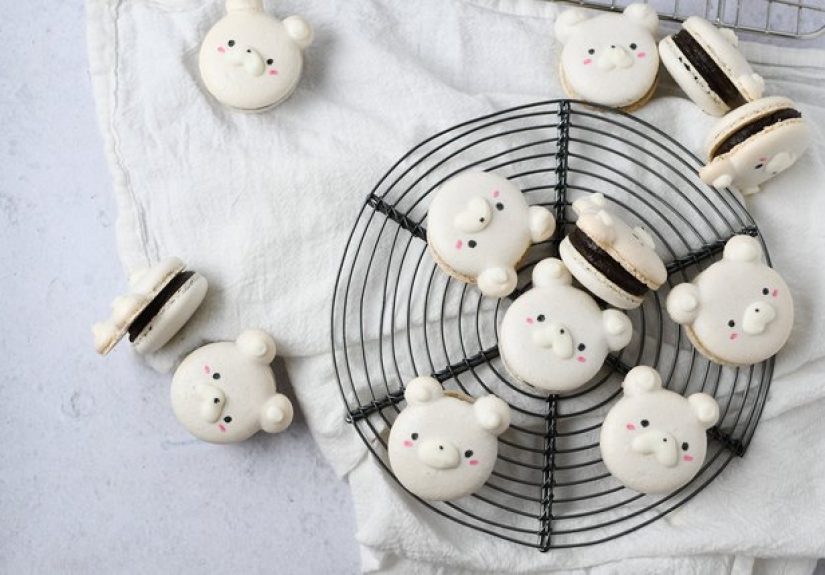
The easiest way to make animal macarons is to pipe a standard round shell for the face and add two smaller dots at the top for ears. Keep the ears modest. Tiny, neat ears look cute and bake more evenly. Oversized ears can spread, flatten, or drift into abstract territory. Suddenly you are no longer making polar bears. You are making mystery snow creatures.
Use a piping bag fitted with a round tip and pipe onto parchment paper or a silicone mat. A template underneath your parchment helps keep the faces uniform in size. Uniform shells are especially useful when sandwiching cookies later, because nothing says “handmade” quite like two mismatched cookies trying to maintain a stable relationship.
Once the shells are baked and cooled, pair similar sizes together before decorating or filling. This small step saves time and frustration later, especially if you are making a larger batch for a party platter or holiday cookie box.
The Best Cheesecake Filling for Macarons
A true cheesecake filling for macarons needs to do three things well: taste tangy and rich, pipe neatly, and hold its shape after chilling. A loose cheesecake mousse may taste lovely, but it can make shells soggy too quickly. For the best texture, aim for a thick, pipeable filling made from softened cream cheese, butter or white chocolate for structure, confectioners’ sugar, vanilla, and sometimes a little heavy cream or sour cream for balance.
Flavor Profile
The goal is not to recreate a full slice of New York cheesecake inside a two-bite cookie. The goal is to capture that familiar flavor in a lighter, tidier format. Vanilla is classic, but a little lemon zest can brighten the filling beautifully. Some bakers add white chocolate to improve stability and deepen the richness without making the center overly tart.
Texture Profile
For macarons with cream cheese filling, thickness matters. The filling should be soft enough to pipe but firm enough to sit proudly between the shells. If it slumps, chill it briefly before assembling. If it is too stiff, let it rest a few minutes at room temperature. You are looking for “fluffy but responsible.”
Optional Flavor Twists
If you want to nudge the flavor beyond classic vanilla cheesecake, try one of these simple upgrades:
- White chocolate cheesecake filling for a sweeter, silkier finish
- Lemon cheesecake filling for a brighter winter dessert
- Berry cheesecake filling with a dot of raspberry or strawberry jam in the center
- Cookies-and-cream cheesecake filling for extra personality
- Maple vanilla cheesecake filling for a cozy cold-weather feel
Decorating Tips for the Polar Bear Face
This is the fun part, and thankfully it does not require a fine arts degree. Once the shells are filled and matured, decorate the top shells with a simple bear face. Use melted dark chocolate, black royal icing, or an edible food marker if the surface is dry and smooth enough.
Keep the Face Simple
The cutest designs are usually the simplest: two tiny eyes, a small oval nose, and a little mouth or dot detail. Overworking the face can make the macarons look busy. Polar bears are naturally minimalists. They are basically winter’s luxury neutrals.
Add Tiny Ears if Needed
If the piped ears bake a bit smaller than expected, you can reinforce the design by adding a tiny white chocolate button or a dab of frosting at the top of the shell. But in most cases, the piped ear shape is enough. The clean outline is what sells the look.
Use White Wisely
You do not need bright white shells to make the effect work. In fact, slightly warm ivory shells often look more elegant and more natural. A stark white color can be tricky to achieve without adding a lot of colorant, and too much added moisture is not a macaron’s best friend.
Common Macaron Problems and How to Fix Them
Cracked Tops
Usually caused by under-rested shells, trapped air bubbles, or oven temperature issues. Tap the trays after piping, pop visible bubbles with a toothpick, and let the shells dry properly before baking.
No Feet
This can happen if the batter is overmixed, the meringue is weak, or the shells did not rest long enough. It can also happen when the oven runs too cool. An oven thermometer is not glamorous, but it saves a lot of emotional damage.
Hollow Shells
Hollows can result from whipping the meringue incorrectly, overbaking, or oven imbalances. Some hollowing happens even to experienced bakers. The good news is that filled and matured macarons often still taste fantastic. The cookie can recover its dignity in the refrigerator overnight.
Sticky Bottoms
If shells cling to the parchment, they may need more bake time or more cooling time. Never force a warm macaron off the tray. That is how beautiful cookies become almond rubble.
Why Aging the Macarons Improves Everything
Freshly baked shells are often crisp and a little fragile. After filling and chilling them for several hours or overnight, the moisture from the cheesecake filling softens the interior slightly while preserving the delicate outer shell. This process, often called maturing or aging, is what gives macarons their ideal texture: crisp edge, chewy middle, creamy center.
This is especially important for cheesecake macarons. The filling needs time to settle, and the flavors become more cohesive after a rest. So yes, technically you can eat them right away. But the better version of the dessert shows up the next day. Patience is annoying like that.
Serving Ideas for Winter Parties and Holiday Tables
These winter macarons are natural stars at seasonal gatherings. Arrange them on a white platter with coconut flakes for a snowy look, or mix them with silver dragées, sugared cranberries, or white chocolate bark for a dessert-board effect. They also work beautifully in gift boxes, as long as they stay chilled until close to serving time.
For a themed dessert spread, pair polar bear macarons with hot chocolate, peppermint bark, mini cheesecakes, or sugar cookies in icy colors. The contrast between refined French pastry and playful bear faces makes the whole table feel thoughtful without being stiff.
If you are hosting a winter birthday or baby shower, these macarons can double as edible décor. Stack them in clear boxes, tie them with ribbon, or display them on tiered trays. People love desserts that look custom, and these definitely do.
Are Polar Bear Macarons Worth the Effort?
Yes, especially if you enjoy baking projects that feel a little theatrical. These are not weeknight emergency cookies you throw together while answering emails and trying to remember where you left your phone. They are a special-occasion bake. But they reward care with a dessert that tastes bakery-level and looks like it came from a pastry case with a sense of humor.
They are also flexible. Once you are comfortable with the shell and filling, you can adapt the design for pandas, snowmen, teddy bears, or other animal-themed macarons. That means one good macaron technique can keep paying rent all year long.
Experience: What It Feels Like to Make Brrr! Polar Bear Macarons With Cheesecake Filling
There is something wonderfully ridiculous about spending an afternoon making tiny bear faces out of almond meringue, and I mean that as the highest possible compliment. Baking polar bear macarons with cheesecake filling is not just about producing dessert. It feels like stepping into a small creative ritual where precision and playfulness somehow agree to share the kitchen.
The first experience is always the sound: the whisk going at full speed, the soft scrape of a spatula folding almond flour into glossy meringue, the tap-tap of baking trays on the counter to release air bubbles. It is part pastry technique, part percussion section. Then comes the concentration. You stare at the batter, asking if it is flowing correctly, as though it might answer. When it finally ribbons just right, it feels oddly triumphant for something you will later decorate with a dot nose.
Piping the shells is where the personality starts to show up. A plain round macaron is lovely, but the moment you add the little ears, the whole tray becomes weirdly charming. They stop being “cookies” and become a cast of characters. Some look alert. Some look sleepy. Some look like they know exactly how much cream cheese filling you are planning to add and support the decision fully.
The waiting period while the shells rest can feel endless, especially if you are the sort of baker who likes immediate gratification. But then the trays go into the oven, and suddenly the magic happens. The feet begin to form. The tops stay smooth. The ears hold. It is one of those small baking moments that feels more exciting than it probably should, but there you are, peering through the oven door like you are watching a championship game.
Then comes the filling, which may be the best part of the whole experience. A good cheesecake filling tastes luxurious without being heavy. It has that cream cheese tang that keeps the sweetness in check, and once it is piped between two shells, the dessert feels complete. Before the filling, the shells are promising. After the filling, they are a full story.
Decorating the faces is where the project becomes genuinely joyful. You do not need perfect lines. In fact, tiny imperfections make them cuter. One bear may end up with slightly surprised eyes. Another may look deeply unimpressed. A third may have the expression of someone who has seen your search history and has concerns. Somehow that only makes the batch better. These macarons are polished enough for a special event, but they still leave room for personality.
And then there is the moment of serving them. People notice these cookies. They lean in. They smile before they even taste one. That reaction is part of the reward. The second reward comes after the first bite, when the shell gives way to the creamy cheesecake center and everyone realizes these are not just decorative little snow creatures. They are actually delicious.
In that way, the experience of making them mirrors the dessert itself. On the outside, they look playful and lighthearted. Underneath, they rely on real technique, patience, and balance. They are a project, yes, but a deeply satisfying one. If you enjoy baking things that make people laugh, stare, and immediately ask for the recipe, this is the kind of dessert experience that earns a permanent place in your winter rotation.
Conclusion
Brrr! Polar Bear Macarons With Cheesecake Filling are the kind of dessert that prove cute and sophisticated can absolutely coexist on the same plate. They combine the delicate chew of French macarons with the creamy tang of cheesecake filling, then wrap the whole thing in a playful winter design that makes them perfect for holidays, parties, and special dessert tables.
The trick is respecting the technique without making the process feel intimidating. Weigh your ingredients, build a stable meringue, fold with intention, rest the shells, and let the filled macarons mature in the refrigerator. Keep the decoration simple, the filling pipeable, and your expectations realistic. Macarons do not demand perfection; they reward practice.
And once you get them right, they are unforgettable: elegant enough for grown-up gatherings, whimsical enough for family celebrations, and tasty enough that nobody will care how long you stood in the kitchen whispering encouragement at a tray of cookie shells. These polar bear macarons are chilly in theme, creamy in the middle, and warm in spirit. Honestly, that is a pretty good dessert résumé.