Table of Contents >> Show >> Hide
- What Happened (And Why People Can’t Stop Watching)
- Why This Moment Hits So Hard in Blended Families
- The Etiquette Truth: There Is No One “Correct” Escort
- Options for Including a Stepfather Without Turning Your Wedding Into Family Court
- How to Plan It So It Feels Effortless (Even If Your Family Isn’t)
- If You’re the Parent or Stepparent: Here’s What “Doing It Right” Looks Like
- The Takeaway: The Aisle Is a Story, Not a Scoreboard
- of Experiences That Couples Relate To (And What They Teach)
Weddings are supposed to be “the happiest day of your life,” which is wedding-industry code for:
“the day everyone brings their feelings… and sets them on fire in formalwear.”
But every once in a while, a moment happens that makes the whole room exhale at the same time
the kind of moment that says, “Hey, we’re messy humans, but we’re trying.”
That’s exactly why the story of a bride’s dad pausing the ceremony to invite her stepfather to walk
down the aisle with them has struck such a nerve (the good kindthe “I’m not crying, you’re crying” kind).
It’s not just sweet. It’s a masterclass in blended-family grace, done in about three seconds, with zero PowerPoint.
What Happened (And Why People Can’t Stop Watching)
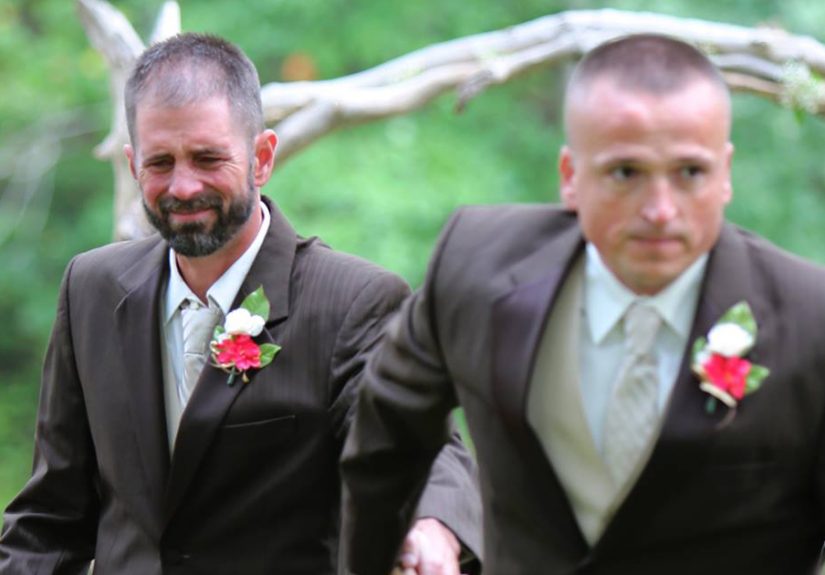
In a widely shared wedding clip, the bride’s biological father is escorting her down the aisle when he stops,
turns toward her stepfather, and invites him to join them. The three link up and continue togetherno awkward
tug-of-war, no passive-aggressive aisle sprinting, no “THIS IS MY SPOTLIGHT” energy. Just a simple,
clear message: love doesn’t have to compete.
Even if you’ve never met these people, you probably understand the subtext instantly:
this bride didn’t “replace” anyone. She expanded her circle. And her dad didn’t lose a rolehe shared one.
That’s why the moment feels so big. It’s not about tradition; it’s about emotional maturity wearing a tie.
Why This Moment Hits So Hard in Blended Families
1) It solves the problem nobody wants to say out loud
A lot of brides with a father and a stepfather feel like they’re planning a ceremony and a peace treaty
at the same time. Someone might be supportive in theory, but silently devastated in practice.
And the bride? She’s stuck trying to honor two relationships without turning her wedding into a
competitive sport.
When a dad publicly invites the stepdad in, it removes the “choosing” narrative. It reframes the aisle walk
from “ownership” to “support.” It turns the moment into a shared accomplishment instead of a shared wound.
2) It modernizes the tradition without shaming it
The whole “giving the bride away” tradition has complicated roots. Today, many couples reinterpret it as
“walking with someone who helped raise you,” or even just “walking with someone who calms your nerves
when your knees become decorative jelly.”
Inviting a stepfather to join is a modern adjustment that keeps the symbolic tendernessfamily, continuity,
supportwhile ditching the outdated vibe that someone is being transferred like a gym membership.
3) It communicates something guests actually remember
Guests forget chair covers. They forget signature cocktails. They forget the third speech that started with,
“I didn’t prepare anything.” But they remember a human moment of generosity.
That aisle invitation is the kind of “tiny plot twist” that becomes the story people tell for years.
The Etiquette Truth: There Is No One “Correct” Escort
Modern wedding etiquette is refreshingly consistent on one point:
the bride chooses who walks with herand that person (or people) should reflect her real life,
not a Hallmark template from 1957.
That means any of these choices can be perfectly appropriate:
- Walking with your father
- Walking with your stepfather
- Walking with both father and stepfather
- Walking with your mother, both parents, grandparents, siblings, kids, or chosen family
- Walking alone (which can be powerful, not “sad”)
- Meeting someone halfway (a great compromise when aisle width or emotions are tight)
Etiquette isn’t a rulebook that punishes nontraditional families. It’s supposed to help people feel respected.
And in blended families, respect often looks like inclusionbalanced with honest boundaries.
Options for Including a Stepfather Without Turning Your Wedding Into Family Court
If the viral moment makes you think, “I want that… but I also want everyone to survive the group text,”
here are practical ways to do it.
Option A: Both dads walk you together (classic, simple, photogenic)
This is the cleanest solution when both relationships are meaningful and generally respectful.
Dads on either side, you in the middle. Everyone’s included, nobody’s “demoted,” and the photos look like
a united front (even if you know the backstory includes at least one awkward Thanksgiving).
Best for: amicable families, confident stepdads, dads who can share attention without breaking out in hives.
Option B: The “halfway handoff” (symbolic and surprisingly elegant)
One escort (often the biological father) walks you partway, then you meet your stepfather (or vice versa),
and you finish together. This honors both relationships while keeping the moment structured and intentional.
It can also feel emotionally accurate when one parent was present early in life and the other showed up
steadily later.
Best for: narrow aisles, complicated histories, families who prefer a plan over surprises.
Option C: One dad escorts; the other has a visible “front-row role”
If walking isn’t the right fit (or would cause tension), you can still honor a stepfather in a meaningful way:
- Have him walk down the aisle with your mother during the processional
- Give him a reading or blessing
- Include him in a welcome toast
- Ask him to escort a grandparent or special family member
- Do a shared dance (split song: first half with one, second half with the other)
This approach says “you matter” without forcing a moment that doesn’t match your emotional reality.
Option D: The bride walks with her partner (increasingly popular)
Many couples choose to enter together. It sidesteps the “who walks me” debate entirely and emphasizes
partnership from the very first step.
Best for: couples who want symmetry, brides who don’t love being the center of attention (yes, they exist), or families with high conflict.
How to Plan It So It Feels Effortless (Even If Your Family Isn’t)
Step 1: Decide what the aisle walk means to you
Before you talk to anyone, define the “why.” Is it about honoring the people who raised you?
Representing your life story? Keeping the peace? Avoiding a public meltdown in front of your future in-laws?
(Valid.)
If you can explain your choice in one sentence, it gets easier to communicate:
“I want both of you with me because you both mattered in my life.”
Or, “I want a halfway handoff because it reflects my relationship with each of you.”
Step 2: Tell the key people earlyprivately
Surprises make for viral videos, but most families do better with a heads-up. Talk to your father and stepfather
separately first, then together if appropriate. The goal isn’t negotiation; it’s clarity.
Sample script (warm, direct):
“I love you, and I want you involved. Here’s what feels right for me on the aisle walk, and I hope you’ll support it.”
Step 3: Coordinate with your officiant and planner
Even “spontaneous” moments work best when the logistics are solid. Make sure the officiant knows your plan,
the music timing works, and the photographer understands the beats you want captured.
Step 4: Make the seating and entrances match the story
If you’re blending families, think about the full ceremony picture: where parents sit, who is escorted in,
and what your program says. A thoughtful seating plan can lower tension before anyone hears the first note
of processional music.
Step 5: Keep the “roles” balanced, not identical
Equality isn’t always symmetry. If your father walks you down the aisle, your stepfather can still have
a meaningful role that fits your relationship. The point is to honor people honestlynot to hand out
matching “Parent Participation Trophies” to avoid discomfort.
If You’re the Parent or Stepparent: Here’s What “Doing It Right” Looks Like
That viral aisle invitation worked because it was emotionally generous and bride-centered. If you’re a parent
navigating this territory, these principles keep the day from becoming about you:
1) Don’t make your love conditional
Nothing sours a wedding faster than “I’ll pay, but only if…” Love with strings is not a gift; it’s a contract.
If you’re contributing financially, talk about money early and keep roles separate from payments.
2) Don’t compete with the past
A stepfather can be deeply loved without erasing a biological father. A father can be honored without
minimizing a stepfather’s steady presence. When adults stop competing, the bride can breathe.
3) Let the couple define “family”
Weddings are one of the few days where the couple gets to design the symbolism. Even if it’s unfamiliar,
you can choose support over control. That’s how you stay close after the weddingnot just during it.
The Takeaway: The Aisle Is a Story, Not a Scoreboard
The reason this “dad invites stepdad” moment resonates is simple: it shows what blended families can look like
when the adults decide to lead with generosity. It doesn’t pretend relationships are easy. It just proves they
can be handled with kindness.
If you’re planning your own wedding, let the aisle walk reflect your real life:
the people who showed up, the people who supported you, and the love you’re carrying forward.
Traditions can be kept, adjusted, or tossed gently into the nearest decorative basketwhatever makes your day
feel honest.
of Experiences That Couples Relate To (And What They Teach)
Couples in blended families often describe the aisle decision as the first “marriage-level” negotiationbecause it
forces you to name what matters. One bride said she always pictured her dad beside her, but when she tried to
imagine the moment without her stepfather (the one who taught her to drive, fixed her flat tire in college, and
never missed a recital), it felt like leaving out a chapter of her life. Her solution was simple: both dads walked.
She called it “my life in one frame,” and the photos proved ittwo proud men, one steady stride, and a bride who
looked more relaxed than she did during her engagement party.
Another bride chose the halfway handoff. Her biological father had been loving but inconsistent; her stepfather had
been consistent but never wanted to step on anyone’s toes. The handoff became a quiet symbol of timing: the father who
gave her life and the stepfather who helped shape it. Guests didn’t need an explanation; they felt it. Later, the bride
joked that the aisle handoff was “the only smooth transition our family has ever pulled off,” and everyone laughedbecause
everyone knew it was true.
Some couples go the opposite direction and decide the bride will walk alone. Not out of bitternessout of independence.
One woman said she’d spent years managing everyone else’s emotions in a divorced household, and she wanted one moment that
belonged only to her. She still honored her dad and stepdad in other ways: a shared toast, a photo with both families, and
a father-figure dance split into two songs. The result wasn’t “cold.” It was intentional. It felt like adulthood.
There are also hard versions of this story. A bride may feel pressured to reward whoever paid the most, or to soothe a
parent who threatens drama. Couples who’ve been through it often say the same thing: don’t let fear write your ceremony.
The aisle moment lasts about a minute, but the relationships last years. When you choose an aisle plan that matches your
truthand communicate it early with kindnessyou protect the marriage you’re building, not just the wedding you’re hosting.
And then there are the unexpectedly beautiful surprises: the dad who initiates inclusion, the stepfather who tears up
but keeps it together, the bride who realizes she doesn’t have to choose sides. Those are the moments people remember
because they feel like hope. Not perfect-family hopereal-family hope. The kind you can walk with.