Table of Contents >> Show >> Hide
- What Is “Brain Drawing,” Exactly?
- Why This Could Help People with Profound Blindness
- The Breakthrough: From “Pixel Thinking” to “Tracing Thinking”
- What Users Actually Perceive (Spoiler: Not 4K Vision)
- Where the Field Stands in 2026
- Brain Implants vs. Other Vision Technologies
- Safety, Ethics, and the Reality Check
- What a Realistic “Version 1” Might Look Like
- Extended Experience Section (500+ Words): What This Could Feel Like in Real Life
- Experience 1: “The First Letter” Moment
- Experience 2: From Lab Confidence to Hallway Confidence
- Experience 3: Cognitive Fatigue Is Real
- Experience 4: Family and Care Partner Perspective
- Experience 5: Rehab Team Reality
- Experience 6: Emotional LandscapeHope, Frustration, and Persistence
- Experience 7: What “Useful Vision” Means to Users
- Conclusion
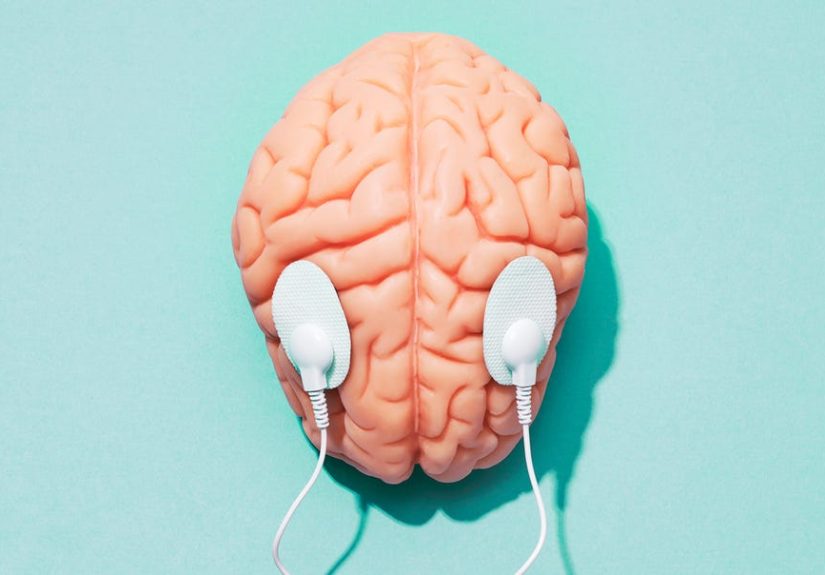
Imagine your brain as a giant sketchpad. Now imagine scientists using tiny bursts of electricity like a digital pencil, tracing simple shapes directly onto that sketchpad so a blind person can perceive them. That ideaoften called “brain drawing”sounds like science fiction with a caffeine addiction. But it’s real, and it’s one of the most exciting directions in vision restoration technology.
This field is still early-stage, but the progress is no joke. Researchers have already shown that blind participants can recognize letter-like shapes when electrodes stimulate the visual cortex in dynamic sequences. In plain English: instead of blasting multiple points at once and hoping the brain assembles a clean picture, scientists “draw” the pattern over time, and the brain follows it better. It’s a smarter approach, and potentially a life-changing one.
In this deep dive, we’ll break down how cortical visual prostheses work, why dynamic stimulation matters, where clinical research stands now, what patients may realistically gain in the first generations, and why safety and ethics are just as important as engineering. We’ll also include an extended experience section at the end so you can feel what this technology might be like in real lifenot just in lab diagrams.
What Is “Brain Drawing,” Exactly?
“Brain drawing” refers to a stimulation strategy in which implanted electrodes activate the visual cortex in sequence to trace a shape over time. The user perceives phosphenessmall points or lines of lightwithout light entering the eye. If that sounds familiar, it’s because many people have experienced phosphenes when rubbing their eyes in a dark room (“seeing stars”).
The big shift is dynamic stimulation. Earlier methods often treated electrode arrays like screen pixels: stimulate many points at once and expect an image to pop out. The brain, however, is not a TV panel. Simultaneous stimulation often created blobs or disconnected flashes instead of recognizable forms. Dynamic tracing works better because visual systems are highly sensitive to movement and sequence.
Key concept: phosphenes are the alphabet, not the full language
A phosphene is a basic visual unit, not a finished image. A useful prosthesis must organize these units into meaningful patterns users can learn and interpret quickly. That is why modern research focuses as much on encoding algorithms and training as on hardware.
Why This Could Help People with Profound Blindness
Many forms of blindness happen because of damage to the eyes or optic nerve, while parts of the brain’s visual pathways remain available. In those cases, cortical stimulation can bypass damaged front-end structures and deliver information directly to the visual cortex.
That does not mean every blind person is a candidate. Blindness has many causes, durations, and neurological profiles. Candidate selection will likely depend on factors such as residual pathway function, cortical health, medical history, and surgical risk tolerance. But for people with irreversible retinal or optic nerve damage, cortical prosthetics may open a pathway that glasses, corneal surgery, or retinal treatment cannot.
Context: the public health need is growing
U.S. eye-health agencies project substantial growth in vision impairment and blindness over the coming decades. So even incremental advanceslike better shape detection and navigation confidencecould matter for millions of families.
The Breakthrough: From “Pixel Thinking” to “Tracing Thinking”
One of the most cited milestones came from teams associated with Baylor and Penn, where researchers tested dynamic stimulation and found that participants could reliably identify letter-like forms. The setup included sighted participants with temporary clinical electrodes and blind participants with prosthetic-relevant implants.
In these experiments, dynamic patterns outperformed static, simultaneous stimulation. Participants could often draw or name forms after brief exposure. That’s huge, because it means useful pattern perception may be possible even with limited electrode countsat least for simple symbols and contours.
Think of it this way: if static stimulation is like throwing confetti and hoping it spells “HELLO,” dynamic stimulation is like writing “HELLO” in cursive with a glowing pen. Same brain, better choreography.
Why dynamic stimulation may be more intuitive
The visual brain is built to track changes over time. Motion cues are deeply embedded in perception. So when stimulation “moves” in a shape-like sequence, users can often interpret it faster than when many points appear simultaneously. This insight has become central to modern visual prosthesis design.
What Users Actually Perceive (Spoiler: Not 4K Vision)
Let’s set expectations correctly: current systems do not restore natural sight. Users report flashes, dots, lines, contours, and simple forms. Some can identify large letters or boundaries. In intracortical studies, participants have recognized certain letters and object edges under controlled conditions.
That might sound modest, but functional value can still be high. If a device can help a user detect a doorway, sidewalk edge, large obstacle, or body outline, that can improve safety and independence in daily life.
Potential first-wave benefits
- Detecting high-contrast edges and large contours
- Recognizing simple symbols
- Improving orientation and mobility confidence
- Assisting task planning in unfamiliar spaces
- Complementing cane, guide dog, and audio-navigation tools
Where the Field Stands in 2026
Despite rapid progress, there is still no clinically available cortical visual prosthesis as a standard approved therapy. Multiple research groups are running or planning trials, including registered studies for intracortical and cortical-surface approaches.
Some programs are focused on increasing electrode count and precision; others are focused on long-term biocompatibility, wireless data transfer, and safer surgical workflows. Meanwhile, high-profile efforts have received regulatory acceleration status (such as FDA breakthrough designation), which helps speed development and review pathways but does not mean a device is approved or proven effective in routine care.
Translation challenge: from “works in trial” to “works in life”
A device can succeed in controlled lab tasks and still fail in everyday conditions. Real-world use requires stable hardware, robust perception in noisy environments, practical battery life, intuitive software, and low maintenance burden. Put simply: if setup takes 45 minutes and calibration drifts by lunchtime, users won’t stick with it.
Brain Implants vs. Other Vision Technologies
Cortical prostheses are one strategy within a broader ecosystem of blindness technologies:
1) Retinal approaches
Best suited for some retinal diseases where downstream neural pathways remain usable. Not ideal for all blindness etiologies, especially when optic nerve transmission is severely compromised.
2) Optic nerve approaches
Conceptually attractive but anatomically and technically complex, with signal-fidelity challenges.
3) Cortical approaches (“brain drawing” family)
Can bypass eye and optic nerve damage by stimulating visual cortex directly. Promising for profound blindness, but surgically invasive and computationally demanding.
4) Non-implant assistive systems
AI audio scene description, object detection, smart canes, and haptic tools are already helping users today and will likely remain essential even if implants improve. In practice, the future is probably hybrid, not winner-takes-all.
Safety, Ethics, and the Reality Check
Because blindness is usually not life-threatening, risk-benefit standards are (rightly) strict. Brain surgery carries potential complications such as infection, bleeding, seizure risk, hardware failure, and explant complexity. Long-term tissue responses and electrode durability remain active areas of study.
Ethically, informed consent must be unusually clear: early participants are contributing to science first, personal benefit second. Teams also need to address data governance, post-trial support, access equity, and affordability. A device that works only for wealthy early adopters is not a vision-restoration success story; it’s a marketing story.
Training is part of treatment
A future user experience will likely combine surgery + calibration + rehab + algorithm updates. Think cochlear-implant style adaptation, where outcomes improve through guided training and neuroplasticitynot instant magic right after activation.
What a Realistic “Version 1” Might Look Like
The first genuinely useful systems may not deliver rich scene detail. Instead, they may provide:
- Contour tracking for navigation
- Large-letter recognition
- Motion alerts in near space
- Simple object boundary cues
- Integration with audio prompts from a companion wearable
That may sound limited compared with natural vision. But for a person living with profound blindness, this can still be transformational. Independence is built from many “small” wins: finding a door quickly, avoiding a low table, orienting toward a person speaking, moving confidently in a new hallway.
Extended Experience Section (500+ Words): What This Could Feel Like in Real Life
Experience 1: “The First Letter” Moment
In early sessions, users often describe uncertainty: “I know something happened, but I can’t name it yet.” Then a threshold moment appears. The stimulation sequence traces a shape. The user pauses, breathes, and says, “That felt like a Z.” This is not cinematic sight returning in a dramatic montage. It’s more like learning a new sensory language one symbol at a time. The emotional punch, however, can be realespecially when a shape repeats and the recognition is reliable. Reliability is the turning point from curiosity to trust.
Experience 2: From Lab Confidence to Hallway Confidence
A common misconception is that successful lab tasks automatically translate to daily mobility. They don’t. Real environments are messy: echoes, moving people, uneven lighting, unpredictable objects. But users can still build practical gains. In orientation-style practice, a person may begin by detecting a bold contrast marker on a wall, then progress to identifying the boundary of a doorway. Week by week, they rely less on guessing and more on consistent cue interpretation. The experience is often described as “less fear of bumping into surprises.” Not perfect perceptionbetter anticipation.
Experience 3: Cognitive Fatigue Is Real
Early users may report that interpreting phosphene-based cues is mentally tiring. That makes sense. The brain is decoding unfamiliar signals while also handling mobility, safety, and social interaction. Training plans that include short, focused sessions usually work better than marathon sessions. Think of it as strength training for perception: repeat, recover, repeat. Over time, many users get faster and less fatigued, but workload remains a serious design consideration. An interface that is “technically accurate but exhausting” won’t be used for long.
Experience 4: Family and Care Partner Perspective
Families often notice subtle milestones first: fewer hesitations at home corners, smoother reach-and-grasp movement, better directional confidence when someone calls from across the room. These are small on paper and massive in daily life. Care partners also learn that encouragement must be patient and specific. “You did better noticing the table edge today” is more useful than “Great job seeing!” because the goal is not false hope; it’s measurable functional progress.
Experience 5: Rehab Team Reality
Clinicians and engineers frequently emphasize that hardware is only half the story. Successful use depends on calibration routines, algorithm tuning, and behavior coaching. If the user can describe what a phosphene pattern “felt like,” engineers can adjust stimulation maps. If engineers refine maps, mobility specialists can retrain tasks. It becomes a loop: perception informs software; software informs rehabilitation; rehabilitation informs daily utility. The best outcomes are usually team outcomes.
Experience 6: Emotional LandscapeHope, Frustration, and Persistence
The emotional path is rarely linear. Hope spikes after a good session and dips after a noisy day with weak pattern recognition. Some users feel pressure to “perform” because the technology is experimental and visible. Others worry they’re disappointing researchers if progress stalls. This is why psychosocial support matters. A healthy trial culture treats variability as data, not failure. On hard days, “not today” is still progress if it teaches the team what conditions reduce signal quality.
Experience 7: What “Useful Vision” Means to Users
Engineers may optimize spatial resolution; users may prioritize confidence, speed, and safety. Those goals overlap, but they are not identical. A user might choose a simpler, more stable mode over a richer but noisy one. Another might prefer edge cues plus audio labels rather than complex visual patterns. In other words, success is personal. For one person, it’s navigating a grocery aisle with less stress. For another, it’s recognizing where a loved one is standing in a room.
That’s the central lesson from experience-based reports around this field: “sense of sight” doesn’t have to mean full natural vision to be meaningful. It can mean practical perception that restores agency, dignity, and choice. And honestly, that’s a pretty extraordinary place for science to be heading.
Conclusion
“Brain drawing” is not a miracle cure, but it is a serious and promising frontier in blindness innovation. Dynamic cortical stimulation has already shown that blind participants can perceive and identify simple forms; intracortical research continues to refine safety, precision, and functional outcomes. The next chapter depends on better electrodes, smarter encoding, durable biocompatibility, rigorous clinical evidence, and user-centered rehabilitation.
If those pieces come together, the first generation of cortical visual prostheses may deliver something profoundly valuable: not perfect vision, but useful perception that improves navigation, independence, and daily confidence. In the world of assistive neurotechnology, that is not a small victoryit’s the beginning of a new sensory toolkit.