Table of Contents >> Show >> Hide
- What Is Orbital Reef, Exactly?
- Who’s Building It (and What Each Partner Brings)
- Why Orbital Reef Exists: The Post-ISS Economy Play
- The Orbital Reef Design Idea: Modular, Tenant-Friendly, Expandable
- Big Technology Highlights (Where Orbital Reef Gets Interesting)
- What Would Orbital Reef Be Used For?
- Timeline Reality Check: Ambition Meets Physics, Schedules, and Budgets
- Market Competition: Orbital Reef Isn’t Alone Up There (or Planning to Be)
- Risks and Challenges: The Stuff That Doesn’t Fit in a Concept Video
- What to Watch Next
- Bottom Line
- Experiences on Orbital Reef: What It Could Feel Like to Work (or Visit) in a Space Business Park
Picture a sleek coworking campus… except your commute is 17,500 miles per hour, your “water cooler talk” involves
radiation shielding, and the view out the window is an actual floating marble called Earth. That, in a nutshell,
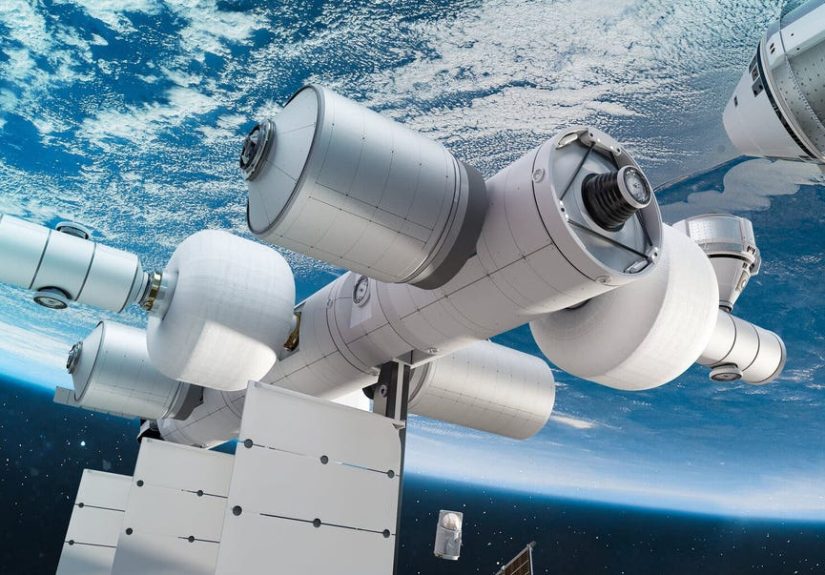
is the pitch behind Orbital Reef: a commercially owned, commercially operated space station concept
led by Blue Origin, designed to be a “mixed-use” destination in low Earth orbit where research, manufacturing,
tourism, and new businesses can all rent a slice of microgravity real estate.
Orbital Reef matters because the space world is approaching a deadline with a giant blinking neon sign:
the International Space Station (ISS) is planned to operate through 2030, and NASA’s goal is to
transition many low Earth orbit activities to private stations so the agency can focus more energy (and budget)
on deep-space exploration. Orbital Reef is one of the headline contenders aiming to become part of that next era.
The hard part (as always): turning an ambitious rendering into a working, safe, boring-in-the-best-way station
where astronauts can do science and businesspeople can do invoiceswithout anyone floating away mid-meeting.
What Is Orbital Reef, Exactly?
Orbital Reef is a proposed commercial space station intended to support a variety of customersgovernment agencies,
universities, startups, big aerospace, and even private visitors. In NASA’s words, it’s designed like a
“mixed-use space business park”: a place that provides core infrastructure (life support, power, docking,
communications, payload services) so multiple tenants can run missions without having to build an entire station
from scratch.
Think of it as “space station as a service.” Instead of everyone bringing their own plumbing and power grid,
Orbital Reef aims to provide the utilities, and customers bring the experiments, manufacturing payloads,
or commercial projects. The goal is to lower the barrier to entry for operating in low Earth orbitbecause space
is already challenging enough without adding “DIY oxygen generator” to your to-do list.
Who’s Building It (and What Each Partner Brings)
Orbital Reef is led by Blue Origin with Sierra Space as a major partner, alongside
a team that has included well-known aerospace and tech organizations. Public announcements and program updates have
described a partner ecosystem meant to cover the full station lifecycle: development, launch, operations, logistics,
payload support, and user services.
Core roles you’ll hear about most
-
Blue Origin: overall station development leadership and major systems, plus the big strategic goal:
make commercial life in orbit routine and scalable. -
Sierra Space: key habitat technology and transportation concept support, including work associated with
inflatable habitat structures (LIFE) and Dream Chaser as a cargo/crew logistics option. -
Additional teammates: public materials have referenced contributions spanning payload operations,
deployable structures, external operations concepts, and cloud-enabled mission support. -
University collaboration: Arizona State University has been highlighted as part of a research/outreach
ecosystem to broaden access and develop new user communities.
The partner list is important, but the bigger story is the systems approach: Orbital Reef is designed to be an
ecosystem, not a single-purpose lab. That’s a shift from the historical model where governments built the station,
governments scheduled everything, and the rest of the world applied for time like it was a coveted tennis court.
Why Orbital Reef Exists: The Post-ISS Economy Play
The ISS has been a scientific powerhouse and a geopolitical miracle. It’s also aging infrastructure in one of the
harshest environments humans operate in. NASA’s current plan is to maximize ISS benefits through 2030 while
transitioning to commercial destinations in low Earth orbit. That transition is not just a bureaucratic reshuffle;
it’s an economic bet that private industry can run stations more efficiently, serve more customers, and innovate
faster than a single government program can.
Orbital Reef is part of NASA’s broader strategy to create a marketplace in orbit: NASA becomes one customer among
many instead of the station’s owner-operator. If that works, microgravity research and manufacturing can scale,
costs can come down, and the “space economy” becomes something more tangible than a slide deck with rocket emojis.
(No disrespect to rocket emojis. They’re doing their best.)
The Orbital Reef Design Idea: Modular, Tenant-Friendly, Expandable
At a high level, Orbital Reef is described as modularmeaning it can be assembled and expanded over time by adding
modules. This approach is practical in orbit because it lets developers start with a “minimum viable station”
(still extremely non-minimum by Earth standards) and add capacity as markets mature.
What “tenant-friendly” means in space
- Multiple docking/visiting vehicle options (in concept): to support crew and cargo flows from different providers.
- Standardized payload interfaces: so research and manufacturing users can install equipment without reinventing the rack system.
- Habitable volume with growth potential: enabling more people, more payloads, and more concurrent missions as demand increases.
- Human-centered architecture: not just survivable, but workablewhere crew can operate efficiently over long stays.
That last point deserves emphasis. Future commercial stations need to be designed not only for astronauts trained
by national agencies, but also for commercial crew members, researchers, and private visitors who may have shorter
training pipelines. Human-in-the-loop testingwhere users simulate real station tasks inside mockupsis one way
teams validate that day-to-day operations will be practical, not just theoretically possible.
Big Technology Highlights (Where Orbital Reef Gets Interesting)
1) Inflatable habitat structures: “Soft goods,” hard performance
One of the most talked-about technologies connected to Orbital Reef is Sierra Space’s expandable habitat approach,
often discussed under the LIFE (Large Integrated Flexible Environment) family. Inflatable habitats matter because
they can pack efficiently for launch and expand into large usable volume in orbitpotentially improving the
“livable space per rocket” ratio that drives cost.
In a notable stress test supported by NASA at Marshall Space Flight Center, a full-scale inflatable habitat
structure was pressurized until it burstintentionallyto validate structural margins and materials behavior.
Tests like this are unglamorous in the best way: they’re how you prove a habitat can survive the unexpected, not
just the planned.
2) Life support milestones: the quiet hero of every station
If rockets are the headline and spacesuits are the fashion, life support is the uncelebrated plumbing that keeps
everybody alive. NASA has highlighted progress testing Orbital Reef-related environmental control and life support
elementssystems that clean, reclaim, and store air and water, which are central to long-duration human presence.
These milestones matter because they are the difference between “a place you can visit” and “a place you can live
and work.” Anyone can host a short trip if resupply is constant and margins are loose. Running an orbital business
park requires repeatable, reliable, and maintainable life support.
3) Human-in-the-loop testing: designing for real operations
NASA has also pointed to completed human-in-the-loop testing milestones for Orbital Reef design development.
Translation: people did realistic workflows inside a station mockup to see what breaks, what’s confusing, and
what becomes a floating hazard the moment gravity leaves the chat.
This is where commercial stations can win: by being engineered for smooth operations, not just peak performance.
In orbit, “easy to use” is a safety feature.
What Would Orbital Reef Be Used For?
Orbital Reef’s “mixed-use” concept is a polite way of saying it wants to host almost everything that can justify
the cost of going to orbit. The most realistic near-to-mid-term categories tend to cluster into four buckets:
research, manufacturing, technology demonstration, and human spaceflight services (including tourism).
Microgravity research: more than “cool science,” it’s commercial leverage
Microgravity changes how fluids mix, how crystals form, how flames behave, and how biological systems express
themselves. That can translate into real value:
- Pharmaceutical R&D: protein crystallization and biological research can improve understanding of disease targets.
- Materials science: experiments in alloys, semiconductors, and composites can reveal new properties or cleaner structures.
- Human physiology: health and performance research informs deep-space missions and can produce Earth-side insights.
The key commercial point: Orbital Reef is aiming to make this type of work more routine by offering infrastructure,
payload integration support, and a station “address” that can be booked like a servicenot negotiated like a treaty.
In-space manufacturing: when “Made in orbit” becomes a label
Manufacturing in orbit only makes sense when microgravity produces something you can’t easily replicate on Earth,
or when the resulting product has high enough value-per-kilogram to justify launch costs. Current candidates
include specialized fibers, advanced materials processing, and niche biomanufacturing.
Orbital Reef’s promise here is operational: steady cadence, repeatable payload support, and enough capacity to
allow iteration. Manufacturing rarely works as a one-off. It needs repetition, quality control, and predictable
timelinesthree things space has historically been bad at. Commercial stations are trying to change that.
Space tourism and private missions: the “hotel” headline with an engineering footnote
Tourism is the attention magnet, and yes, it’s part of Orbital Reef’s public vision. But the economic reality is
that private human spaceflight works best when paired with other revenue streams: government research contracts,
commercial payloads, and institutional partnerships. Tourism can help, but it probably won’t carry the station
aloneat least not early on.
What commercial stations can do better than the ISS era is packaging: standardized training, clearer mission
planning for short stays, and “plug-and-play” amenities for private crews. The station doesn’t need to be a luxury
resort to be attractive. It just needs to be safe, functional, and not designed like it was assembled by a very
smart committee that never had to live there. (Again: committees, we appreciate you. Please don’t float my coffee.)
Timeline Reality Check: Ambition Meets Physics, Schedules, and Budgets
Orbital Reef has been discussed publicly since 2021, with NASA selecting it for collaboration under a funded Space
Act Agreement as part of the agency’s commercial LEO efforts. Since then, NASA and partners have highlighted
incremental progress: life support testing milestones (March 2024), expandable habitat stress testing (reported in
connection with mid-2024 testing), and human-in-the-loop milestone completion (April 2025).
That’s meaningful progressbut it’s also a reminder of how long station development takes. A station is not a
single vehicle; it’s a city block worth of systems that must work together in a place where “hardware store run”
means “launch campaign.”
Transportation is part of the station story
Orbital Reef’s long-term success is tied to reliable access: crew, cargo, spares, and return downmass. Public
concepts have referenced launch vehicles and spacecraft that, like all space programs, come with schedule risk.
This is one reason NASA emphasizes milestone-based progress: it forces the ecosystem to prove readiness step by
step instead of betting everything on a single “big bang” deployment.
Market Competition: Orbital Reef Isn’t Alone Up There (or Planning to Be)
Orbital Reef is one of several commercial station efforts aiming to support NASA and other customers after the ISS.
That competitive landscape is good for innovationbut it also raises an uncomfortable question:
Is the near-term market big enough for multiple stations?
Analysts and reporting have noted skepticism about whether demand can support several private stations at once,
especially given the tight timeline around ISS retirement. Competition may ultimately produce winners,
consolidations, or niche specialization: one station becomes the research workhorse, another becomes the private
mission hub, another becomes the manufacturing testbed.
Orbital Reef’s differentiation is the “business park” framing: a multi-tenant platform built to host diverse users.
If it can combine scalable habitable volume, strong payload services, and dependable logistics, it has a credible
path to being an anchor destination.
Risks and Challenges: The Stuff That Doesn’t Fit in a Concept Video
1) Safety and certification
NASA’s future role is partly as a customer and partly as a certifying authority to ensure stations meet safety
standards for government astronauts. That involves requirements across life support redundancy, fire safety,
micrometeoroid and orbital debris (MMOD) protection, operational procedures, and emergency response.
Certification is not a checkbox; it’s a multi-year proof that the station can handle normal ops and abnormal chaos.
2) Operations at scale
A station can’t just be built; it has to be operated affordably. That means logistics planning, maintenance,
resupply cadence, spare parts strategy, payload turnaround time, and crew workload design. Cloud-enabled operations
and modern supply chain ideas are promisingbut in space, every “simple” operation tends to have a 200-page
procedure attached. The future stations that win are the ones that make operations feel routine.
3) Partnership complexity
Commercial station teams are large, and large teams sometimes get… spicy. Public reporting in 2023 described
tensions and uncertainty around the Orbital Reef partnership structure. Even when everyone stays committed to the
overall goal, program management realitiesownership, funding responsibilities, schedulescan create turbulence.
The encouraging part is that NASA milestone progress continued to be reported afterward, suggesting the work did
not simply evaporate into the vacuum.
4) The economics puzzle
Space stations are expensive to build and operate. The revenue model must blend multiple customer segments:
NASA contracts, international partners, commercial payloads, private missions, and perhaps media or sponsored
content. The “business park” approach is a way to diversify revenue, but it also requires a steady pipeline of
tenants and a station architecture flexible enough to serve them.
What to Watch Next
- More habitat testing: expandable habitat work is likely to continue with larger-scale structures and validation campaigns.
- More operational mockups: human-in-the-loop testing tends to expand into training and procedure development as designs mature.
- NASA acquisition milestones: NASA’s Phase 2 requirements and contracting activity will shape which station concepts advance and how.
- Logistics readiness: reliable cargo and crew transportation will be a deciding factor for station viability and customer confidence.
Bottom Line
Orbital Reef is one of the most ambitious attempts to turn low Earth orbit into a true commercial destinationan
address you can rent for research, manufacturing, technology demos, or private missions. NASA’s strategy to operate
the ISS through 2030 and transition to commercial stations creates both urgency and opportunity: urgency because
the timeline is tight, opportunity because demand for microgravity research and orbital services is real and
growing.
The project’s progress milestoneslife support testing, expandable habitat validation, and human-centered design
simulationsshow that the work is happening in the places that matter: the engineering trenches. The open question
is whether the broader ecosystem (funding, transport, market demand, partnerships) can stay aligned long enough to
deliver a safe, scalable station in time. In space, the physics is hard. The schedules might be harder.
Experiences on Orbital Reef: What It Could Feel Like to Work (or Visit) in a Space Business Park
Nobody can honestly promise what “life on Orbital Reef” will be like until it existsbecause orbit has a habit of
humbling even the best plans. But we can describe the kinds of experiences Orbital Reef is designed to
enable, based on how commercial stations are being architected and tested. Consider this the “day-in-the-life”
previewless sci-fi fantasy, more practical wonder.
The researcher experience: where your lab bench floats with you
Imagine you’re a biotech researcher arriving for a two-week microgravity campaign. Your experiment isn’t a one-off
science fair project; it’s part of a pipeline where your team runs the same process repeatedly, tweaking variables,
collecting data, and iterating fast. The station experience you want is not “heroic astronaut vibes”it’s
consistent operations. You want standardized racks, clear interfaces, predictable timelines,
and a crew that can help execute procedures without reinventing them every mission.
In a “business park” station, your day might begin with a short ops briefingwhat payload activities are scheduled,
what visiting vehicles are doing, and which systems are in maintenance. Then it’s hands-on work: installing
cartridges, monitoring growth chambers, swapping samples into cold stowage, and logging results. The magic of
microgravity isn’t just that things float; it’s that physical processes can behave differently enough to reveal new
outcomes. That’s the moment you’re waiting for: when a sample that was stubborn on Earth forms cleaner structures
in orbit, or a material processes more uniformly because gravity isn’t pulling it into “good enough” compromise.
The manufacturing customer: the calm, repeatable grind of doing business in orbit
Now imagine you’re not a scientistyou’re running a manufacturing demo. Your goal is simple: prove you can produce
a high-value material (or component) in microgravity, return it, and do it again. The experience is less
“astronaut selfie” and more “quality control in a very expensive clean room.”
A station like Orbital Reef aims to make this doable by providing the boring essentials: power, cooling,
communications, and payload operations support. If the station can shorten the time between “payload arrives”
and “payload runs,” that’s a business advantage. Your team cares about cycle time, reliability, and downmass.
Because if your product comes back perfect but three months late, your customers on Earth will applaud politely
and then buy something else.
The private visitor: awe, orientation, and the world’s weirdest first-day training
For a private visitor, the first hours are usually the strangest. Your brain expects gravity; your body votes “no.”
You’ll learn quickly that pushing off too hard turns you into a human pinball. You’ll also learn that the station
is not a movie set: it’s a workplace where everything is labeled, stowed, and strapped down for a reason.
The highlight is predictable and timeless: the view. People describe Earth as vivid, delicate, and unreallike
someone turned up the saturation on reality. In a station designed with human experience in mind, observation
areas and windows become more than a luxury; they’re part of making the environment livable. A “business park”
might sound corporate, but in orbit it still needs a little humanityplaces to orient, decompress, and remember
why anyone bothered to build a space address in the first place.
The operations team: keeping the station boring (which is the point)
Behind every dreamy orbital lifestyle is an ops team obsessed with one thing: normal. Normal power.
Normal thermal control. Normal air revitalization. Normal water loops. In a successful commercial station,
the crew spends less time fighting the environment and more time supporting customers. That’s why life support
milestones and human-in-the-loop testing are such a big dealthey are steps toward making the station feel routine.
If Orbital Reef delivers on its promise, the “experience” will look like this: a place where research campaigns run
on schedule, payloads rotate with less friction, and private missions don’t require a heroic, bespoke effort every
single time. In other words, Orbital Reef’s best future experience is the one where space finally starts to feel
like a place you can workstill extraordinary, but no longer impossible to plan.