Table of Contents >> Show >> Hide
- Why Homemade Pasta Dough Is Worth It (Yes, Even on a Weeknight)
- Ingredients That Matter (and Why They Matter)
- Tools You Need (and the Ones You Don’t)
- Basic Homemade Pasta Dough Recipe
- How to Roll Pasta Dough (Machine or No Machine)
- How to Cut Fresh Pasta (Without Tears)
- Cooking Fresh Pasta (Fast, Furious, and Delicious)
- Troubleshooting Pasta Dough (Because Dough Has Feelings)
- Storage and Make-Ahead Tips
- Easy Variations (Once You Nail the Basics)
- of Real-World Experiences (What It’s Actually Like the First Few Times)
- Conclusion
Homemade pasta dough looks fancy, sounds intimidating, and somehow convinces everyone you spent all day in a rustic Italian kitchen
(even if you made it in sweatpants while your playlist yelled “Now That’s What I Call 2000s”). The truth? A basic homemade pasta dough
recipe is mostly flour + eggs + a little patience. The magic is in the techniquekneading, resting, rollingbecause pasta dough is
basically a tiny, delicious workout you can eat.
In this guide, you’ll get a reliable, beginner-friendly fresh pasta dough that rolls smoothly, cuts cleanly, and cooks fast. You’ll also
learn how to adjust the dough when it feels too dry, too sticky, or too “why are you like this?”because dough has moods.
Why Homemade Pasta Dough Is Worth It (Yes, Even on a Weeknight)
Fresh pasta has a tender bite and a rich flavor that dried pasta can’t quite replicate. It’s also customizable: thicker for chewy
pappardelle, thinner for delicate tagliatelle, or rolled into sheets for ravioli and lasagna. Once you know how to make pasta dough, you
can turn a few pantry staples into a dinner that feels restaurant-levelwithout restaurant-level prices.
Ingredients That Matter (and Why They Matter)
Flour: All-Purpose vs. “00” vs. Semolina
For a classic fresh egg pasta dough, you have options:
- All-purpose flour: Easy to find, forgiving, and great for beginners.
- “00” flour: Extra finely milled, often produces a silkier dough that rolls beautifully.
- Semolina (or fine semolina): Adds structure and a slightly firmer bite; helpful for dusting to prevent sticking.
If you want the simplest path: start with all-purpose flour. If you want a more “I watched one Italian nonna video and now I have opinions”
vibe: use “00” flour, or blend “00” and a bit of semolina for extra backbone.
Eggs: The Built-In Flavor Booster
Eggs provide moisture, fat, and structure. They’re also the reason fresh pasta dough can feel different from batch to batchegg size varies,
humidity varies, flour absorbs differently. That’s normal. Pasta making is less “laboratory precision” and more “confident adjusting.”
Salt, Olive Oil, and Water: The Supporting Cast
- Salt: Some traditional doughs skip it and rely on salty cooking water. Adding a pinch in the dough is finejust don’t overdo it.
- Olive oil (optional): Can make dough a touch more pliable and easier to roll, especially for stuffed pasta.
- Water (as needed): Use only if the dough refuses to come together. Add slowlylike you’re feeding a shy cat.
Tools You Need (and the Ones You Don’t)
You don’t need a pasta machine to make fresh pasta, but it does make rolling thinner sheets easier. Here’s a practical list:
- Nice-to-have: kitchen scale (for consistent results), bench scraper (for cleanup), pasta roller/cutter
- Totally works: rolling pin + sharp knife or pizza cutter
- Must-have: clean countertop or big bowl, your hands, and a little optimism
Basic Homemade Pasta Dough Recipe
This is a classic fresh pasta dough recipe designed for flexibility. You’ll get both weight and volume measurements, but if you can use a
scale, do ityour future self will thank you.
Ingredients (Makes about 2–3 servings, or ~1 pound of fresh pasta)
- 300 g flour (about 2 1/2 cups), all-purpose or “00” (plus more for dusting)
- 3 large eggs
- 1 egg yolk (optional, for a richer dough)
- 1/2 tsp kosher salt (optional)
- 1 tsp olive oil (optional)
- 1–3 tsp water (only if needed)
Step-by-Step Instructions
-
Make a flour mound and well.
On a clean counter, pile the flour and make a wide well in the center (like a tiny flour volcano). If using a bowl, mix flour and salt,
then form the well in the middle. -
Add eggs and start mixing.
Crack eggs into the well (add yolk and olive oil if using). Beat with a fork, gradually pulling flour from the edges into the egg mixture.
Go slowly at firstthis prevents “egg escape,” which is exactly as dramatic as it sounds. -
Bring it together into a shaggy dough.
When the center becomes thick and batter-like, start folding in more flour. Once it’s too thick for a fork, switch to your hands. Use a
bench scraper to gather loose bits. If it seems impossibly dry, add water a teaspoon at a time. -
Knead until smooth and elastic (8–10 minutes).
Knead by pushing the dough away with the heel of your hand, folding it back, and turning. At first it may feel dry or roughkeep going.
You’re building gluten, which gives the dough stretch and strength. The dough is ready when it’s smoother, elastic, and springs back
gently when pressed. -
Rest the dough (30 minutes).
Wrap tightly in plastic wrap (or cover in an airtight container) and rest at room temperature for 30 minutes. This relaxes the gluten,
making rolling dramatically easier. Skipping the rest is like skipping the cool-down after a workoutpossible, but you’ll regret it. -
Divide and roll.
Cut the dough into 2–4 pieces. Keep the pieces you’re not using covered to prevent drying. Lightly dust the counter and dough.
How to Roll Pasta Dough (Machine or No Machine)
Option A: With a Pasta Machine
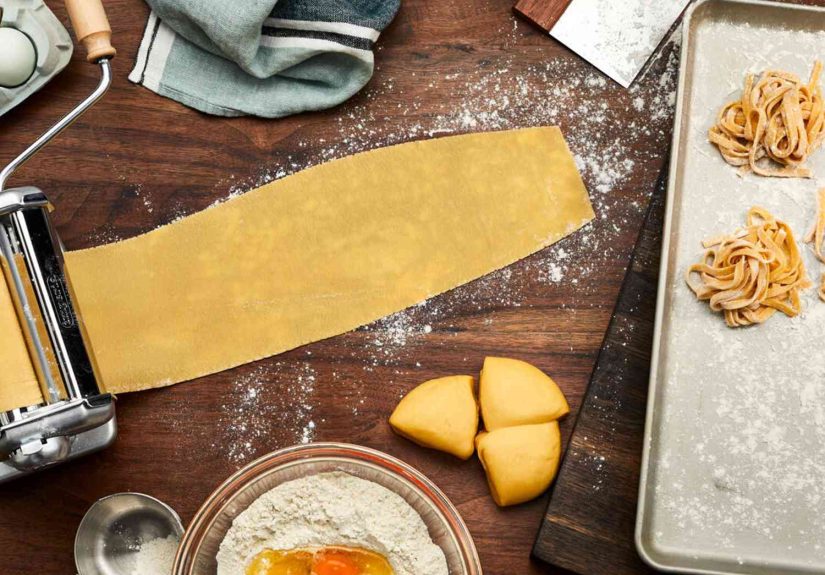
- Flatten a dough piece into a rectangle.
- Run it through the widest setting.
- Fold into thirds (like a letter) and roll again 1–2 times for smoother sheets.
- Keep reducing thickness one setting at a time until the desired thinness.
For noodles like fettuccine or tagliatelle, aim for thin but not transparent. For ravioli, go thinner so the pasta seals well and doesn’t feel
bulky.
Option B: With a Rolling Pin
Roll from the center outward, rotating the dough frequently. If it springs back, let it rest 5–10 minutes and try again. Roll until it’s thin
enough that you can see a faint shadow of your hand through it when held up (especially helpful for lasagna sheets and stuffed pasta).
How to Cut Fresh Pasta (Without Tears)
Once you have a sheet, lightly dust it with flour or semolina so it doesn’t stick to itself.
- Tagliatelle/fettuccine: Roll the sheet loosely into a log, slice into ribbons, then unfurl.
- Pappardelle: Cut wide ribbons (about 3/4 to 1 inch).
- Lasagna: Cut into rectangles sized to your baking dish.
Cooking Fresh Pasta (Fast, Furious, and Delicious)
Fresh pasta cooks much faster than dried. Use a big pot of generously salted water (it should taste pleasantly salty). Add pasta and stir
immediately to prevent sticking.
- Thin ribbons: about 1–2 minutes
- Thicker shapes: about 2–4 minutes
- Stuffed pasta: often 2 1/2–4 minutes at a gentler boil
Taste early. Fresh pasta goes from “not done” to “oops, mush” quickly. Reserve a splash of pasta water to help sauces cling like they mean it.
Troubleshooting Pasta Dough (Because Dough Has Feelings)
The dough is too dry and won’t come together
- Add water 1 teaspoon at a time, kneading between additions.
- Keep kneading. Many doughs look hopeless at minute 2 and perfect at minute 9.
The dough is sticky
- Dust the counter and your hands with flour, but don’t bury it.
- Knead until the surface becomes smoother and less tacky.
The dough keeps shrinking when I roll it
- It needs more rest. Cover it and wait 10 minutes.
- Rolling thinner in stages helpsdon’t try to go from thick to paper-thin instantly.
The edges are cracking
- Usually a sign of dryness. Lightly dampen your hands and knead a bit more.
- Make sure the dough is covered when resting and between rolling sessions.
Storage and Make-Ahead Tips
Storing the dough
- Room temperature: Rest up to 1 hour while you prep.
- Refrigerator: Wrap tightly and store up to 24 hours. Bring to room temp for 20–30 minutes before rolling.
- Freezer: Wrap tightly, then place in a freezer bag. Thaw overnight in the fridge, then bring to room temp before rolling.
Storing cut pasta
- Lightly dust with flour/semolina, spread on a tray, and cook within a couple hours for best texture.
- For freezing: freeze on a tray until solid, then transfer to a freezer bag so strands don’t clump together.
Easy Variations (Once You Nail the Basics)
- Richer dough: Add an extra yolk for a silkier, more luxurious bite (great for ravioli).
- More structure: Replace 10–20% of the flour with semolina (or fine semolina).
- Color/flavor: Add a spoonful of tomato paste, pureed spinach, or a pinch of ground herbsadjust flour if the dough gets wetter.
of Real-World Experiences (What It’s Actually Like the First Few Times)
If you’re new to homemade pasta dough, here’s the most comforting truth: nearly everyone’s first batch feels “wrong” before it feels right.
A lot of home cooks describe the early mixing stage as a minor crisisdry crumbs, eggy streaks, flour everywhere, and that one moment where
you wonder if you should just order takeout. That’s normal. Pasta dough often looks scruffy until you knead long enough for the flour to
hydrate and the gluten to develop. People who stick with the knead almost always notice a turning point: the dough goes from rough and
stubborn to smoother and more cohesive, like it finally decided to cooperate.
Another common experience: the dough’s texture changes depending on the day. Humid kitchen? The dough might feel stickier. Dry winter air?
You may need a teaspoon or two of water. Eggs can vary tooone “large” egg is not always the same as another. This is why experienced pasta
makers talk about learning the feel. Many beginners do best by making small adjustments slowly: add flour with a light dusting, add water by
the teaspoon, and knead a minute before deciding whether the adjustment worked. Dough is a slow listener.
Rolling is where first-timers often have their biggest “aha” moment. If the dough keeps shrinking back, it’s not a personal insultit’s
gluten doing its job. A short rest fixes it. People are often surprised by how thin pasta sheets need to be for the final noodles to feel
tender. “It looks too thin,” is a common comment right before someone cooks it and realizes it’s exactly right. If you’re hand-rolling, many
cooks find it helpful to roll, rest 5 minutes, then roll again. It’s less of a battle and more of a negotiation.
Cutting pasta can also be unexpectedly fun. Lots of folks start with ribbons because they’re forgivingfettuccine and tagliatelle don’t demand
perfection. A slightly uneven noodle still tastes like fresh pasta. The bigger rookie mistake is letting cut pasta sit in a sticky pile.
People learn quickly that light flouring and spreading strands out prevents clumping. If you’re making ravioli, there’s a shared
“pro tip” experience: don’t overfill. Overfilled ravioli are the leaky pens of the pasta worldthey will betray you.
Finally, most home cooks report the same surprise when cooking: fresh pasta cooks fast. The habit from dried pasta“set a timer for
10 minutes and walk away”doesn’t work here. The best experience is hovering (proudly), tasting early, and pulling the pasta when it still has
a gentle bite. The payoff is immediate: fresh pasta feels special, even with simple sauces like butter and Parmesan, garlicky olive oil, or a
quick marinara. And after you do it once, the fear factor drops dramatically. Pasta dough becomes less of a “project” and more of a
“flexible skill,” which is exactly where you want it.
Conclusion
A basic homemade pasta dough recipe is equal parts simple and satisfying: flour, eggs, knead, rest, roll, cut, cook. Once you understand the
“why” behind each stephydration, gluten development, and restingyou can troubleshoot confidently and make fresh pasta that tastes like a
celebration on a plate. Start with ribbons, keep your dough covered, taste early when boiling, and remember: if the first batch is slightly
imperfect, congratulationsyou made real pasta like a real human.