Table of Contents >> Show >> Hide
- What Is an Embroidery Journal (and Why Is Everyone Obsessed)?
- Why This Is the Best Kind of Memory Keeping
- Pick Your Format: One Hoop, Many Pieces, or Something Wearable
- Supplies You Actually Need (Not 47 Gadgets)
- How to Set Up Your Embroidery Journal Without Overthinking It
- Theme Ideas That Make Stitching Feel Like a Treat, Not Homework
- The Stitch Shortlist: 7 Stitches That Cover 90% of Life
- How to Keep Up All Year (Even When Life Gets Loud)
- Finishing Your Year in Stitches: Display, Gift, or Archive
- Conclusion: Your Year, But Make It Art
- Experiences That Make an Embroidery Journal Feel Surprisingly Personal (and Kind of Addictive)
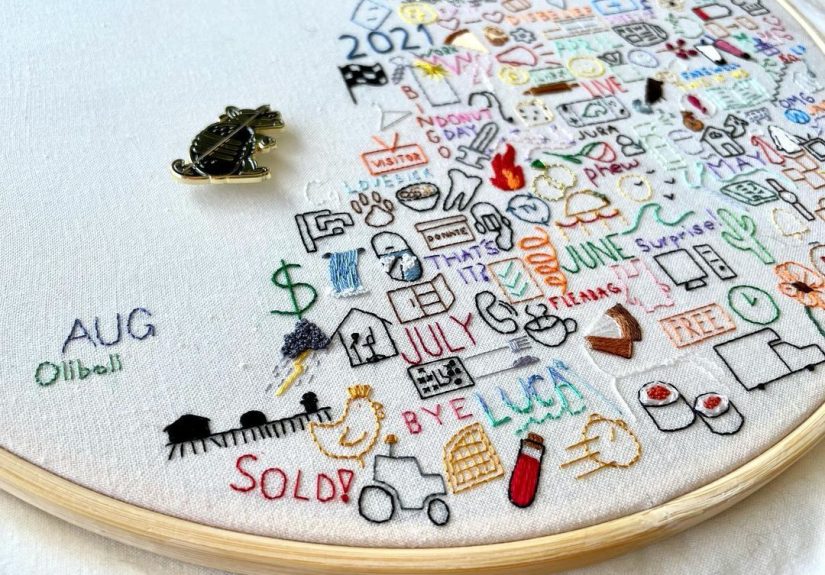
If you’ve ever tried to keep a journal and ended up with a notebook that’s 83% “Day 1: I will change my life,” and 17% grocery lists, I have good news: you can remember your year without writing a novel. Enter the embroidery journala “year in stitches” that turns everyday moments into tiny, tactile symbols you can actually hang on a wall (instead of hiding in your Notes app like a digital raccoon).
The concept is simple: stitch one small icon per day (or per weekno one is grading you), and by December you’ll have a gorgeous piece of stitched memory-keeping that’s part art, part time capsule, part “wow, I really did eat tacos that often.” It’s cute. It’s calming. It’s surprisingly honest. And it might be the only yearly habit that gets better when you’re imperfect.
What Is an Embroidery Journal (and Why Is Everyone Obsessed)?
An embroidery journal is a personal tracking project where you record days using small stitched motifsthink tiny images, symbols, letters, or mini “doodles” done with needle and thread. Instead of writing paragraphs, you stitch a quick icon that represents your day: a little coffee cup for a cozy morning, a star for good news, a squiggle for “my brain was buffering,” or a microscopic suitcase for travel.
Some people stitch on one large hoop all year. Others create monthly panels, patches, quilt squares, or fabric pages stored in a binder. There’s also a popular cousin: temperature embroidery, where colors correspond to daily temperatureslike the famed temperature blanket trend, but with floss and dramatic little leaves.
Why This Is the Best Kind of Memory Keeping
1) It’s fast enough to be realistic
A daily embroidery journal doesn’t require an hour and a fancy pen name. Most days, your icon can take 5–15 minutes. It’s the crafting equivalent of “just put on your sneakers”small action, big payoff.
2) It turns your year into something you can touch
Photos are great, but they’re also trapped behind passwords, cloud sync issues, and that one friend who keeps sending you “storage almost full” screenshots. Embroidery is physical. It becomes a keepsake you can frame, gift, or pass down.
3) It rewards consistency, not perfection
A journal entry can feel like it needs to be “good.” A stitched icon can be delightfully messy. The wonky French knot becomes proof you had a real day, not a curated highlight reel.
Pick Your Format: One Hoop, Many Pieces, or Something Wearable
The Classic: One Hoop for the Whole Year
This is the crowd favorite: a large hoop (often 10–12 inches) with a layout that holds 365-ish mini motifs. Many stitchers divide the hoop into 12 sections (one per month), then fill each section with icons like a stitched calendar.
The Flexible: Monthly Hoops or Fabric Pages
If committing to one mega-hoop feels intense, go monthly. Twelve smaller hoops are easier to manage and less risky if you decide in March that your “symbol system” needs a reboot (it will).
Fabric pages are another great option: stitch on small pieces of cotton or linen, then store them in a portfolio, binder sleeves, or an archival box. This is also a dream if you like adding labels, dates, or short captions.
The Sneaky Genius: Patches, Quilts, and Tote Bags
You can stitch your journal as patchesone per week or one per “big moment”and turn them into a quilt, jacket, or tote. Congratulations, you’ve invented wearable nostalgia.
Supplies You Actually Need (Not 47 Gadgets)
- Embroidery hoop (choose a size that fits your layout; bigger = more breathing room)
- Fabric (cotton or linen is beginner-friendly; tightly woven fabric makes stitching easier)
- Embroidery floss (classic 6-strand floss lets you stitch thin or bold by separating strands)
- Needles (embroidery/crewel needles in a couple sizes)
- Small scissors (sharp enough to cut floss cleanly)
- Marking tool (water-soluble pen or pencil made for fabric)
- Optional helpers: needle threader, thimble, water-soluble stabilizer, and a needle minder if you’re a “lose-my-needle-in-the-couch” legend
How to Set Up Your Embroidery Journal Without Overthinking It
Step 1: Decide your “visual vocabulary”
Your journal works best when you create a simple symbol system. Think of it like emojis, but with more stabbing. Pick 15–30 icons that can cover most days: coffee, book, heart, dumbbell, plane, music note, cat paw, little star, raindrop, and a tiny spiral for “chaos, but make it fashion.”
Pro tip: keep a small paper key (or a note in your phone) that explains what your icons mean. Future You will not remember why you stitched a single banana on April 17. Present You will insist it’s “obvious.”
Step 2: Sketch your layout lightly
You can do a simple grid (tiny boxes or dots), a circular calendar, monthly wedges, or flowing rows. Lightly mark boundaries so spacing stays sane. The goal is to avoid arriving in November with room for exactly three icons and a single thread of panic.
Step 3: Choose a color strategy
Color can mean anything: moods, seasons, categories (work, family, health, fun), or the classic temperature embroidery approach where each color represents a temperature range. If you don’t want to track anything, go with a simple palette you love and call it “aesthetic wellness.”
Theme Ideas That Make Stitching Feel Like a Treat, Not Homework
- Daily icons: a tiny symbol that captures the day’s vibe
- Weekly highlights: one icon per week (great if you’re busy)
- Gratitude stitches: one small thing you’re thankful for
- Temperature journal embroidery: color-coded daily weather
- Books & media: tiny covers, stars, headphones, popcorn
- Food memories: tacos, ramen, birthday cakeyes, it counts as history
- Movement tracker: shoes, bikes, yoga poses, or “walked to the fridge twice”
- Plant diary: leaves, blooms, watering can icons
- Travel & days out: tiny landmarks, maps, suitcases
- Family & friends: simple symbols (hearts, initials, inside jokes)
- Work wins: check marks, lightbulbs, tiny laptops (use sparingly for mental health)
- Self-care log: tea cups, bath bubbles, bedtime moons
The Stitch Shortlist: 7 Stitches That Cover 90% of Life
Straight stitch
The little black dress of embroidery. Great for stars, sparks, confetti, tiny lines, and “I just need a mark here.”
Backstitch
Clean outlines, letters, and doodle-style drawings. If your icons are cartoon-ish (in a good way), backstitch is your best friend.
Stem stitch
Like backstitch, but smoother on curvesperfect for vines, swirls, and anything that needs to look less like a staircase.
Satin stitch
Smooth filled shapes: petals, hearts, tiny fruit, and the occasional blob you’ll insist is “abstract.”
French knots
Tiny dots with big personality. Ideal for flower centers, sprinkles, snow, and “I survived today” confetti.
Lazy daisy
Quick petals and leaves that look impressive for the time investment. The ROI is frankly rude.
Chain stitch
A bolder line that adds texture. Also fun for borders when you want your journal to look finished even if you’re behind.
How to Keep Up All Year (Even When Life Gets Loud)
Make it “missable”
The fastest way to quit is to set rules you can’t live with. Give yourself a buffer: stitch daily when you can, but allow catch-up sessions. A weekend “stitch-and-stream” session can fill a week in one cozy sitting.
Keep a micro-kit ready
Put a needle, two floss colors, tiny scissors, and your hoop (or a small fabric piece) in a pouch. If you can stitch while waiting for pasta water to boil, you can stitch anywhere. (Yes, including soccer practice. No, not while driving.)
Use repeatable motifs
Your icons don’t need to be new every day. Repeating motifs are the whole point. If three days in a row were “coffee, work, sleep,” stitching the same tiny mug is not cheating. It’s documentation.
Finishing Your Year in Stitches: Display, Gift, or Archive
Clean up (gently) and press
When you finish, you may want to rinse away any water-soluble markings and let the fabric dry flat. A gentle press (from the back, with a pressing cloth) helps it look crisp.
Display ideas
- Keep it in the hoop: add a backing fabric and hang it like art
- Frame it: lacing the fabric over a mat looks polished
- Turn it into a pillow or wall hanging: your year, but make it home décor
- Create a “volume set”: twelve monthly pieces in matching frames is chef’s kiss
Archival storage tips (because future-you deserves nice things)
If you’re not displaying it right away, treat it like a textile heirloom. Avoid sealing it in plastic where moisture and odors can get trapped. Instead, store it flat when possible, or roll it carefully with protective tissue. Use acid-free, archival tissue and boxes if you want your stitches to stay fresh for the long haul. Think breathable, supported, and protected from extreme heat, humidity, and direct light.
Conclusion: Your Year, But Make It Art
The magic of an embroidery journal is that it doesn’t demand perfect words or perfect days. It asks for a small, steady act of attentionjust enough to help you remember what actually made up your year: tiny joys, messy moments, unexpected wins, and the quiet days that deserve to be seen too.
Start simple. Choose a few icons. Stitch what matters. And when you look back, you won’t just remember your year you’ll be able to run your fingers over it.
Experiences That Make an Embroidery Journal Feel Surprisingly Personal (and Kind of Addictive)
The first week is usually pure optimism. You pick a gorgeous palette, sketch your layout, and tell yourself, “This will be my calm, mindful ritual.” Then you stitch Day 1 and realize two things immediately: (1) it’s more relaxing than doomscrolling, and (2) your “tiny icon” is somehow the size of a small continent. Don’t panic. Most stitchers have a January full of ambitious motifs and a February full of “we are simplifying for emotional sustainability.”
Around week three, you develop favoritesicons that feel like old friends. The coffee mug becomes your unofficial co-author. The little star for “good news” starts showing up more often than you expected, which is a delightful reminder that your brain tends to forget good moments unless you physically stitch them into existence. This is one of the sneaky benefits of a stitch journal: it makes you notice what’s worth recording because you have to translate life into symbols. Suddenly, a quiet walk gets an icon. A funny text message gets a tiny speech bubble. Your year looks fullernot because you did more, but because you paid attention.
Then comes the first “I missed a day” moment. Maybe it’s a long workday, travel, a sick kid, or your own energy dipping below zero. The embroidery journal teaches a gentle skill: returning without guilt. Many people do a catch-up Sunday where they stitch several icons in a row. And honestly? It’s fun. You get to relive the week like a highlight reelexcept the highlights include “laundry mountain” and “accidentally ate cereal for dinner.” Those count. They’re real life. They deserve a tiny bowl icon.
By mid-year, your style starts to evolve. Early icons look a little stiff; later ones feel confident. The same symbol improves over time, and your hoop quietly becomes a progress report. Not the stressful kind. The satisfying kindlike watching handwriting mature, or seeing photos from the same spot in different seasons. This is why hand embroidery journaling can feel more meaningful than a standard planner: the record is made with skill, patience, and tiny decisions. You learn what colors you reach for when you’re happy. You learn which days you mark with bold stitches and which you keep minimal. Your journal doesn’t just capture events; it captures you.
There’s also a specific kind of joy in the “inside joke” iconsomething that would make no sense to anyone else. A weird little triangle for the day you got lost in a parking garage. A tiny crown for the time your friend hyped you up when you needed it. A microscopic leaf for the plant that finally stopped being dramatic and grew a new sprout. These are the moments that make a memory keeping project feel alive. They don’t need context for the world; they only need to spark recognition in you.
And then December hits. You fill the last space, tie off the final thread, and suddenly you’re staring at a year that looks… beautiful. Not because it was perfect, but because it’s complete. The embroidery journal becomes proof that your days mattered enough to recordeven the ordinary ones. You’ll notice patterns: bursts of travel, a season of rest, a cluster of hard days that eventually gives way to brighter icons. It’s gentle perspective you can hang on a wall. And if you decide to do it again next year, you’ll start with more confidence, fewer rules, and a healthier respect for how big a “tiny” icon can get.