Table of Contents >> Show >> Hide
- What Is Baby Eczema?
- How Common Is Eczema in Babies?
- What Causes Baby Eczema?
- Baby Eczema Symptoms: What Does It Look Like?
- Baby Eczema vs. Other Common Baby Rashes
- How Baby Eczema Is Diagnosed
- Best Baby Eczema Treatment Options
- Can Food Cause Baby Eczema?
- When to Call the Pediatrician
- Can Baby Eczema Be Prevented?
- Real-World Parent Experiences With Baby Eczema
- Conclusion
Baby skin is famous for being soft, squishy, and unfairly photogenic. But sometimes that adorable skin decides to stage a protest. Enter baby eczema, a common condition that can leave infants with dry, itchy, irritated patches that make parents wonder whether they need a new lotion, a new laundry detergent, or a full-time skin consultant.
The good news: baby eczema is common, manageable, and usually not dangerous. The less-fun news: it can be stubborn, messy, and wildly good at showing up right before nap time, family photos, or a visit from the in-laws. If your baby has a rash that keeps coming back, this guide breaks down what baby eczema is, what causes it, what symptoms to watch for, how to treat it, and when it is time to call the pediatrician.
What Is Baby Eczema?
Baby eczema, also called infant eczema or atopic dermatitis, is a chronic inflammatory skin condition that causes patches of skin to become dry, red, sensitive, and itchy. It often shows up in the first year of life, especially on the cheeks, scalp, forehead, chin, elbows, and knees. In younger babies, the face is a common target. As babies get older, the rash may shift to the outside of the arms and legs or into the creases around joints.
Eczema is not contagious, and it is not caused by poor hygiene. You did not “cause” it by using the wrong swaddle, choosing the wrong detergent one time, or failing a secret parenting skin exam. In many cases, eczema happens because a baby’s skin barrier is naturally weaker and more prone to losing moisture. That makes it easier for irritants, allergens, and dry air to stir up trouble.
How Common Is Eczema in Babies?
Very common. Eczema is one of the most common skin conditions in children. Many babies develop symptoms in early infancy, and for some families, eczema becomes part of the daily routine right alongside burp cloths, diaper changes, and pretending they definitely got enough sleep.
Some children improve significantly as they get older, while others continue to have sensitive skin or eczema flares into childhood, adolescence, or adulthood. In other words, baby eczema may be temporary, but it can also be a long-haul skin issue that needs consistent care.
What Causes Baby Eczema?
There is no single cause of baby eczema. Instead, it usually develops from a combination of genetics, skin barrier problems, immune system activity, and environmental triggers.
1. A leaky skin barrier
Healthy skin acts like a shield. In babies with eczema, that shield is weaker. The skin loses water too easily and has a harder time keeping out irritants. This can lead to dryness, inflammation, and itching. Researchers and clinicians often point to problems with the skin barrier, including changes in proteins such as filaggrin, as an important part of eczema.
2. Family history
Babies are more likely to develop eczema if eczema, asthma, seasonal allergies, or food allergies run in the family. This does not guarantee your baby will have eczema, but it can raise the odds.
3. Environmental triggers
Even if a baby is prone to eczema, flare-ups are often worsened by outside triggers. Common culprits include:
- Dry air and cold weather
- Heat and sweating
- Fragrance in soaps, lotions, and wipes
- Harsh detergents and fabric softeners
- Scratchy fabrics like wool
- Saliva and drool around the mouth and chin
- Tobacco smoke
- Dust, pet dander, mold, and pollen in some children
4. The itch-scratch cycle
Eczema loves a vicious cycle. Skin gets dry and itchy. Baby rubs or scratches. The skin barrier gets more damaged. Inflammation worsens. The itching ramps up. Repeat until everyone in the house is tired. Breaking this cycle is a big part of treatment.
Baby Eczema Symptoms: What Does It Look Like?
Baby eczema does not always look exactly the same from one child to another, but common eczema symptoms in babies include:
- Dry, rough, or scaly patches of skin
- Red, pink, or inflamed skin
- Small raised bumps
- Itching, fussiness, or rubbing against bedding
- Oozing, crusting, or weeping during more severe flares
- Thickened skin over time from repeated scratching
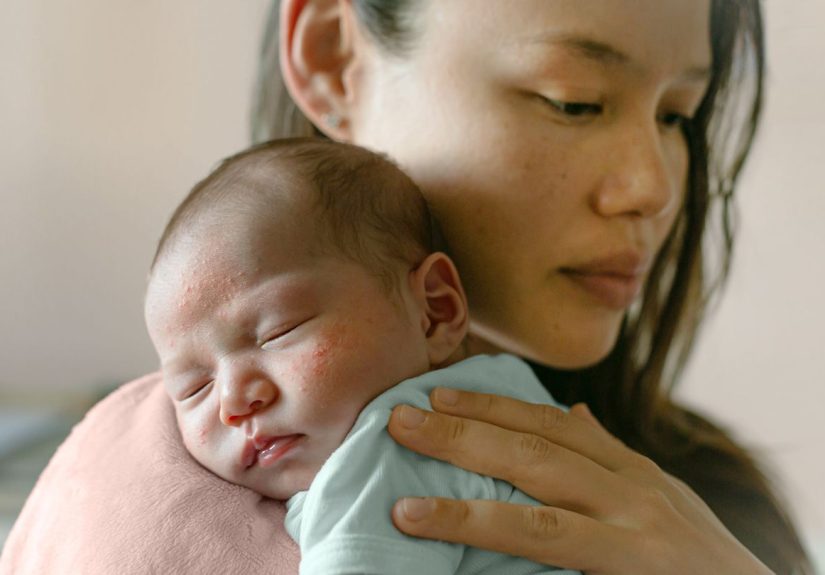
On lighter skin tones, eczema may appear red or pink. On deeper skin tones, it may look purple, brown, gray, or darker than the surrounding skin. It can also leave lighter or darker areas after the flare settles down.
One important clue is itch. Dermatologists often say that if a rash is not itchy, eczema becomes less likely. Babies obviously cannot say, “Excuse me, I am itchy,” but they may rub their face on your shirt, squirm during sleep, or scratch with surprising determination for someone who still needs help putting on pants.
Baby Eczema vs. Other Common Baby Rashes
Because babies collect rashes the way adults collect streaming passwords, it helps to know that not every rash is eczema.
Cradle cap
Cradle cap usually causes greasy, yellowish, flaky scales on the scalp. It is often less itchy than eczema and may improve on its own. Some babies can have both cradle cap and eczema at the same time, because apparently one rash is simply not dramatic enough.
Baby acne
Baby acne tends to cause tiny pimples rather than dry, itchy patches. It usually appears on the face and often clears without eczema-style treatment.
Diaper rash
Diaper rash affects the diaper area and is often related to moisture, friction, irritation, or yeast. Eczema can affect many body areas, but the classic infant eczema pattern often shows up on the cheeks, scalp, outer arms, and legs.
Contact dermatitis
If the rash appears right where something touched the skin, such as a wipe, lotion, fabric, or soap, contact dermatitis may be the issue. Sometimes eczema and contact irritation overlap, which is extra rude but medically possible.
How Baby Eczema Is Diagnosed
Most cases of baby eczema are diagnosed with a medical history and physical exam. A pediatrician or dermatologist will look at the appearance and location of the rash, ask about family history, and review possible triggers. Testing is not always needed.
If the eczema is severe, hard to control, frequently infected, or linked to possible allergies, your child’s clinician may recommend referral to a pediatric dermatologist or allergist.
Best Baby Eczema Treatment Options
The main goals of baby eczema treatment are simple: repair the skin barrier, reduce inflammation, calm itching, and prevent infection.
1. Moisturize like it is your new hobby
Moisturizer is the foundation of eczema care. Thick, fragrance-free creams and ointments usually work better than thin lotions. Ointments and petrolatum-based products tend to seal in moisture especially well and may sting less on irritated skin.
Apply moisturizer at least twice a day and ideally right after bathing. Many experts recommend the “3-minute rule”: pat the skin dry gently, then apply moisturizer within a few minutes while the skin is still slightly damp.
2. Short, lukewarm baths
Bathing can help if you do it right. The sweet spot is usually a short bath, about 5 to 10 minutes, in lukewarm water. Skip hot water, aggressive scrubbing, and heavily scented products. Use a mild, fragrance-free, non-soap cleanser only where needed. Then pat dry and moisturize immediately.
3. Topical steroids when needed
When the skin is inflamed, moisturizers alone may not be enough. That is when pediatricians often recommend a topical corticosteroid, such as hydrocortisone for mild flares or a prescription-strength option for more stubborn eczema. These medicines help reduce redness, itch, and inflammation.
Used correctly and for the recommended amount of time, topical steroids are a standard, effective treatment. The key phrase here is used correctly. Do not slather on random steroid creams for weeks because your cousin’s neighbor swears by them. Follow your child’s clinician’s instructions.
4. Wet-wrap therapy for bad flares
For severe flares, some pediatricians recommend wet-wrap therapy. This involves applying medication or moisturizer, covering the area with a damp cotton layer, and then adding a dry outer layer. It can help the skin absorb moisture and calm inflammation more quickly. Because technique matters, ask your pediatrician or dermatologist how to do this safely before trying it.
5. Avoid triggers
Daily habits make a real difference. Helpful changes may include:
- Using fragrance-free skin care and laundry products
- Dressing your baby in soft cotton clothing
- Keeping nails short to reduce skin damage from scratching
- Avoiding overheating and heavy overdressing
- Managing drool by gently blotting and protecting the skin with ointment
- Using a humidifier if indoor air is very dry
6. Treat infection if it develops
Scratching can break the skin and open the door to infection. If the eczema becomes infected, your child may need additional treatment, such as antibiotics or another prescription medicine. This is not a “wait and see for three weeks” situation.
Can Food Cause Baby Eczema?
This topic makes many parents spiral into a Google rabbit hole at 2 a.m., so let’s keep it grounded. Food does not cause every case of eczema, and routine food elimination is not recommended just because a baby has dry patches. That said, babies with moderate to severe eczema can have a higher risk of food allergy, and the relationship between eczema and food allergy is real.
If you suspect a food reaction, talk with your pediatrician before removing major foods from your baby’s or breastfeeding parent’s diet. Random restriction can create more problems than it solves and may not improve the skin at all.
There is also an important peanut-allergy point: infants with severe eczema and/or egg allergy may need a more specific plan for peanut introduction, often around 4 to 6 months with clinician guidance. Infants with mild to moderate eczema typically do not need peanut allergy testing before age-appropriate introduction around 6 months. This is one place where getting your pediatrician involved is smart, not overcautious.
When to Call the Pediatrician
Call your child’s clinician if:
- The rash is not improving with moisturizers and basic care
- Your baby seems miserable, very itchy, or is not sleeping well
- The skin looks infected
- You see yellow crusting, pus, fluid-filled bumps, warmth, swelling, or spreading redness
- Your baby has fever, pain, or the rash suddenly worsens
- You are concerned a food allergy may be involved
- You are using steroid cream and nothing is changing
In short: dry patches are one thing; angry, oozing, painful skin is another. When in doubt, let the pediatrician take a look.
Can Baby Eczema Be Prevented?
There is no guaranteed way to prevent eczema, especially when genetics are involved. But you may be able to reduce flares and protect the skin barrier by building a consistent routine:
- Moisturize daily, even when the skin looks better
- Use gentle, fragrance-free cleansers and detergents
- Keep baths short and warm, not hot
- Dress your baby in breathable fabrics
- Avoid known irritants and overheating
Think of eczema care less like a one-time fix and more like brushing your teeth: boring, repetitive, and surprisingly effective when done regularly.
Real-World Parent Experiences With Baby Eczema
Parents often describe baby eczema as one of those conditions that seems small on paper but huge in daily life. A few dry patches can quickly turn into a whole family routine built around baths, ointments, cotton pajamas, laundry changes, and trying to stop a tiny human from scratching their face at 3 a.m. The emotional side is real too. Many parents say they felt guilty at first, wondering if they had used the wrong lotion, introduced the wrong food, or somehow missed an obvious sign. In reality, eczema is common, and most families learn that consistency matters more than perfection.
One common experience is the “mystery cheek rash” stage. A baby starts with red, dry cheeks that come and go. Parents try a baby lotion that smells lovely, only to discover that fragrance and eczema are not exactly best friends. After switching to a thick, fragrance-free ointment and using it several times a day, the skin often begins to calm down. That moment alone has converted many families into loyal believers in plain, boring moisturizers.
Another frequent story involves sleep. Some parents notice that their baby rubs their face against the crib sheet, squirms constantly, or wakes up more often during a flare. Once the itch is under better control, sleep may improve for both baby and adults, which is a deeply beautiful medical outcome. Nothing makes a treatment plan feel successful quite like everyone in the house becoming slightly less haunted.
Many families also talk about learning their baby’s triggers through trial and error. For one child, it may be winter air and indoor heat. For another, it may be drool around the chin, scratchy clothing, or soap that is too harsh. Some parents find that keeping a simple log helps. Not a dramatic detective board with red string, just a few notes on what products were used, when flares happened, and whether something new was introduced.
Parents of babies with more stubborn eczema often say the turning point came when they stopped chasing miracle cures and started following a simple, repeatable plan: short lukewarm bath, prescription medicine when directed, thick moisturizer right away, and trigger avoidance every day. Families dealing with moderate to severe eczema may also describe how helpful it was to finally see a pediatric dermatologist or allergist, especially when infection, food allergy questions, or repeated flares were part of the picture.
Perhaps the most reassuring shared experience is this: improvement is often gradual. Skin may not look perfect overnight. Good weeks can be followed by annoying flares. But many parents say that once they understood eczema better, they felt less panicked and more in control. That shift matters. Baby eczema may be persistent, but with the right care, it usually becomes much more manageable.
Conclusion
Baby eczema can look dramatic, feel frustrating, and turn a simple bath into a full production. Still, the basics really do work. A gentle skin care routine, thick moisturizers, trigger avoidance, and appropriate treatment for flares can make a major difference. If the rash is severe, infected, or just not improving, your pediatrician can help tailor a plan that fits your baby’s skin instead of whatever the internet screamed at you last night.
The big takeaway is this: eczema is common, treatable, and usually manageable with steady care. The goal is not to create a baby who glistens like a buttered dinner roll 24 hours a day, though it may feel that way at first. The goal is calmer skin, less itching, fewer flares, and a happier baby.