Table of Contents >> Show >> Hide
- Step 1: Make Sure Keeping It Is Legal, Ethical, and Actually a Good Idea
- Step 2: Set Up an Escape-Proof Enclosure
- Step 3: Create the Right Interior: Hides, Texture, and a Calm Layout
- Step 4: Keep Temperature and Humidity Moderately Warm, Not Swampy
- Step 5: Always Provide Fresh Water
- Step 6: Feed Live Prey That Matches the Spider’s Size
- Step 7: Learn the Signs of Premolt and Leave the Spider Alone
- Step 8: Do Not Handle It Unless Absolutely Necessary
- Step 9: Keep the Habitat Clean Without Constantly Wrecking It
- Step 10: Monitor Health and Know When to Get Help
- Common Mistakes to Avoid
- Conclusion
- Experience Notes: What Caring for a Huntsman Spider Actually Feels Like
- SEO Tags
If you have decided to care for a huntsman spider, congratulations: you have chosen one of the animal kingdom’s most impressive eight-legged roommates. Huntsman spiders are fast, flat-bodied, excellent climbers, and the kind of creatures that can make visitors jump three feet backward before asking, “Why is that spider the size of a pancake?” In other words, they are unforgettable.
They are also not a typical “pet” in the cuddly sense. A huntsman spider is more like a tiny, self-contained wildlife documentary that happens to live in your home. It does not want belly rubs. It does not care about your playlist. It definitely does not want to be passed around at parties. But if you respect its needs, provide the right setup, and keep your hands to yourself, a huntsman can be a fascinating animal to observe.
Because “huntsman spider” can refer to several species, this guide focuses on practical care principles that fit the pantropical huntsman type most people mean when they use the term. The goal is simple: help you keep the spider secure, healthy, hydrated, well fed, and as stress-free as possible. Here are the 10 steps that matter most.
Step 1: Make Sure Keeping It Is Legal, Ethical, and Actually a Good Idea
Before you buy, rescue, or temporarily house a huntsman spider, start with the least glamorous but most important step: common sense. Check local laws, landlord rules, and any regulations about exotic or wild-caught animals in your area. A huntsman spider may seem low drama compared with a parrot or snake, but “small” does not mean “unregulated.”
Just as important, ask yourself why you want one. If the answer is “because it looked cool on a wall and I panicked into parenthood,” pause. Huntsman spiders are best for people who enjoy observation more than handling. They are quick, they can vanish into tiny spaces, and they are not ideal for anyone who wants a hands-on pet. If you are caring for one temporarily before safe release where legal, this guide still helps. If you want a long-term setup, aim for a legal, responsibly sourced specimen rather than impulsively taking a healthy wild spider from its habitat.
Step 2: Set Up an Escape-Proof Enclosure
If there is one rule a huntsman spider would write for you, it is this: “Nice cage. Shame if I slipped out of it.” Huntsman spiders are famously fast and their flattened bodies let them squeeze into places that look impossible. That means the enclosure must be secure, well ventilated, and designed with zero comedy-level escape gaps.
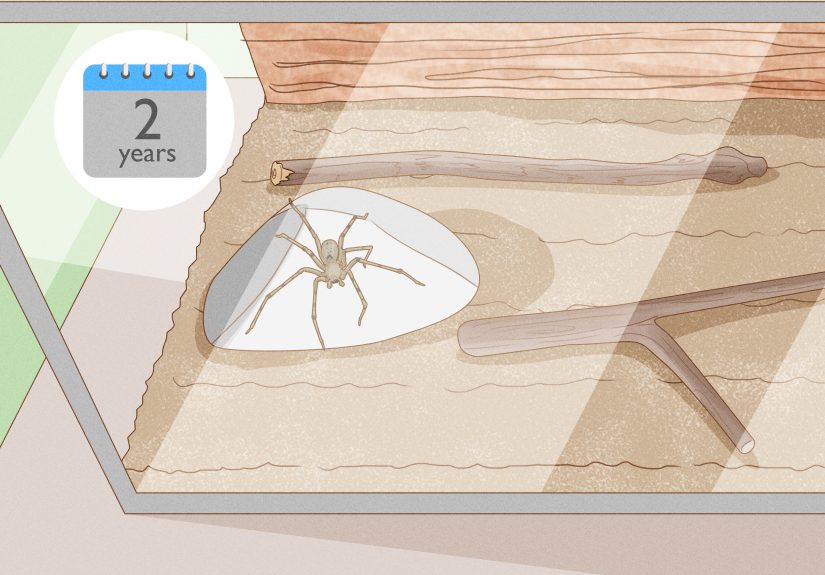
A plastic or glass enclosure with a locking lid works well, as long as the ventilation holes are tiny enough to prevent escape. Give the spider enough room to move and climb, but do not go overboard with a giant tank that makes feeding and monitoring difficult. More important than sheer size is usable space. Huntsman spiders appreciate vertical surfaces, narrow retreats, and hiding places. Cork bark, upright slabs of bark, branches, and textured backgrounds can help the enclosure feel less like a prison cell and more like a spider studio apartment.
Step 3: Create the Right Interior: Hides, Texture, and a Calm Layout
Huntsman spiders are roaming hunters, but that does not mean they want a bare box. In the wild and around buildings, they tuck themselves into sheltered spots: behind objects, inside crevices, under cover, and other places that say, “No thank you, I am off duty.” Your enclosure should offer the same sense of security.
At minimum, include one solid hide and one flatter retreat where the spider can press its body close to a surface. Bark pieces leaned against the wall of the enclosure work beautifully. A little substrate at the bottom is useful for stability and moisture balance, but this is not the sort of spider that needs a decorative jungle made for social media. Keep the layout simple. Too much clutter makes maintenance harder and can increase the chance of losing sight of the spider during feeding or cleaning. The best setup is calm, functional, and boring to everyone except the spider, which is exactly the point.
Step 4: Keep Temperature and Humidity Moderately Warm, Not Swampy
Huntsman spiders are associated with warm climates, so a freezing room is not going to win any popularity contests. At the same time, turning the enclosure into a sauna is not good care either. Think moderately warm, lightly humid, and well ventilated. The goal is a stable environment that feels more like a sheltered tropical nook than a steamy greenhouse.
Most keepers do best when they avoid extremes. Do not let the setup become bone dry for long stretches, but do not keep everything soaking wet. Light moisture in part of the enclosure and access to water are usually more helpful than drenching the whole habitat. Good airflow matters because stale, wet conditions can create mold and hygiene issues. When the spider seems to be approaching a molt, slightly boosting humidity without waterlogging the enclosure can help. In short: aim for balance. Huntsman care is less about gadgets and more about not making the habitat weird.
Step 5: Always Provide Fresh Water
Yes, even a spider needs a drink. One of the easiest beginner mistakes is assuming a huntsman gets all its moisture from prey and therefore does not need a water source. That is risky. A shallow water dish is simple, useful, and much less dramatic than trying to guess whether your spider is dehydrated by reading its vibes.
Use a dish shallow enough to be safe and easy to clean. Refresh the water regularly and keep it free of feeder insect parts, substrate, and mystery debris that somehow appears overnight. If your enclosure dries out quickly, slightly moistening one section of the habitat can help, but the water dish should still be there. The bigger lesson is consistency. A spider does not need spa service, but it does need basic environmental stability. Fresh water is part of that stability and one of the cheapest upgrades you can provide.
Step 6: Feed Live Prey That Matches the Spider’s Size
Huntsman spiders are active hunters. They do not spin a classic prey-catching web and wait around like patient little landlords. They move, stalk, and overpower prey. That means feeding time should involve live prey items the spider can catch safely, such as appropriately sized feeder insects.
The golden rule is not to overdo it. A prey item should be manageable, not a gladiator opponent. Offer food that is smaller than or at least clearly controllable for the spider. Crickets, roaches, or other feeder insects commonly used in invertebrate care can work well when sourced cleanly. Do not dump in a buffet and walk away. Feed deliberately, observe, and remove leftovers if the spider does not eat. Unattended prey can stress the spider, especially around molting time. A huntsman does not need a huge meal plan. It needs regular, sensible feeding and prey that does not turn dinner into a wrestling match.
Step 7: Learn the Signs of Premolt and Leave the Spider Alone
Molting is one of the most important parts of spider care, and it is also the moment when anxious keepers are most tempted to do exactly the wrong thing. A huntsman nearing a molt may become less active, hide more, refuse food, or just act like it has entered a “do not disturb” phase. Respect that phase.
During premolt, reduce handling to zero, keep the enclosure calm, and make sure water is available. Avoid unnecessary rehousing, deep cleaning, or repeated poking with “just checking on you” energy. After the molt, the spider’s new exoskeleton needs time to harden. Feeding too soon or disturbing it too much can create problems. This is the stage where patience beats enthusiasm. If your spider has gone off food for a bit, that is not always a crisis. Sometimes it is just getting ready for the biological equivalent of changing every piece of armor it owns.
Step 8: Do Not Handle It Unless Absolutely Necessary
Here is the honest truth: a huntsman spider is a display animal, not a pocket companion. Handling adds risk for both you and the spider. It can bolt, fall, get injured, vanish into your curtains, or decide that your hand is an unacceptable surprise. None of those outcomes count as enrichment.
If you need to move the spider, use a catch cup, soft guiding tool, or container method instead of bare hands. Slow movements matter. Planning matters. Closing the room door before transfer matters a lot more than people expect. Remember that even spiders that are not medically dangerous can bite defensively if threatened, squeezed, or trapped. Low-stress management is the smart path. Think of the huntsman as an animal you manage around, not with. Admire the speed, the posture, the hunting behavior, and the strange elegance. Just do it with a respectful amount of distance.
Step 9: Keep the Habitat Clean Without Constantly Wrecking It
Spider care has a funny balance: you want the enclosure clean, but you do not want to redecorate it every five minutes like you are starring in a home makeover show called Extreme Arachnid Edition. The key is spot cleaning. Remove uneaten prey, old boluses, shed skins when appropriate, and anything moldy or foul. Refresh the water dish and monitor ventilation.
Deep cleaning should be occasional, not obsessive. A huntsman spider benefits more from stability than from a weekly total habitat reset. If you tear apart every hide, remove every scent mark, and relocate every bark slab on a whim, the spider has to start over each time. That creates stress. Instead, watch the enclosure the way a good groundskeeper watches a trail: maintain the essentials, fix problems early, and leave well enough alone when everything is functioning. Clean care is not the same thing as constant interference.
Step 10: Monitor Health and Know When to Get Help
A healthy huntsman spider usually looks alert, coordinated, and capable of gripping surfaces well. Problems can show up as repeated failed molts, obvious injury, prolonged inability to move normally, refusal to eat for an unusually long period outside a molt cycle, shriveling that suggests dehydration, or strange material around the mouthparts. The trick is noticing patterns instead of panicking over every quiet day.
Keep simple notes on feedings, molts, enclosure changes, and odd behavior. You do not need a spreadsheet worthy of NASA, but a basic log helps. If something truly seems wrong, contact an exotics veterinarian or a knowledgeable invertebrate specialist. Spider medicine is specialized, so finding help before an emergency is smarter than searching after one. Good huntsman care is not just about feeding and misting. It is about observation. The more you watch calmly, the faster you will notice when “normal spider weirdness” shifts into “this needs attention.”
Common Mistakes to Avoid
The biggest mistakes in huntsman spider care are usually boring, which is annoying because people expect the dramatic mistakes to be the dangerous ones. In reality, trouble often starts with the basics: an enclosure that is not secure enough, too much handling, prey left in too long, too much moisture, too little moisture, or nonstop “maintenance” that stresses the spider out.
Another common mistake is assuming every spider behaves like every other spider. A huntsman is not a tarantula with a haircut. It is a fast, flattened hunter with its own style and stress responses. Care improves when you work with that natural history instead of against it. Keep the setup secure, the routine steady, and the spider mostly unbothered. That simple formula solves a surprising number of problems.
Conclusion
Taking care of a huntsman spider is really about restraint. You do not need to entertain it, train it, cuddle it, or turn its enclosure into a luxury resort. You need to provide safety, warmth, clean water, appropriate prey, secure hiding spaces, and peace. The spider does the rest.
That is part of the appeal. A huntsman spider is a low-drama, high-fascination animal when cared for correctly. It asks for very little compared with furred or feathered pets, but it does ask for respect. Give it an escape-proof home, a calm environment, and a keeper who knows when to back off, and you will get the reward of watching one of nature’s most efficient hunters go about its business. Quietly. Quickly. Usually at the exact moment you were not prepared to see it.
Experience Notes: What Caring for a Huntsman Spider Actually Feels Like
For many keepers, the most memorable part of caring for a huntsman spider is how quickly the emotional arc changes. On day one, there is usually a mix of fascination and mild terror. You set up the enclosure, add the bark hide, double-check the lid six times, and then stare at the spider like it might suddenly file paperwork or escape through a molecule-sized crack. By day three, the fear often softens into respect. You start recognizing its favorite hiding spot, the time of day it becomes active, and the weirdly graceful way it flattens itself against a surface like a living paper cutout.
Feeding also becomes an experience in humility. New keepers sometimes expect dramatic attacks every time prey is offered. In reality, the spider may ignore the food, wait patiently, or strike so fast you are not entirely sure what happened. It teaches you to slow down and observe instead of constantly expecting performance. That is one of the best hidden lessons in huntsman care: the animal does not exist to entertain you on command. It exists as it is, and you get to watch if you are patient enough.
Another common experience is learning the difference between “something is wrong” and “something is just spider.” A huntsman that skips a meal, vanishes into a hide, or sits motionless for hours can make a beginner spiral into concern. Then, after enough time, you realize that quiet behavior, sudden movement, and long still periods are all part of the package. Care becomes less about hovering and more about reading patterns. That shift feels surprisingly rewarding. You become less reactive and more observant, which is probably good for your entire life, not just your spider hobby.
Many keepers also talk about how huntsman spiders change the atmosphere of a room. Not in a haunted-house way, although sure, guests may disagree. More in the sense that the enclosure becomes a living focal point. People ask questions. They stare. They back up. Then they lean in again. Even people who claim to hate spiders often become curious once the animal is housed safely and presented as something to learn from rather than scream at. A huntsman can turn fear into fascination faster than you might expect.
And then there is the transfer experience, which every keeper remembers forever. Moving a huntsman spider from one enclosure to another requires planning, patience, and the kind of steady breathing usually associated with yoga or diffusing a tiny bomb. You learn quickly to close doors, clear surfaces, and think through each step before starting. When it goes well, you feel absurdly accomplished. When it goes badly, you discover just how fast your heartbeat can get while holding a catch cup. Either way, it becomes part of the story.
Over time, the overall experience of caring for a huntsman spider becomes less about “owning” a strange animal and more about sharing space with a specialized predator. That is what makes it interesting. You are not shaping its personality the way you might with a dog. You are building the conditions that let it behave naturally. Watching that natural behavior unfold, even in small ways, is the real payoff.